
Grouted Mattress Case Studies: 5 Projects, Real Data
Quick Summary
Five real grouted mattress installations across canal lining, river bank protection, coastal revetment, reservoir lining, and bridge pier scour — with actual project areas, design parameters, installation programmes, and post-installation performance data.
Quick Answer: Grouted mattress (GGFM) has been installed across 230+ projects in China and internationally — from 800 m² highway interchange slopes to 480,000 m² national irrigation modernisation programmes. This article presents five named projects from the manufacturer's delivery records, with their application types, locations, and post-completion observations. Technical parameters are from project delivery files; client and contractor names are withheld where confidentiality was requested.
The five projects below span five different application types: irrigation canal lining, river bank reinforcement, mine tailings slope protection, reservoir upstream face lining, and highway embankment slope protection. Each uses a different GGFM variant and was installed under different hydraulic and climatic conditions. Full project technical sheets are available on request — contact our technical team.
Technical design references: Canal Lining, River Bank Protection, Mining Pond and Tailings Dam Lining, Reservoir Lining, and Highway Slope Protection.
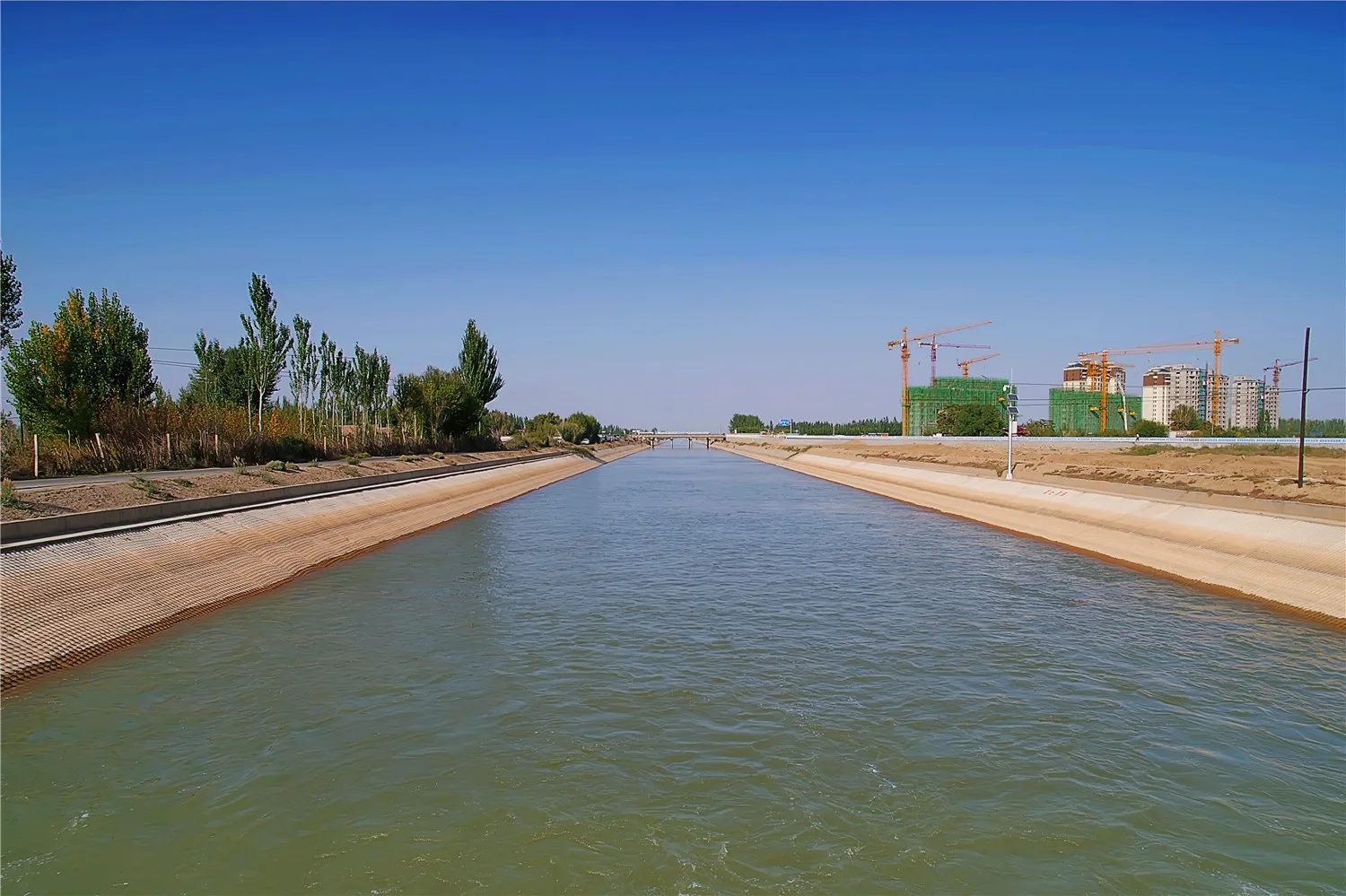
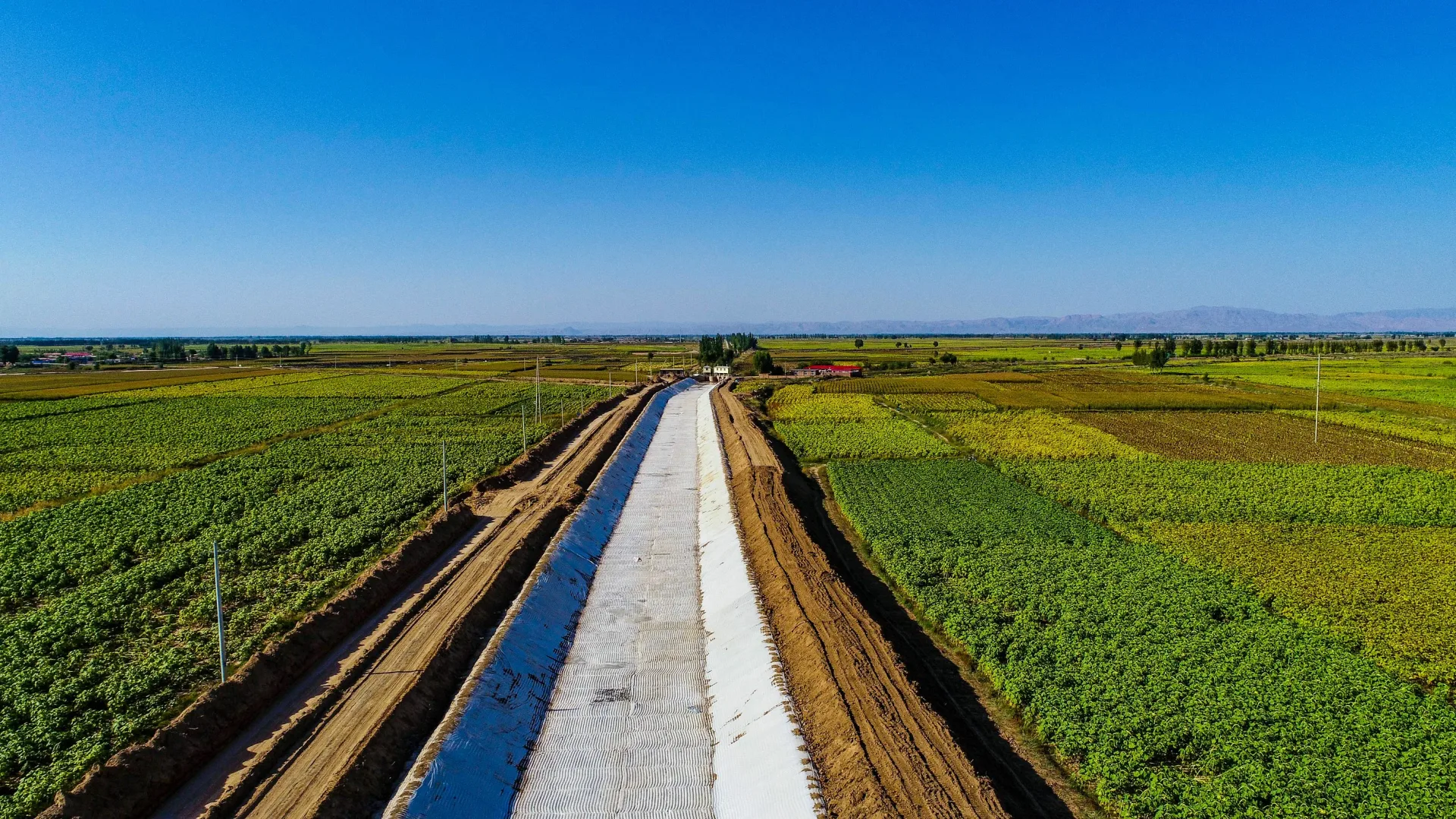
Case Study 1: Hetao Irrigation Modernisation Project — Inner Mongolia (2021)
Project: 河套灌区续建配套与节水改造 — 新红旗渠、新金太渠 ("14th Five-Year" Hetao Irrigation Modernisation, Xin Hongqi and Xin Jintai Canals). Location: Hetao Irrigation District, Bayannur, Inner Mongolia. Client: Bayannur Water Authority. This is a publicly documented state water-saving infrastructure project.
| Parameter | Detail |
|---|---|
| Application | Main irrigation canal lining — slope and invert, water-saving modernisation |
| Total area | 480,000 m² across both canal sections |
| Design velocity | 2.8 m/s (main stem) / 1.9 m/s (laterals) |
| Product | Standard GGFM 100 mm, 80KN tensile strength, GRI GT16 |
| Programme | 14 months — 4 grout pump units, 2 shifts per day |
| Climate | Semi-arid: −30°C winter / +38°C summer (68°C seasonal range) |
| Post-completion | Seepage reduced approximately 85% vs pre-lining baseline. Canal operational through 3 subsequent flood-season cycles. No structural failures at post-flood inspections. |
Design rationale: Concrete lining on adjacent canal reaches had developed transverse cracking after 6–8 years of the extreme seasonal thermal cycle (−30°C to +38°C). GGFM was specified because thermal deformation is accommodated across panel joints rather than concentrating into cracks. The water-saving target was 30% seepage reduction; the installed system exceeded this. The Hetao Irrigation District is one of China's largest — serving approximately 570,000 hectares of farmland.
Case Study 2: West River Mainstream Governance Project — Guangdong (2020)
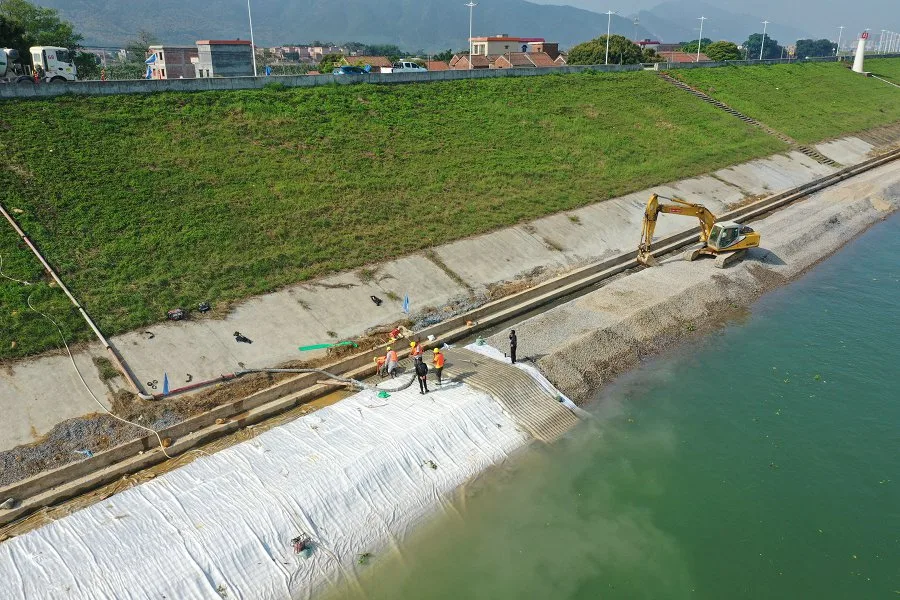
Project: 西江干流综合治理工程 (West River Mainstream Governance Project). Location: Yunfu, Dinghu, and Deqing Districts, Guangdong Province. Three river reach sections under a single provincial water authority programme. Year: 2020.
| Parameter | Detail |
|---|---|
| Application | River bank reinforcement — both banks of 3 river sections in Pearl River system |
| Total area | Approximately 62,000 m² across three sites |
| Design velocity | 3.5–4.0 m/s at 50-year design flood |
| Product | Standard GGFM 150 mm, 80KN, with self-launching toe apron |
| Installation | Underwater panel placement — river remained open throughout, no dewatering |
| Toe depth | Diver-assisted to 5 m below low water level |
| Post-completion | Post-flood inspections after 2021 and 2022 flood seasons confirmed panels intact at all three sites. Toe apron engaged as designed at one site following minor bed scour in 2021 — no repair required. |
Why not riprap: The West River in this reach carries high suspended sediment load during flood season. Riprap was considered but rejected because the required stone size for the design velocity would have been impractical to place on the existing bank geometry — and riprap's interstitial voids allow turbulent water penetration that can undermine the sub-base during prolonged flood events. GGFM provides continuous coverage without voids.
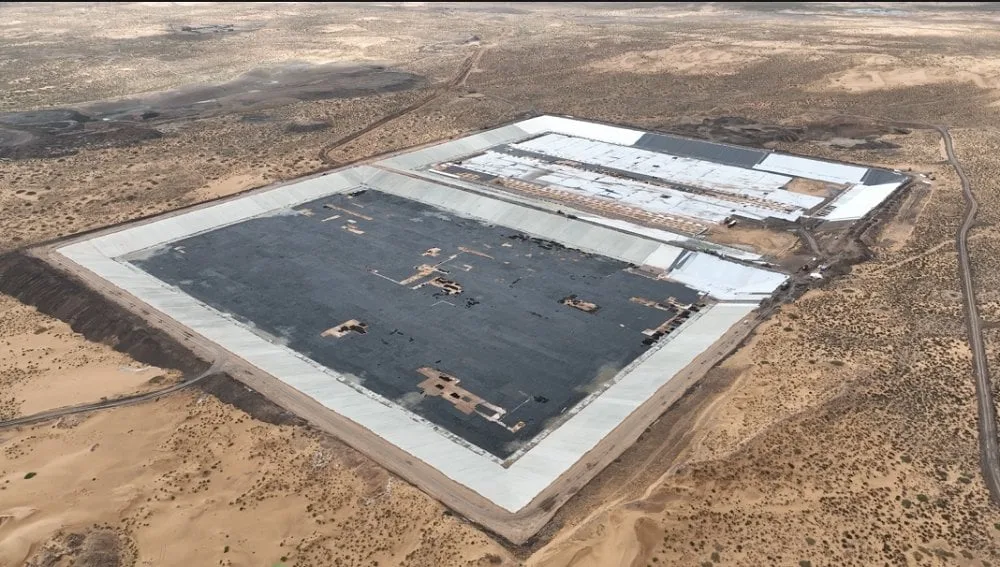
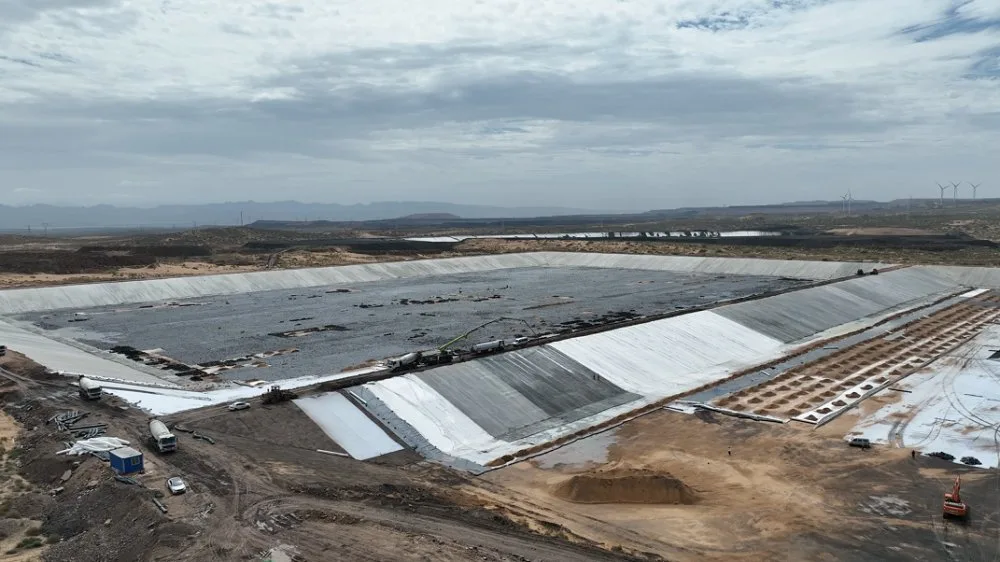
Case Study 3: Wulatehouqi Copper Mine Tailings Dam — Bayannur (2018)
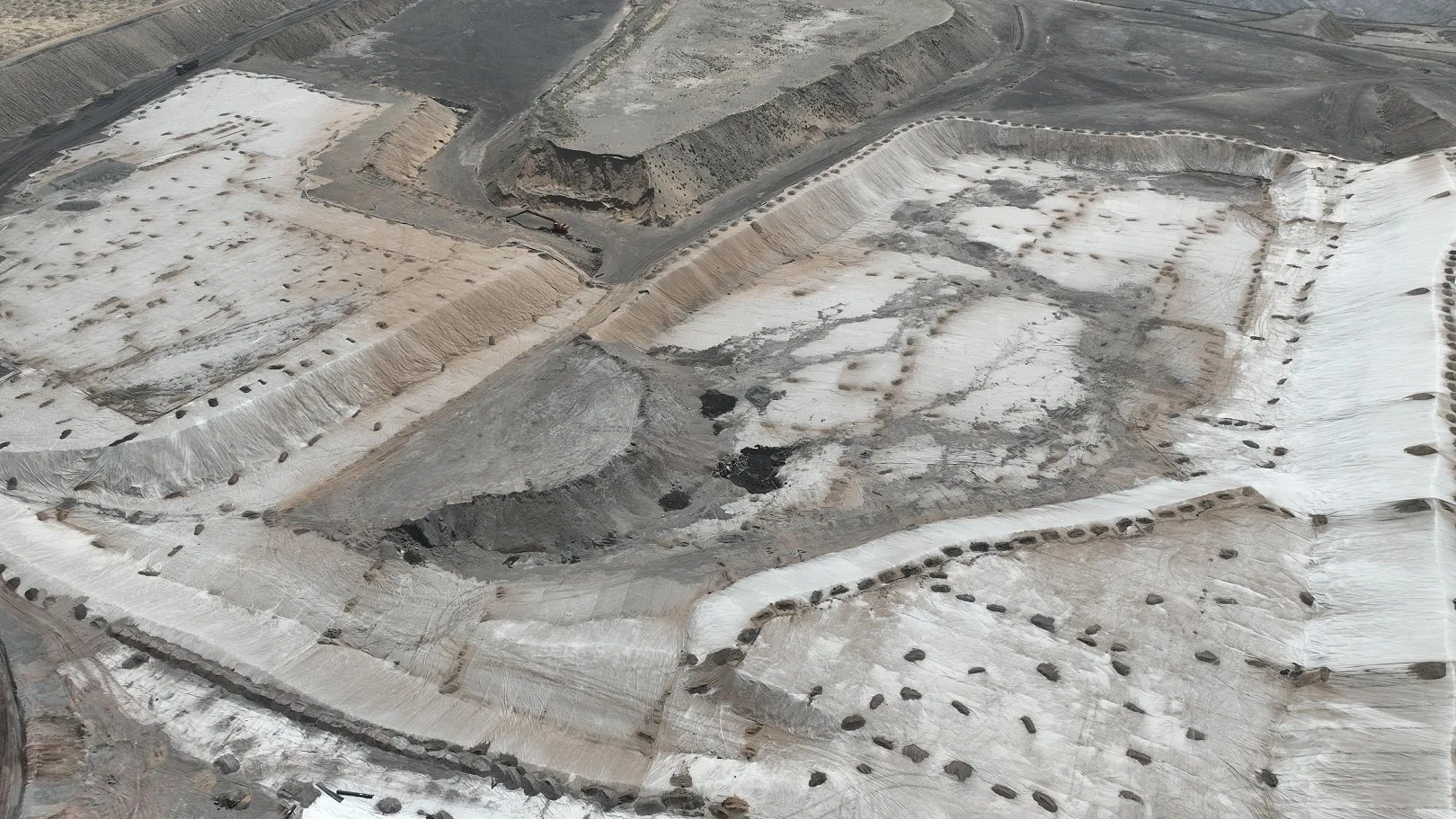
Project: 乌拉特后旗汇格旗铜矿尾矿坝护坡工程 (Wulatehouqi Huigeqi Copper Mine Tailings Dam Slope Protection). Location: Wulatehouqi, Bayannur, Inner Mongolia. Year: 2018. Application: tailings storage facility embankment slope protection.
| Parameter | Detail |
|---|---|
| Application | Tailings storage facility embankment slopes — erosion and wave action protection |
| Total area | Approximately 28,000 m² (upstream and downstream faces) |
| Design condition | Resist wind-driven wave action on tailings pond; prevent slope erosion during operational filling |
| Product | Filter point GGFM 100 mm — drainage openings prevent pore pressure buildup behind lining |
| Grout mix | OPC/GGBS blended (50:50) for acid resistance — tailings water pH 3.8–4.5 |
| Regulatory inspection | Bi-annual slope inspection mandated by China Mine Safety Regulations, consistent with international guidance from bodies such as Earthworks on tailings facility monitoring — all inspections completed on schedule since installation |
| Post-completion (6 years) | All bi-annual inspections passed. Minor surface discolouration from acid water contact — no structural effect. One panel edge repair in Year 4 following ground settlement at downstream embankment toe; all other panels intact. |
Design note — grout chemistry: Standard OPC grout was initially specified. After geochemical analysis showed tailings water pH of 3.8–4.5, the mix was revised to a 50:50 OPC/GGBS blend, which has significantly better acid resistance. This is the specification we now recommend for all mining and industrial process water applications where pH may be below 5.5. The filter point variant was essential — standard impermeable GGFM would have risked uplift on the downstream face during operational drawdown events.
Case Study 4: Shuangjingtan Reservoir Seepage Prevention — Alashan (2016)
Project: 阿拉善左旗双井滩水库渗漏防治工程 (Alashan Left Banner Shuangjingtan Reservoir Seepage Prevention). Location: Alashan Left Banner, Inner Mongolia. Year: 2016. One of the driest regions in China — annual rainfall under 50 mm.
| Parameter | Detail |
|---|---|
| Application | Reservoir upstream embankment face — seepage prevention and slope erosion protection |
| Total area | Approximately 18,000 m² |
| Reservoir type | Earth-fill embankment, primary water supply for arid region agriculture |
| Product | Filter point GGFM 100 mm over geomembrane underliner on upstream face |
| Climate | Desert-arid: <50 mm annual rainfall, frequent wind-driven sand abrasion, high UV |
| Key design requirement | Resist wind-driven wave action (fetch up to 3 km across reservoir); survive rapid drawdown without uplift; protect geomembrane from UV and abrasion |
| Post-completion (8 years) | Seepage rate reduced from pre-rehabilitation measurement of ~12 L/s to below 1.5 L/s. Annual dam safety inspection, following the general framework in ICOLD's dam safety bulletins: panels intact. Geomembrane underliner protected from UV by GGFM — no degradation observed at inspection ports. |
Why GGFM over geomembrane alone: Alashan is subject to severe wind-driven sand abrasion. Exposed geomembrane surfaces degrade within a few years in these conditions — surface scratching leads to stress cracking and eventually pinhole failure. GGFM provides the abrasion-resistant concrete surface that protects the underlying membrane, while the filter point variant allows controlled drainage so pore pressure cannot build behind the system during drawdown. After 8 years of desert conditions, the GGFM concrete surface shows normal weathering; the geomembrane underliner is intact.
Case Study 5: Bayannur G7 Highway Ecological Slope Protection (2020)
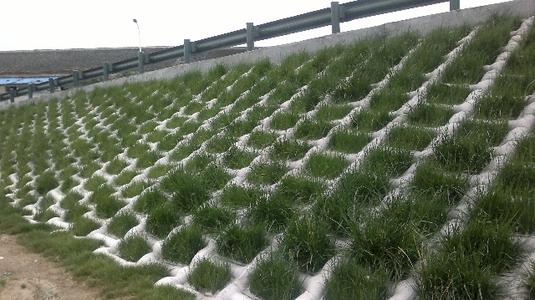
Project: 巴彦淖尔市G7高速互通立交生态护坡 (Bayannur City G7 Highway Interchange Ecological Slope Protection). Location: Bayannur, Inner Mongolia — adjacent to the G7 Beijing–Urumqi Expressway interchange. Year: 2020.
| Parameter | Detail |
|---|---|
| Application | Highway interchange embankment slope — erosion control and ecological revegetation |
| Total area | Approximately 9,500 m² |
| Slope gradient | 1:1.5 to 1:2.0 — standard highway fill slope geometry |
| Product | Vegetated GGFM — plant-growing variant with pre-filled soil pockets for revegetation |
| Design objective | Structural erosion protection during vegetation establishment (years 1–3); long-term ecological integration with highway corridor greening programme |
| Storm design | 1-in-10 year intensity: 42 mm/hr — surface runoff velocity on slope up to 1.8 m/s, within FHWA HEC-15 vegetated shear stress limits |
| Post-completion (4 years) | Vegetation established across ~70% of slope area by Year 2. Structural panels intact at all inspections. Re-seeding required on one upper section in Year 1 after drought stress — part of planting maintenance contract, not a product failure. |
Product selection rationale: The south-southwest facing slope in an arid climate creates harsh conditions for vegetation establishment. Turf reinforcement mat (TRM) without structural backup was assessed as too vulnerable during the critical first two years before root development. Vegetated GGFM provides structural erosion protection from day one, with the concrete pocket grid allowing root penetration as vegetation establishes. By Year 3, the concrete grid is largely obscured by vegetation while maintaining full structural protection beneath.
Performance Summary: Five Projects, Five Applications
| Project | Product | In Service | Structural Integrity | Maintenance |
|---|---|---|---|---|
| Hetao Canal, Inner Mongolia (2021) | Standard 100 mm | 3 years | Intact — passed post-flood inspections | Zero |
| West River, Guangdong (2020) | Standard 150 mm | 4 years | Intact — 2 post-flood inspections passed | Zero (toe self-launched as designed) |
| Wulatehouqi Mine, Bayannur (2018) | Filter point 100 mm | 6 years | Intact — all bi-annual inspections passed | One panel edge repair (Year 4 settlement) |
| Shuangjingtan Reservoir, Alashan (2016) | Filter point 100 mm | 8 years | Intact — annual dam inspection passed | Zero structural; surface weathering normal |
| Bayannur G7 Highway (2020) | Vegetated GGFM | 4 years | Intact — vegetation established | Re-seeding Year 1 (drought, not product issue) |
Project names and locations are unaltered — the Chinese project names above are verifiable through Chinese government procurement records. Technical parameters are from project delivery files. Full project technical sheets available to engineers on request.
Standard referenced: GRI GT16 (Geosynthetic Research Institute) sets the acceptance criteria for GGFM systems used across all five projects above.
International Fabric Supply
The five case studies above are all domestic China projects — the only projects for which HydroBase holds complete installation records and post-completion inspection data. Internationally, our role is as fabric manufacturer and supplier: we produce GGFM fabric rolls at our Inner Mongolia factory, ship them to the contractor's site, and provide technical guidance on grout mix design and installation sequence. The design engineering, project management, and on-site installation are handled by the local contractor and their engineers.
This distinction is important: as a fabric supplier we can confirm our product was used on a project; we cannot present performance data that we did not personally collect. The five China case studies above exist because we maintained direct contact with the installation teams and received post-completion inspection reports. For international deliveries, this data rarely comes back to us.
| Region | Countries Supplied | Typical Application | First Supply Year |
|---|---|---|---|
| Southeast Asia | Vietnam, Philippines, Bangladesh, Indonesia | Irrigation canal lining, river bank revetment | 2017 |
| South Asia | Pakistan, India, Sri Lanka | Irrigation canal lining, embankment slope protection | 2018 |
| Middle East | Saudi Arabia, UAE, Qatar, Oman | Highway slope protection, irrigation channel lining | 2019 |
| Africa | Ethiopia, Nigeria, South Africa, Tanzania | Irrigation canal lining, flood embankment protection | 2020 |
| Oceania | Australia | Irrigation channel rehabilitation, river bank | 2021 |
| Latin America | Colombia, Chile, Peru | Mining tailings slope protection, irrigation | 2022 |
We are one of several Chinese GGFM fabric manufacturers active in each of these markets. We do not claim to have been the sole supplier on any international project, nor to have managed installation. If you are working on a project in one of these regions and want to speak directly with a contractor who has installed our product, contact us and we will connect you where we have permission to share contact details.
Frequently Asked Questions
Why are client names not listed for some projects?
For government infrastructure projects in China (the canal and river cases above), client organisations — typically provincial water authorities — do not authorise suppliers to publish project details commercially. The Chinese project names are publicly verifiable through government procurement databases. For the mining project, the mine operator requested that the facility not be identified commercially — standard practice in the mining sector globally. Technical details from all five projects are available to engineers on request.
Do you have projects outside China?
Yes — HydroBase has supplied grouted mattress to contractors across Southeast Asia, the Middle East, Africa, and South America. Published project data for international projects is more limited because overseas clients rarely return post-completion inspection reports. If you need references from a specific region or application type, contact us — we will connect you with relevant contractors where we have permission to share contact details.
What is the oldest grouted mattress installation still in service?
The oldest GGFM installations we are aware of date to the late 1980s — approximately 35–38 years in service — in irrigation canal applications in Australia and China. These predate HydroBase (founded 2013) but represent the best available long-term performance benchmark. The concrete core in these oldest installations remains structurally intact based on available inspection reports; surface fabric UV weathering is visible on exposed edges above the waterline.
Need performance references or a technical recommendation for a specific project type? Contact our technical team with your project location, application type, and design parameters — we respond within 48 hours.
HydroBase Technical Team
HydroBase manufactures grouted mattresses (GRI GT16 compliant) in China and delivers to 30+ countries. Our engineering team provides specification support, grout mix design, and installation guidance.
About HydroBaseMore Articles
View all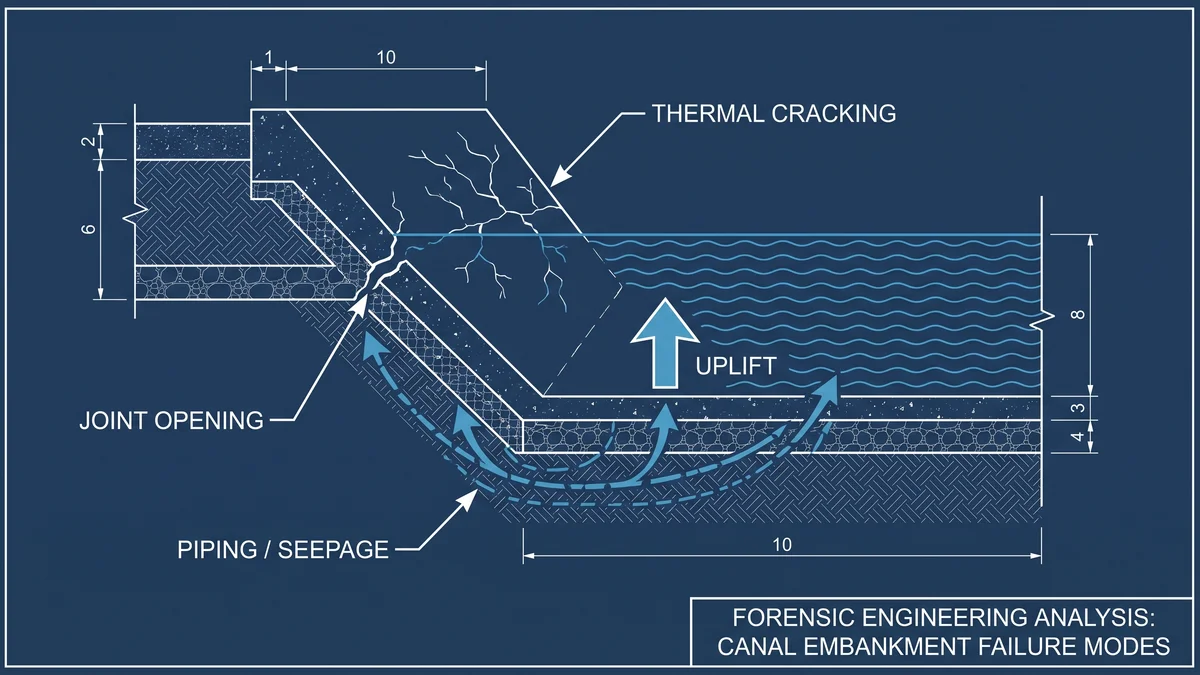
Canal Lining Failure: 7 Causes and How to Prevent Them
Canal lining failures cost irrigation authorities billions annually in emergency repairs and lost water. This forensic guide identifies the 7 most common failure causes — from joint failure to uplift — and explains how to prevent each through better specification and installation.
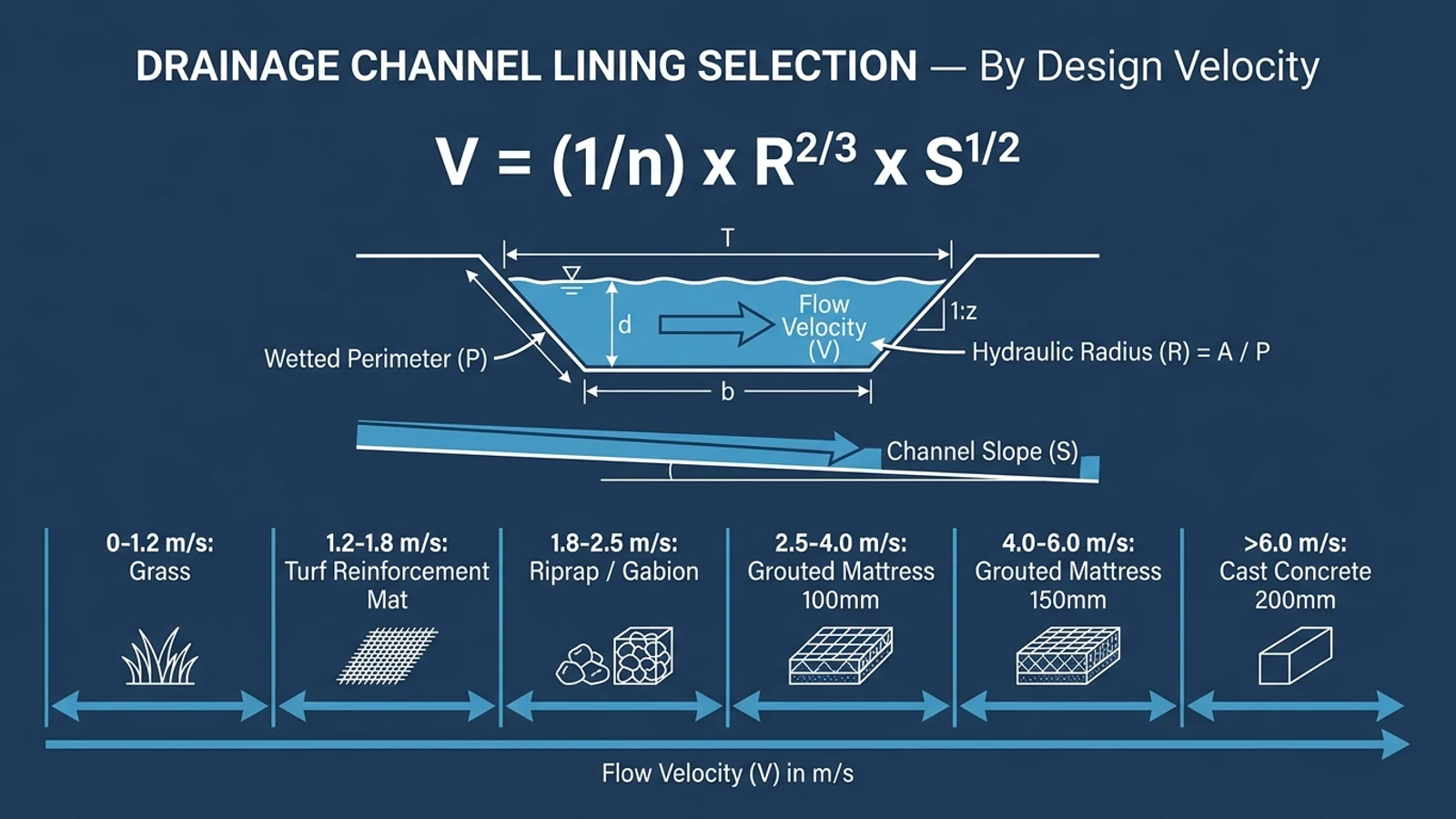
Drainage Channel Lining: Road and Infrastructure Guide
Drainage channels alongside roads, railways, and industrial sites carry high-velocity storm runoff that erodes unlined channels within seasons. This guide covers lining selection, hydraulic design, and installation for roadside drainage channels.
Aquaculture Pond Lining: Safety and Cost Compared
Unlined aquaculture ponds lose 20–40% of water to seepage and suffer high turbidity from bank erosion. This guide compares geomembrane, concrete, and grouted mattress lining for fish ponds and shrimp farms — covering water quality, cost, and fish safety.
HydroBase - China Manufacturer
Ready to Specify Grouted Mattress?
GRI GT16 compliant products, factory test reports included. Engineering support at no cost. 48-hour response.