
Grouted Mattress vs Geomembrane: Which Is Right?
Quick Summary
A direct comparison of grouted mattress (GGFM) and geomembrane for canal lining and reservoir seepage control. Cost, seepage performance, installation, maintenance, and when to use each — with no bias.
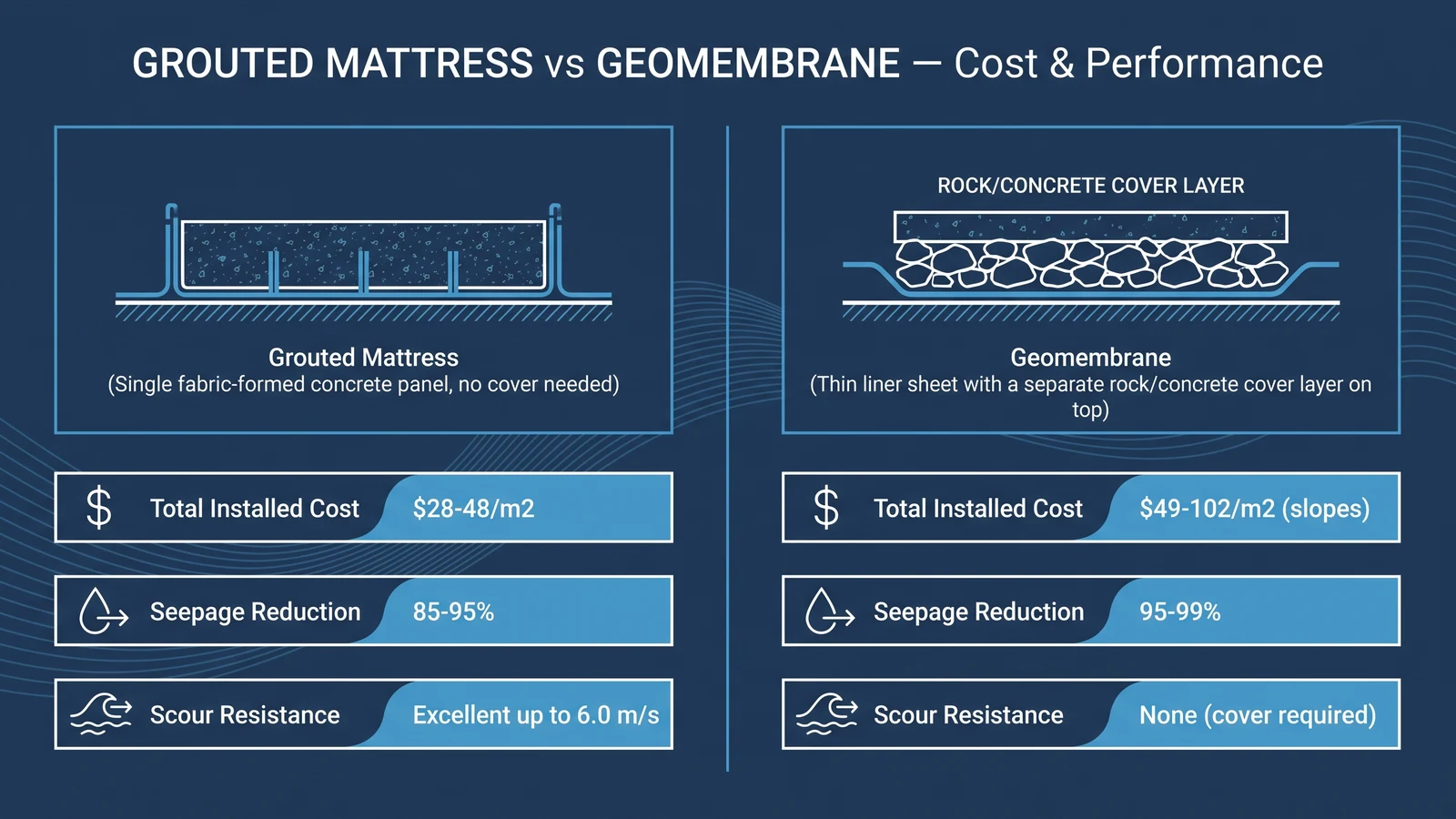
Quick Answer: Geomembrane (HDPE or LLDPE) provides better seepage control than grouted mattress — it reduces seepage by 95–99% vs 85–95% for grouted mattress. But geomembrane requires a separate protective cover layer on exposed slopes (adding $30–$60/m²), has no scour resistance, and is vulnerable to seam failure. Grouted mattress is a single-product solution providing both seepage control and erosion protection, with 50+ year design life and no seam welding. For most irrigation canals and small reservoirs, grouted mattress is the lower total cost and lower risk option. For ponds where maximum seepage control is critical (chemical, mining), geomembrane wins.
Grouted mattress and geomembrane are the two most common synthetic seepage control systems for hydraulic engineering projects. Both are widely misunderstood — geomembrane is often assumed to be "the cheapest" option (it is, if you ignore the protective cover), and grouted mattress is sometimes assumed to be "just concrete" (it provides far more flexibility than concrete). Cost figures in this comparison reflect 2024 international market pricing (material FOB China or Southeast Asia; installation by specialist contractor). Adjust for your region — installation labour rates vary significantly between markets.
Understanding Each System
Geomembrane
A continuous polymeric sheet — most commonly HDPE (high-density polyethylene) or LLDPE (linear low-density polyethylene) in 1.0–2.5 mm thickness — deployed over the prepared subgrade and seam-welded into a continuous impermeable barrier. The GRI publishes acceptance standards for HDPE geomembranes (GRI GM13) and LLDPE (GRI GM17). On exposed canal slopes and reservoir faces, a protective cover layer is required — without it, the membrane is vulnerable to UV degradation, wave loading, vandalism, ice damage, and foot traffic puncture during maintenance.
Grouted Mattress
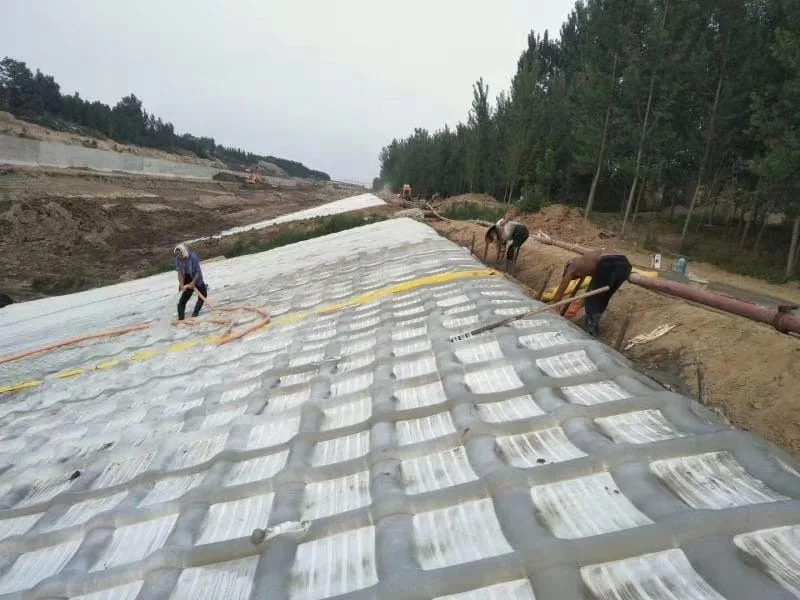
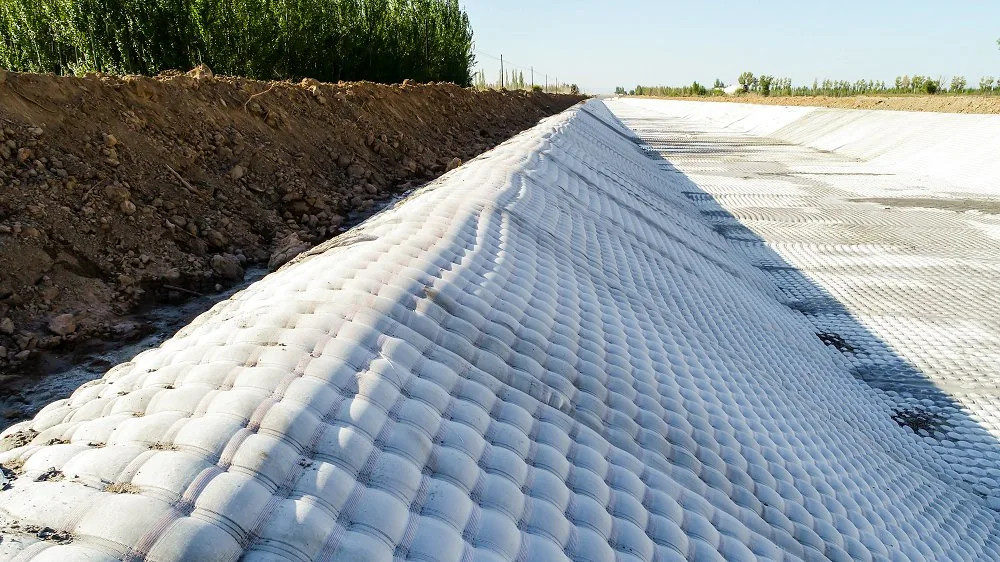
Grouted mattress (GGFM) is a double-layer woven polypropylene fabric pumped on-site with cement grout. The cured product is an articulated concrete armour — heavy (155–310 kg/m²), hydraulically resistant, and self-protecting (the concrete surface requires no cover layer). Meets GRI GT16. The filter point variant allows controlled drainage for rapid drawdown environments. See GRI GT16 Explained for full standard details.
Cost Comparison: The Full Picture
| Cost Component | Geomembrane (HDPE 1.5 mm) | Grouted Mattress (100 mm) |
|---|---|---|
| Membrane / fabric material | $5–$10/m² | $8–$14/m² |
| Protective cover (slope) | $30–$60/m² (concrete or riprap) | $0 (no cover needed) |
| Installation labour + plant | $8–$15/m² | $12–$22/m² (grout + pump) |
| Seam welding QC (spark/air test) | $2–$5/m² | $0 |
| Dewatering | $4–$12/m² | $0 |
| Total installed (slopes) | $49–$102/m² | $28–$48/m² |
For the canal invert (flat, not exposed to wave loading), geomembrane without concrete cover can be used — reducing geomembrane total cost to $17–$32/m² vs $28–$48/m² for grouted mattress. On flat inverts where scour is not a concern, geomembrane may be cost-competitive.
Performance Comparison
| Performance Factor | Geomembrane | Grouted Mattress | Winner |
|---|---|---|---|
| Seepage reduction | 95–99% | 85–95% | Geomembrane |
| Scour resistance (slope) | None (cover required) | Excellent (up to 6.0 m/s) | Grouted Mattress |
| Settlement tolerance | Good (flexible) — seam risk at settlement junctions | Excellent (articulated — no seams to fail) | Grouted Mattress |
| Rapid drawdown safety | Poor without drainage layer | Excellent (filter point variant) | Grouted Mattress |
| Repair difficulty | Moderate (cut and weld patch) | Easy (grout injection or patch panel) | Grouted Mattress |
| UV resistance | Poor (must be covered or UV-stabilised) | Excellent (grout core protects fabric) | Grouted Mattress |
| Manning's n (hydraulic roughness) | 0.009–0.012 | 0.016–0.020 | Geomembrane (slightly smoother) |
| Chemical resistance | Excellent (HDPE resistant to most chemicals) | Good (concrete — check specific chemical) | Geomembrane (for aggressive chemicals) |
When to Use Each System
Choose Grouted Mattress when:
- The canal or reservoir slope has design velocity >1.5 m/s — geomembrane without cover cannot resist scour, and adding a concrete cover eliminates the cost advantage
- Rapid drawdown is a design scenario — filter point grouted mattress handles it; geomembrane requires a complex drainage design
- The project is in a remote location where welding equipment and skilled welders are difficult to mobilise
- Settlement of the subgrade is anticipated — grouted mattress tolerates differential settlement without seam failure
- A 50+ year design life is required without major maintenance
Choose Geomembrane when:
- Near-zero seepage is required — chemical or contaminated water storage, mining ponds, aquaculture
- The canal invert is flat and not subject to scour — geomembrane without cover is cost-competitive on flat surfaces
- The water is chemically aggressive and incompatible with concrete (low pH, high sulphate, high CO₂)
- Temporary lining is required — geomembrane can be removed and relocated; grouted mattress cannot
Related: canal lining methods cost comparison and our reservoir lining systems guide. For geomembrane seam welding quality standards, see ASTM D6392 (standard test method for determining the integrity of seams for flexible polymeric sheet geomembranes).
Frequently Asked Questions
Can grouted mattress and geomembrane be used together?
Yes — a combined system using a geomembrane underliner below grouted mattress is used on some high-specification projects. The geomembrane provides near-zero seepage control; the grouted mattress provides scour protection and UV protection for the membrane. This system is specified on mining tailings storage ponds, chemical process water channels, and irrigation projects in extremely water-scarce regions where every m³ of seepage is economically significant. Cost is additive — typically $55–$90/m² total installed.
Is HDPE or LLDPE better for canal lining?
HDPE is stiffer and more chemical-resistant — preferred for mining ponds and chemical storage. LLDPE is more flexible and has better puncture resistance — preferred for agricultural canal lining over variable subgrades. LLDPE also has better stress crack resistance than HDPE in dynamic applications (wave loading, vibration). For most irrigation canal lining applications, LLDPE 1.5 mm with UV stabiliser is the standard specification. If geomembrane is being used without a cover layer, specify minimum 1.5 mm; with concrete cover, 1.0 mm is acceptable.
How long does geomembrane last in a canal?
HDPE geomembrane designed to GRI GM13 has a minimum design life of 100 years in a buried condition. However, in canal applications — where it is regularly exposed to UV during maintenance, subject to wave and current loading, and frequently walked on during inspection — the practical life is closer to 30–50 years. Seam failure is the most common cause of premature performance loss. Grouted mattress, once cured, has effectively unlimited concrete life with the fabric protected from UV — design life is quoted at 50+ years based on installations dating to the 1980s.
Not sure which system is right for your project? HydroBase engineers have specified both geomembrane and grouted mattress across hundreds of irrigation, reservoir, and drainage projects. Send us your project parameters and we will give you an honest recommendation — including cases where geomembrane is the better answer.
HydroBase Technical Team
HydroBase manufactures grouted mattresses (GRI GT16 compliant) in China and delivers to 30+ countries. Our engineering team provides specification support, grout mix design, and installation guidance.
About HydroBaseMore Articles
View all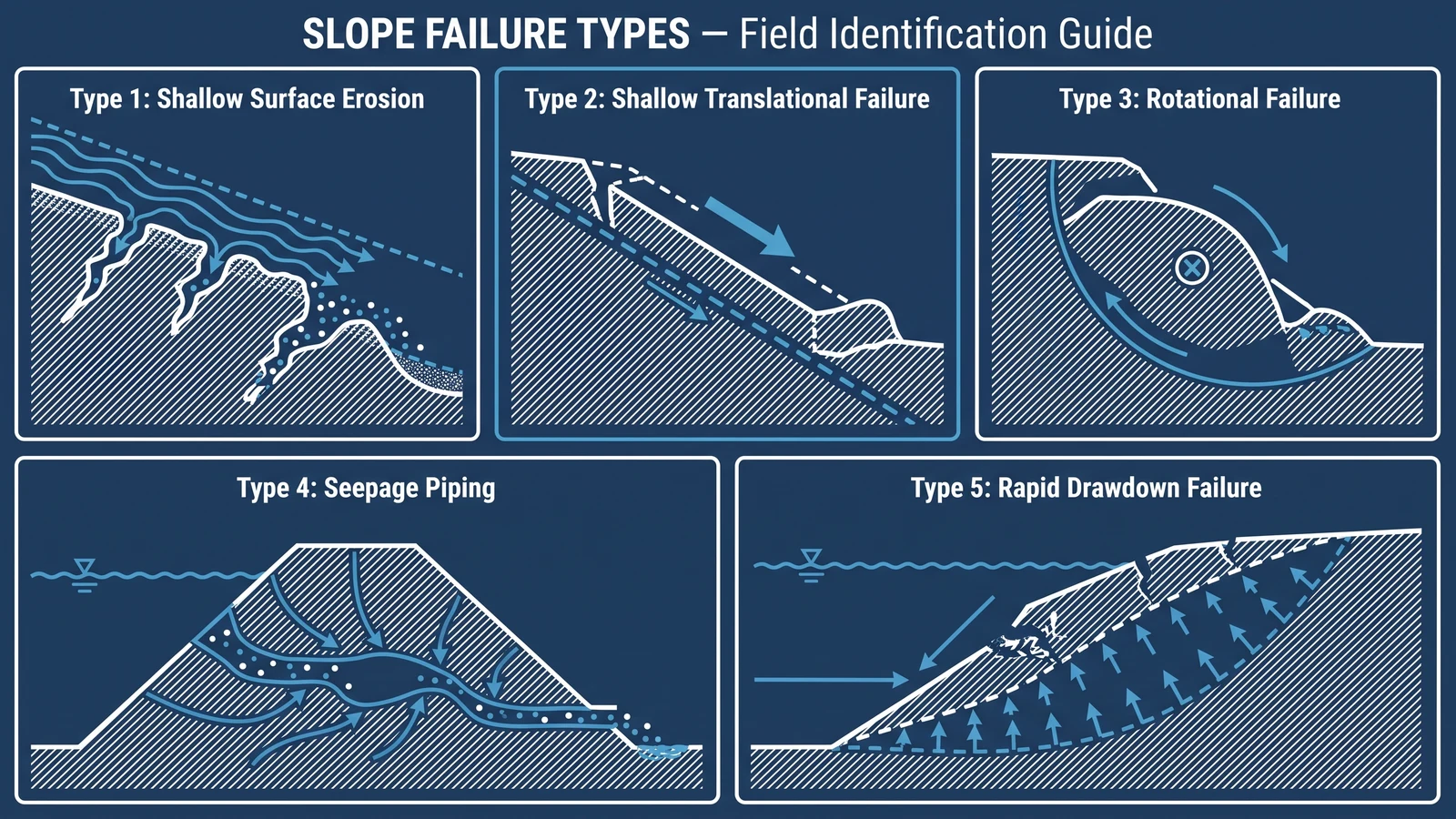
Slope Failure Causes and Prevention: Field Guide
Slope failures on canal embankments, reservoir faces, and road cuttings follow recognisable patterns. This field guide covers the five main slope failure types — shallow surface erosion, shallow translational, rotational, piping, and rapid drawdown — with prevention measures for each.
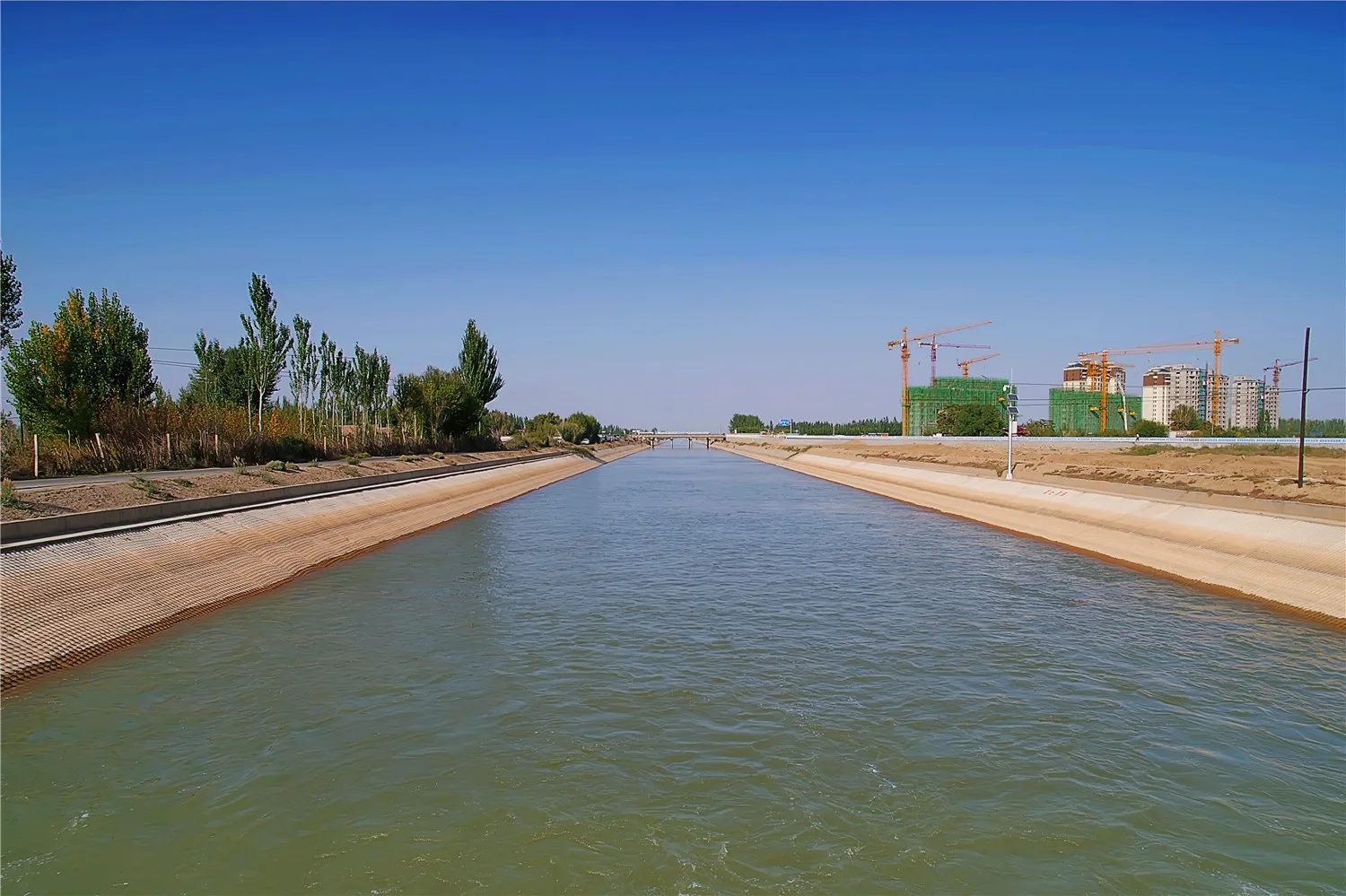
Grouted Mattress Case Studies: 5 Projects, Real Data
Five real grouted mattress installations across canal lining, river bank protection, coastal revetment, reservoir lining, and bridge pier scour — with actual project areas, design parameters, installation programmes, and post-installation performance data.
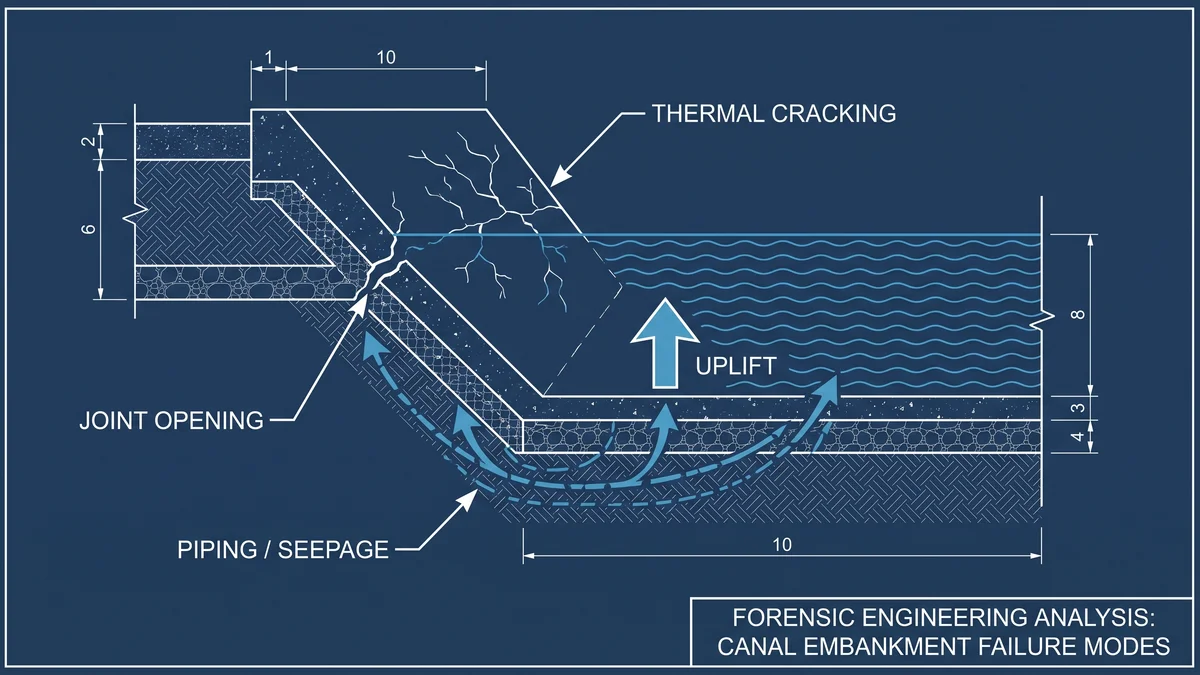
Canal Lining Failure: 7 Causes and How to Prevent Them
Canal lining failures cost irrigation authorities billions annually in emergency repairs and lost water. This forensic guide identifies the 7 most common failure causes — from joint failure to uplift — and explains how to prevent each through better specification and installation.
HydroBase - China Manufacturer
Ready to Specify Grouted Mattress?
GRI GT16 compliant products, factory test reports included. Engineering support at no cost. 48-hour response.