
Reservoir Lining Systems: Engineer's Guide 2026
Quick Summary
Comparing every reservoir lining option — compacted clay, geomembrane, concrete, and grouted mattress — on seepage control, installation, cost, and design life. With rapid drawdown design requirements.
Quick Answer: For small-to-medium reservoir upstream face lining where clay is not locally available, filter point grouted mattress often provides the best balance of seepage control, drawdown safety, and installed cost — it requires no protective cover and tolerates settlement without cracking. Compacted clay remains cheaper where high-plasticity clay is on-site; geomembrane achieves higher seepage reduction but requires a protective cover layer and careful seam welding. Geomembrane is cheaper per m² but requires a concrete or compacted soil protective layer on the upstream face. Compacted clay is the lowest-cost option but only viable where high-plasticity clay is available on-site. This guide compares all four systems with design life and cost data.
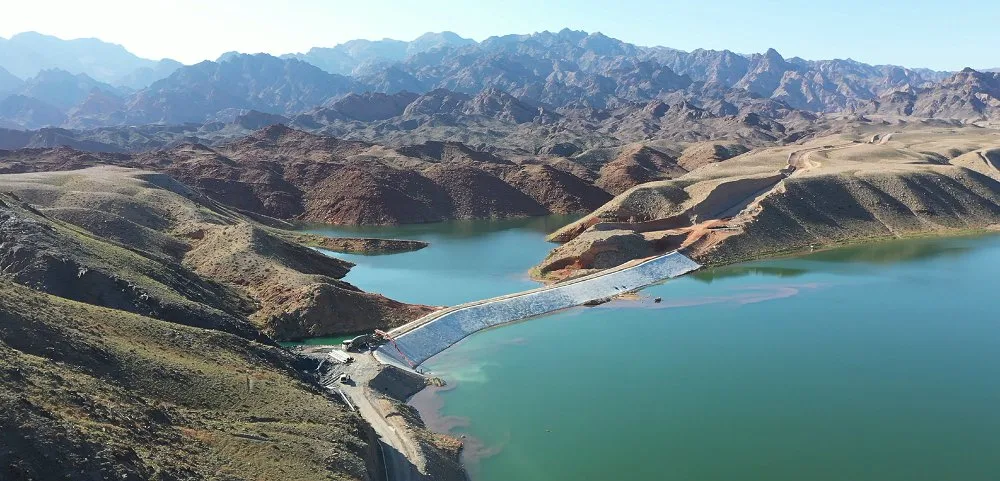
Reservoir lining design involves a complex set of trade-offs that depend on the dam type, the embankment material, the operating water level regime, and the consequences of seepage. A small farm irrigation reservoir in a clay-rich catchment may require nothing more than a compacted clay blanket; a concrete-faced rockfill dam (CFRD) on a remote mountainous project may require a sophisticated geomembrane system with concrete face slabs. This guide walks through the main options for the upstream face of earth-fill and rockfill embankment dams — the most common reservoir type globally.
For canal lining specifically, see Canal Lining and Canal Lining Methods Comparison. For reservoir slope protection without seepage control, see Slope Protection for Canals and Reservoirs.
Why Reservoir Lining Matters
Seepage through and under an embankment dam is the primary safety concern in dam engineering — it is the precursor to internal erosion and piping failure, the leading cause of dam failure globally. The International Commission on Large Dams (ICOLD) records that approximately 35% of embankment dam failures are attributable to internal erosion and piping, with seepage-related instability contributing to a further 20%.
A reservoir lining reduces seepage by providing a low-permeability barrier on the upstream face of the embankment. It does not need to be perfectly impermeable — the objective is to reduce seepage to a level that can be safely managed by the embankment's internal drainage system without risk of internal erosion. The design criterion is typically a seepage rate below 1–2 L/s per 100 m of dam length, with zero turbid seepage (turbidity indicates active piping).
The Four Main Reservoir Lining Systems
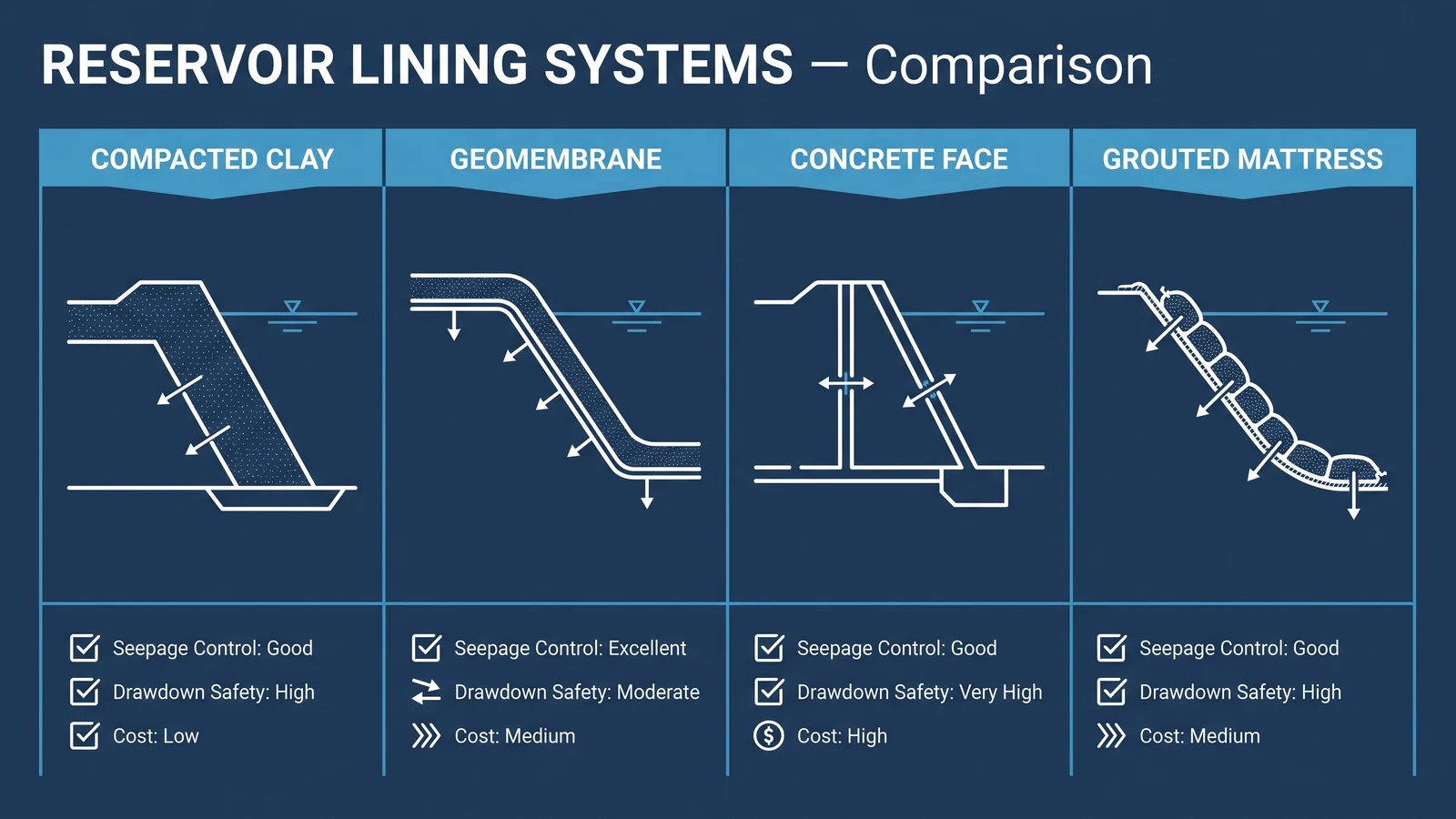
1. Compacted Clay Blanket
An upstream blanket of high-plasticity compacted clay (minimum PI ≥ 20, minimum thickness 1.0–1.5 m) is the oldest and most widely used reservoir seepage control measure globally. Effective, durable, and self-healing (clay swells to close small cracks). Requires high-plasticity clay material available on or near the site — transported clay is rarely economic beyond 20 km haul distance. Not suitable as the sole lining system where the embankment contains significant proportions of gap-graded or coarse materials susceptible to internal erosion.
2. Geomembrane
A synthetic polymer sheet (HDPE, LLDPE, or PVC) placed on the upstream face. Effectively impermeable when seams are properly welded. The lowest-cost lining material per m² of seepage control ($4–$12/m² for the membrane alone). Requires a protective cover layer on the exposed face — typically a concrete slab (adding $30–$60/m²), compacted gravel, or grouted mattress. Without cover, the membrane is vulnerable to UV degradation, vandalism, wave loading, and ice damage. Geomembrane seam failure is the most common cause of system failure — seam quality control (spark testing, air-channel testing) is critical and typically verified against ASTM geomembrane seam testing standards.
3. Concrete Face (CFRD)
Reinforced concrete face slabs cast on the upstream slope of a rockfill dam — the concrete-faced rockfill dam (CFRD) configuration. The most hydraulically efficient seepage control system — effectively impermeable when construction joints are properly sealed. Requires a uniform, well-compacted rockfill subgrade and very high concrete face construction quality. Sensitive to differential settlement — face slab cracking at construction joints has caused significant seepage problems on several major CFRDs. High first cost; used predominantly on large dams (>50 m height) where the cost is amortised over a large reservoir volume.
4. Filter Point Grouted Mattress
Filter point grouted mattress is increasingly specified as the upstream face lining on small-to-medium embankment dams and reservoir embankments. The filter openings at cell intersections equalise pore pressure during rapid drawdown — preventing the uplift failure that can occur with impermeable concrete or geomembrane systems. The articulated mattress tolerates the settlement that occurs as the embankment consolidates over its first 3–5 years of operation, without cracking. Installed cost $45–$75/m²; no protective cover required.
System Comparison
| System | Installed Cost (USD/m²) | Rapid Drawdown Safety | Settlement Tolerance | Seepage Reduction | Design Life |
|---|---|---|---|---|---|
| Compacted Clay | $8–$20 (if local) | Good (permeable) | Excellent | High (PI ≥ 20) | 50+ years |
| Geomembrane + cover | $40–$75 | Poor without drainage | Poor (tears at joints) | Very high | 30–50 years |
| Concrete face (CFRD) | $100–$200 | Poor (rigid + impermeable) | Poor (cracks) | Very high | 50+ years |
| Filter Point Grouted Mattress | $45–$75 | Excellent (filter points) | Excellent (articulated) | High | 50+ years |
Selecting Reservoir Lining by Project Type
| Project Type | Recommended Lining | Key Reason |
|---|---|---|
| Small farm reservoir (< 1 million m³) in clay catchment | Compacted clay blanket | Lowest cost where PI ≥ 20 clay available within 15 km |
| Small-medium reservoir, no local clay, frequent drawdown | Filter point grouted mattress | No cover needed; drawdown-safe; settles without cracking |
| Irrigation reservoir, near-zero seepage required | Geomembrane (HDPE) + grouted mattress cover | Belt-and-braces: membrane provides seepage barrier; mattress provides UV and mechanical protection |
| Large rockfill dam (> 30 m height) | Concrete-faced rockfill (CFRD) | Mass concrete face provides structural seepage control; required for high consequence dams |
| Rehabilitation of leaking existing reservoir | Filter point grouted mattress over existing face | Can be deployed without demolishing existing lining; self-launching toe ensures continuity |
Rapid Drawdown: The Critical Design Scenario
Rapid drawdown — the sudden lowering of the reservoir water level during drought, emergency release, or maintenance — is the most critical design scenario for reservoir upstream face lining. When the external water level drops faster than pore pressure can dissipate through the embankment, the net force on the lining face reverses from inward (water pressure holding lining in place) to outward (pore pressure pushing lining off the face).
For an impermeable lining system (concrete or geomembrane without drainage layer), this uplift can detach the lining from the face or buckle it. The design criterion from USBR Design Standard No. 13 is that the lining must either: (a) be permeable enough to equalise pore pressure during the design drawdown rate; or (b) be anchored with sufficient passive resistance to resist the uplift at the design drawdown rate; or (c) be designed with a drainage layer behind the lining that prevents pore pressure build-up.
Filter point grouted mattress satisfies criterion (a) — the filter openings allow the pore pressure to equalise progressively during drawdown, preventing uplift. The design drawdown rate that can be accommodated depends on the filter opening size and the embankment permeability — consult a geotechnical engineer for site-specific analysis.
Installation on Reservoir Embankments
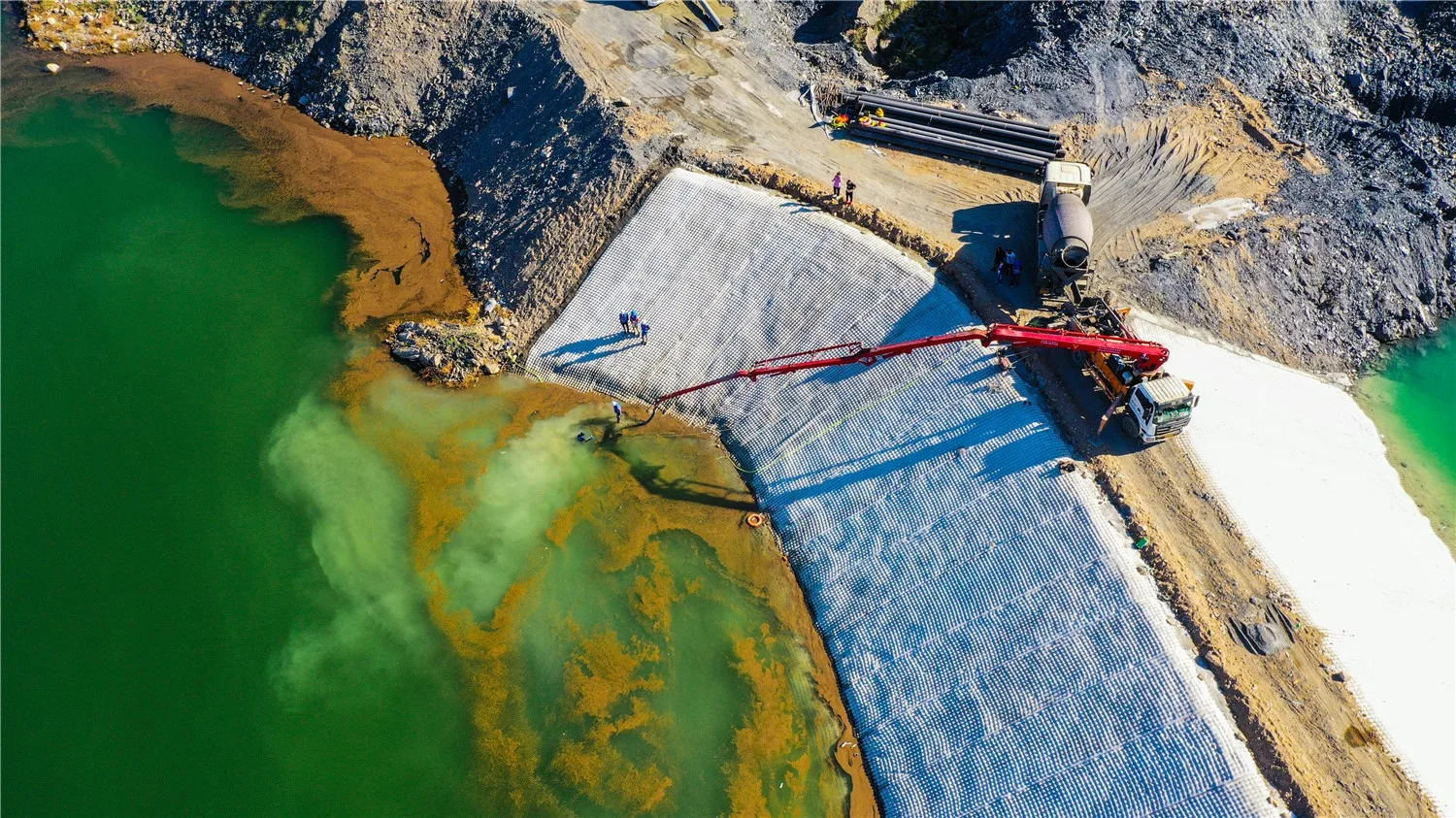
Grouted mattress installation on reservoir upstream faces follows the same slope installation procedure as canal lining (see Slope Protection Guide), with two important additional requirements:
- Tidal zone procedure: For reservoirs that cannot be fully dewatered, the upper slope is installed in the dry; the lower slope and toe are installed by diver-assisted placement during a low water period. A detailed programme showing water level, installation zone, and crew deployment is prepared in advance.
- Foundation cutoff: The lower edge of the mattress must be anchored in a toe cutoff trench or tied into the existing concrete plinth at the base of the slope. This prevents the mattress from being undermined by seepage at the embankment toe — the highest-risk seepage zone on any dam.
Frequently Asked Questions
What is the best lining for a small farm reservoir?
If high-plasticity clay is available within 10–15 km, a compacted clay blanket is the most cost-effective option. If clay is not available locally, filter point grouted mattress is the next most cost-effective option — lower risk of seam failure than geomembrane, no concrete cover required, and tolerant of the variable subgrade typically found on small earthfill reservoirs built without detailed geotechnical investigation.
Can grouted mattress be used on existing reservoirs that are leaking?
Yes — this is one of the most common applications. The mattress is deployed over the existing eroded or seeping upstream face and pumped. The grout fills surface voids and cracks in the existing material, providing a new impermeable surface. The self-launching toe ensures continuity at the base of the slope even if the existing toe has been undercut. Send us your project details for a rehabilitation assessment.
Does filter point grouted mattress fully stop seepage?
Filter point mattress significantly reduces seepage but is not perfectly impermeable — the filter openings allow a small flow rate necessary for pore pressure equalisation. Seepage reduction of 85–95% compared to an unlined embankment is typical. For reservoirs where zero seepage is required (contaminated water, chemical storage), a geomembrane underliner below the grouted mattress provides the additional barrier. This dual system (geomembrane + grouted mattress cover) is used on some mining tailings storage facilities and chemical ponds.
HydroBase supplies filter point grouted mattress for reservoir and embankment dam lining projects worldwide. GRI GT16 certified, 150 mm and 200 mm thickness available for dam-face applications. Request a technical assessment with your reservoir geometry and drawdown rate data.
HydroBase Technical Team
HydroBase manufactures grouted mattresses (GRI GT16 compliant) in China and delivers to 30+ countries. Our engineering team provides specification support, grout mix design, and installation guidance.
About HydroBaseMore Articles
View all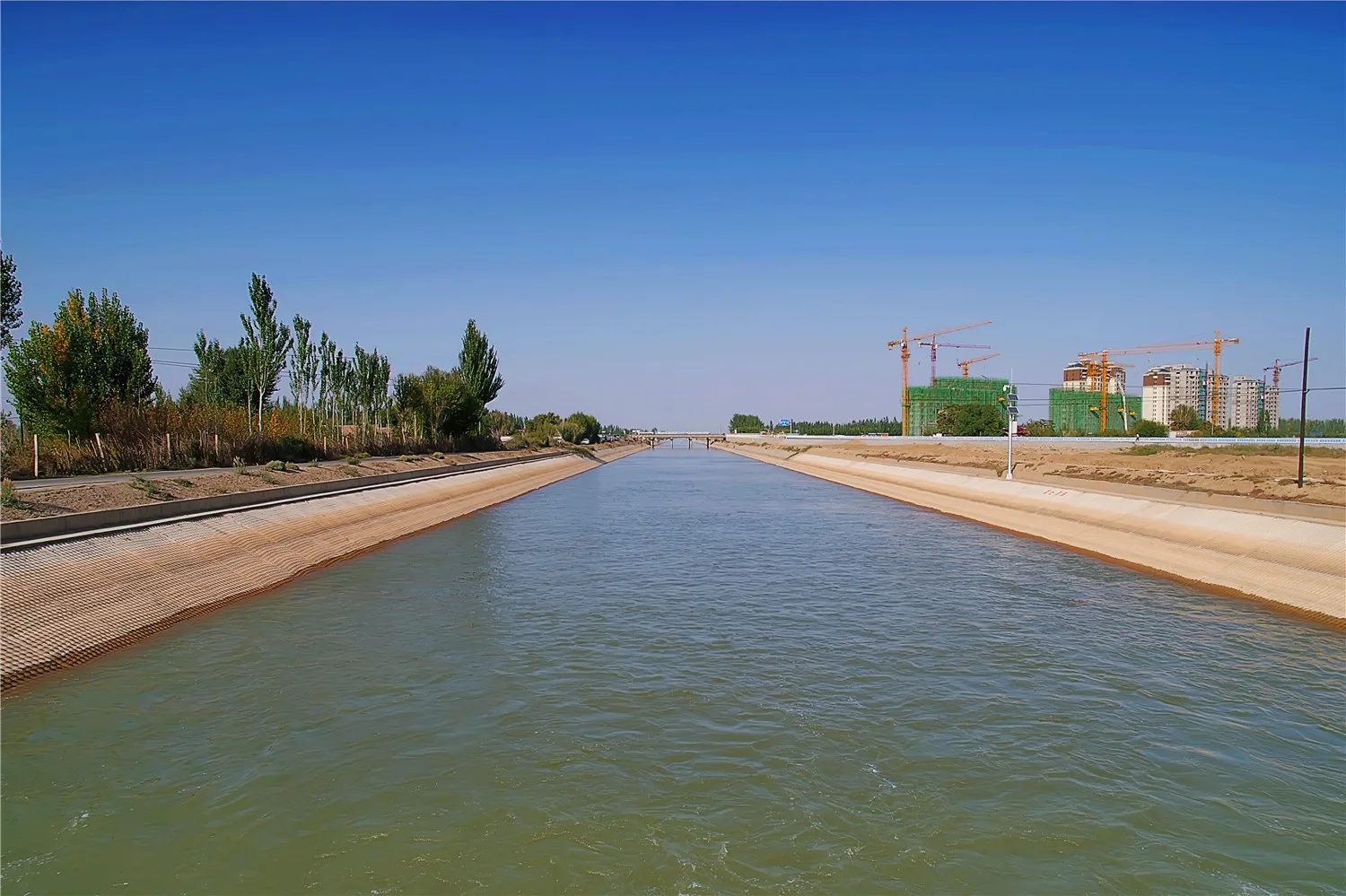
Grouted Mattress Case Studies: 5 Projects, Real Data
Five real grouted mattress installations across canal lining, river bank protection, coastal revetment, reservoir lining, and bridge pier scour — with actual project areas, design parameters, installation programmes, and post-installation performance data.
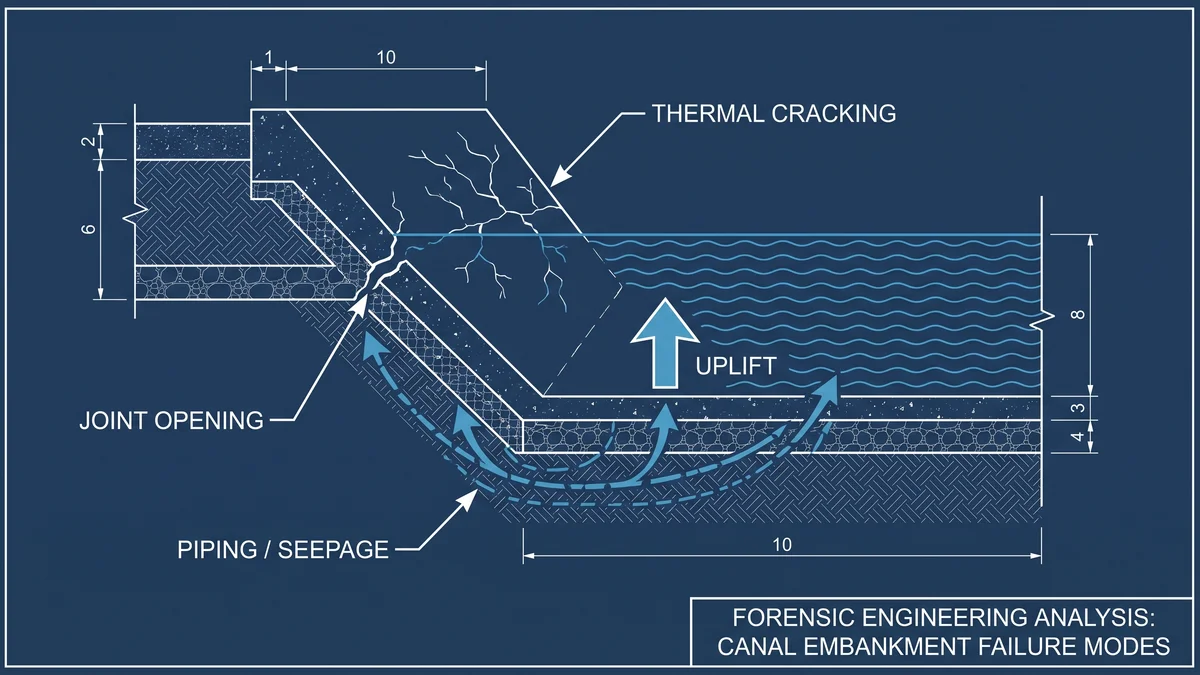
Canal Lining Failure: 7 Causes and How to Prevent Them
Canal lining failures cost irrigation authorities billions annually in emergency repairs and lost water. This forensic guide identifies the 7 most common failure causes — from joint failure to uplift — and explains how to prevent each through better specification and installation.
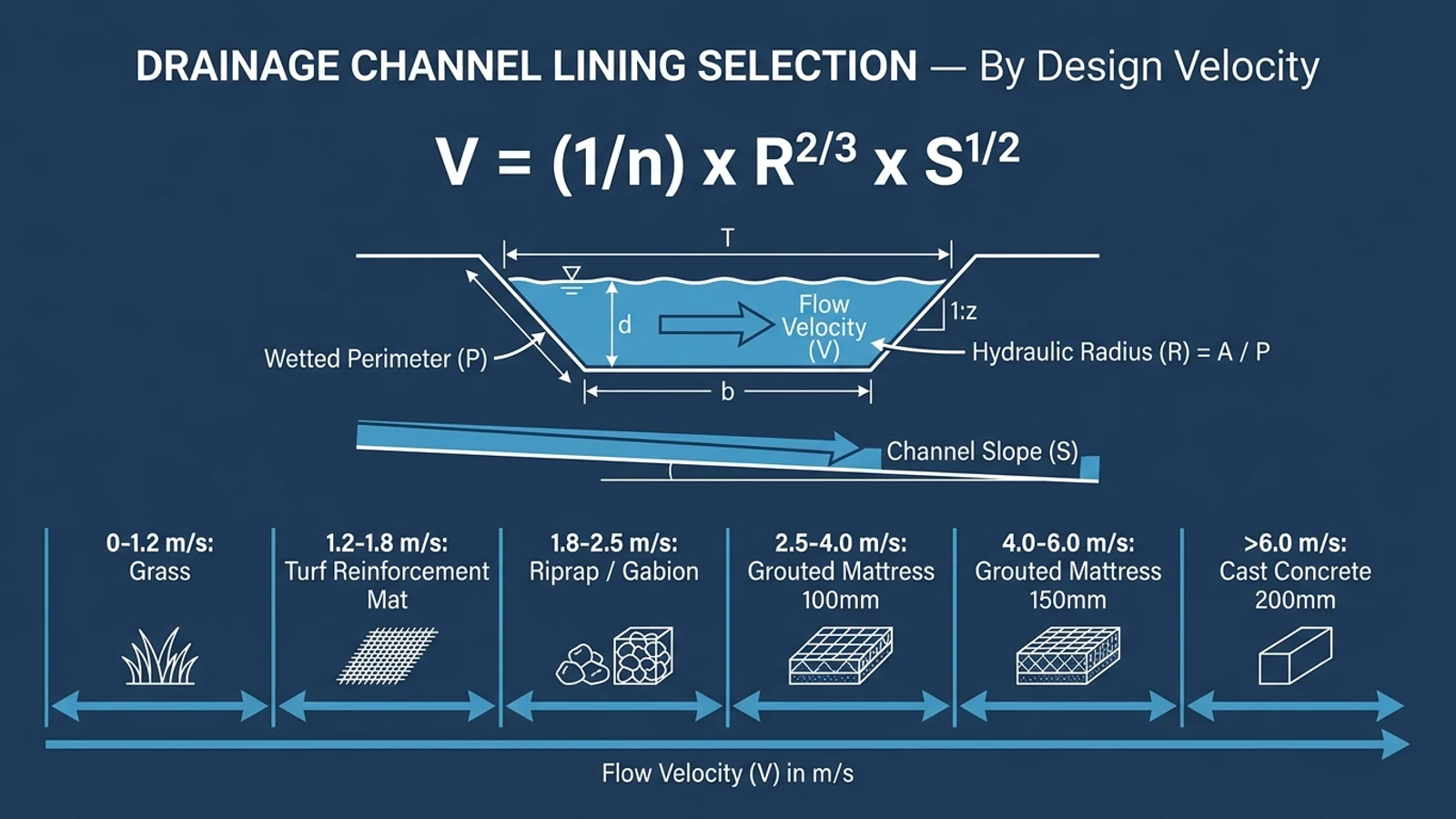
Drainage Channel Lining: Road and Infrastructure Guide
Drainage channels alongside roads, railways, and industrial sites carry high-velocity storm runoff that erodes unlined channels within seasons. This guide covers lining selection, hydraulic design, and installation for roadside drainage channels.
HydroBase - China Manufacturer
Ready to Specify Grouted Mattress?
GRI GT16 compliant products, factory test reports included. Engineering support at no cost. 48-hour response.