
Quick Answer
Grouted mattress is the preferred slope protection system for hydraulic and civil engineering projects where dewatering is impractical or costly. It installs on embankments, reservoir faces, and river banks with flow running, at 800–1,200 m² per shift. Design velocities up to 6.0 m/s (200 mm thickness). GRI GT16-compliant. Installed cost typically $25–45/m² — significantly less than rip-rap, gabions, or shotcrete.
Armour That Moves With the Slope — and Stays Intact
Traditional slope protection methods — riprap, poured concrete slabs, or pre-cast panels — all require a stable, prepared substrate. If the slope settles, heaves, or moves, rigid systems crack and lose integrity. Maintenance becomes permanent.
Grouted mattress is a fabric-formed system: the geotextile mould adapts to the existing slope profile and the concrete fills into it. When minor differential settlement occurs after installation, the articulated mattress accommodates the movement without cracking. The protection remains intact through the design life. For slopes where ecological appearance matters, our vegetated grouted mattress allows grass to establish through the open-cell matrix. For slopes with high groundwater or tidal conditions, the filter point variant provides drainage relief.
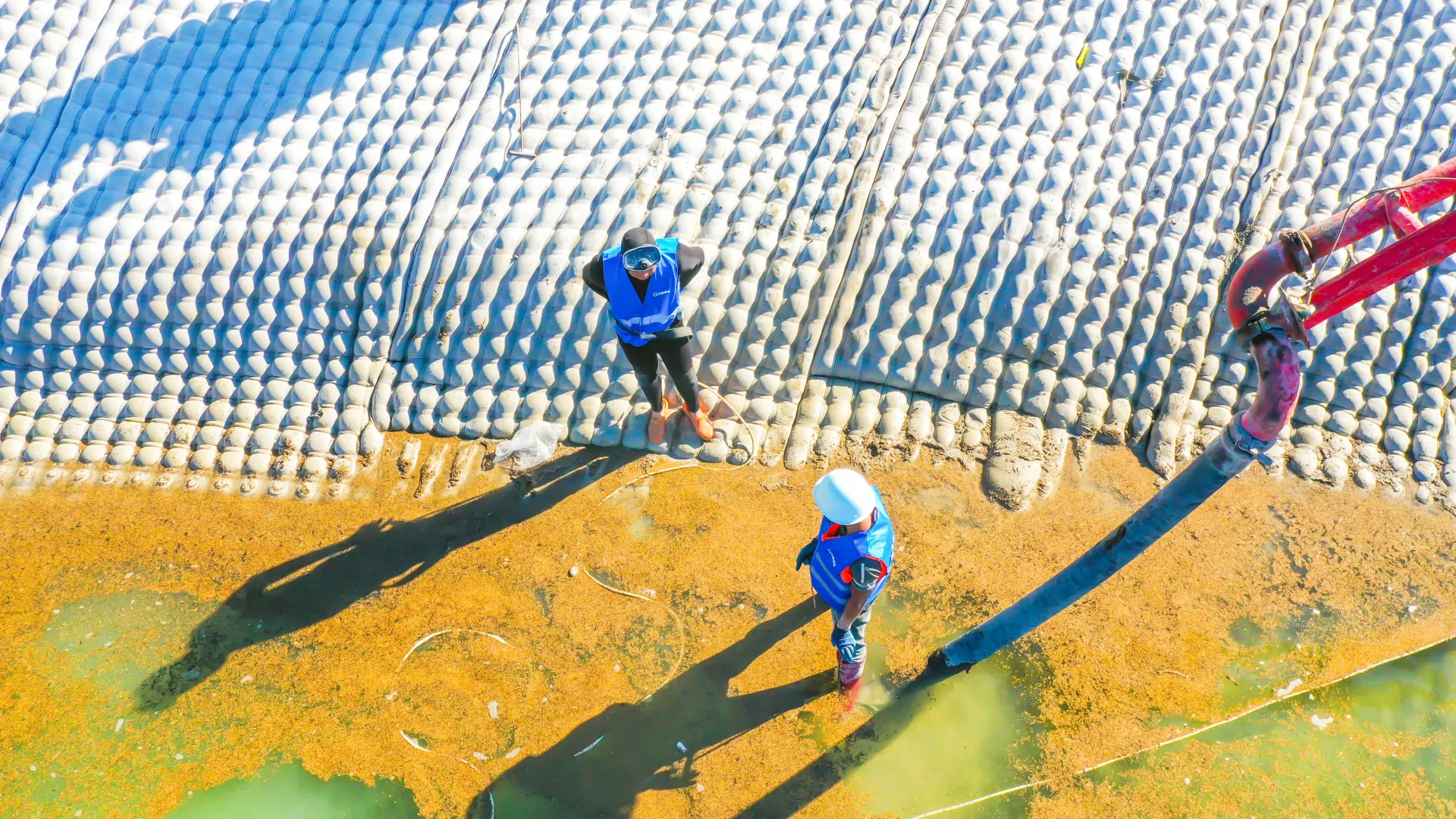
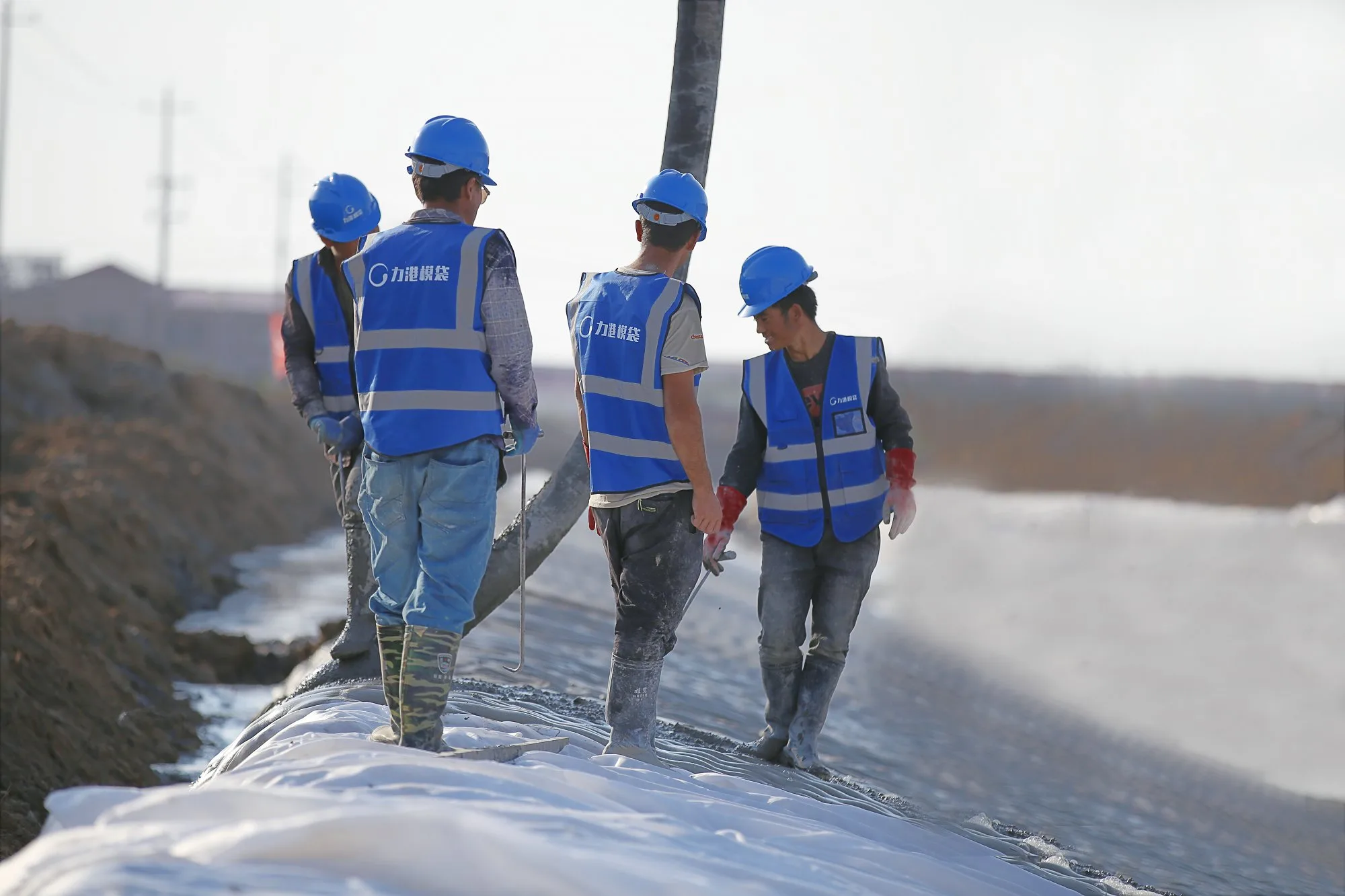
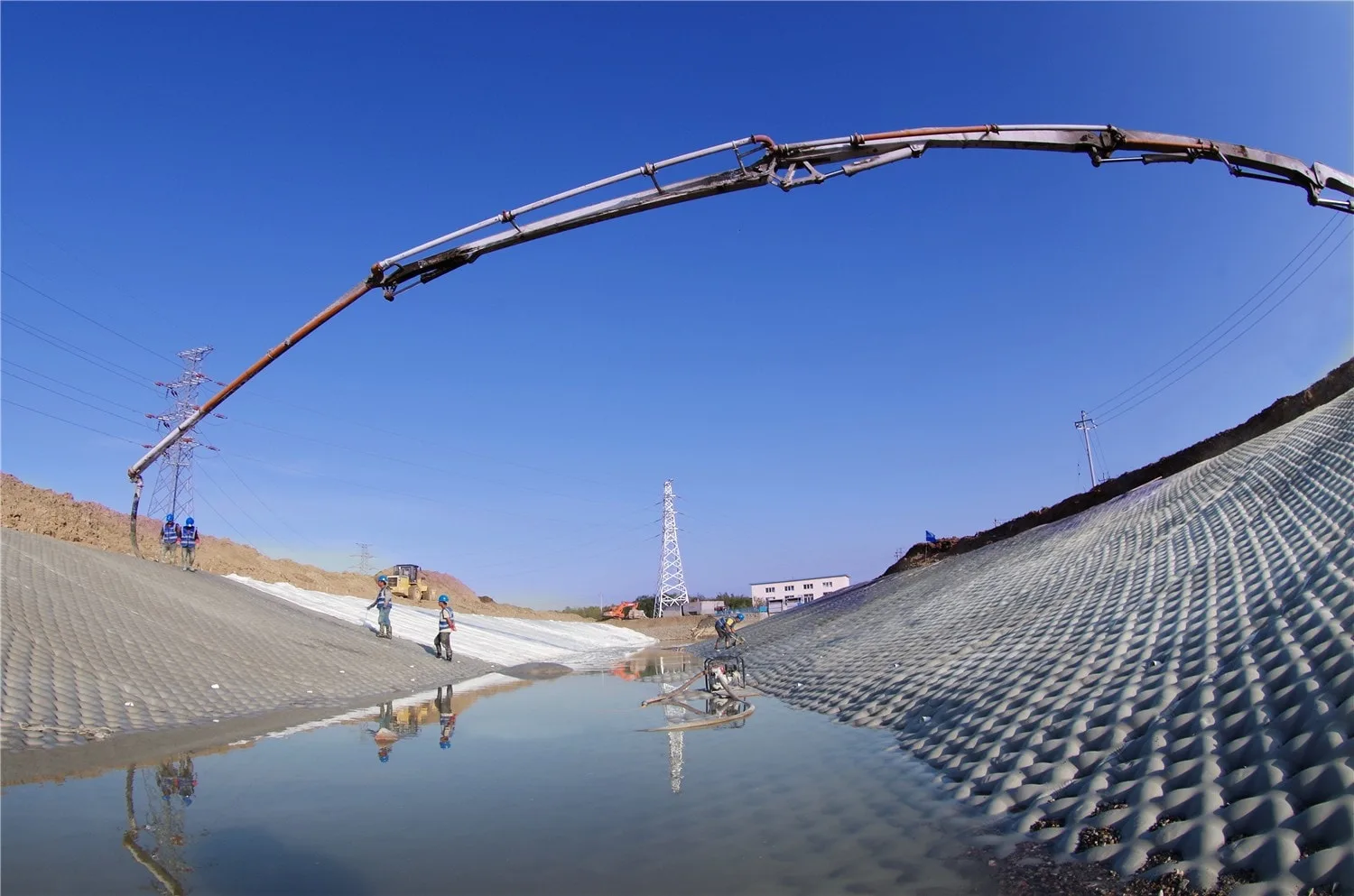
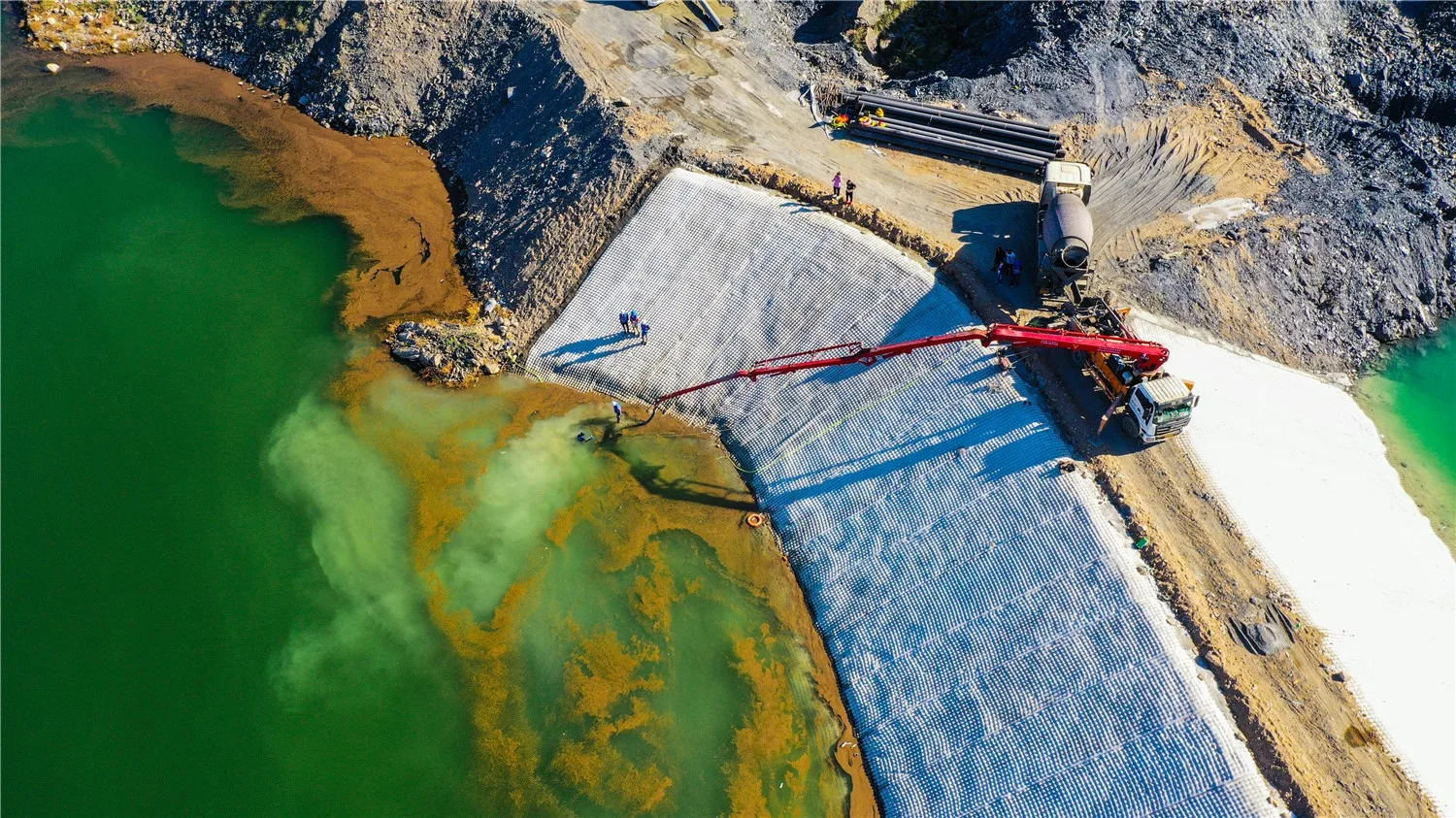
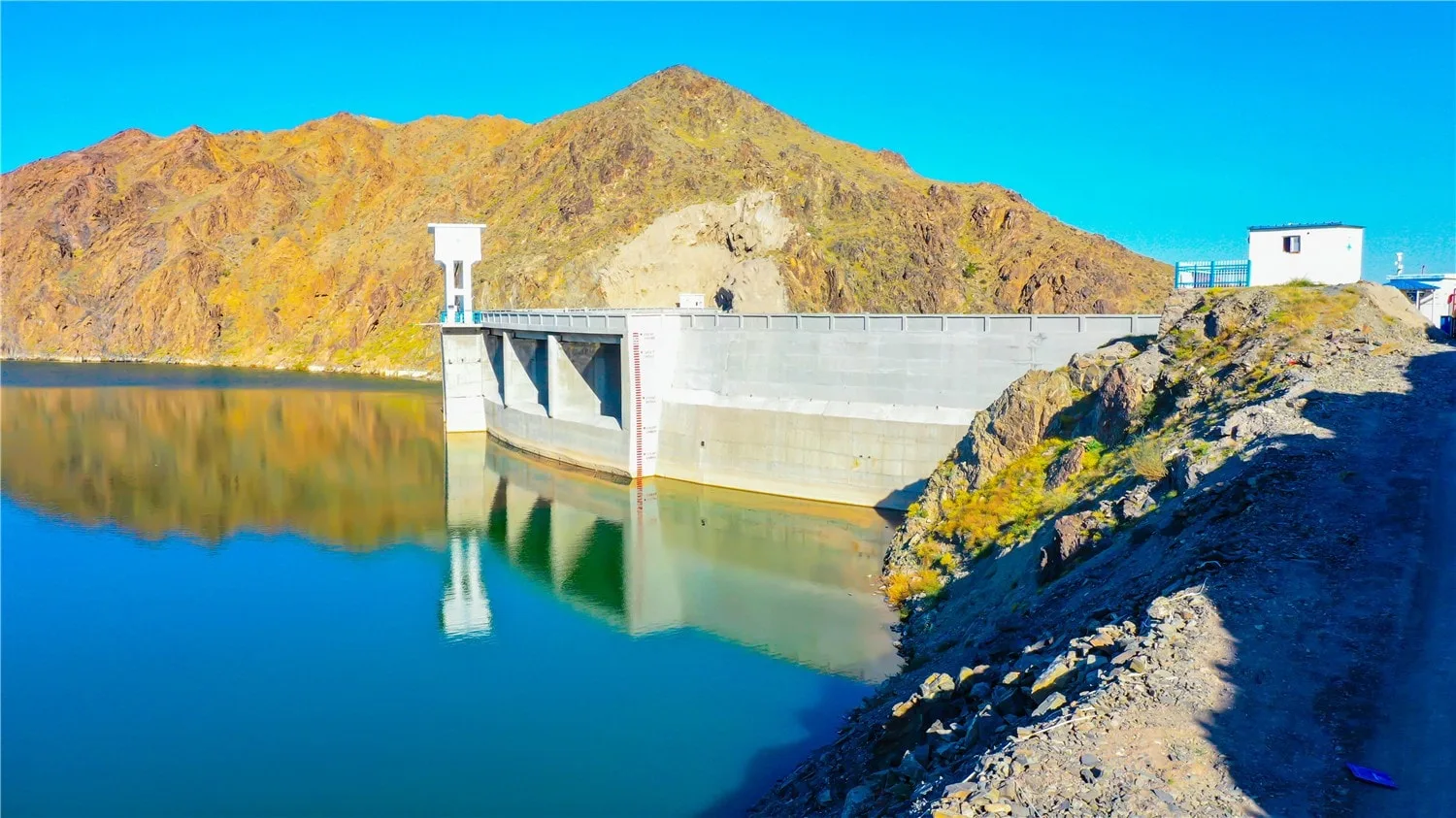
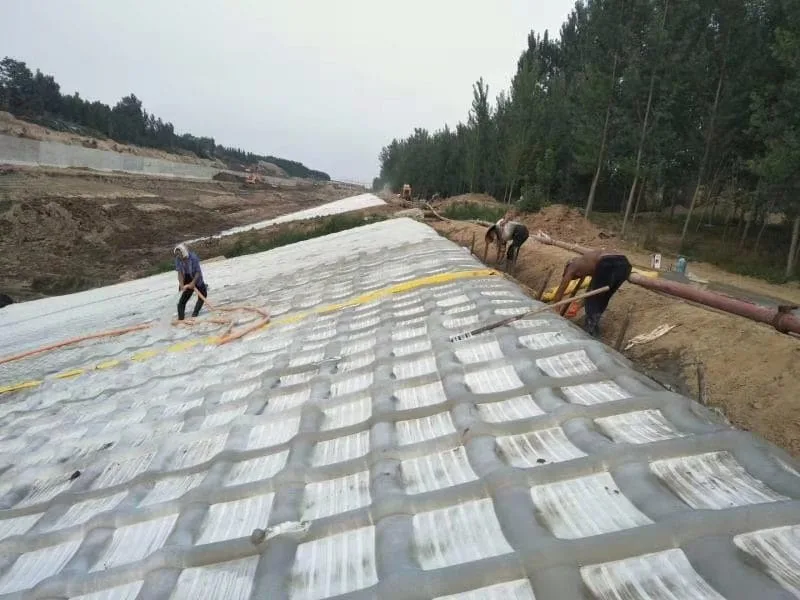
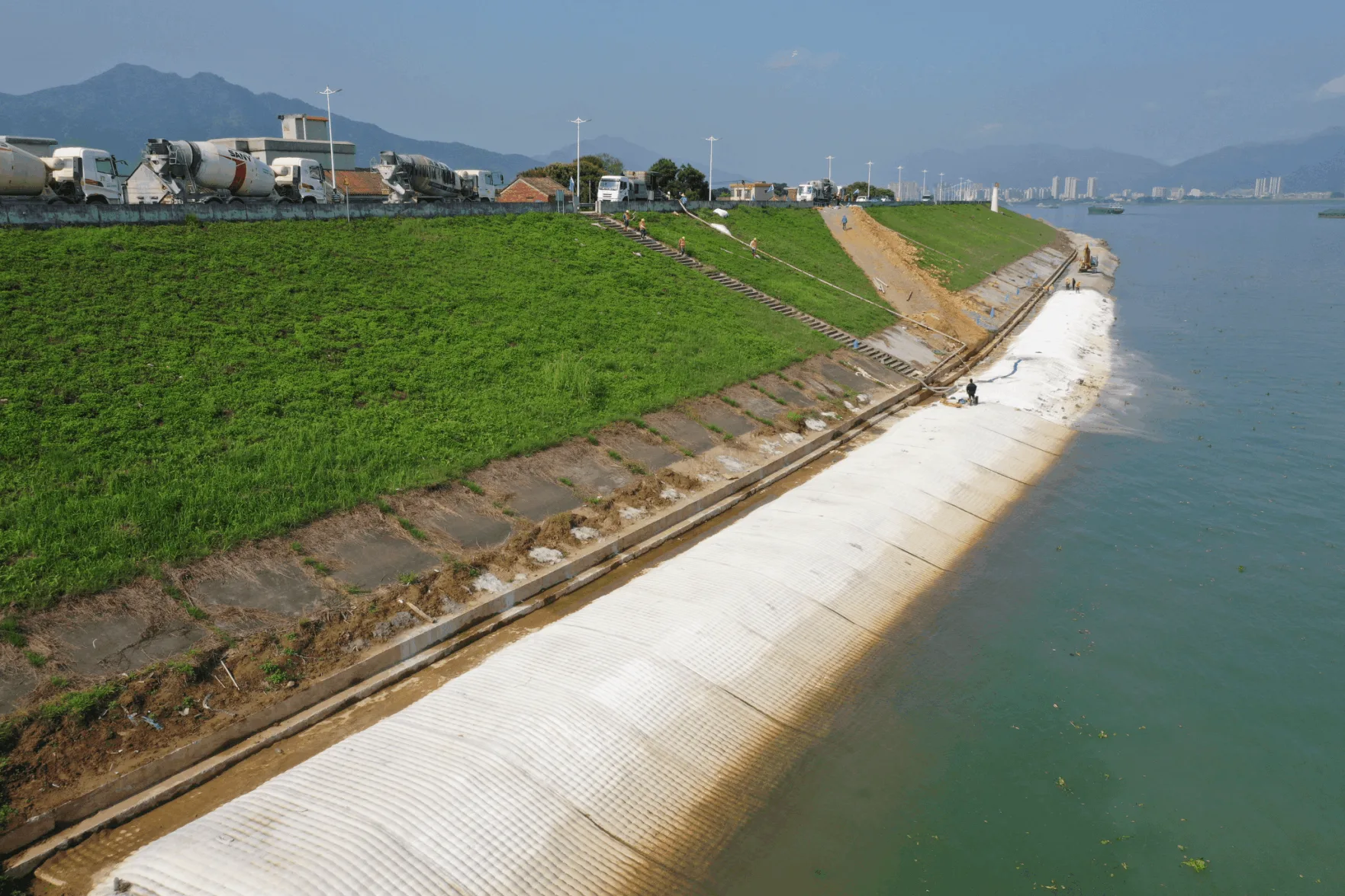
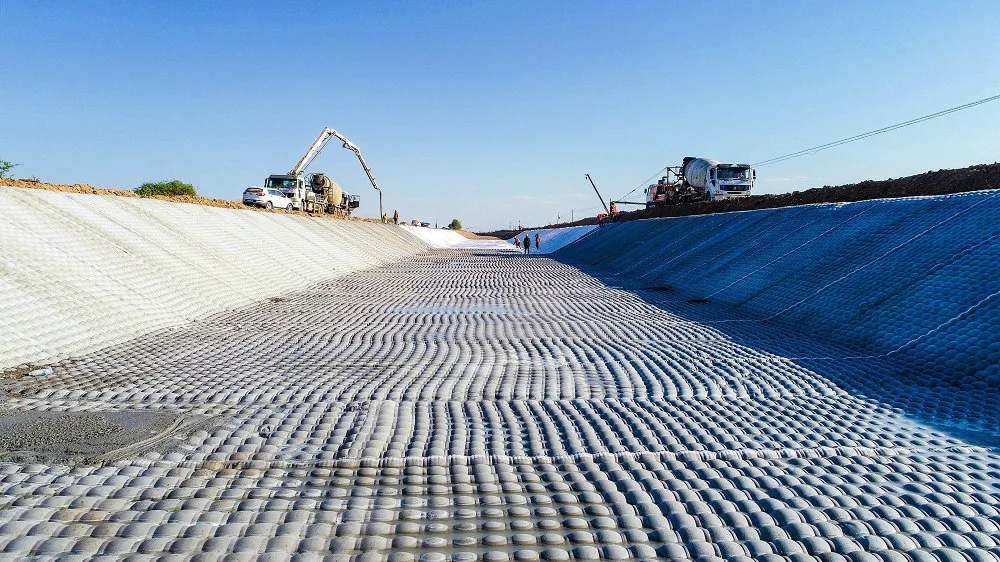
What Do Completed Slope Protection Projects Look Like?
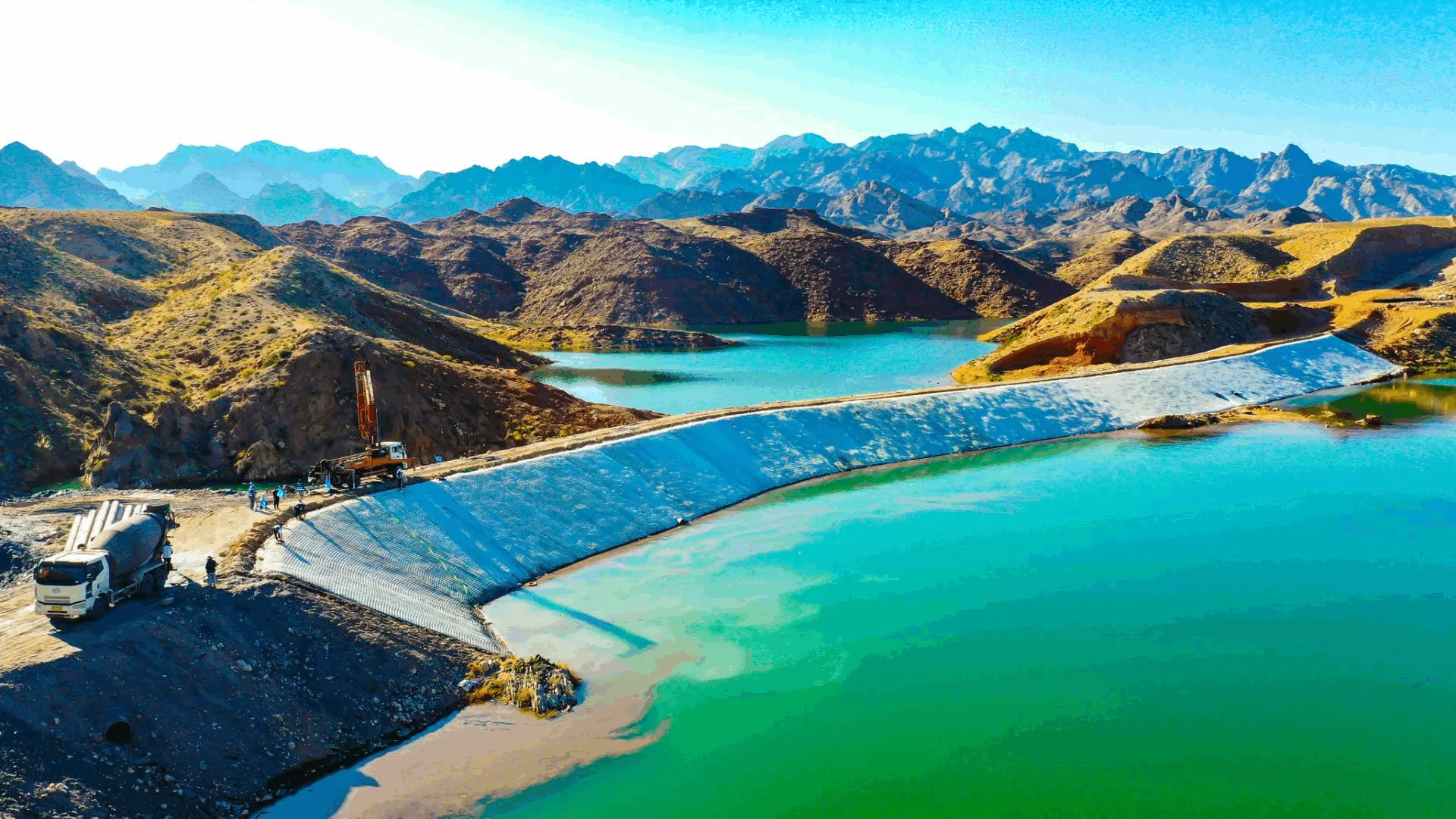
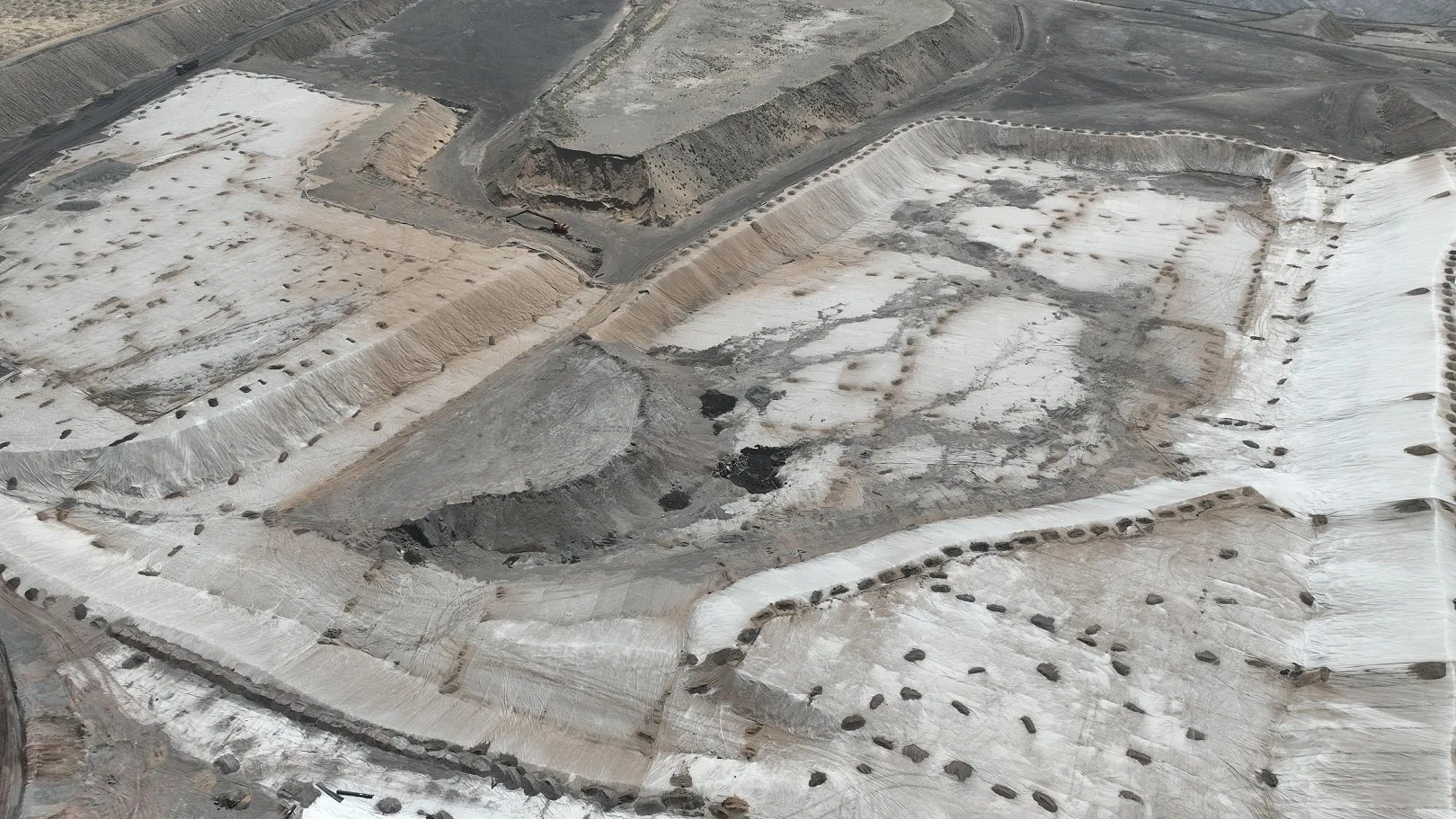
Which Slope Types Can Grouted Mattress Protect?
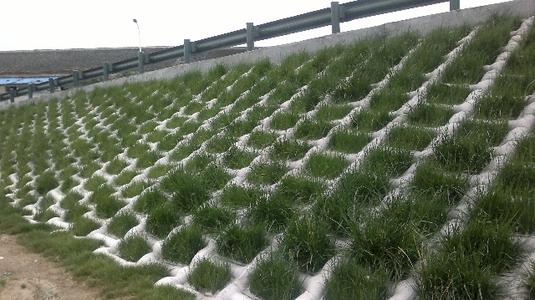
Highway & Railway Embankments
Road and rail embankments require durable, low-maintenance slope protection. Grouted mattress meets the load and velocity criteria of both applications and is approved by major infrastructure standards.
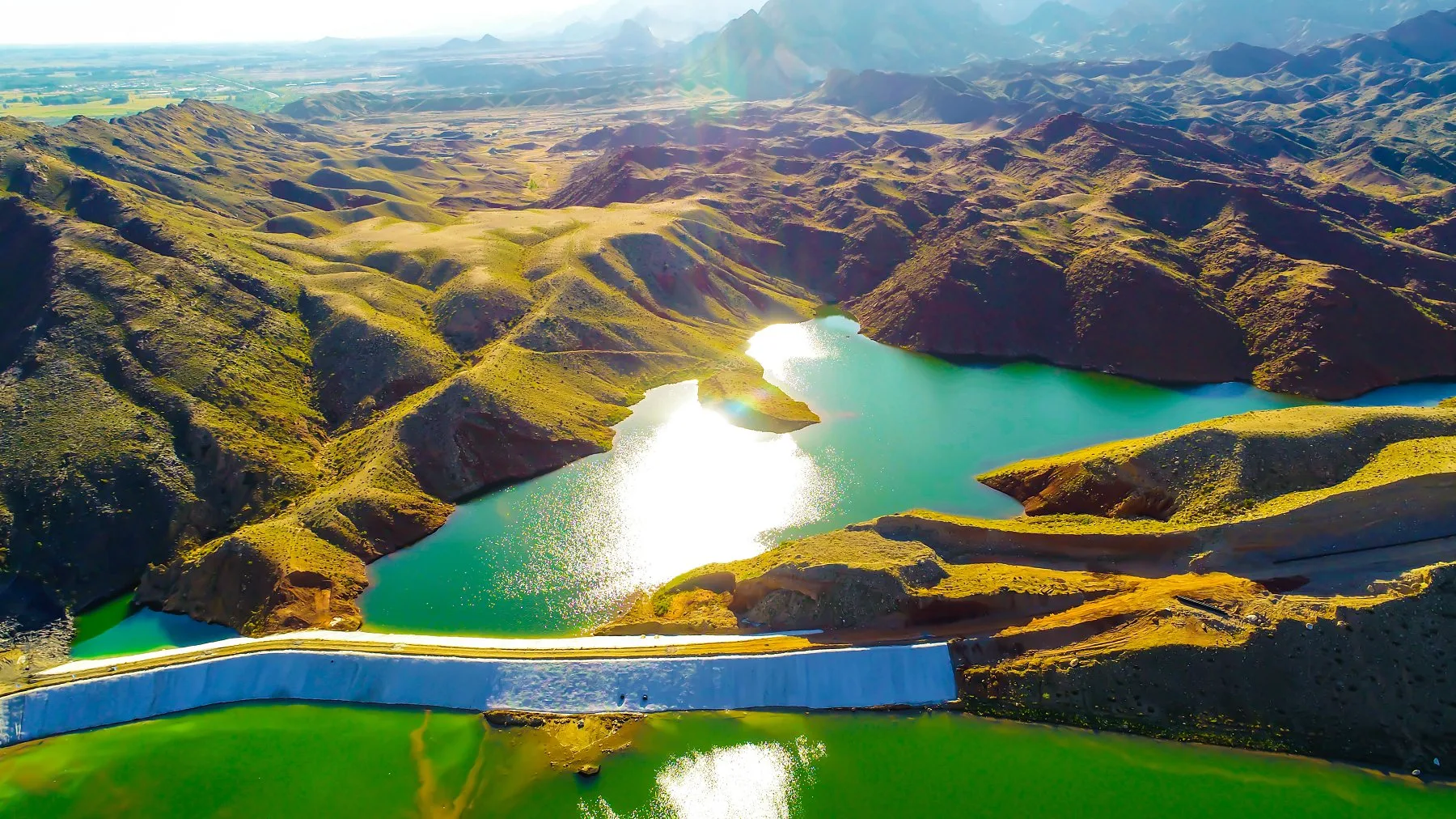
Dam & Reservoir Facing
Upstream face protection on earth fill dams and reservoir slopes. The mattress withstands drawdown conditions, wave action, and ice loading — critical on mountain and high-altitude projects.
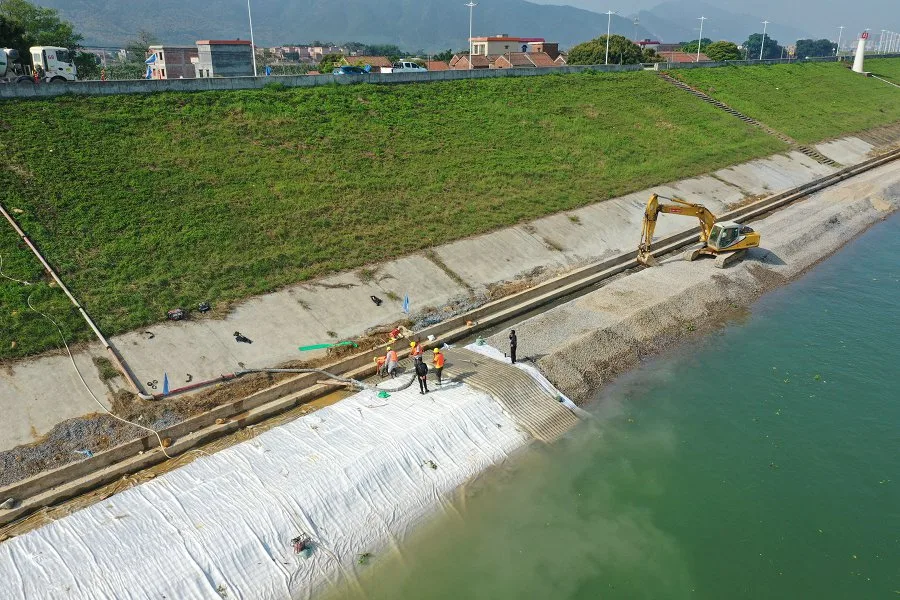
River & Channel Banks
Riverbank erosion protection where the bank is intermittently submerged. Grouted mattress withstands the scour velocity of flood events without requiring dewatering for installation.
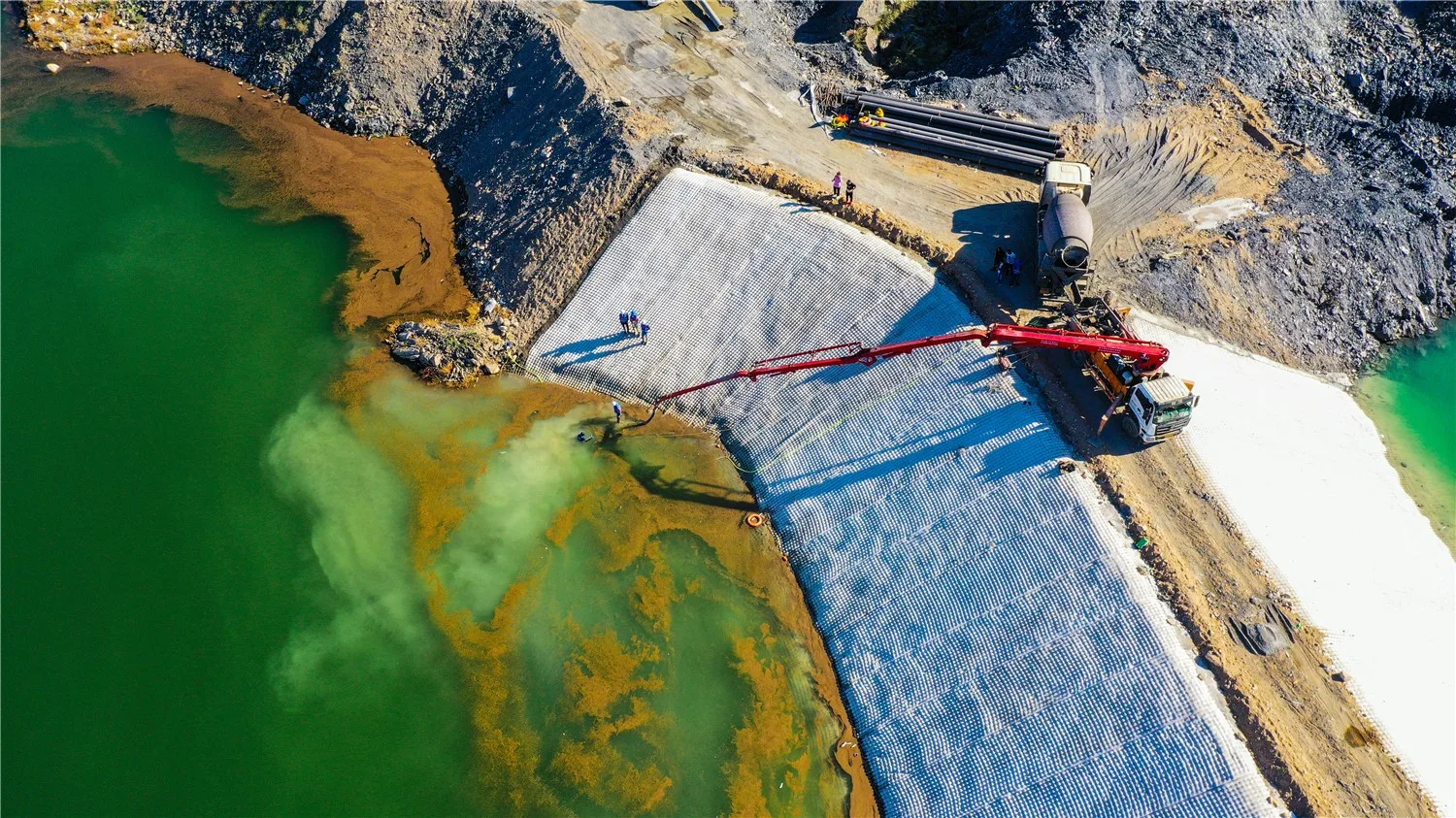
Mining Pond Slopes
Water retention pond slopes on mining sites are exposed to chemical loading and aggressive water. Grouted mattress provides chemical-resistant armour without ongoing maintenance.
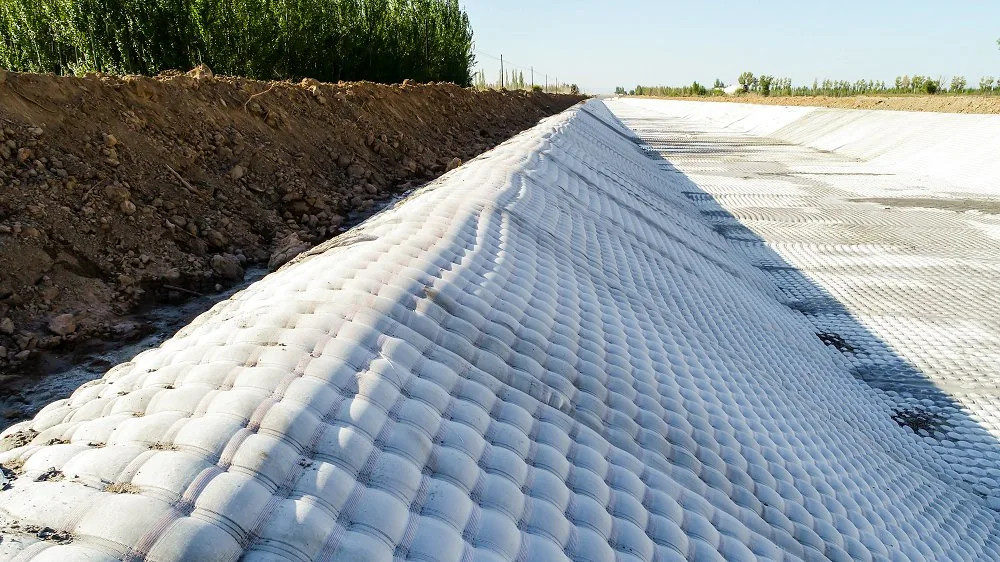
Canal Bank Protection
Canal banks adjacent to lined channels where maintenance access is restricted. The mattress can be installed from the top of bank with a pump boom — no canal closure required.
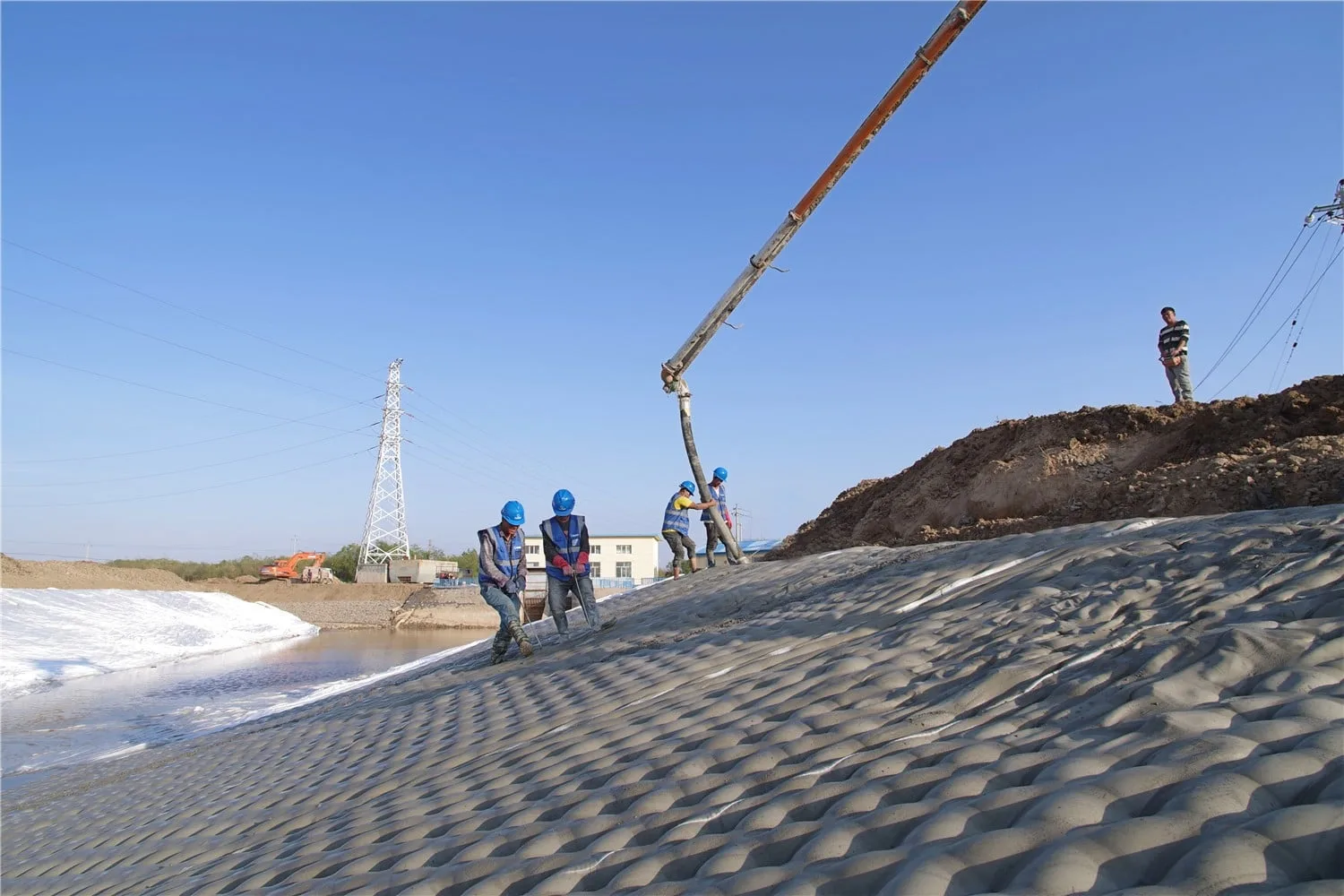
Coastal & Tidal Slopes
Seawall faces, tidal flats, and coastal embankments where wave action and tidal cycling are the design loads. Filter point variant drains pore pressure during tidal drawdown.
Which Thickness Should I Specify for My Slope?
Select mattress thickness based on design flow velocity and slope angle. HydroBase engineers confirm the specification for your site conditions.
| Thickness | Max Flow Velocity | Typical Slope Type | Max Slope Angle |
|---|---|---|---|
| 75 mm | 2.5 m/s | Low rainfall embankments, gentle slopes | 1:3 |
| 100 mm | 3.5 m/s | Standard embankments, highway slopes | 1:2 |
| 150 mm | 4.5 m/s | Reservoir facing, wave action zones | 1:1.75 |
| 200 mm | 6.0 m/s | Dam facing, high-velocity channel banks | 1:1.5 |
★ Most commonly specified. All thicknesses GRI GT16-compliant, compressive strength ≥17 MPa at 28 days. Filter point variant available for phreatic line applications.
How Is Grouted Mattress Installed on a Slope?
Survey & Specification
Slope angle, height, soil type, rainfall intensity, and hydraulic exposure are assessed. Mattress thickness, variant (standard, filter point, or vegetated), and anchoring details are confirmed.
Slope Preparation
The slope surface is trimmed and lightly compacted. No excavation, no shuttering, no toe preparation beyond design depth. The geotextile adapts to the existing surface profile.
Fabric Roll-Out & Seaming
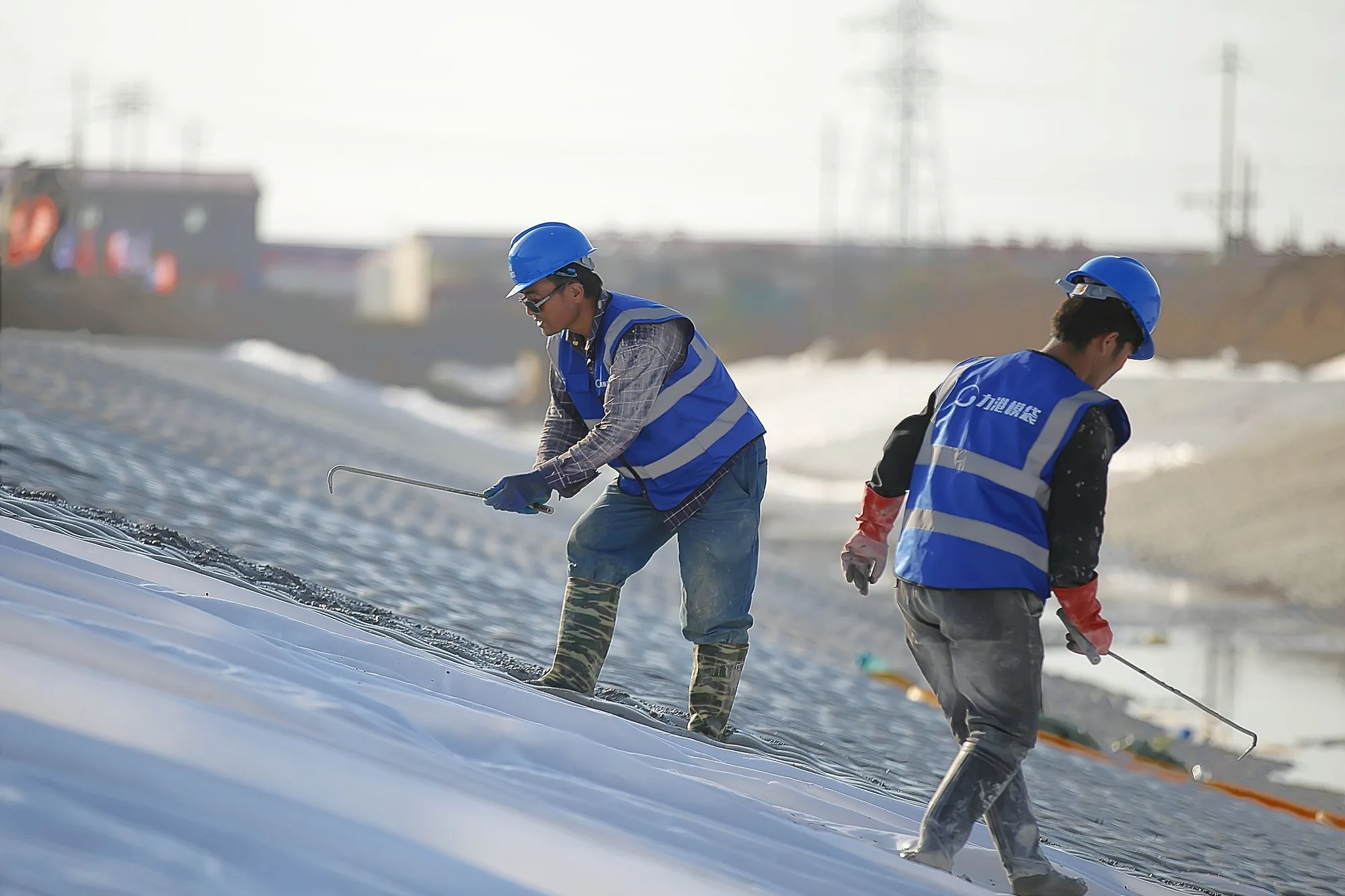
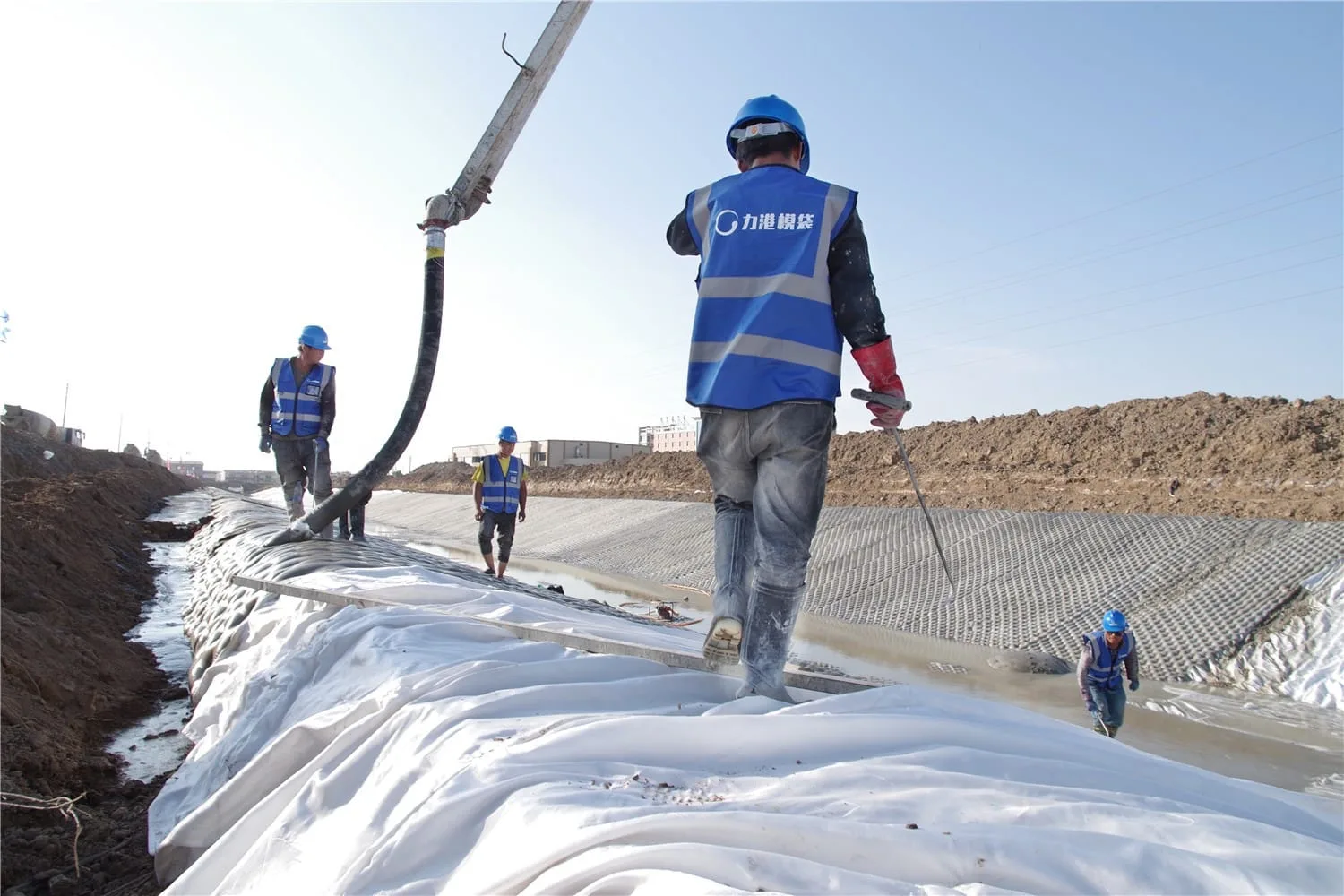
Panels are rolled from the crest down to the toe. Adjacent panels are overlapped 300 mm and seamed. The fabric is tensioned and pinned to maintain contact with the slope.
Grout Injection & Curing
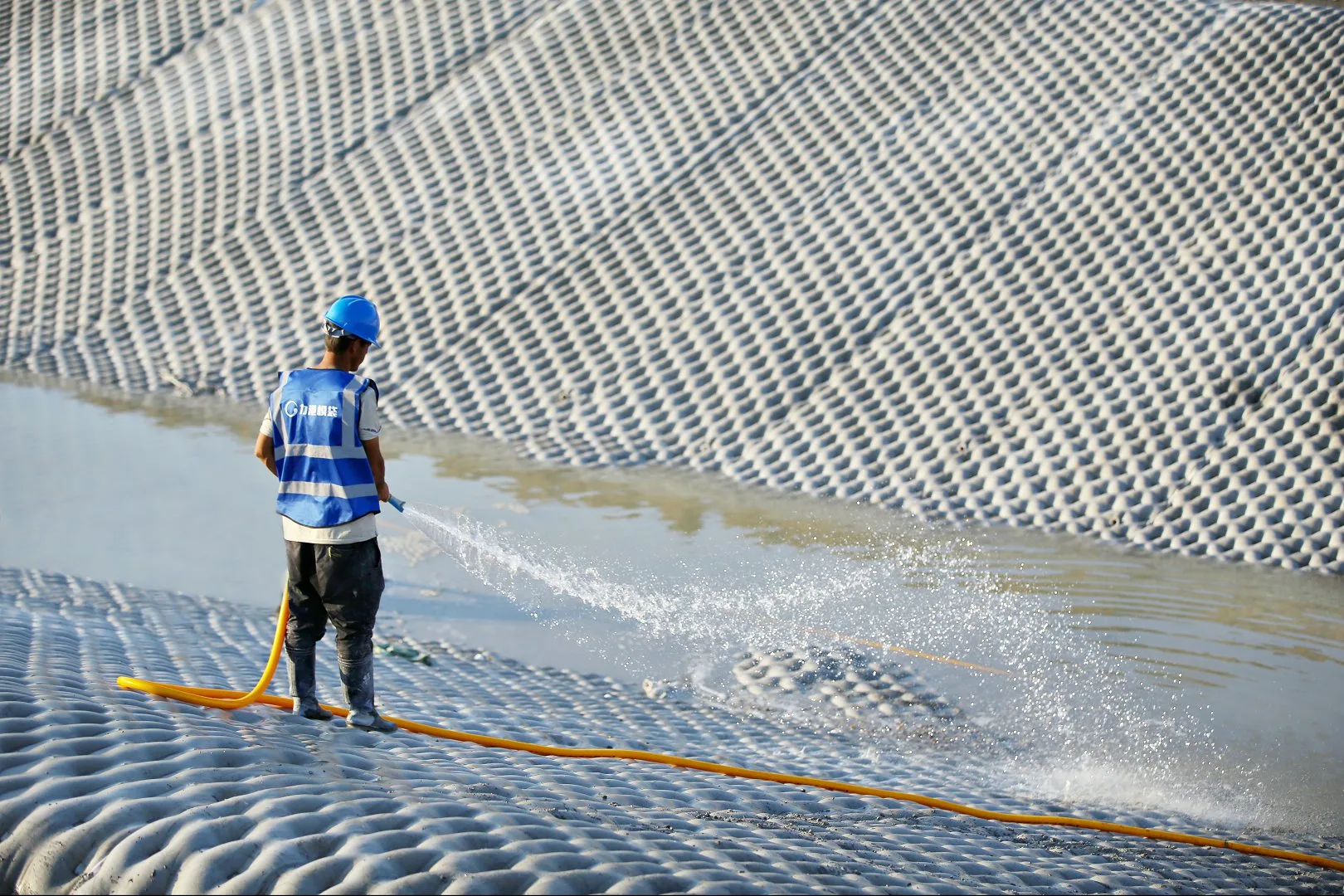
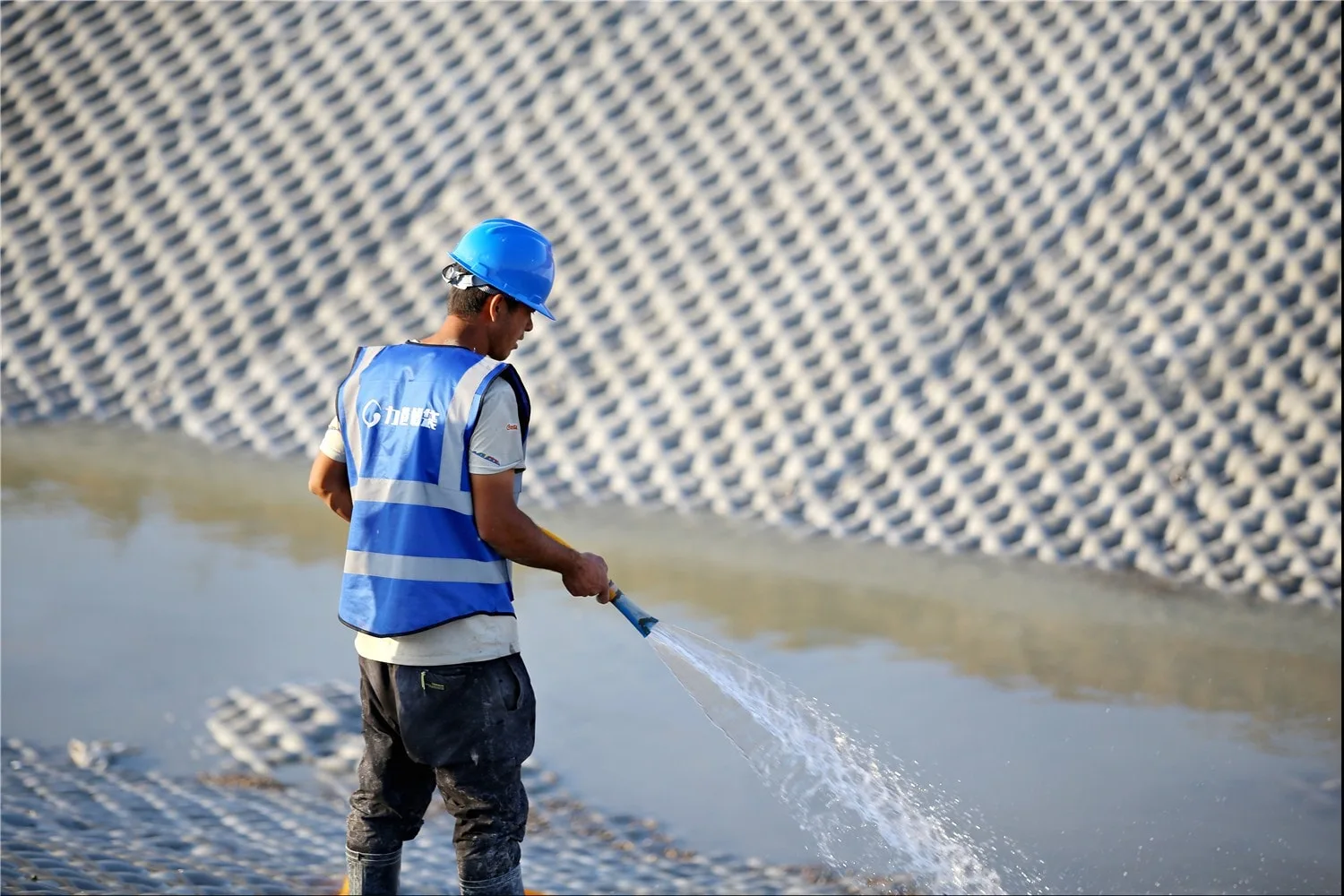
Concrete is pumped from the crest downward through injection ports. Workers on the slope check for uniform fill. Water misting begins within 30 minutes of each panel completing.
How Does Grouted Mattress Compare to Rip-Rap, Gabions, and Shotcrete?
| Criterion | Grouted Mattress | Riprap | Concrete Slab |
|---|---|---|---|
| Conforms to settlement | Flexible — no cracking | Stone may shift | Cracks under movement |
| Steep slope capability | Up to 1:1.5 | Limited above 1:2 | Any angle (with anchors) |
| No substrate excavation | Fabric adapts to profile | Requires graded bed | Requires levelled base |
| Installation speed | 800–1,200 m²/day | 400–600 m²/day | 150–400 m²/day |
| Typical cost | $35–55/m² | $40–80/m² | $70–120/m² |
| Design life | 50+ years | 30–40 years | 40+ years |
| Maintenance | Minimal | Re-grading after flood | Joint re-sealing |
| Vegetated option | Available | None | None |
230+ Slope Projects. Three Variants. One Factory.
Slope Protection with Grouted Mattress: Frequently Asked Questions
What is the steepest slope grouted mattress can be installed on?
We have installed on slopes as steep as 1:1.5 (vertical:horizontal). For slopes steeper than 1:2, anchor pins at 1 m centres are specified to prevent sliding during grout injection before the material cures. Our engineers confirm the anchoring design for your slope angle and height.
Can it be installed over a failed or unstable slope?
Yes. The geotextile fabric adapts to an irregular surface — including scour holes, failed slope faces, and existing rip-rap. The grout fills voids and bonds to the subgrade, restoring the profile without prior reconstitution in most cases.
Is drainage behind the mattress required?
For dry slopes with no artesian pore pressure, the standard (impermeable) mattress is used and no additional drainage is needed. For slopes with high groundwater or tidal fluctuation, our filter point variant provides engineered drainage relief and prevents hydrostatic uplift.
Can grouted mattress be used on the upstream face of an earthen dam?
Yes — this is one of the most common applications. The mattress provides wave action resistance and seepage control on reservoir-facing slopes. We supply to dam operators and water authorities for both new construction and dam rehabilitation projects.
Does it need special plant or equipment on site?
No specialist plant is required. A standard concrete pump truck and two transit mixers are the only equipment needed. The pump truck can operate from the crest of the slope — no access road down the face is necessary.
How is the mattress fixed at the top of the slope?
A trench anchor is excavated at the crest (typically 300 mm - 300 mm), the top edge of the mattress is folded into the trench, and grout is pumped to fill it simultaneously with the main mattress. This creates an integral mechanical anchor that eliminates the risk of top-edge roll-back.
Related Applications & Products
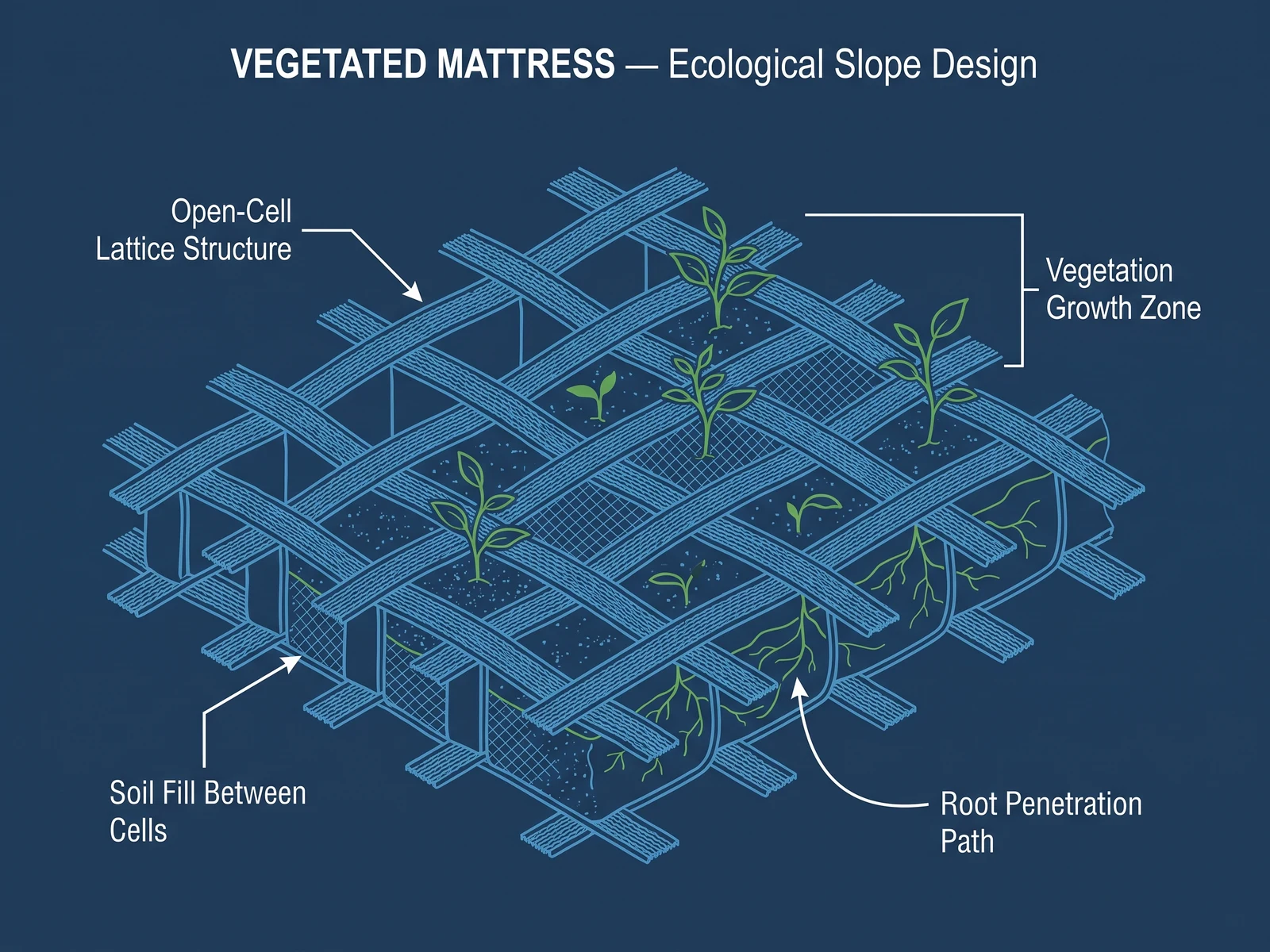
Vegetated Grouted Mattress
Slope protection with grass growth through the mattress — green appearance with full concrete strength.
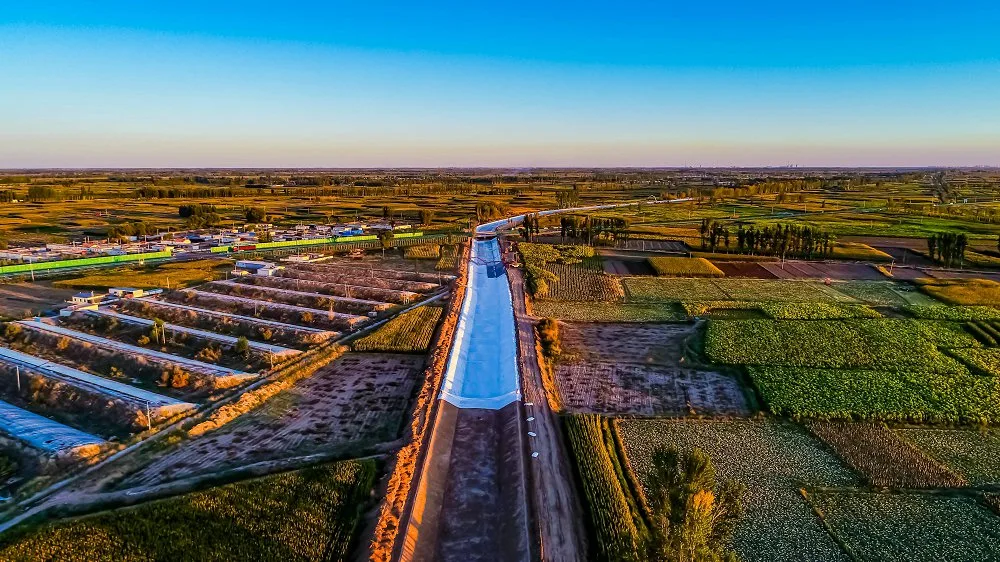
Canal Lining
The same system applied to canal beds and banks — without dewatering or flow interruption.
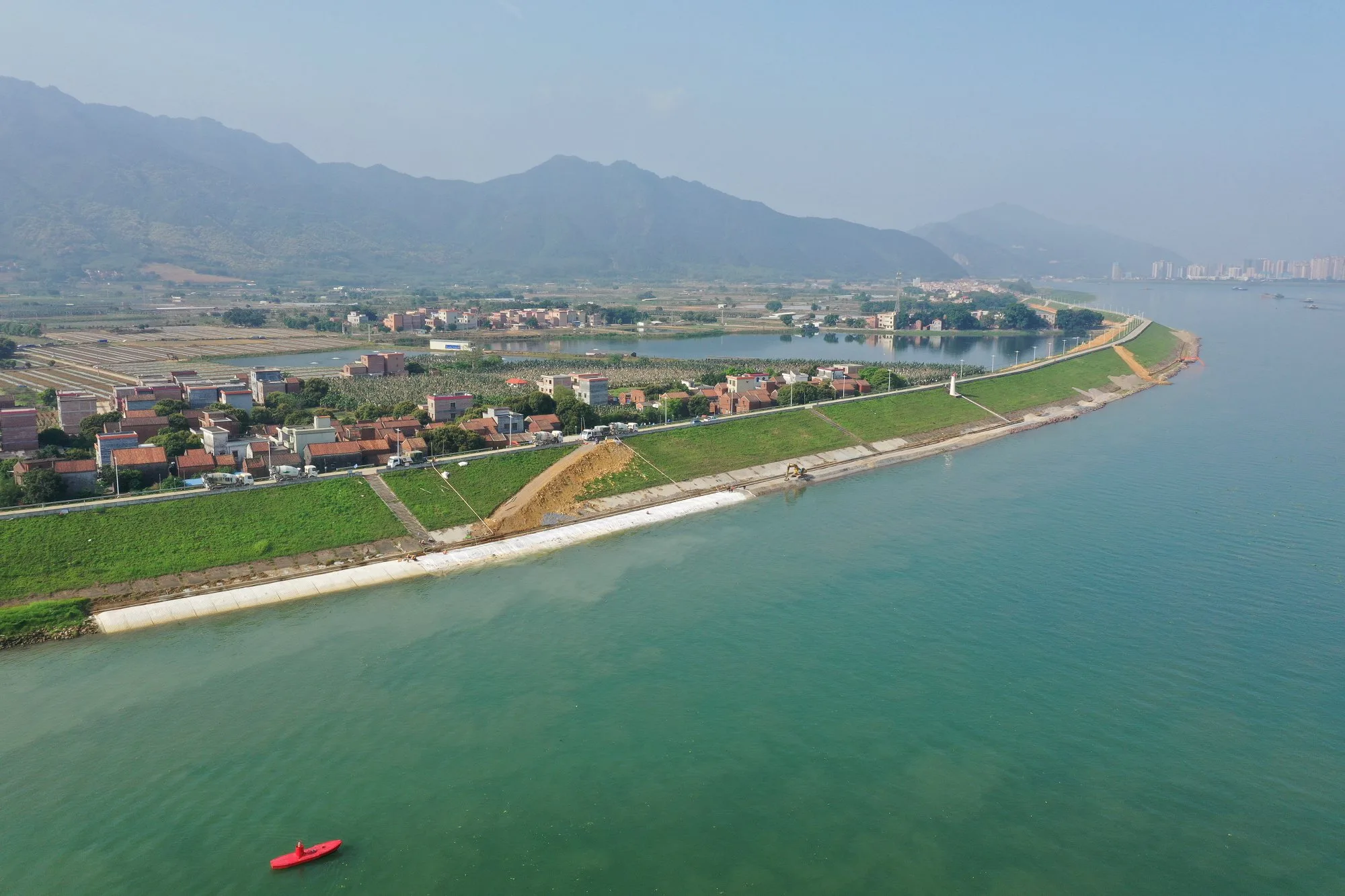
Bridge Pier Scour
Grouted mattress placed underwater around bridge piers — no cofferdam needed.