
Quick Answer
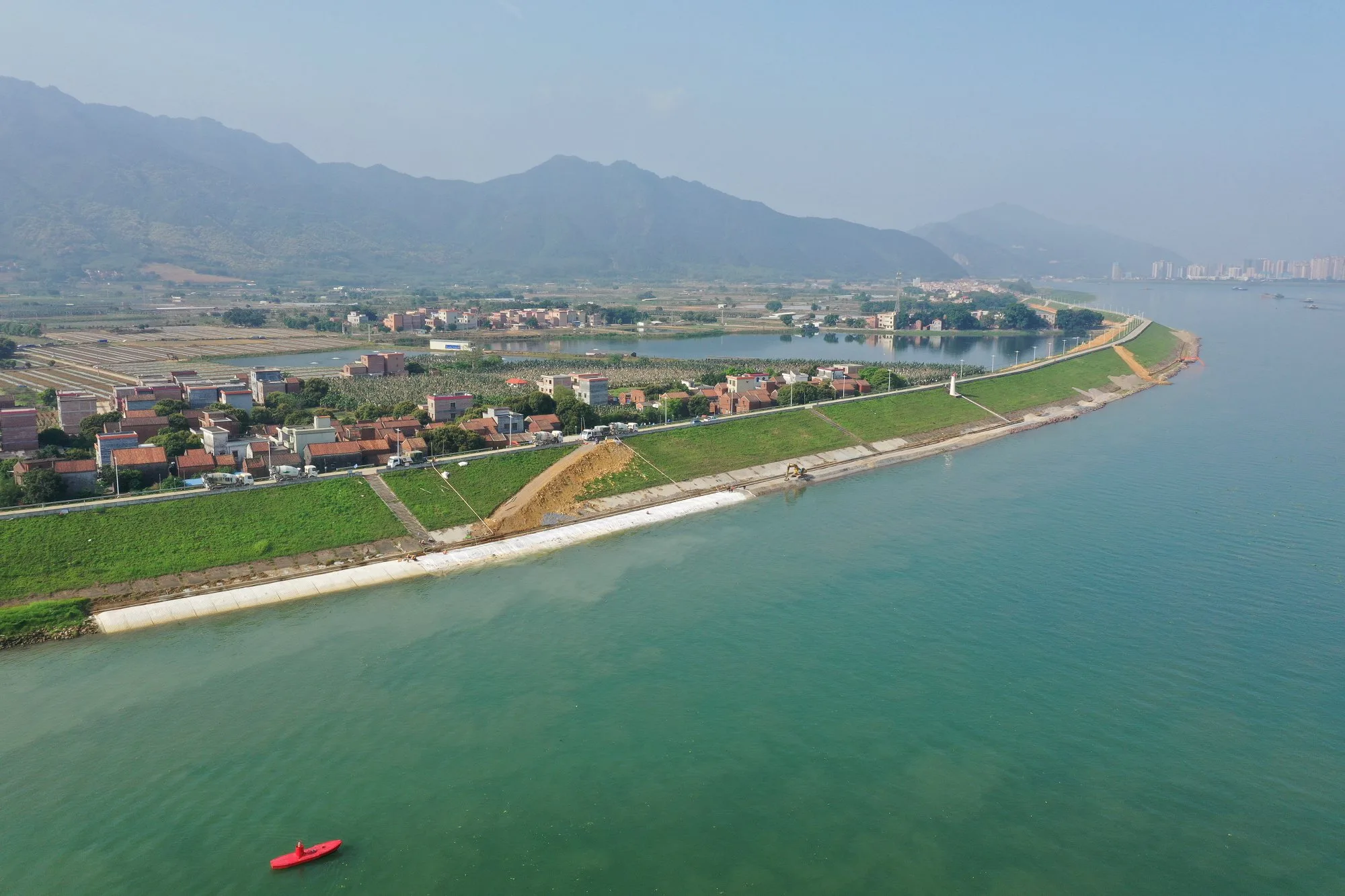
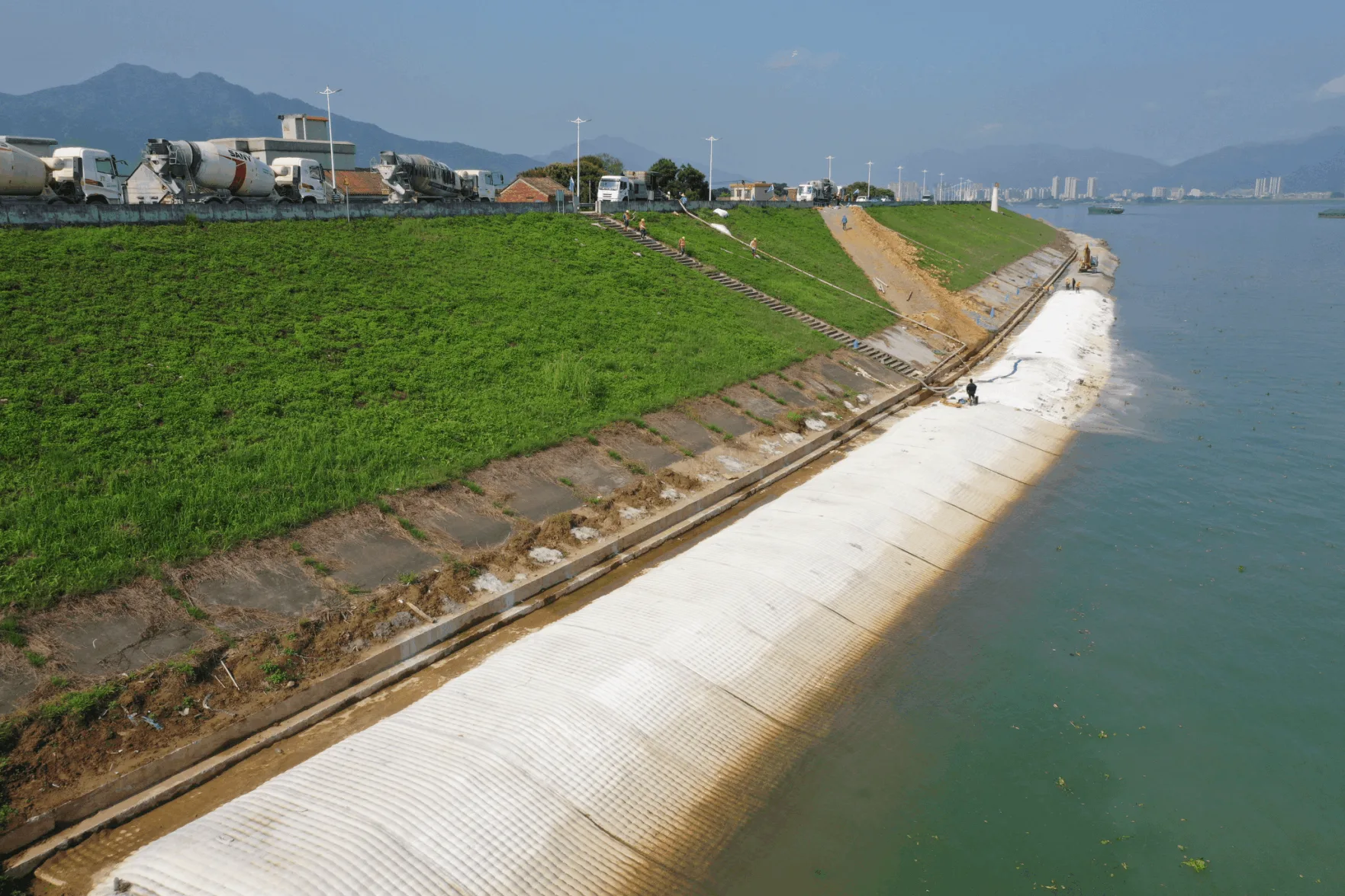
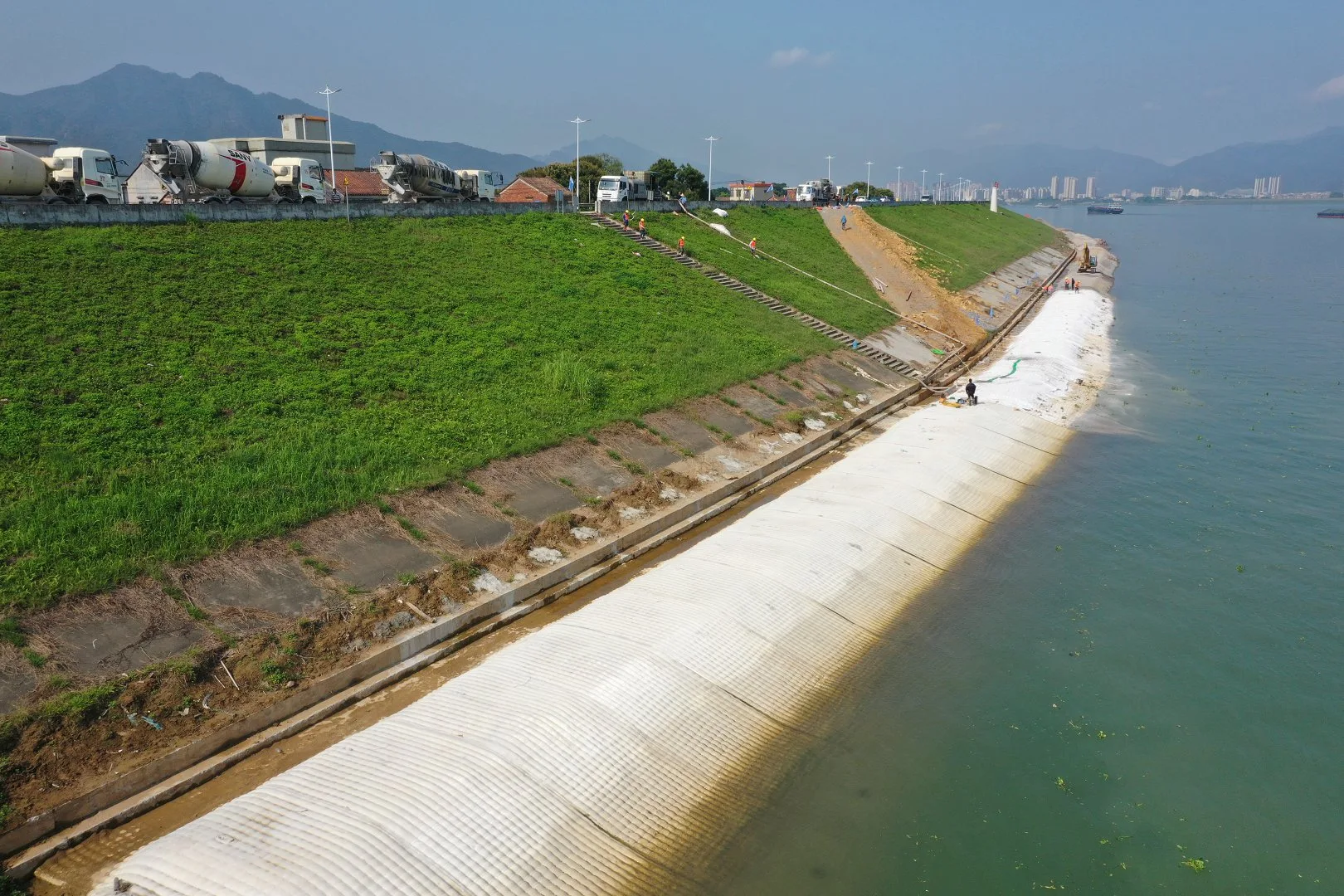
For coastal and tidal revetment, HydroBase supplies the filter point grouted mattress — an engineered variant with drainage ports at cell intersections that relieve hydrostatic uplift pressure during tidal drawdown. Without drainage relief, solid concrete revetment panels are lifted and displaced by reversing pore pressures. The filter point mattress eliminates this failure mode while delivering the same wave-resistance performance as the standard product. It installs during tidal windows with no dewatering, cofferdam, or sheet piling.
Why the Coastal Environment Demands a Different Product
Conventional impermeable revetments fail in tidal zones because of uplift pressure. When tide recedes, water trapped behind the revetment face creates a net upward force — particularly on sloped surfaces. This lifts, cracks, and displaces armour panels, often causing catastrophic progressive failure.
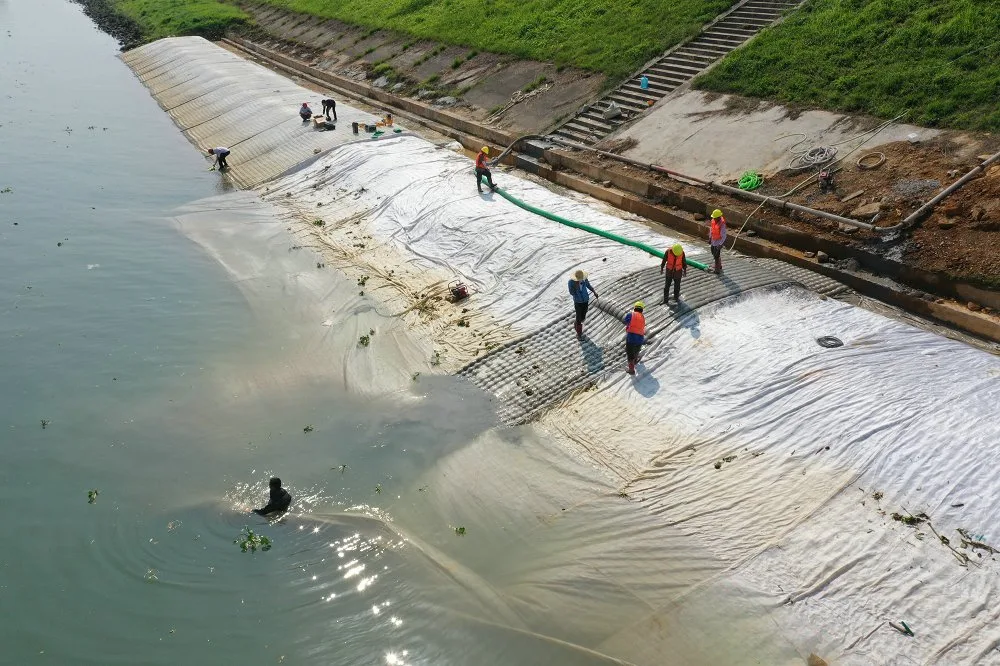
The filter point grouted mattress solves this with engineered openings at the cell intersections of the woven fabric. Water passes freely through these ports in both directions — seaward during tidal drawdown, landward during run-up — eliminating the pressure differential that causes uplift failure.
The result is a revetment that performs reliably through thousands of tidal cycles without maintenance, does not require drainage layers or geosynthetic composites behind it, and installs faster than any precast alternative.
Coastal Revetment Applications
Seawall Facing
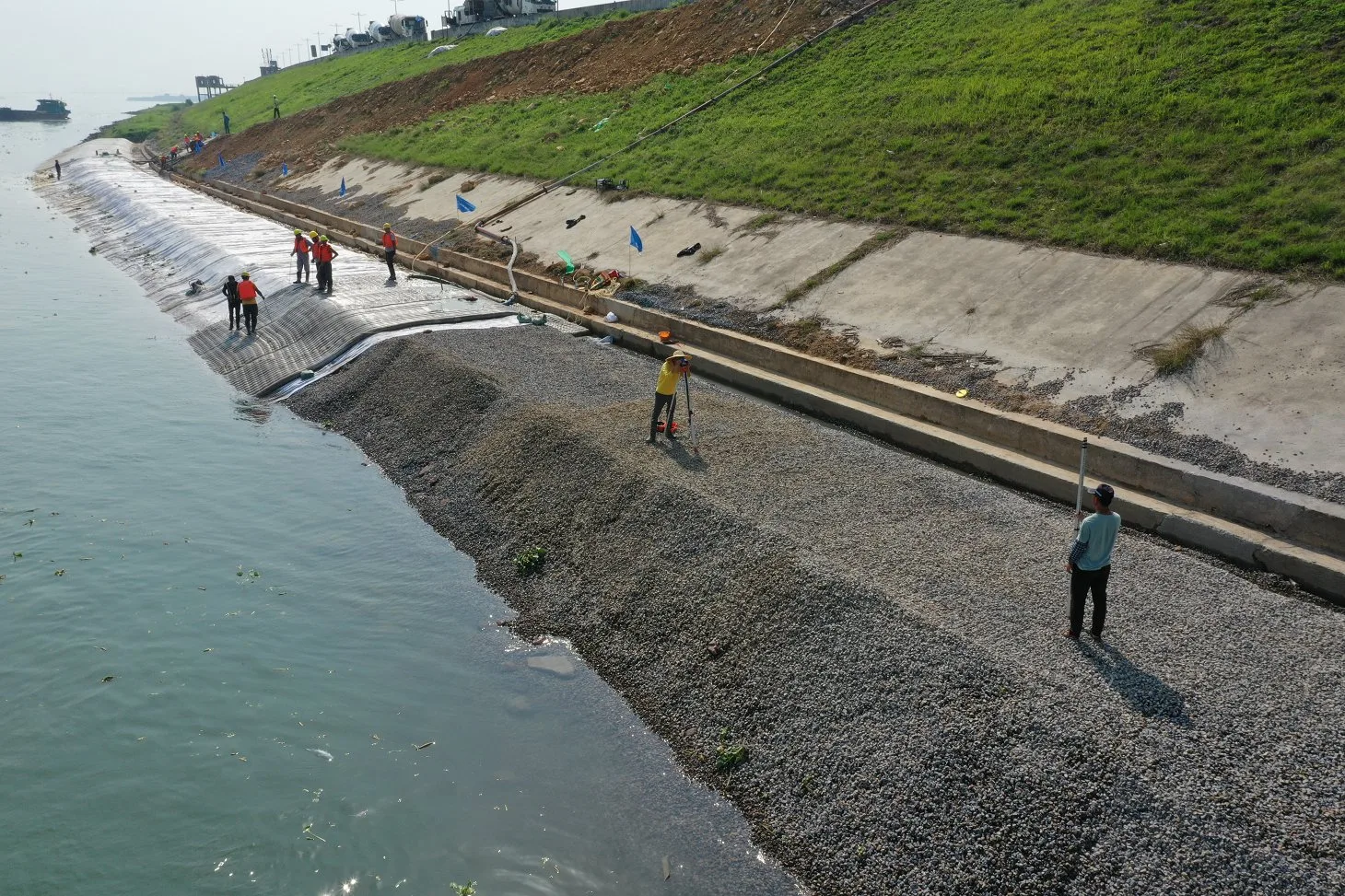
Primary wave armour on rubble mound, sheet pile, or concrete sea wall structures. Replaces precast panels on seawalls and bulkheads with a flexible, continuous alternative that self-adjusts to foundation settlement.
Tidal Embankments
Protection of tidal creek and estuary embankments subject to tidal inundation and wave fetch. Filter point variant specified for any site with tidal head reversal.
Coastal Flood Defences
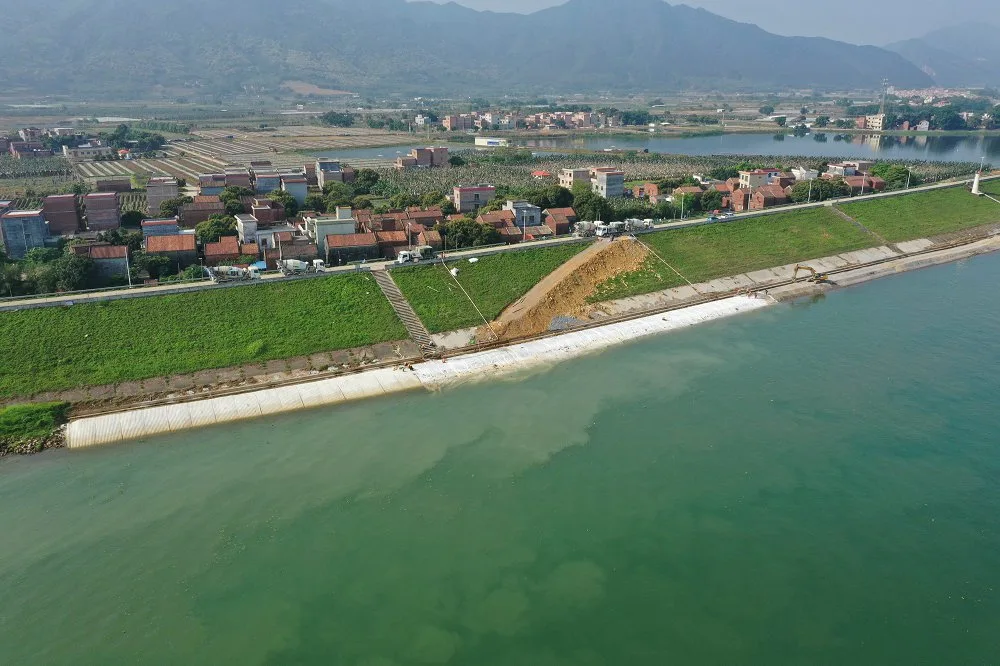
Wave run-up and overtop protection on coastal flood embankments. Impermeable crest with filter point face combines seepage control with uplift relief.
Aquaculture Ponds
Lining of coastal aquaculture pond embankments in tidal areas. Prevents seepage loss while allowing controlled tidal exchange through filter ports.
Port & Harbour Works
Bank protection in tidal basins, approach channels, and harbour entrance training walls. Resists propeller wash and tidal scour.
Beach & Dune Protection
Toe protection on beach and dune revetments subject to wave scour and longshore drift. Conforms to irregular scoured profiles.
vs. Conventional Coastal Revetment
| Feature | Filter Point GGFM | Precast Concrete Panels | Rock Armour |
|---|---|---|---|
| Tidal uplift relief | Built-in filter ports | Requires separate drainage | Natural voids |
| Wave energy absorption | Flexible — dissipates | Rigid — reflects | Dissipates |
| Settlement tolerance | Articulates freely | Cracks at joints | Self-adjusts |
| Installation in tide | Tidal window install | Requires cofferdam | Limited |
| Salt & UV resistance | PP fabric — 50+ yr | Good | Excellent |
| Installation speed | 800–1,000 m²/shift | Slow — crane lifts | Medium |
| Maintenance | None | Joint resealing | Stone replacement |
Frequently Asked Questions
Why do you recommend the filter point variant for coastal revetment?
In tidal zones, the water level on the seaward face drops during ebb tide while water trapped behind the revetment creates net upward pressure. This uplift force can displace or crack solid concrete panels. The filter point grouted mattress has engineered openings at cell intersections that equalise pressure in both directions, eliminating the uplift failure mode entirely.
Can grouted mattress withstand wave action?
Yes. The flexibility of the system is a key advantage — it absorbs and dissipates wave energy rather than reflecting it. Individual cells deform slightly under wave loading and recover elastically. The continuous nature of the mattress (no joints between panels) means there are no points of weakness for wave action to exploit. Maximum wave exposure depends on thickness selection — our engineering team confirms suitability for your design wave height.
Is the polypropylene fabric resistant to seawater and UV?
Yes. Woven polypropylene geotextile has excellent resistance to seawater, salt, and marine organisms. It does not corrode, rust, or biodegrade. UV resistance is confirmed by GRI GT16 testing: — 70% retained tensile strength after 500 hours of UV exposure (ASTM D4355). For permanently submerged applications, UV is not a factor and the fabric performs indefinitely.
How is installation timed around tidal windows?
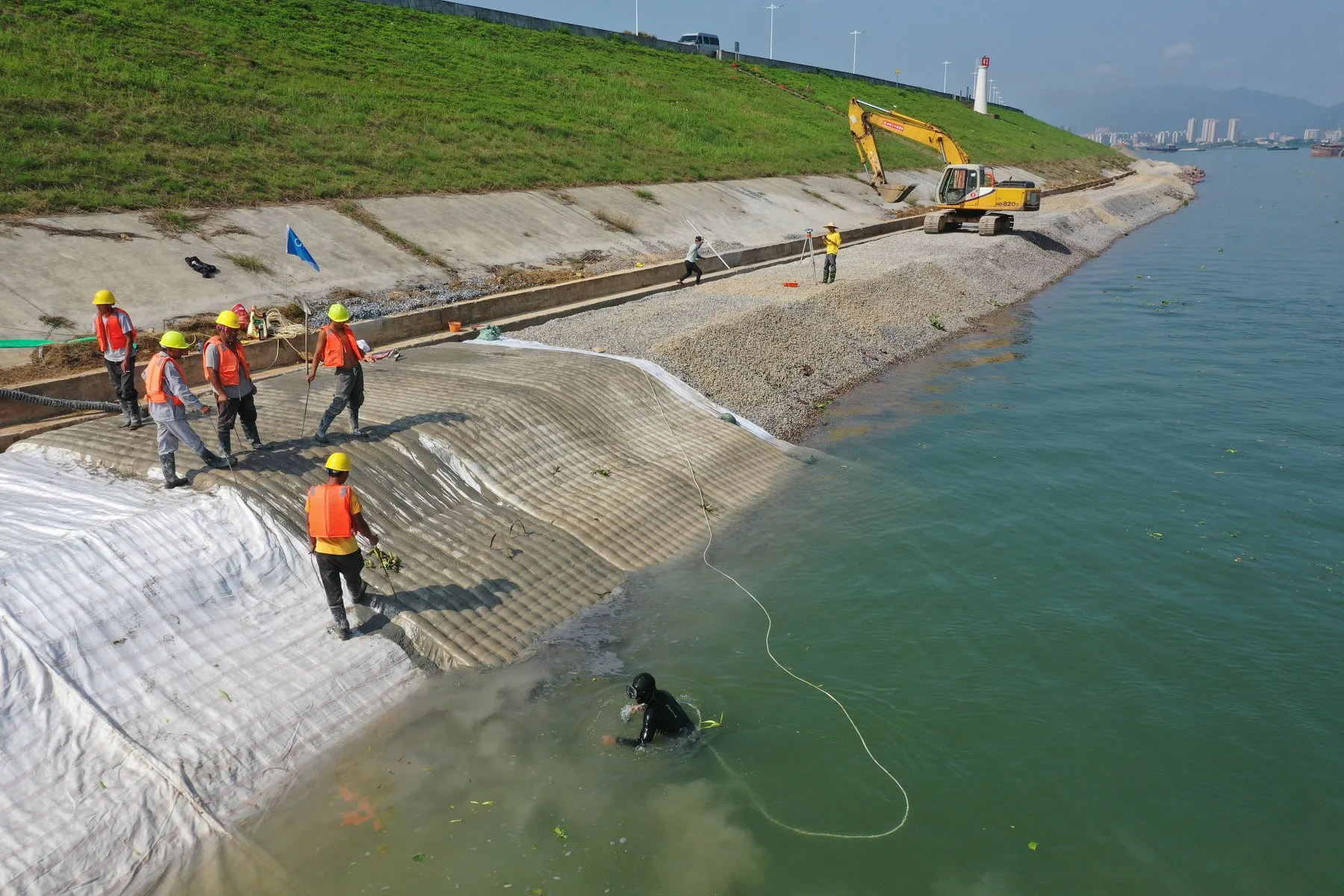
Installation is planned around the tidal cycle. Fabric deployment and pinning is done during low-tide windows when the slope is exposed. Grouting can proceed during rising tide on the lower sections as the pump hose works from the crest downward. Our installation team is experienced in coordinating crew, equipment, and pump truck to maximise output within tidal constraints.
What happens if the underlying embankment settles after installation?
Grouted mattress articulates with foundation movement. Individual cells hinge relative to each other as the underlying material settles, without cracking or losing contact with the bank surface. This is a significant advantage over rigid precast panel revetments, which crack at joints or lift off the bank when differential settlement occurs.
Related Reading
How the geotextile formwork system works — including the filter point variant for tidal applications.
Full comparison of grouted mattress, ACB mats, and GCCM — with tidal site selection guide.
Product page: drainage ports, uplift relief mechanism, and coastal project specifications.