
Bridge Pier Scour: Grouted Mattress Protection Guide
Quick Summary
Scour is the leading cause of bridge failure worldwide. This article explains how grouted mattress is used to protect bridge piers from scour — including underwater installation methods.
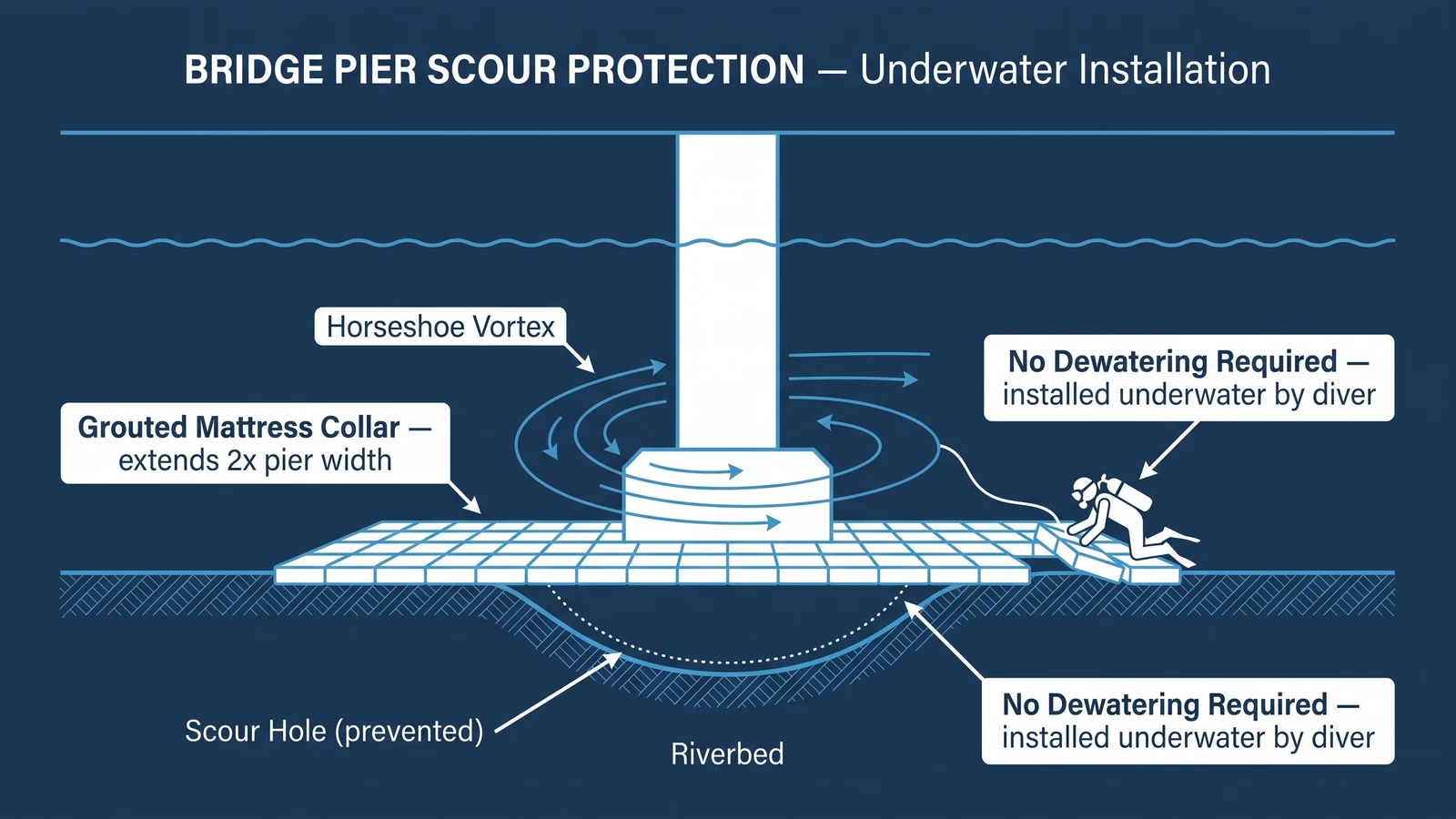
Quick Answer: Bridge pier scour is the leading cause of bridge failure worldwide. A grouted mattress collar installed flat on the riverbed — extending at least 2× the pier width in all directions — armours the bed against the horseshoe vortex that drives scour. Installation does not interrupt navigation or require dewatering.
Scour accounts for approximately 60% of bridge failures during flood events, according to FHWA HEC-23 (Bridge Scour and Stream Instability Countermeasures, 3rd ed.). It is one of the most preventable failure modes in structural engineering — but only when addressed before a flood event, not during one.
This article explains the mechanics of pier scour, why grouted mattress is the preferred engineering solution, and how it is installed around an existing pier without disrupting river traffic or channel flow. For related applications see slope protection and canal lining.
What Is Bridge Pier Scour and Why Is It Dangerous?
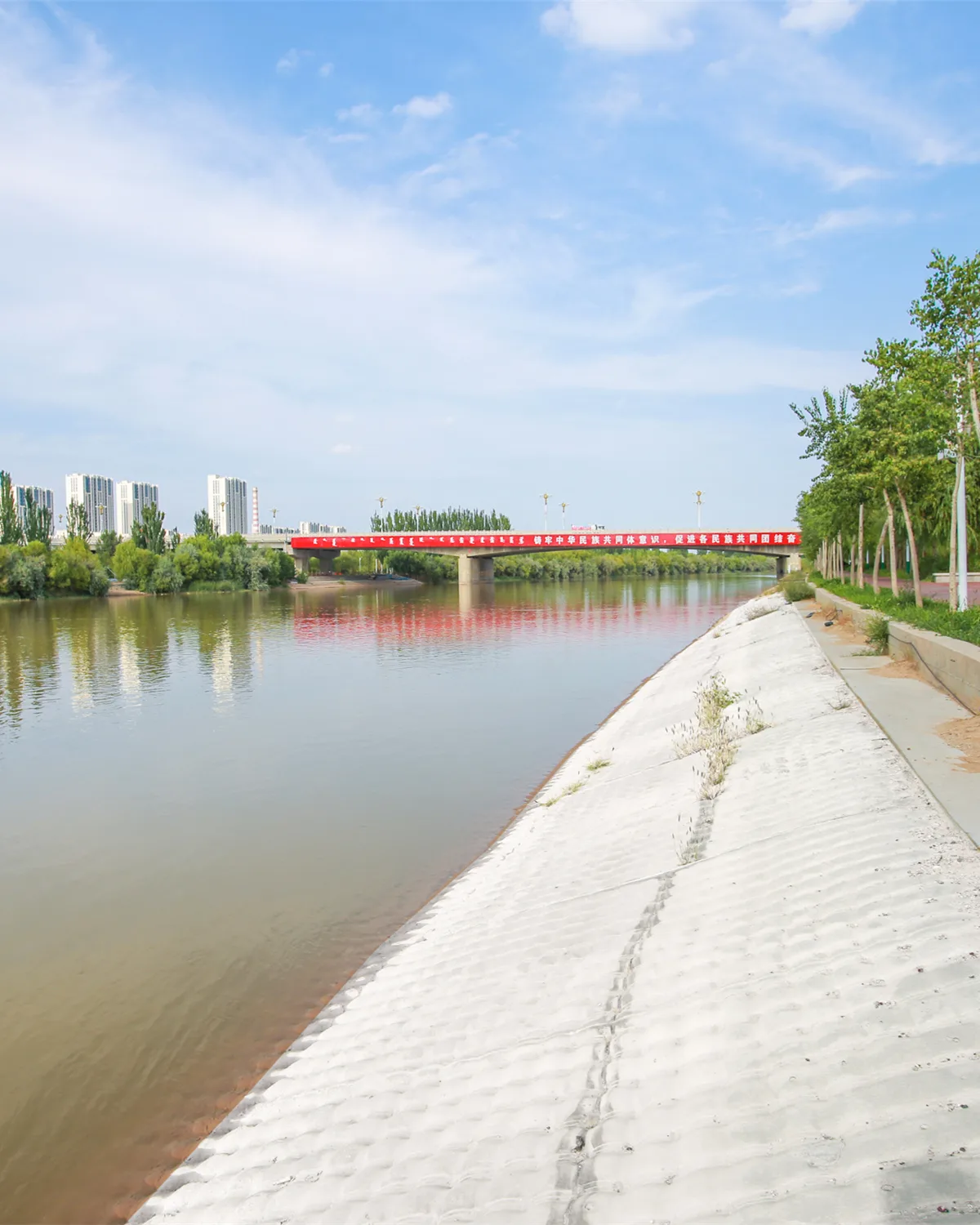
Scour is the progressive erosion of riverbed material around a structure caused by flowing water. Around bridge piers, the acceleration of flow past the obstruction and the formation of horseshoe vortices at the pier base remove sediment at rates far exceeding those of the undisturbed channel — creating a scour hole that can deepen by several metres during a single flood event.
When scour removes material from around a bridge pier foundation, the effective bearing capacity is reduced. If scour reaches the base of the piles, or undermines a spread footing, the pier can lean, settle, or collapse — often rapidly and without warning during the flood that caused it.
| Variable | Effect on Scour Depth |
|---|---|
| Flow velocity | Proportional — higher velocity = deeper scour |
| Pier width | Proportional — wider pier = larger horseshoe vortex |
| Pier shape | Round-nosed piers scour 20–30% less than rectangular piers |
| Sediment grain size | Fine sands scour several times more readily than coarse gravels |
| Flood duration | Scour deepens progressively through a sustained flood event |
Under the FHWA HEC-18 methodology, design scour depths of 2–6 m around typical highway bridge piers are common under 100-year flood conditions — often exceeding the original foundation design depth.
Why Is Grouted Mattress the Preferred Bridge Pier Scour Solution?
Grouted mattress offers decisive advantages over rip-rap collars, concrete aprons, and sheet piling for pier scour protection:
- Conforms to existing riverbed topography — rip-rap and concrete aprons require a flat surface; grouted mattress drapes over existing scour hole geometry and fills in place
- Installed without navigation interruption — the mattress is positioned by divers and pumped from the surface; the channel remains open throughout
- Articulated at joints — if scour develops at the edge of the mattress, panels flex rather than cracking, preventing progressive failure
- Suppresses vortex development — the roughness and mass of the cured mattress disrupts the horseshoe vortex formation that drives scour
- Permanently attached to the riverbed — once grouted, the mattress cannot be displaced by the velocities that caused the original scour
The mattress collar extends a minimum of 2× the pier width in all directions from the pier face (2.5× recommended for piers on fine sand). The outer edge terminates in a grout-filled perimeter tube that prevents undermining — the most common initiation point for progressive failure of scour protection works.
How Is Grouted Mattress Installed Around a Submerged Bridge Pier?
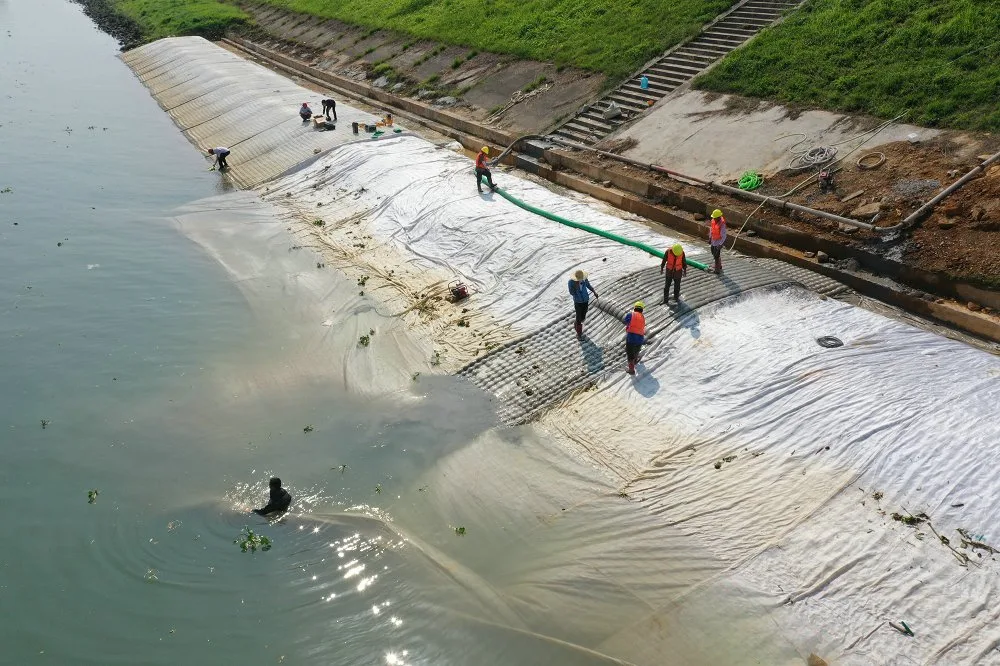
- Bathymetric survey — multibeam echo sounder survey of the existing riverbed within a 5 m radius of each pier. This defines the scour hole geometry and allows the collar to be designed to fill the void.
- Collar geometry design — the HydroBase engineering team designs the mattress panel layout, accounting for pier dimensions, bed topography, and the required extension radius. Panels are pre-cut to shape in the factory.
- Guide frame deployment — a steel guide frame is lowered by crane to the riverbed from a pontoon. The frame locates the mattress panels in the correct position relative to the pier without requiring divers to work in the pump wash.
- Panel positioning — the rolled mattress panels are lowered into the guide frame by crane. Divers verify panel position and connection, then ascend before pumping begins.
- Grout injection — pumping is controlled from the surface. A pressure drop indicates a panel has been fully filled. Typical pumping time per panel: 20–45 minutes at 15 m³/hour.
- Post-installation inspection — divers confirm all cells are expanded, the perimeter tube is intact, and pier face clearances are maintained.
Under normal river conditions (velocity <1.5 m/s), installation proceeds at 100–200 m²/day with a four-person dive team and a single pump unit.
What Design Standards Apply to Bridge Pier Scour Protection?
| Standard | Jurisdiction | Relevance |
|---|---|---|
| HEC-23 (FHWA) | USA | Primary reference; specific guidance on grouted mattress collar sizing |
| GB 50286-2013 | China | Code for Design of Levee Project; governs hydraulic structure scour protection |
| CIRIA C742 | UK/Europe | The Rock Manual; covers scour protection for infrastructure including grouted systems |
All three references accept grouted mattress as a compliant scour protection system where the design thickness meets the hydraulic load requirements established by the site-specific scour analysis.
For related design guidance, see our bridge scour protection methods comparison and the grouted mattress vs rip-rap performance article.
Frequently Asked Questions
How is the grouted mattress collar anchored to prevent uplift during a flood?
Two mechanisms resist uplift: the mass of the cured grout (typically 230–310 kg/m² at 150–200 mm thickness) acts as ballast, and a grout-filled perimeter tube around the collar edge is pinned to the riverbed with steel anchors at 2 m centres. The perimeter tube eliminates the gap between the mattress edge and the riverbed where flow could otherwise get underneath and generate uplift pressure.
Can the mattress be installed around complex pier geometries?
Yes — mattress panels can be pre-cut with openings to fit around circular, rectangular, or grouped pile configurations. The panels are cut to the exact geometry provided in the pier drawings, minimising on-site trimming by divers. Complex pile groups (4-pile, 6-pile arrangements) can be accommodated with custom panel configurations.
How does grouted mattress compare to rip-rap for pier scour?
Rip-rap scour collars are subject to displacement by the high local velocities generated by the horseshoe vortex — once one stone moves, the gap grows rapidly. Grouted mattress, once cured, is monolithic and cannot be displaced piece by piece. See the full comparison for cost and performance details.
Can the collar be extended later if scour develops beyond the original design radius?
Yes — new mattress panels can be installed adjacent to the existing collar, overlapping the outer edge by a minimum of 500 mm. The fresh grout bonds adequately to the cured panel edge. This is considerably simpler than rip-rap extension, which requires the new rock to be correctly graded and placed against the existing material without disturbing it. Plan the initial installation with this possibility in mind: slightly oversizing the original collar by 500 mm is cheaper than a second mobilisation.
HydroBase provides free scour assessment support, including collar geometry design, thickness specification, and installation method statement preparation. Send us your pier dimensions and flow data and we will respond within 48 hours.
HydroBase Technical Team
HydroBase manufactures grouted mattresses (GRI GT16 compliant) in China and delivers to 30+ countries. Our engineering team provides specification support, grout mix design, and installation guidance.
About HydroBaseMore Articles
View all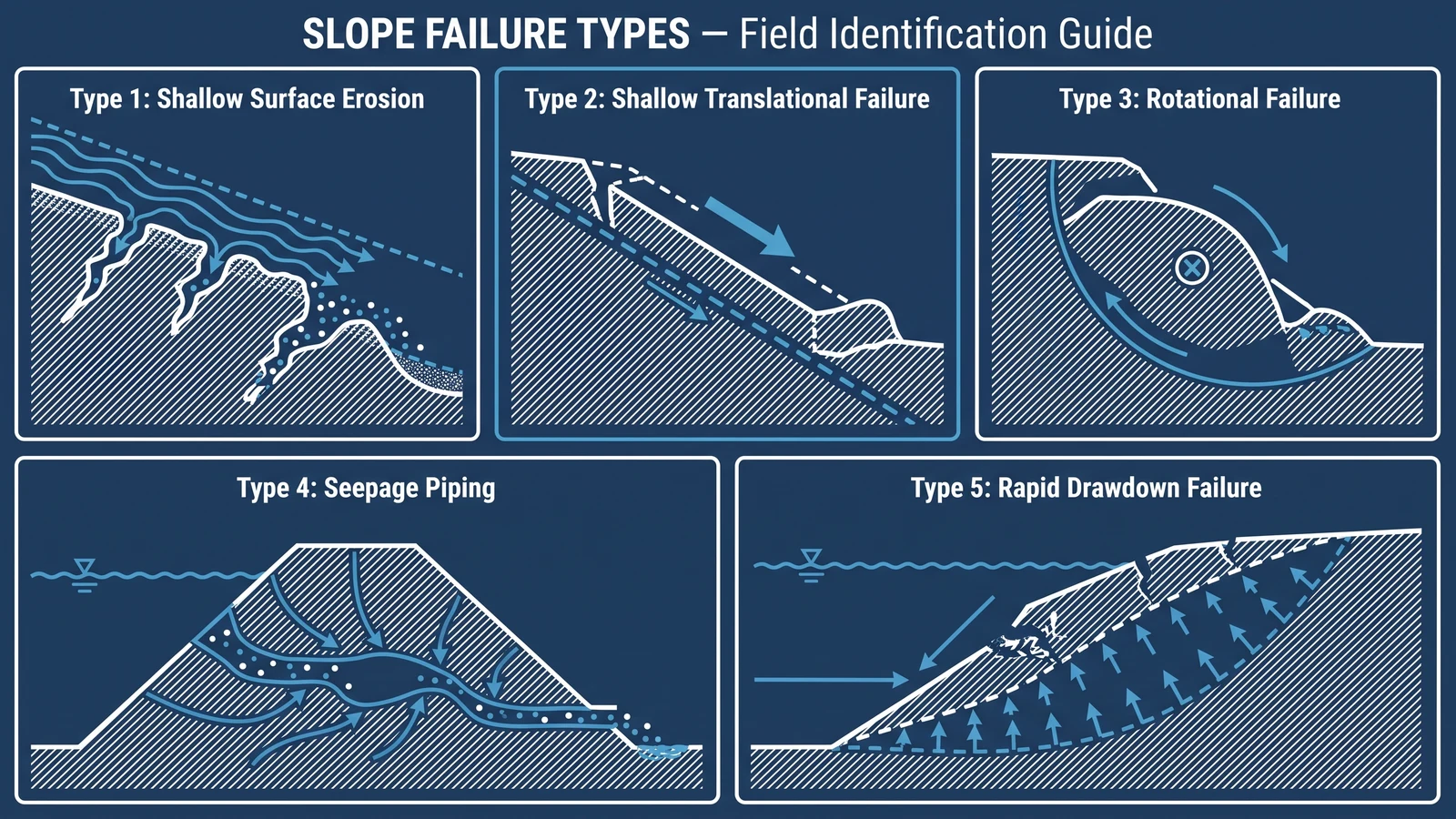
Slope Failure Causes and Prevention: Field Guide
Slope failures on canal embankments, reservoir faces, and road cuttings follow recognisable patterns. This field guide covers the five main slope failure types — shallow surface erosion, shallow translational, rotational, piping, and rapid drawdown — with prevention measures for each.
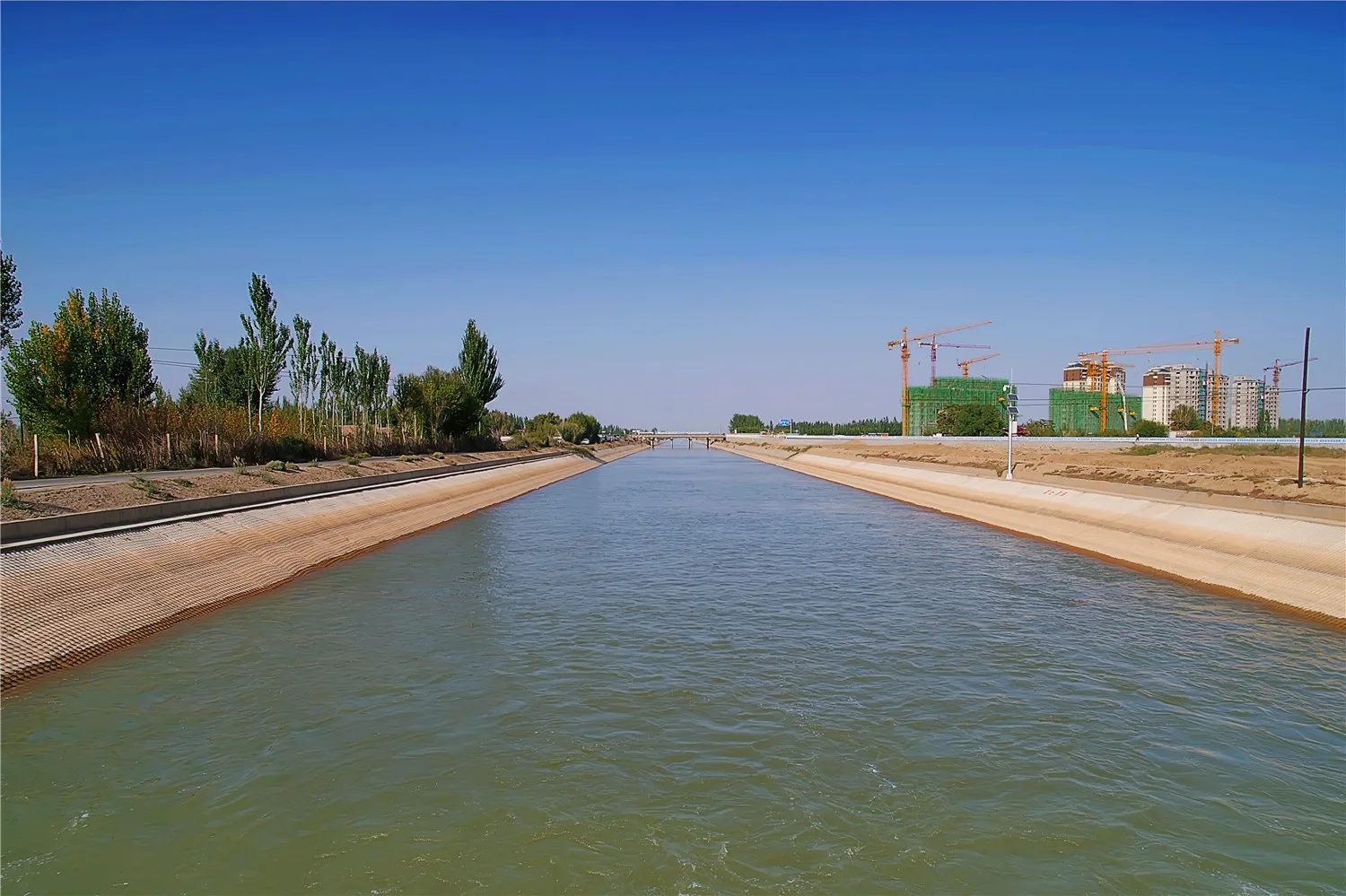
Grouted Mattress Case Studies: 5 Projects, Real Data
Five real grouted mattress installations across canal lining, river bank protection, coastal revetment, reservoir lining, and bridge pier scour — with actual project areas, design parameters, installation programmes, and post-installation performance data.
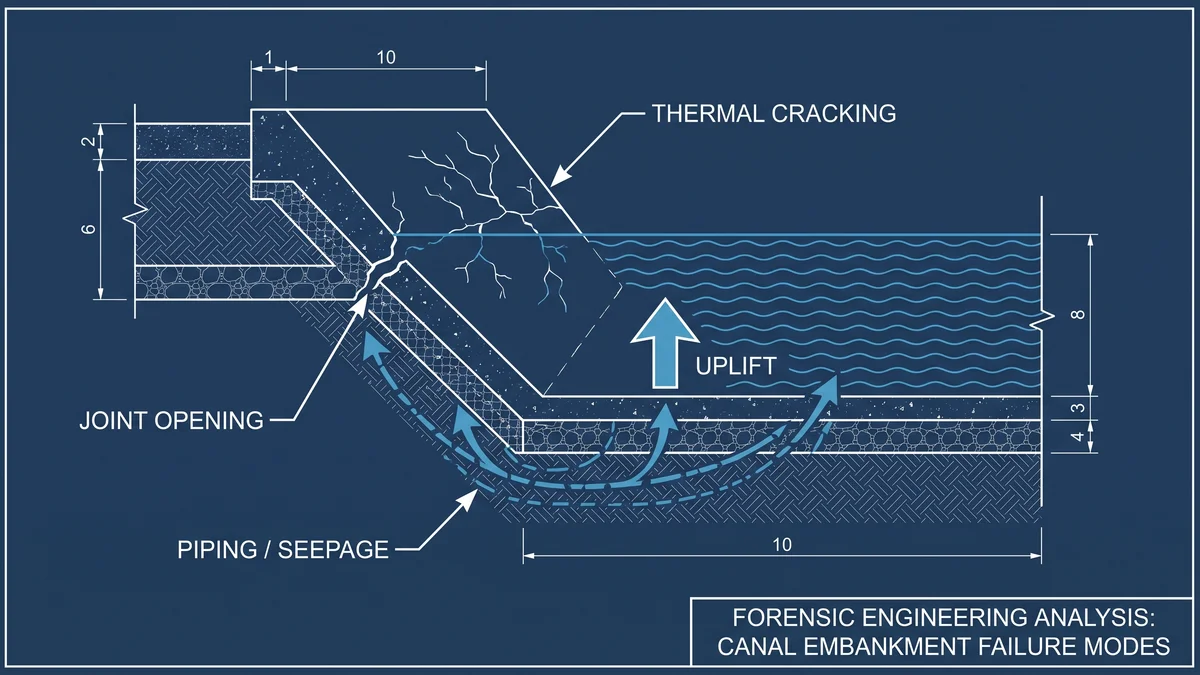
Canal Lining Failure: 7 Causes and How to Prevent Them
Canal lining failures cost irrigation authorities billions annually in emergency repairs and lost water. This forensic guide identifies the 7 most common failure causes — from joint failure to uplift — and explains how to prevent each through better specification and installation.
HydroBase - China Manufacturer
Ready to Specify Grouted Mattress?
GRI GT16 compliant products, factory test reports included. Engineering support at no cost. 48-hour response.