
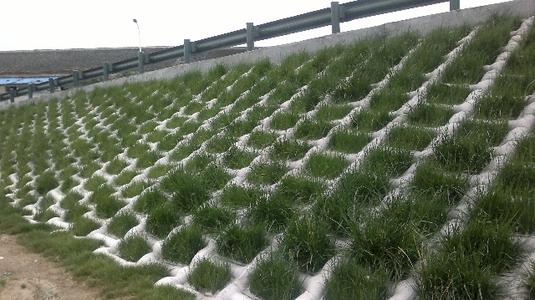
Highway Slope Protection: Embankment Erosion Guide
Quick Summary
Highway embankment and cut slope erosion causes road failures, landslides, and maintenance cost spirals. This guide compares every slope protection system for road and highway applications — from vegetation to grouted mattress — with design and cost data.
Quick Answer: For highway embankment slopes with design rainfall runoff velocity above 2.0 m/s, or in climates with intense storm events, grouted mattress (100–150 mm) is one of the more durable erosion protection options, with lower ongoing maintenance than riprap or gabions. Vegetation is adequate for slopes with runoff velocity below 1.5 m/s in temperate climates where establishment is reliable. Riprap and gabions are competitive where local rock is available and installation by grouted mattress contractors is not practical. Concrete slope paving is used at culvert inlets and drainage channel transitions where velocity is highest. This guide covers all options with FHWA and CIRIA design references.
Highway embankment slopes represent one of the largest surface areas of exposed, vulnerable soil in any road project. Cut slopes through weak or weathered rock, and fill embankments over soft ground, are subject to intense rainfall erosion, gully development, and in steep terrain, shallow landslide. The cost of slope failures on national highway networks runs to hundreds of millions of dollars annually in slope repairs, traffic disruption, and accident liability.
This guide addresses the protection of highway fill embankment slopes and cut slopes against rainfall erosion and surface runoff. It does not cover deep-seated slope stability — that requires geotechnical investigation and slope stability analysis beyond this guide's scope. For bridge abutment scour protection see Bridge Scour Protection Methods. For flood embankment overtopping protection see Flood Embankment Protection.
The Erosion Mechanisms on Highway Slopes
Highway slopes erode through four mechanisms, often acting simultaneously:
- Raindrop impact: high-energy raindrops detach surface particles — the energy is proportional to rainfall intensity squared. High-intensity tropical and monsoon rainfall generates very high raindrop energy.
- Sheet flow erosion: thin sheets of water flowing down the slope surface generate shear stress on the soil. Below 1.0 m/s the erosive capacity is low; above 2.0 m/s even compacted clay erodes rapidly.
- Rill and gully erosion: as runoff concentrates into small channels (rills), flow depth and velocity increase — shear stress increases as the square of velocity. A small rill can develop into a gully within a single storm season.
- Seepage erosion: internal drainage within the embankment can emerge on the slope face, carrying fine particles. This is the same piping mechanism as in dam engineering — visible as wet patches and turbid seeps on the slope face.
Slope Protection Options: Comparison
| System | Max Runoff Velocity | Installed Cost (USD/m²) | Maintenance Intensity | Establishment Period |
|---|---|---|---|---|
| Seeded vegetation | 0.8–1.2 m/s | $3–$10 | Annual mowing, reseeding | 1–2 growing seasons |
| Erosion control matting (biodegradable) | 1.2–1.8 m/s (temporary) | $8–$18 | Replace every 2–5 years | Temporary — degrades |
| Permanent turf reinforcement mat (TRM) | 1.5–2.5 m/s | $15–$30 | Moderate — mowing | 1–2 growing seasons |
| Riprap | 2.5–4.0 m/s | $35–$80 | Post-storm stone replenishment | Immediate |
| Gabion mattress | 2.0–3.0 m/s | $30–$60 | Wire inspection, repair | Immediate |
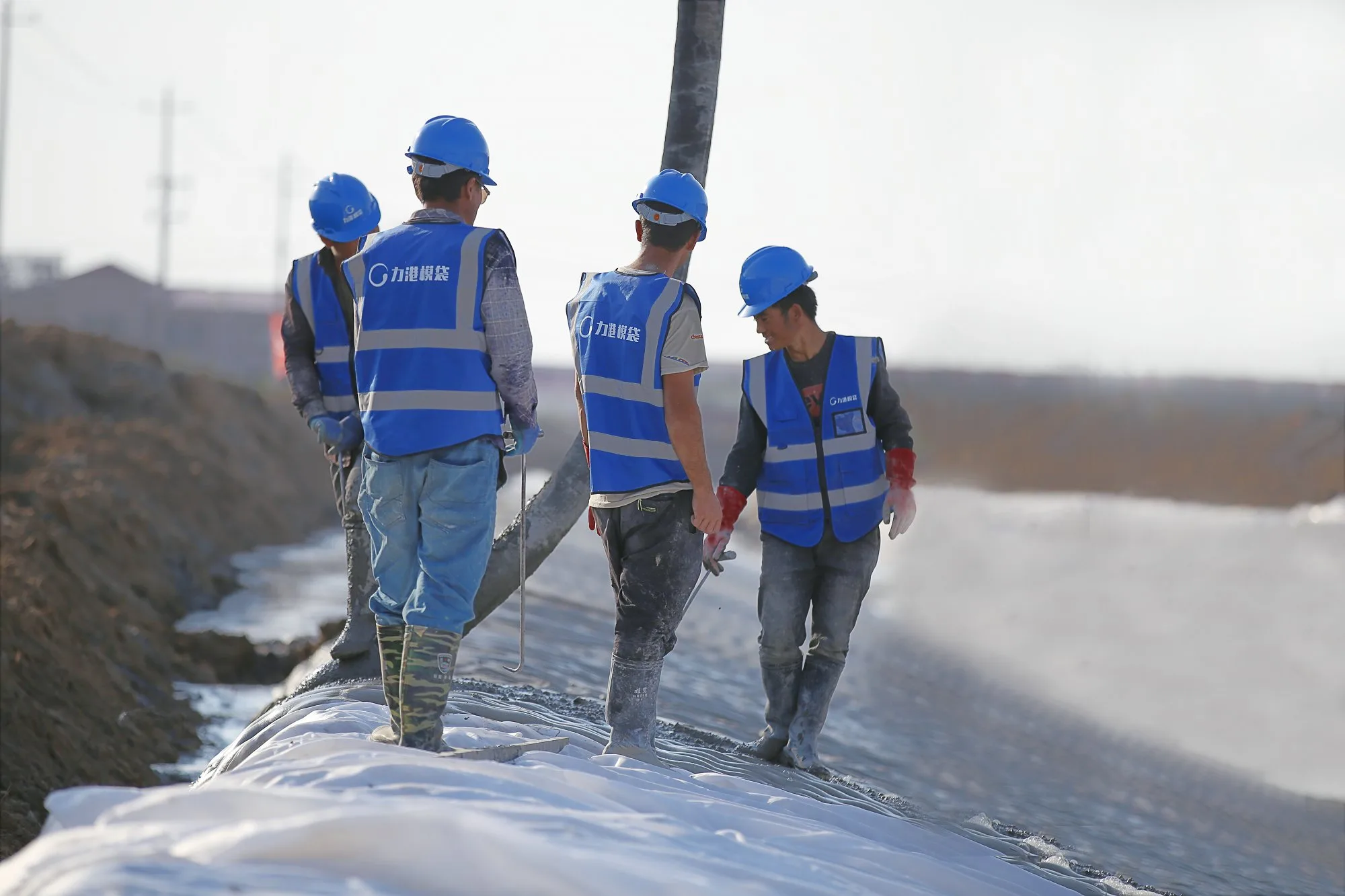
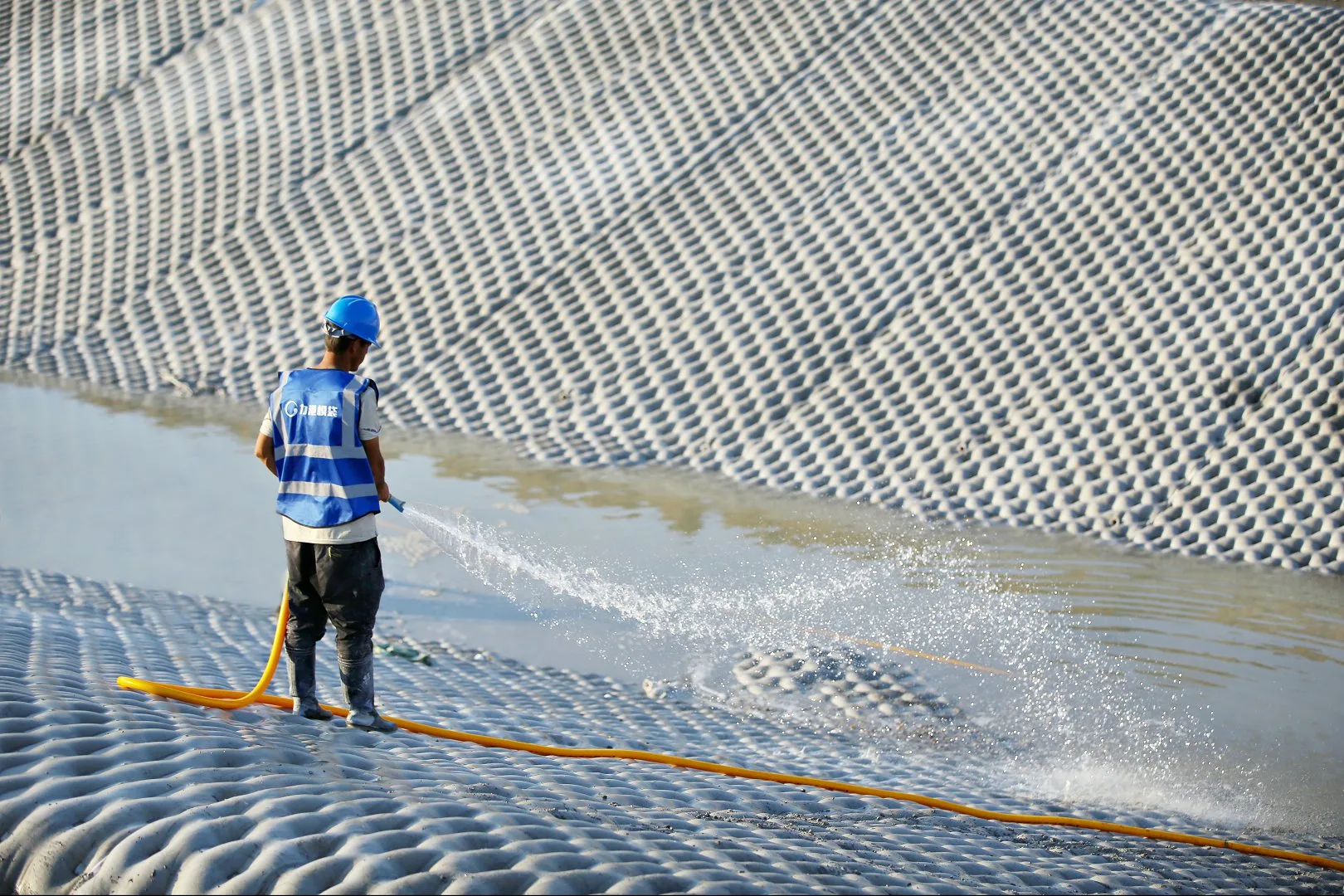
| Grouted Mattress 100 mm | Up to 3.5 m/s | $28–$48 | Annual visual inspection | Immediate (7-day cure) |
| Concrete slope paving | Up to 8.0 m/s | $40–$75 | Joint resealing | Immediate (28-day cure) |
Selection Guide by Slope and Climate
| Scenario | Design Runoff Velocity | Recommended System | Notes |
|---|---|---|---|
| Temperate climate, gentle slope (1:3–1:4) | 0.5–1.2 m/s | Seeded vegetation + biodegradable matting | Lowest cost; TRM as safety net if establishment unreliable |
| Temperate climate, steeper slope (1:2–1:3) | 1.2–2.0 m/s | Permanent turf reinforcement mat (TRM) or gabion | Riprap competitive where local rock available |
| Tropical / monsoon climate, any slope | 2.0–4.0 m/s | Grouted mattress 100–150 mm | Monsoon intensity (50–150 mm/hr) defeats vegetation; immediate permanent protection required |
| Steep cut slope in weathered rock (1:1–1:2) | 2.0–4.5 m/s | Shotcrete (with rock bolts if block failure risk) or grouted mattress | Shotcrete adds structural support; grouted mattress surface erosion only |
| Culvert inlet / drainage channel transition | 4.0–8.0 m/s | Concrete slope paving or 150 mm grouted mattress | Grouted mattress preferred where irregular geometry makes formwork difficult |
The table above is a starting-point reference — the design runoff velocity for your specific slope depends on rainfall intensity, slope length, and slope angle. Use the rational method (Q = CiA) or the FHWA HEC-14 nomographs to calculate site-specific values before specifying a protection system.
Climate is the most important variable. In temperate climates, vegetation is often adequate for slopes up to 1:2 because rainfall intensity rarely exceeds 30–50 mm/hour and there is a reliable growing season for establishment. In tropical and monsoon climates, the same slope geometry generates runoff velocities 2–3× higher during peak rainfall events, and vegetation establishment is unreliable on poorly-compacted fill. Hard armour is the norm, not the exception, for highway embankments in Southeast Asia and South Asia.
Slope length matters as much as slope angle. A 1:3 slope that is 10 m long generates a fraction of the runoff velocity of a 1:3 slope that is 50 m long. Where long slopes are unavoidable, mid-slope interceptor drains (benching) reduce the effective slope length and significantly reduce the design runoff velocity — often enough to drop from a hard-armour specification to a vegetation-based system. The cost saving from interceptor drains typically exceeds the drain construction cost many times over.
Drainage: The Essential Companion to Slope Protection
No slope protection system can substitute for adequate surface drainage. The peak runoff velocity that determines which protection system is needed depends directly on the slope length — longer slopes accumulate more runoff and generate higher velocities at the toe. Interceptor drains at mid-slope, stepped berms, and proper catch drain design at the slope toe are essential companions to any surface protection system.
The FHWA HEC-14 (Hydraulic Design of Energy Dissipators) provides the standard methodology for sizing highway slope drainage and energy dissipation structures. The CIRIA C769 (Control of Water by Vegetation on Slopes) covers vegetation-based approaches in the UK context.
Frequently Asked Questions
How steep can a highway embankment slope be without hard armour protection?
With adequate vegetation and in temperate climates with moderate rainfall intensity, slopes up to 1:2 (26.6°) can be protected by vegetation alone if the design runoff velocity is below 1.5 m/s. In tropical climates, or where the embankment fill quality is poor, hard armour is recommended for slopes steeper than 1:3 regardless of vegetation coverage. Rainfall intensity is the critical factor — the same slope that performs well in a temperate climate will fail in a monsoon climate.
Can grouted mattress be used on a 1:1 cut slope?
Yes — grouted mattress has been installed on slopes up to 1:1 (45°). At this steepness, additional anchor stakes (at 1.0–1.5 m centres rather than 2.0 m centres) are required, and the grout injection sequence must be carefully managed to prevent the wet grout running to the panel base before setting. The practical limit for standard installation without specialist procedures is approximately 1:1.2. Consult HydroBase engineering for steeper applications.
What is the design standard for highway slope protection in China?
In China, highway slope protection is governed by JTG D30 (Technical Specification for Highway Subgrades) and JTG/T F20 (Technical Guidelines for Construction of Highway Subgrades). Grouted mattress (护坡砌块复合防护) is listed as an approved protection system for slopes with design runoff velocity above 2.0 m/s. The minimum thickness requirements in JTG D30 are consistent with GRI GT16 velocity-thickness relationships.
HydroBase has supplied grouted mattress for highway slope protection on major road projects across China, Southeast Asia, and the Middle East. Request a highway slope protection assessment with your design rainfall intensity and slope geometry — our engineering team will specify the correct system within 48 hours.
HydroBase Technical Team
HydroBase manufactures grouted mattresses (GRI GT16 compliant) in China and delivers to 30+ countries. Our engineering team provides specification support, grout mix design, and installation guidance.
About HydroBaseMore Articles
View all
Grouted Mattress Case Studies: 5 Projects, Real Data
Five real grouted mattress installations across canal lining, river bank protection, coastal revetment, reservoir lining, and bridge pier scour — with actual project areas, design parameters, installation programmes, and post-installation performance data.
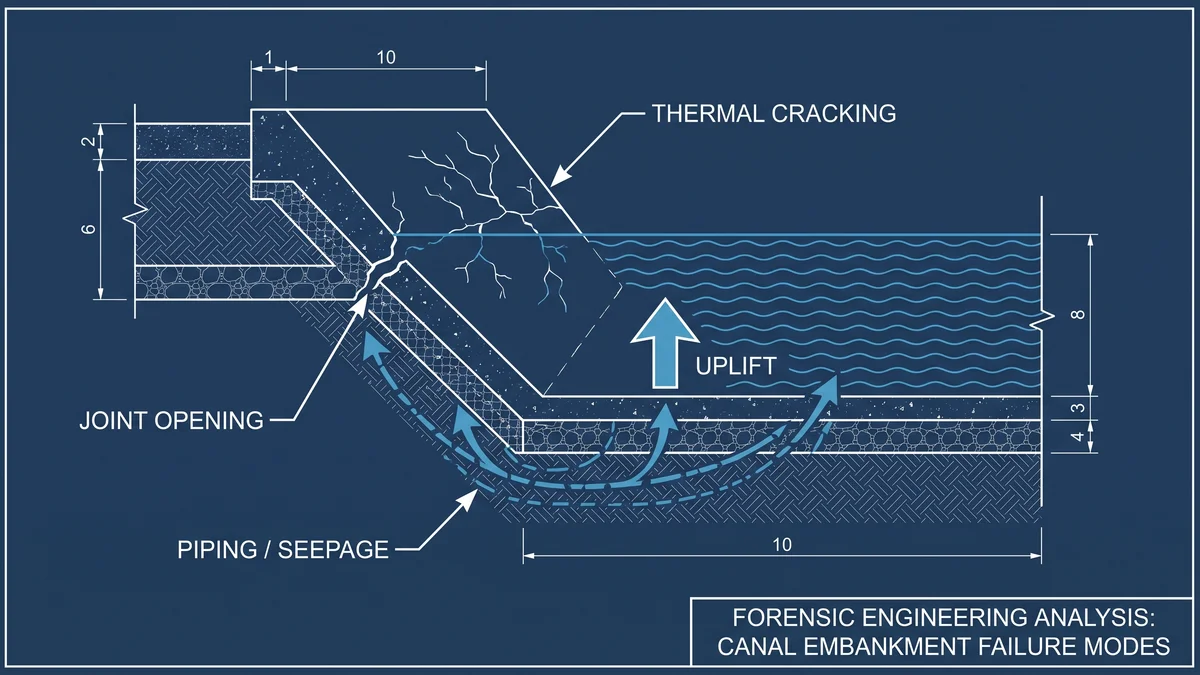
Canal Lining Failure: 7 Causes and How to Prevent Them
Canal lining failures cost irrigation authorities billions annually in emergency repairs and lost water. This forensic guide identifies the 7 most common failure causes — from joint failure to uplift — and explains how to prevent each through better specification and installation.
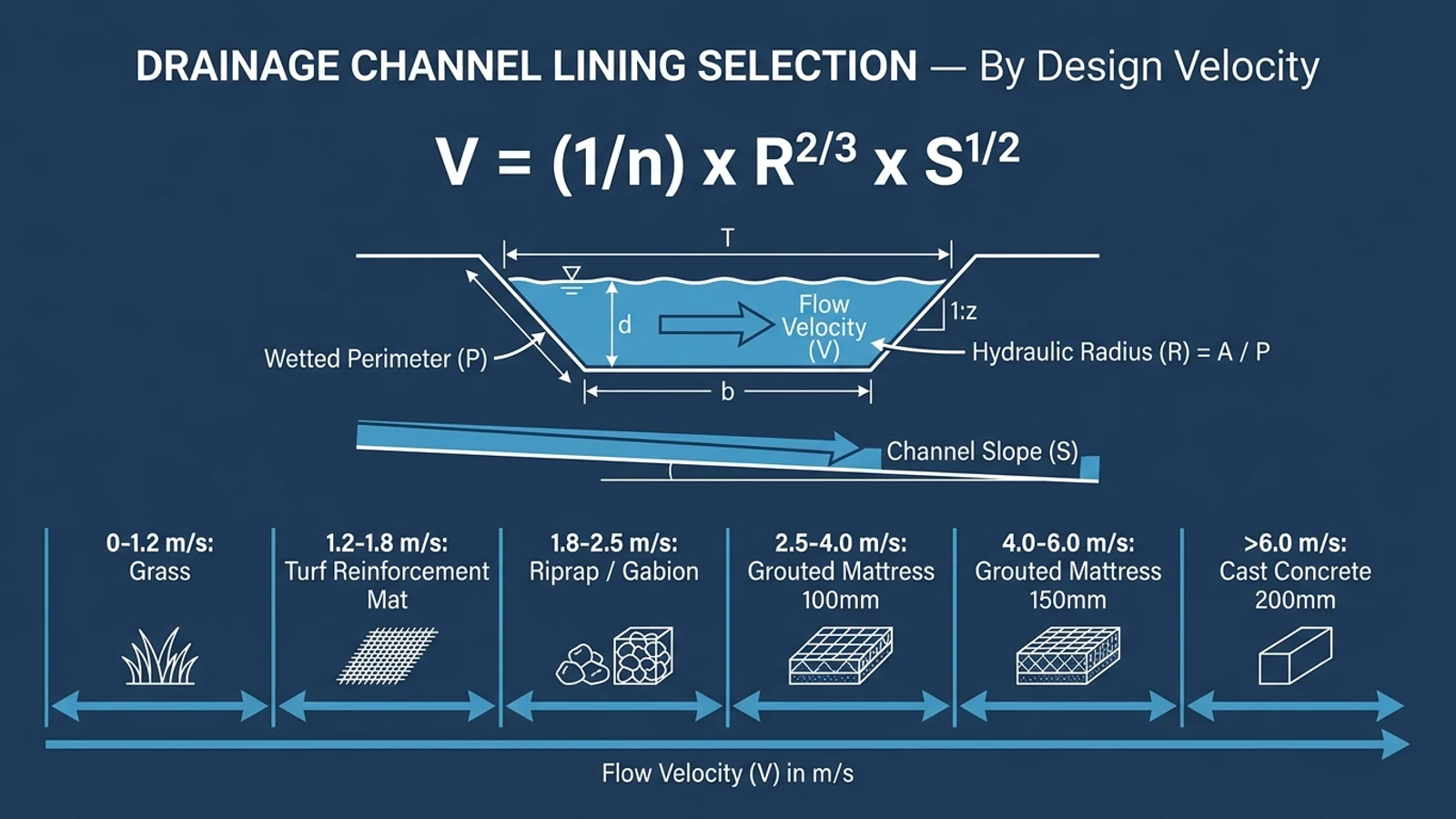
Drainage Channel Lining: Road and Infrastructure Guide
Drainage channels alongside roads, railways, and industrial sites carry high-velocity storm runoff that erodes unlined channels within seasons. This guide covers lining selection, hydraulic design, and installation for roadside drainage channels.
HydroBase - China Manufacturer
Ready to Specify Grouted Mattress?
GRI GT16 compliant products, factory test reports included. Engineering support at no cost. 48-hour response.