
Mining Pond and Tailings Dam Lining: Engineer's Guide
Quick Summary
Mining ponds and tailings storage facilities present the most demanding lining challenges — aggressive chemistry, high consequence of failure, and remote locations. This guide covers lining selection for process water ponds, tailings dams, and sediment ponds.
Quick Answer: Mining ponds and tailings storage facilities require the highest level of containment performance. Geomembrane underliner (HDPE 2.0–2.5 mm) provides the primary seepage barrier; grouted mattress (150–200 mm filter point) provides slope protection and UV/mechanical cover for the membrane on embankment faces. The combined system reduces containment failure risk significantly compared to a single lining layer. This guide covers the design requirements for the four main mining pond types.
Mining operations generate water management challenges at every stage — from process water storage and recycling to tailings disposal and closure. Containment failure at any of these stages can result in catastrophic environmental damage, regulatory penalties, and reputational loss. The Brumadinho tailings dam failure in Brazil (2019) and the Mount Polley mine failure in Canada (2014) have driven significant tightening of design standards for mining containment facilities globally.
This guide covers lining system selection for the four main mining pond types, with reference to ICMM (International Council on Mining and Metals) guidance, MEND (Mine Environment Neutral Drainage) protocols, and the MAC Towards Responsible Mining: Tailings Management framework.
The Four Main Mining Pond Types
1. Process Water Pond
Stores the recycle water from ore processing — typically high pH (lime-treated) or high conductivity, but not necessarily highly toxic. Primary containment objective: prevent groundwater contamination and meet site water balance. Lining requirement: geomembrane or low-permeability clay blanket on base and slopes. Grouted mattress slope protection over geomembrane on steep slopes (>1:3) exposed to wave action from wind or pumping turbulence.
2. Tailings Storage Facility (TSF)
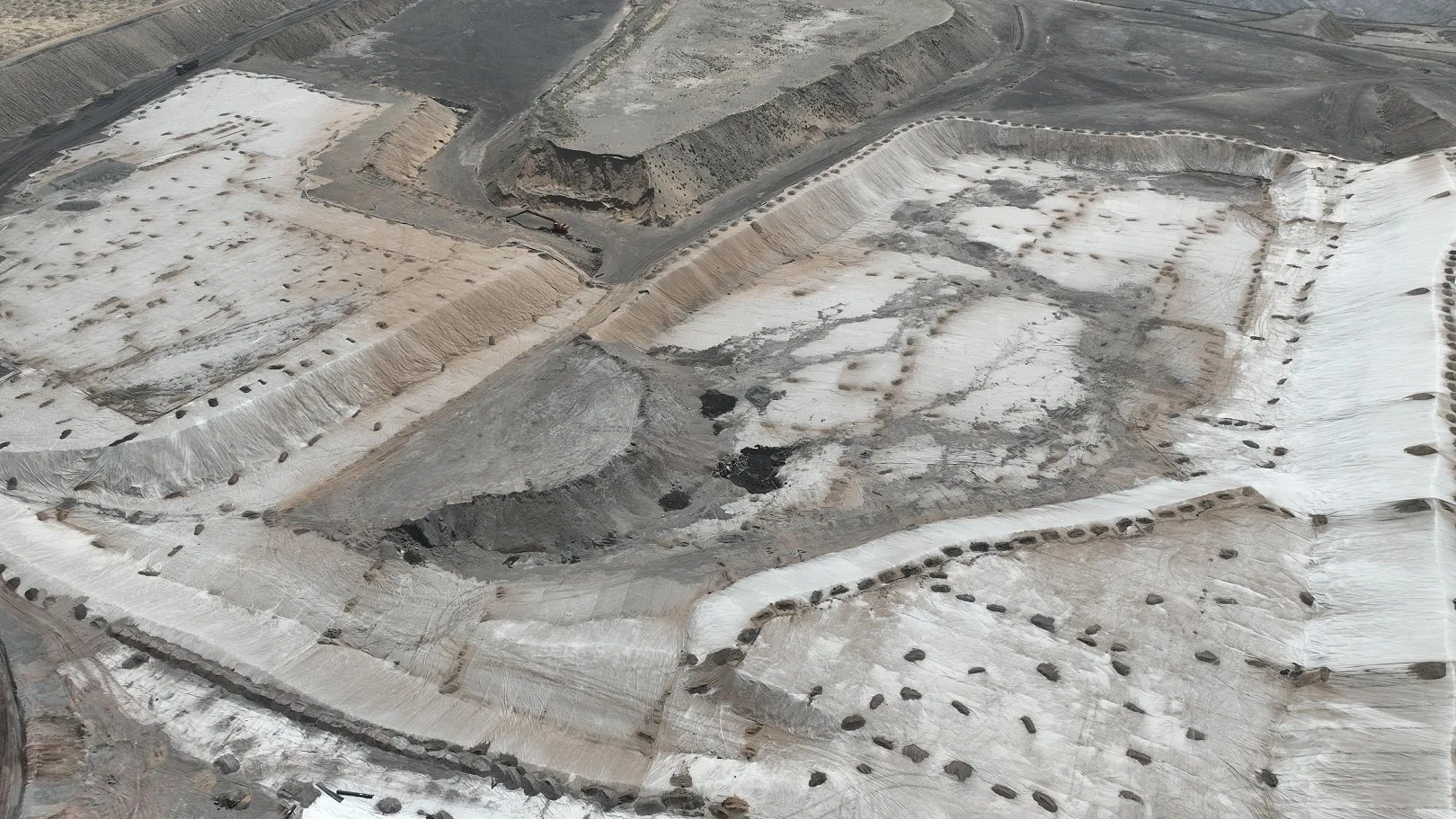
The largest and highest-consequence mining containment structure — stores the fine-grained waste residue from ore processing. The tailings typically contain process chemicals (cyanide, sulphide, heavy metals) that must not reach groundwater or surface water. Regulatory requirements for TSF lining have increased significantly since 2019. Most jurisdictions now require engineered composite lining (geomembrane + compacted clay or CCL) on the base and lower slopes, with grouted mattress or riprap on the outer (downstream) face of the embankment for slope protection.
3. Sediment Pond (Settling Pond)
Captures suspended sediment from site runoff, mine drainage, and process effluent before discharge or recycling. Lower chemical risk than TSF but requires reliable containment during storm events. Typically lined with geomembrane on the base; grouted mattress on the inlet berm and embankment slopes exposed to erosion from inflow turbulence and wave action.
4. Heap Leach Pad
A specialised facility where crushed ore is stacked on an engineered pad and irrigated with lixiviant (typically acid or cyanide solution). The pad liner must prevent lixiviant escape to groundwater with near-zero leakage. Standard specification: double liner system (primary HDPE 2.5 mm + secondary HDPE 2.0 mm with leak detection layer between). No grouted mattress on the pad surface itself — the liner is overlaid with ore directly. Grouted mattress is used on the perimeter berm outer face for erosion protection.
Lining System Selection by Mining Pond Type
| Pond Type | Base Liner | Slope Liner | Slope Protection |
|---|---|---|---|
| Process Water Pond | HDPE 1.5–2.0 mm | HDPE 1.5–2.0 mm | Filter Point Grouted Mattress 150 mm |
| Tailings Storage (base) | HDPE 2.0 mm + CCL 600 mm | HDPE 2.0 mm + CCL | Grouted Mattress 150–200 mm (outer face) |
| Sediment Pond | HDPE 1.0–1.5 mm | HDPE 1.0–1.5 mm or Grouted Mattress | Grouted Mattress 100 mm on inlet berms |
| Heap Leach Pad | HDPE 2.5 mm primary + 2.0 mm secondary | Same double-liner | Grouted Mattress on perimeter berms |
Why Grouted Mattress on Mining Embankment Slopes?
Mining embankment outer (downstream) slopes face three erosion mechanisms that grouted mattress is specifically designed to address:
- Rainfall erosion — high-intensity storms in many mining regions generate significant runoff over bare slopes. Grouted mattress eliminates surface erosion regardless of rainfall intensity, which is critical during the construction and early operation phases before vegetation establishes on the outer slope.
- Seepage emergence erosion — some seepage through the embankment is inevitable; where it emerges on the outer slope face, it can initiate internal erosion. A grouted mattress on the outer slope does not prevent seepage emergence, but it does prevent the surface erosion that can mask seepage monitoring and accelerate failure. A geotextile filter beneath the mattress prevents piping of fine material.
- Overtopping resilience — if the TSF embankment is overtopped during an extreme storm event, grouted mattress significantly reduces the rate of erosion on the outer slope, slowing the failure progression and allowing emergency response time. This is the primary reason many national mining regulators now specify or recommend hard armour on TSF outer slopes.
Remote Site Logistics: Why Grouted Mattress Wins in Mining
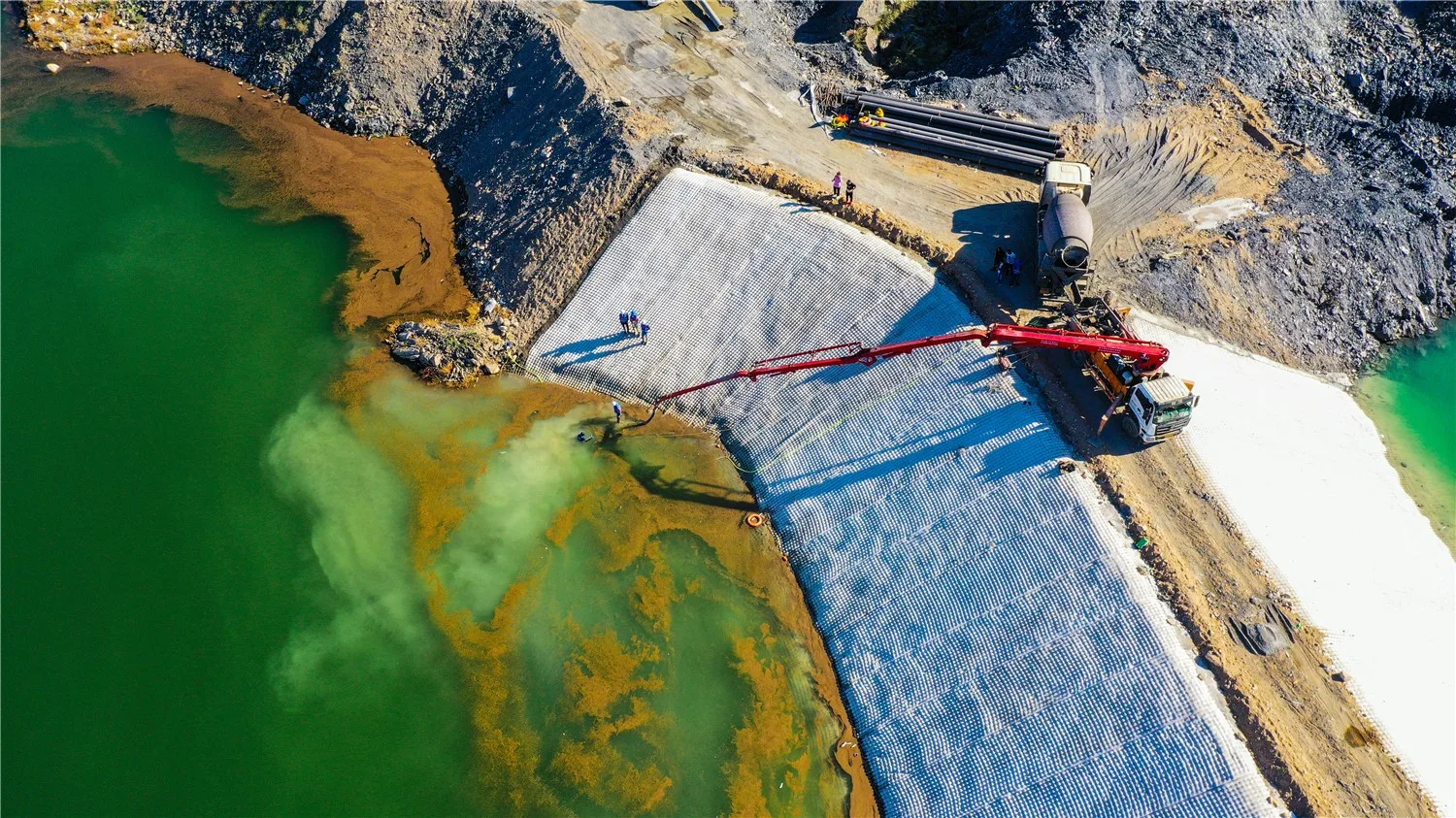
Many mining projects are located in remote areas — desert, mountain, or jungle — where rock for riprap is not available locally and heavy construction plant is expensive to mobilise. Grouted mattress has significant logistics advantages in these environments:
- Light to ship: Unfilled rolls weigh only 2–5 kg/m² — a 20-foot container holds approximately 5,000 m² of mattress fabric, sufficient for a medium-sized embankment slope. Compare with riprap, which requires rock haulage from a local quarry at 1,500–2,500 kg/m³.
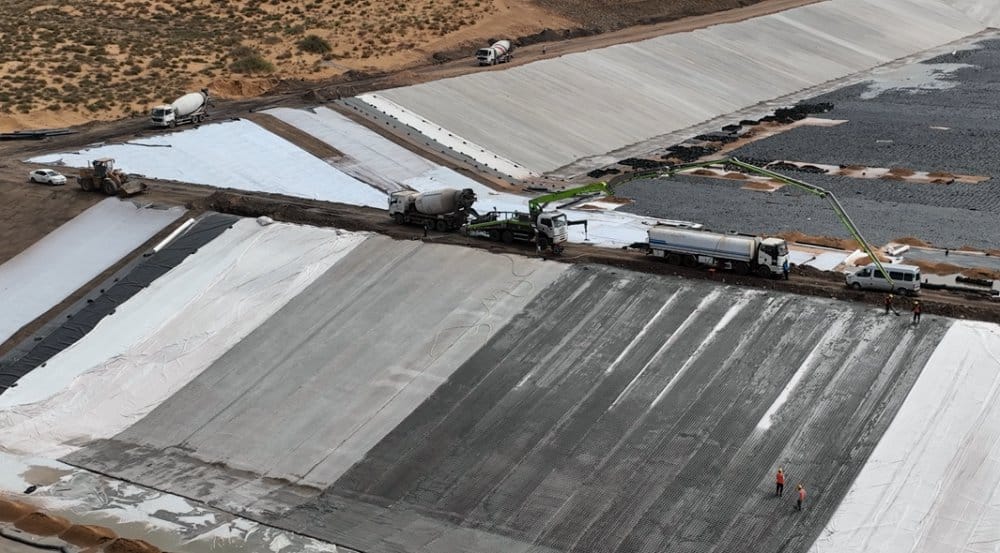
- Standard plant: The only specialist plant required is a concrete pump truck — standard on any construction site. No rock crusher, no quarry blast, no heavy haulage trucks for aggregate.
- Helicopter or air-freight capable: For extremely remote sites where road access is seasonal or non-existent, mattress fabric can be airfreighted. The grout ingredients (cement, sand) are sourced locally or flown in separately.
For more on erosion-resistant lining options, see our guide to grouted mattress vs geomembrane and our overview of revetment mattress performance.
Frequently Asked Questions
Does grouted mattress resist acid mine drainage?
Standard Portland cement concrete has limited resistance to acidic environments — sulphuric acid (produced by oxidation of sulphide minerals in acid mine drainage) attacks the calcium silicate hydrate phases in concrete, reducing strength over time. For applications in contact with acid mine drainage (pH <4.5), specify slag cement (GGBS) or high-alumina cement in the grout mix, or use a geomembrane as the primary containment liner with grouted mattress as the protective cover only. HydroBase engineering team can advise on grout mix design for aggressive chemical environments.
What is the minimum slope for grouted mattress installation on mining embankments?
There is no minimum slope — grouted mattress can be installed on slopes from near-flat to 1:1 (45°). On outer embankment slopes, typical mining embankment grades of 1:2 to 1:2.5 are straightforward standard-procedure installations. Slopes steeper than 1:1.5 require additional anchor stakes and modified injection procedures. The practical upper limit for standard installation is approximately 1:1.2 — consult HydroBase engineering for steeper applications.
Is grouted mattress acceptable to mining regulators as slope protection?
Yes — grouted mattress is accepted as a hard armour slope protection system by mining regulators in Australia (ANCOLD guidelines), Canada (MAC framework), South Africa (SANS 10286), and most Asian mining jurisdictions. It satisfies the "engineered erosion protection" requirement in post-Brumadinho design standards. Where regulators require a specific design methodology, USACE EM 1110-2-1601 provides the hydraulic design basis, and GRI GT16 provides the material acceptance standard.
HydroBase has supplied grouted mattress for mining water management projects across Australia, Mongolia, Indonesia, and sub-Saharan Africa. Factory-direct supply, 48-hour dispatch, marine-grade shipping documentation. Request a mining project consultation — our engineering team responds within 24 hours.
HydroBase Technical Team
HydroBase manufactures grouted mattresses (GRI GT16 compliant) in China and delivers to 30+ countries. Our engineering team provides specification support, grout mix design, and installation guidance.
About HydroBaseMore Articles
View all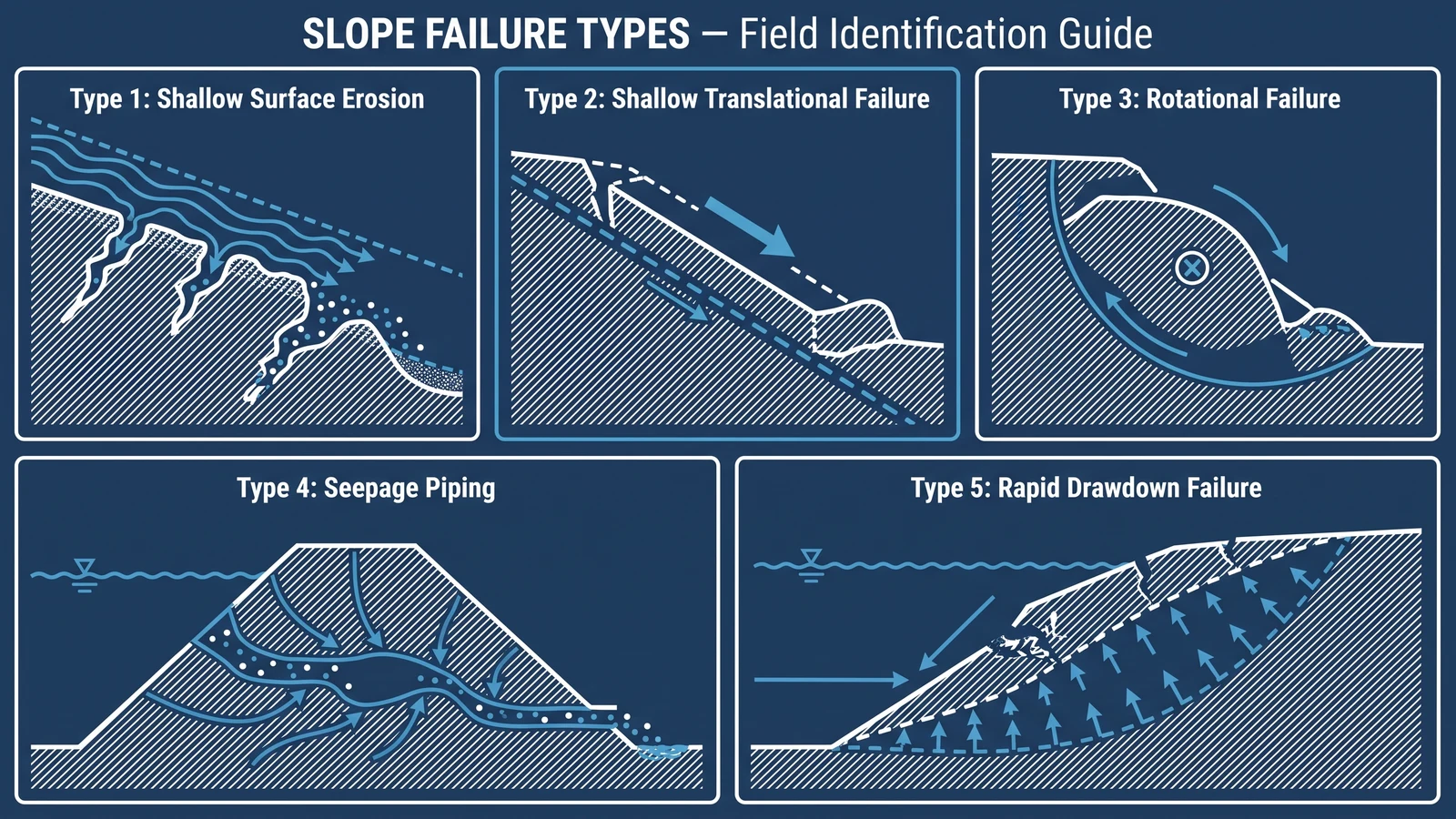
Slope Failure Causes and Prevention: Field Guide
Slope failures on canal embankments, reservoir faces, and road cuttings follow recognisable patterns. This field guide covers the five main slope failure types — shallow surface erosion, shallow translational, rotational, piping, and rapid drawdown — with prevention measures for each.
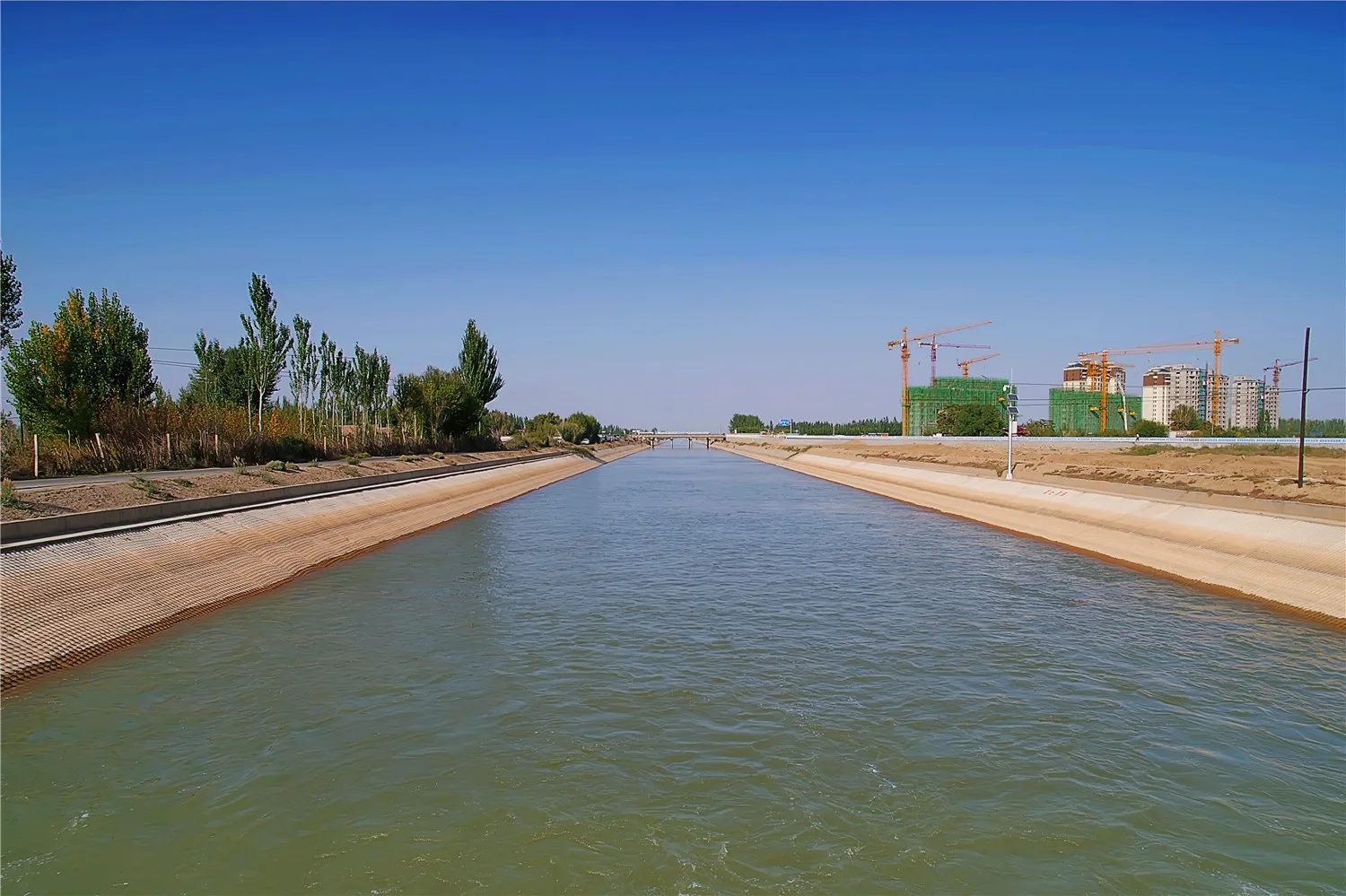
Grouted Mattress Case Studies: 5 Projects, Real Data
Five real grouted mattress installations across canal lining, river bank protection, coastal revetment, reservoir lining, and bridge pier scour — with actual project areas, design parameters, installation programmes, and post-installation performance data.
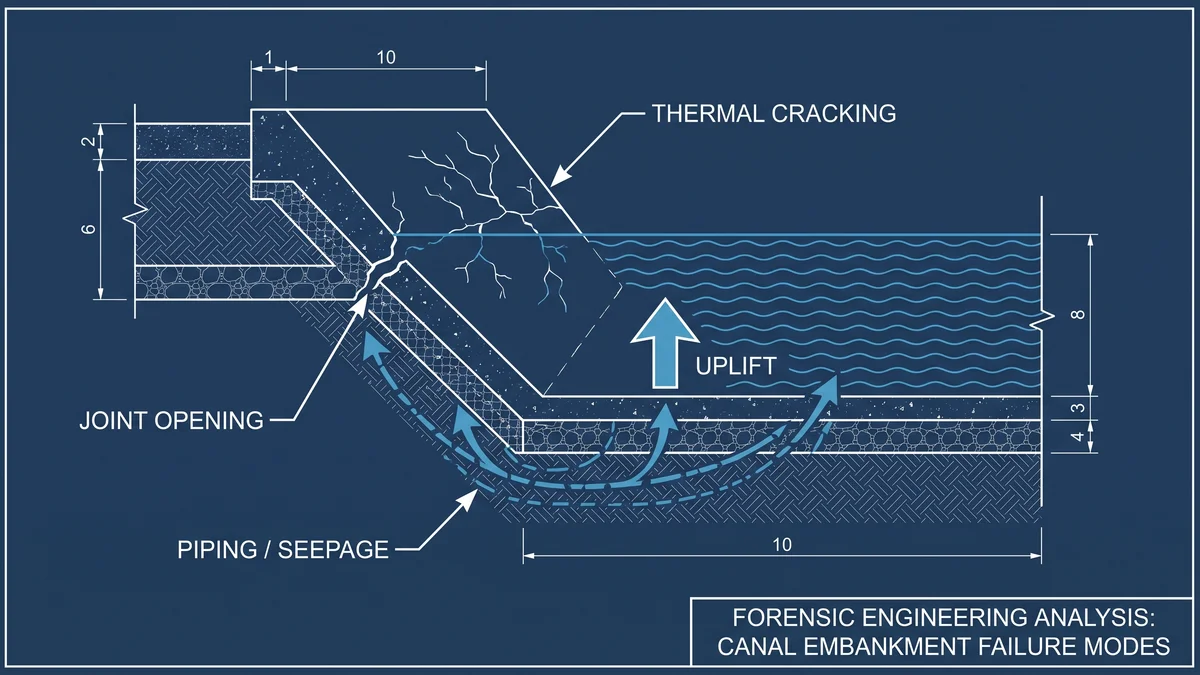
Canal Lining Failure: 7 Causes and How to Prevent Them
Canal lining failures cost irrigation authorities billions annually in emergency repairs and lost water. This forensic guide identifies the 7 most common failure causes — from joint failure to uplift — and explains how to prevent each through better specification and installation.
HydroBase - China Manufacturer
Ready to Specify Grouted Mattress?
GRI GT16 compliant products, factory test reports included. Engineering support at no cost. 48-hour response.