
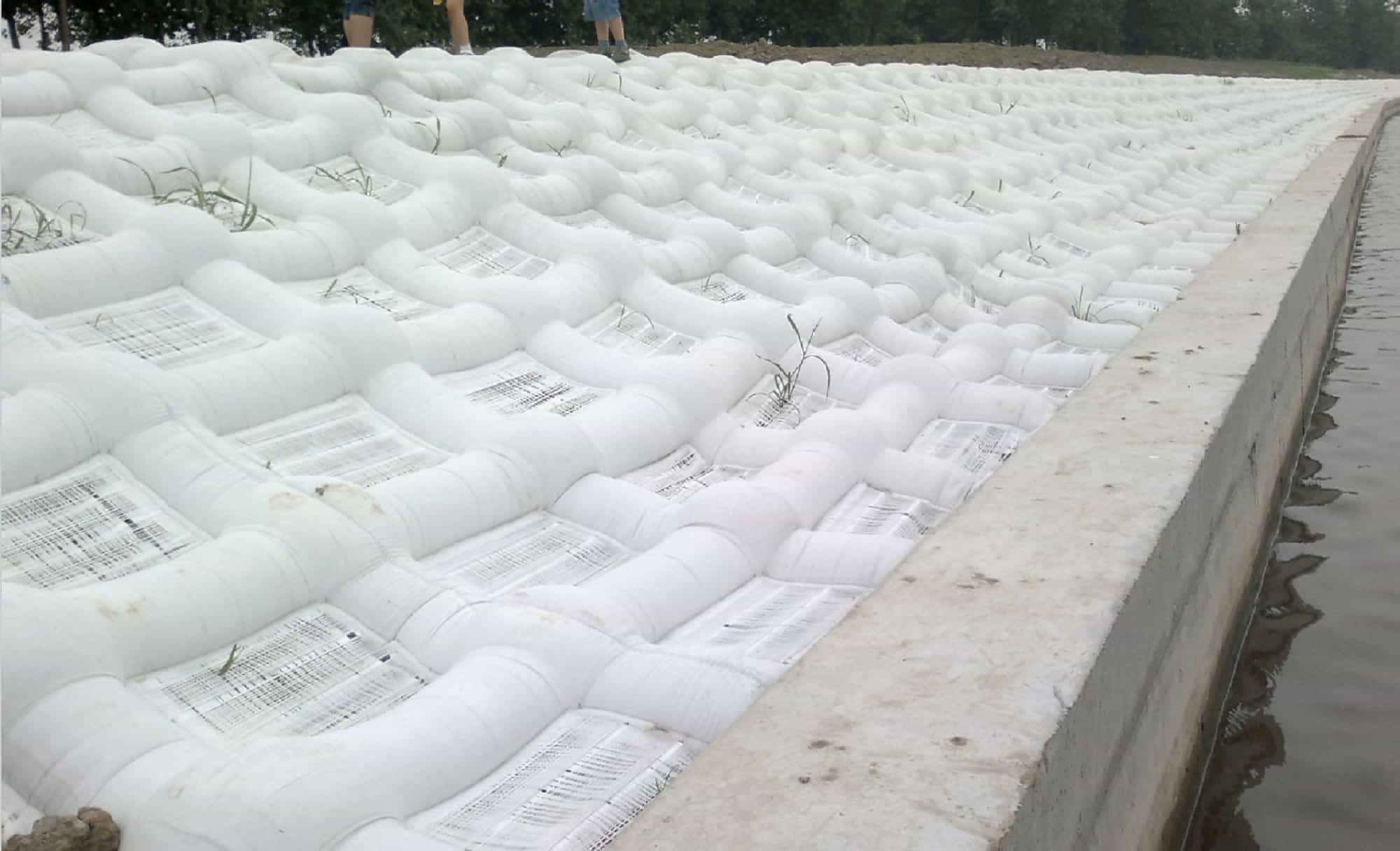
Vegetated Grouted Mattress
Open-cell concrete matrix allows vegetation to establish through the hardened grout — structural erosion protection with ecological cover. GRI GT16-compliant.
Third-party GRI GT16 test reports - ISO 17025 lab - BOQ template included with every order
Quick Answer
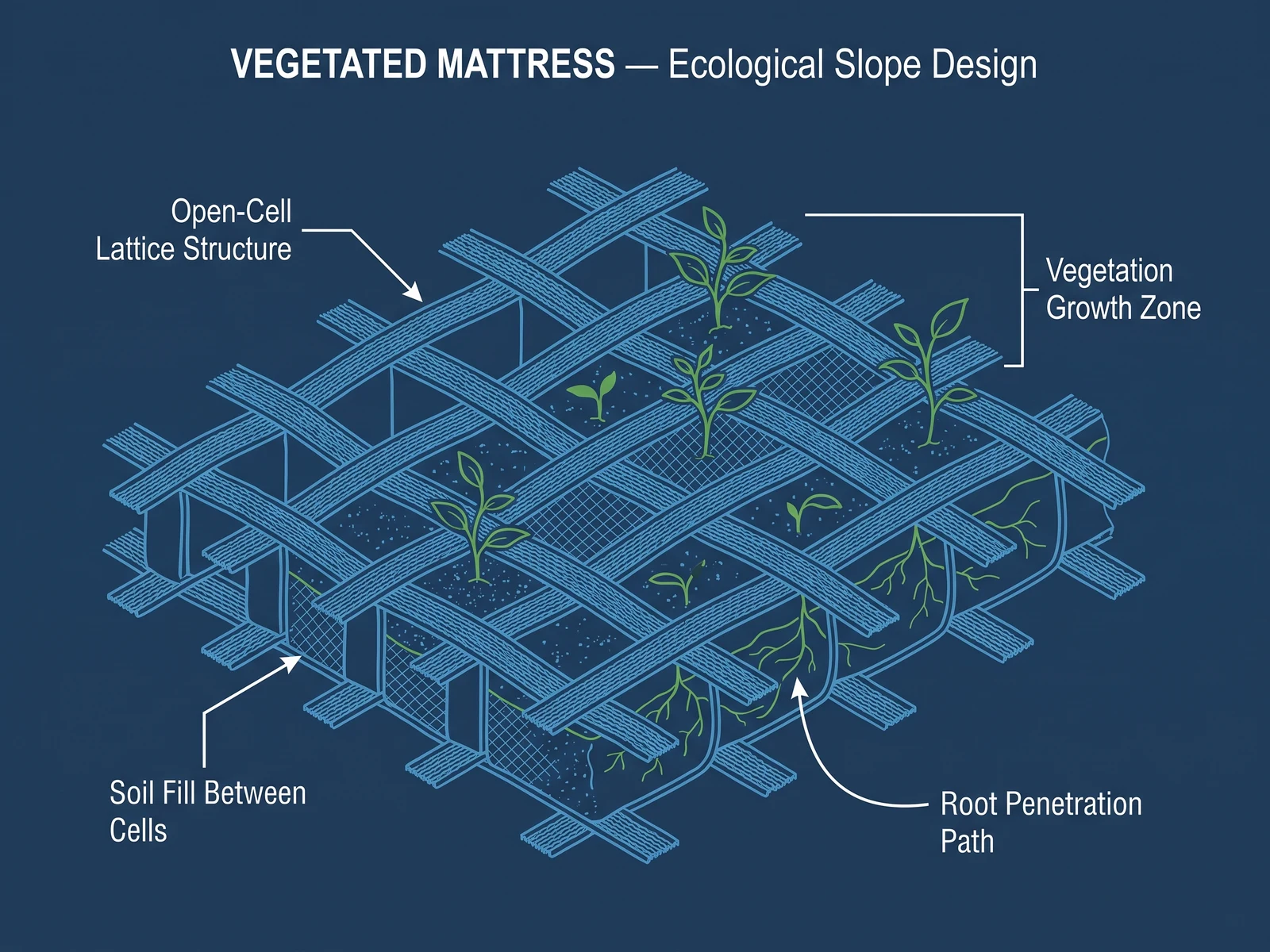
Vegetated grouted mattress is a GRI GT16-compliant GGFM variant with an open-cell fabric that allows vegetation to grow through the hardened grout matrix. The upper geotextile layer has a regular pattern of open cells — typically 15–20% void ratio — that remain open after grouting and expose the underlying soil. Native grass seed broadcast over the surface roots through these cells, producing a slope surface that appears green while the concrete matrix provides full erosion and scour protection. It is specified for highway embankments, river corridor slopes, and any application requiring both structural armour and visual ecological integration.
What Is Vegetated Grouted Mattress and How Does Vegetation Establish?
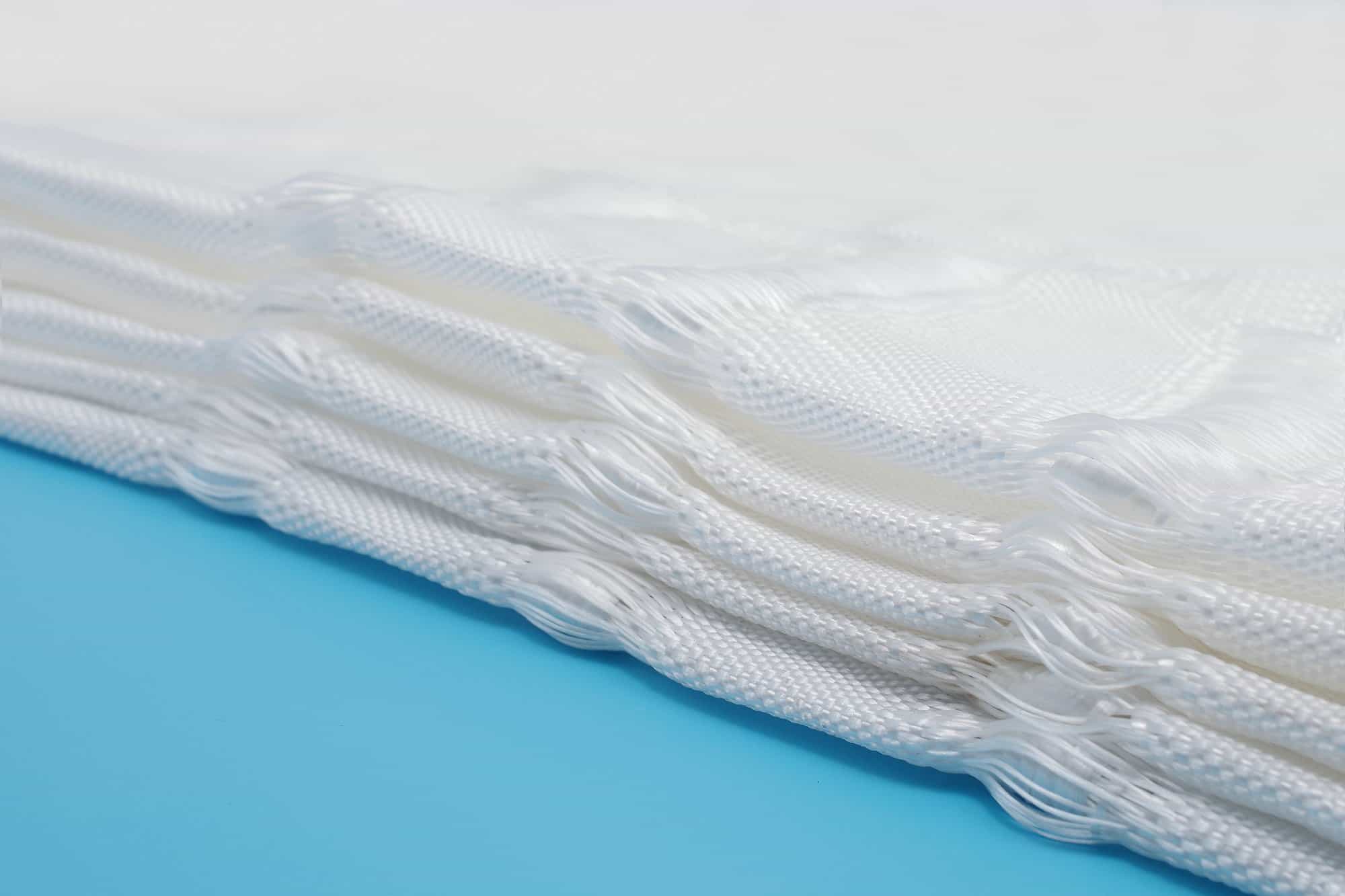
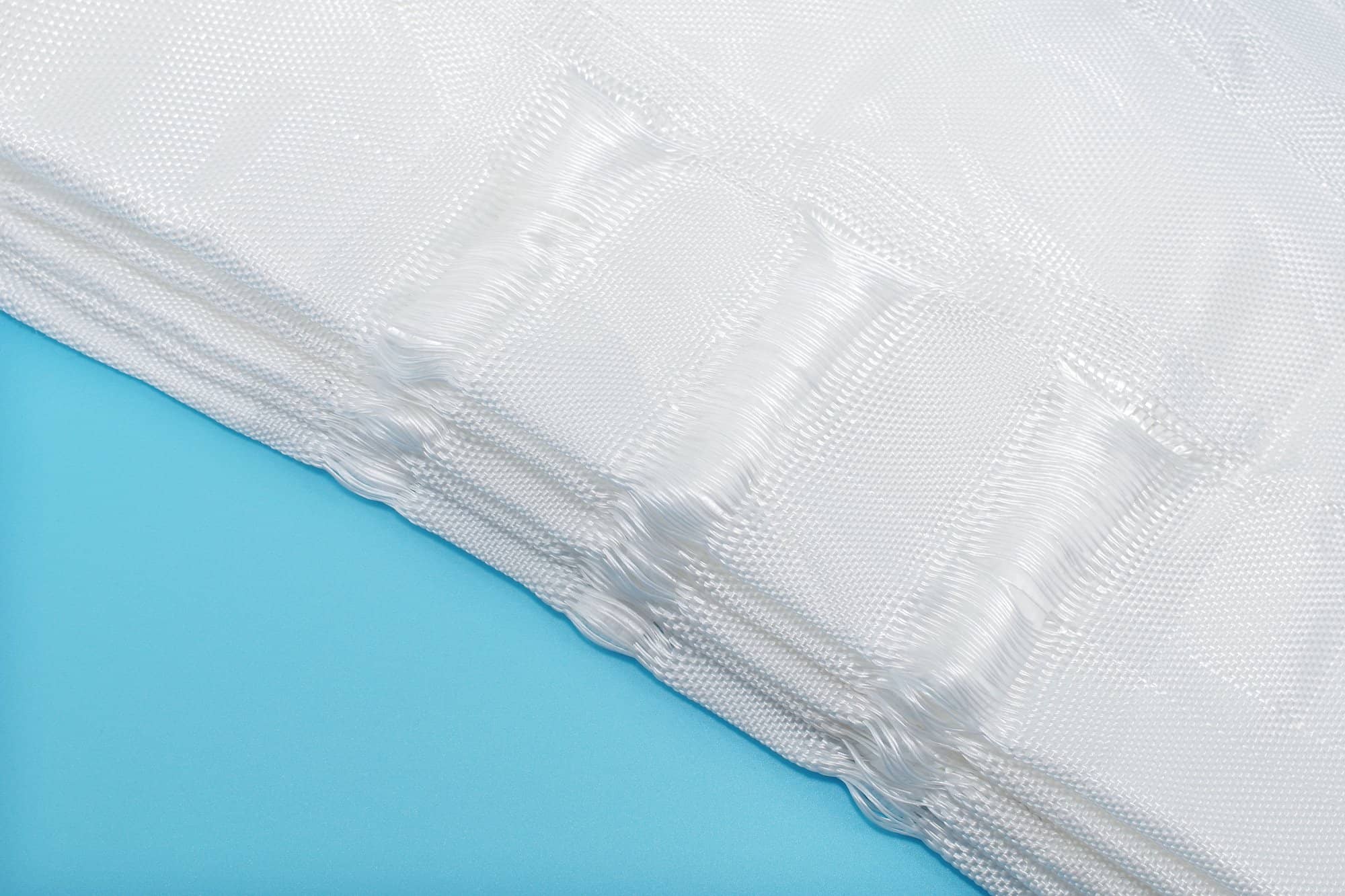
The vegetated grouted mattress uses a specially designed open-cell fabric. The upper geotextile layer has a regular pattern of large openings (typically 60–0 mm diameter). When filled with grout, these openings remain as cells in the concrete matrix, exposing the underlying soil.
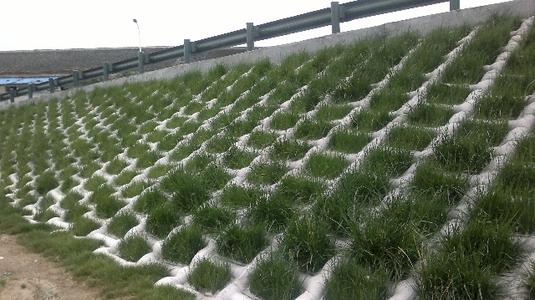
After curing, native grass seed is broadcast across the surface. Roots establish through the open cells, anchoring into the soil below. The result is a slope that appears green and natural, while the concrete matrix provides full structural protection against erosion.
This makes the vegetated variant the preferred choice for highway embankments, park slopes, and any amenity site where bare concrete finish is unacceptable.
Vegetated Slope Installations
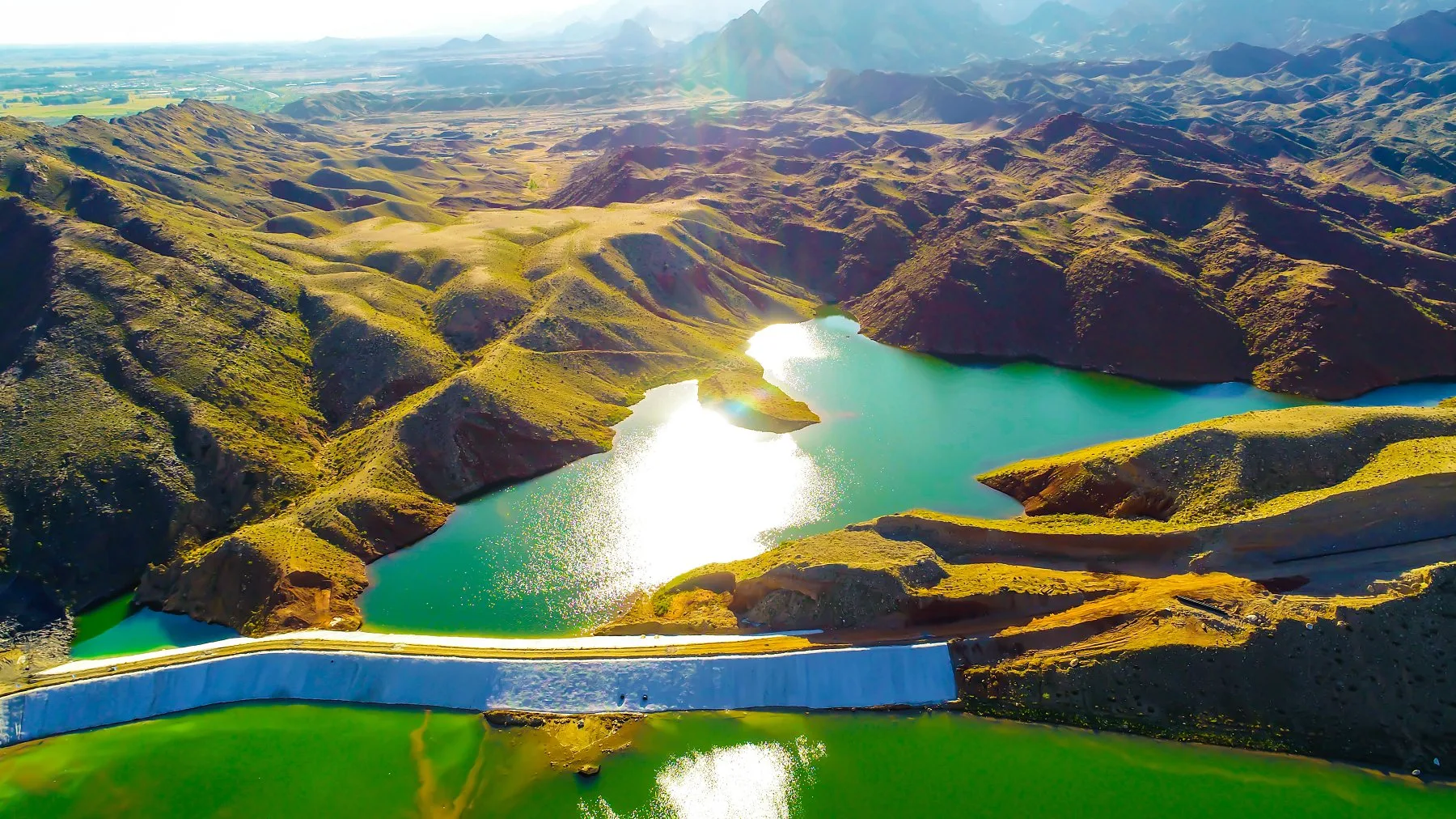
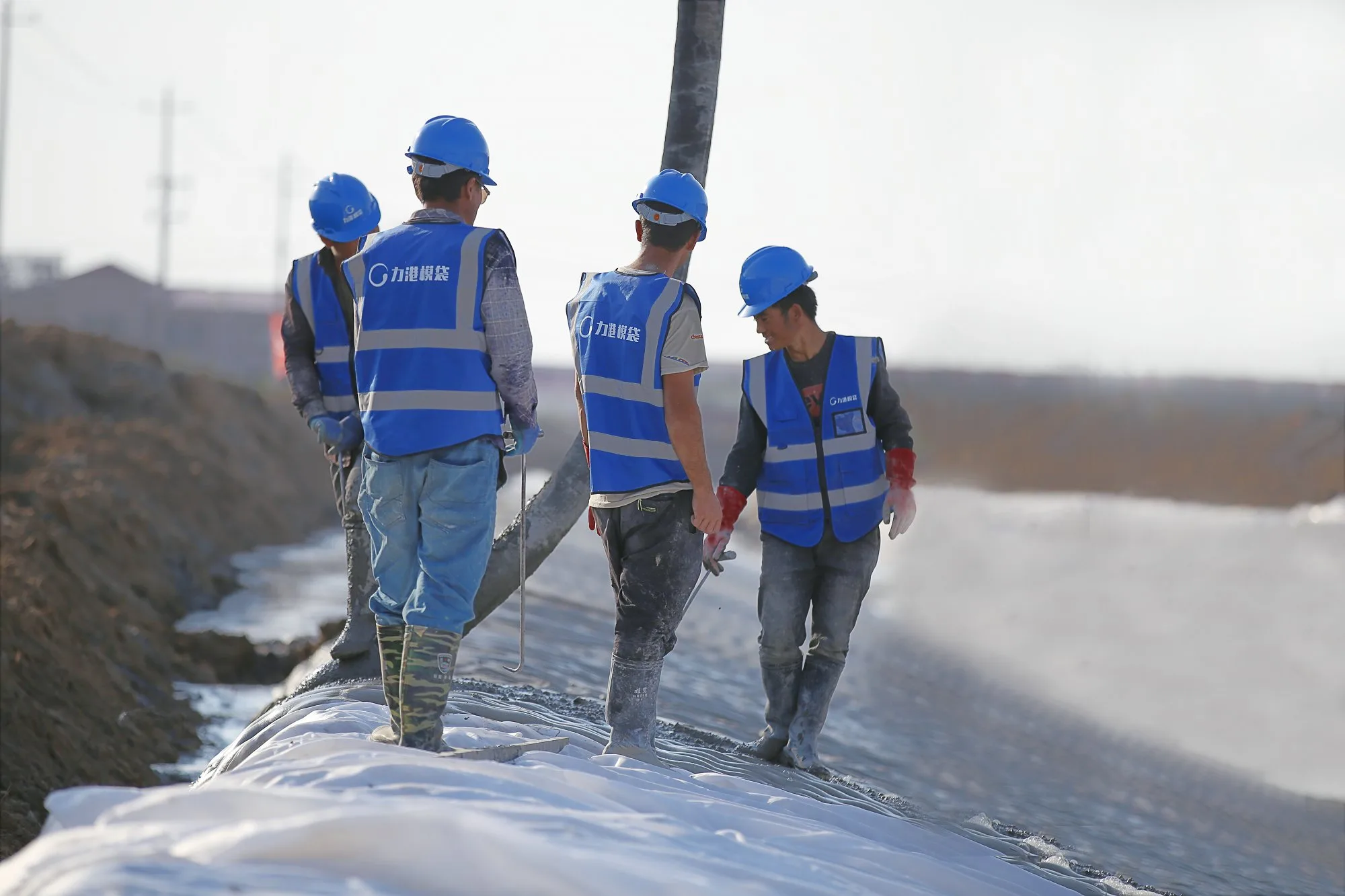
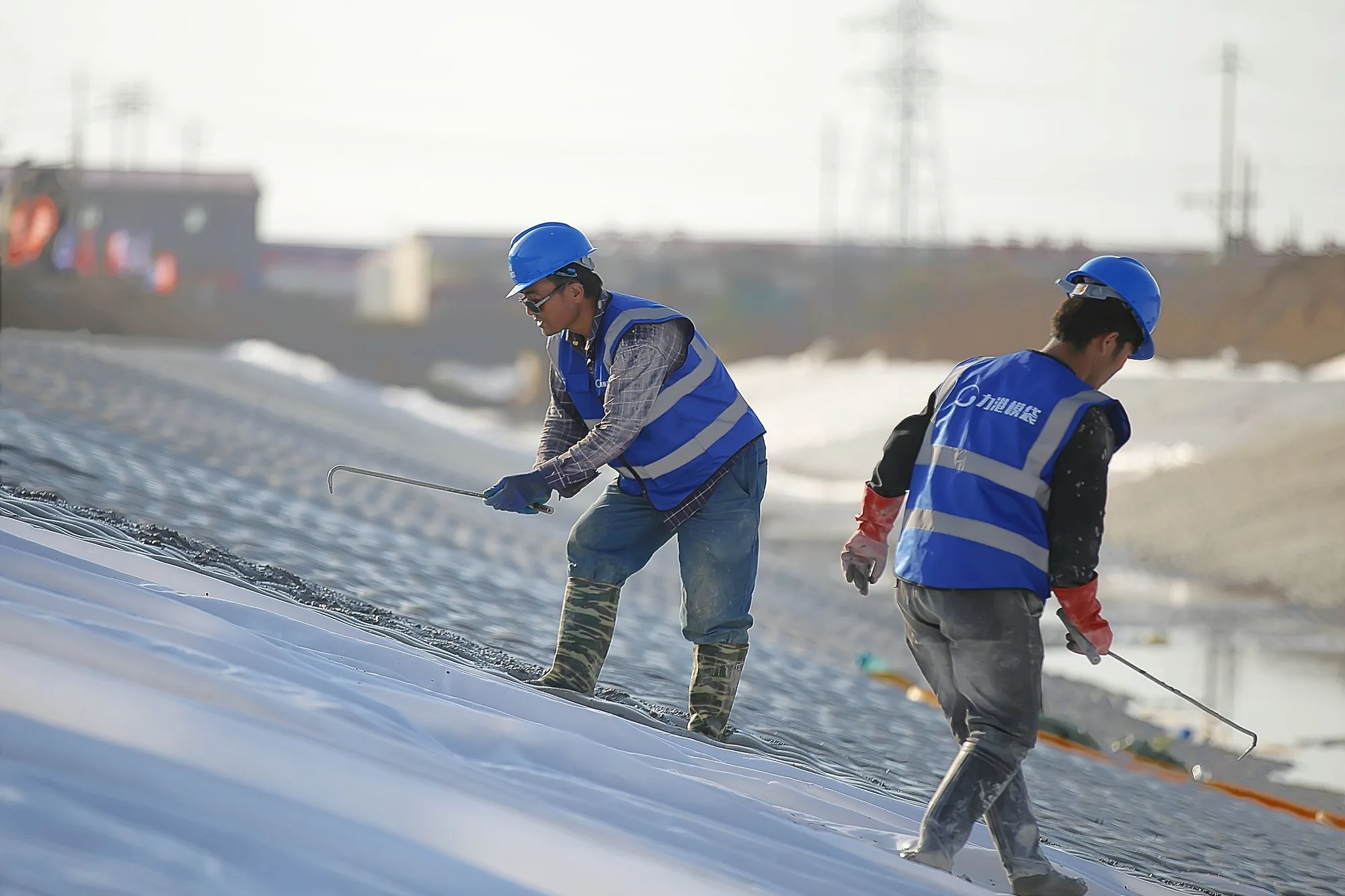
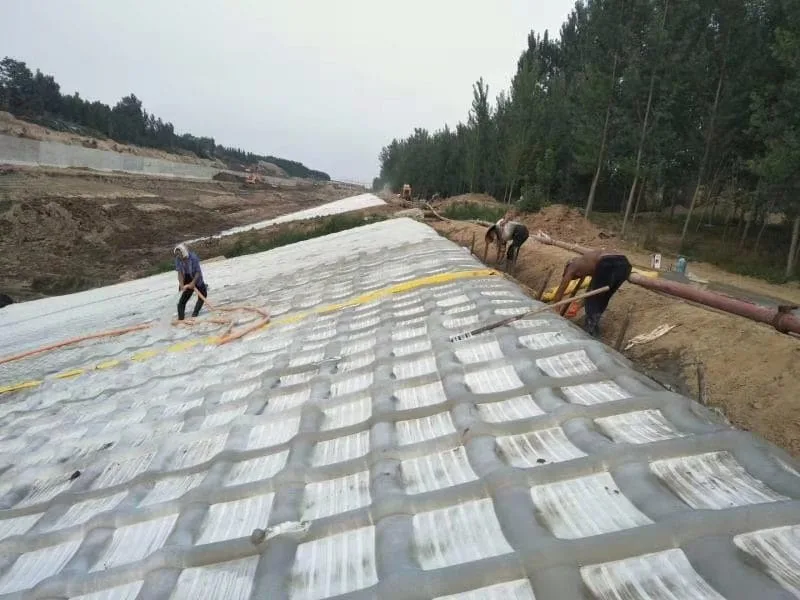
Vegetated Mattress Specifications
| Parameter | Value |
|---|---|
| Thickness | 75 mm, 100 mm, 150 mm |
| Open Cell Diameter | 60–90 mm |
| Open Cell Area Ratio | ~15–20% of total surface |
| Compressive Strength | ≥17 MPa at 28 days (GRI GT16) |
| Design Velocity (max) | 3.5 m/s (100 mm grade) |
| Slope Range | Up to 1V:1.5H (34-) |
| Seeding Method | Hydroseeding or broadcast after 7-day cure |
| Vegetation Establishment | 4–8 weeks (temperate conditions) |
| Standard | GRI GT16 |
| Panel Width | Up to 6 m |
| Panel Length | Up to 30 m |
Where Green Cover Is a Planning Requirement
Highway Embankments
Motorway and national road embankment slopes where environmental planning requires a naturalistic finish.
Amenity Parks & Reservoirs
Public-facing slopes where aesthetic is as important as structural protection.
Golf Courses & Recreational
Water feature edges, pond banks, and fairway drainage channels with landscaping requirements.
River Levees
Flood defence embankments where regulatory approval requires vegetation cover rather than bare concrete.
Airport Perimeter Slopes
Airfield boundary banks and drainage channels requiring stable, mowable vegetation cover.
Farmland Drainage Slopes
Agricultural field boundary slopes and irrigation canal banks with environmental sensitivity.
Vegetated vs Standard vs Rip-Rap
| Criterion | Vegetated Mattress | Standard Mattress | Rip-Rap |
|---|---|---|---|
| Vegetation compatible | By design | Solid surface | Between rock only |
| Bare concrete visible | Hidden at maturity | Visible | Rock visible |
| Erosion protection | Full (concrete matrix) | Full | Depends on sizing |
| Ecological habitat value | High | Low | Medium |
| Planning approval ease | Usually straightforward | Site dependent | Site dependent |
| Maintenance | Mow vegetation only | Minimal | Re-grading required |
| Typical cost | $30–50/m² | $25–45/m² | $45–80/m² |
Vegetated Mattress Questions
What types of grass or plants grow through the mattress?
Any grass species that roots in the substrate beneath the mattress can establish through the open cells. Common choices include buffalo grass, Bermuda grass, and native species selected for the climate. We recommend seeding with a hydroseeder into the cells immediately after grout cure, using species appropriate to the site location.
How long does it take for vegetation to establish?
Under favourable conditions (sufficient moisture, mild temperatures), visible green cover appears within 4–8 weeks of seeding. Full root establishment and canopy closure typically takes one growing season. The concrete matrix provides full erosion protection from day one — vegetation is supplementary.
Does vegetation growing through the cells reduce structural capacity?
No. The root system stabilises the subgrade without affecting the concrete matrix. Compressive strength and hydraulic performance are unchanged at maturity. We specify standard GRI GT16 structural parameters regardless of the vegetation component.
Is it suitable for steep slopes?
The vegetated mattress is most commonly specified on slopes up to 1:2 where vegetation establishment is feasible. On steeper slopes, vegetation struggles to establish without irrigation — the standard or filter point mattress is more appropriate in those cases.
Can it be used on slopes that are periodically submerged?
For slopes with intermittent flooding (up to 2–4 weeks per year), established grass typically recovers after inundation. For frequently submerged slopes (tidal zones or perennial floodplains), the standard or filter point variant is recommended as sustained submersion prevents vegetation establishment.
Other Grouted Mattress Products
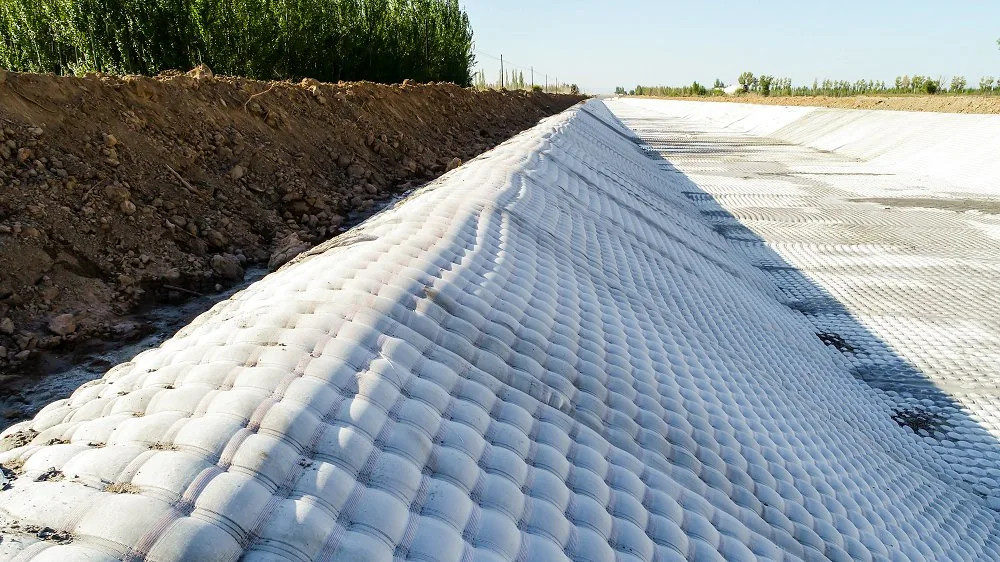
Standard Grouted Mattress
Universal erosion protection for canals, slopes, and river banks — solid face.
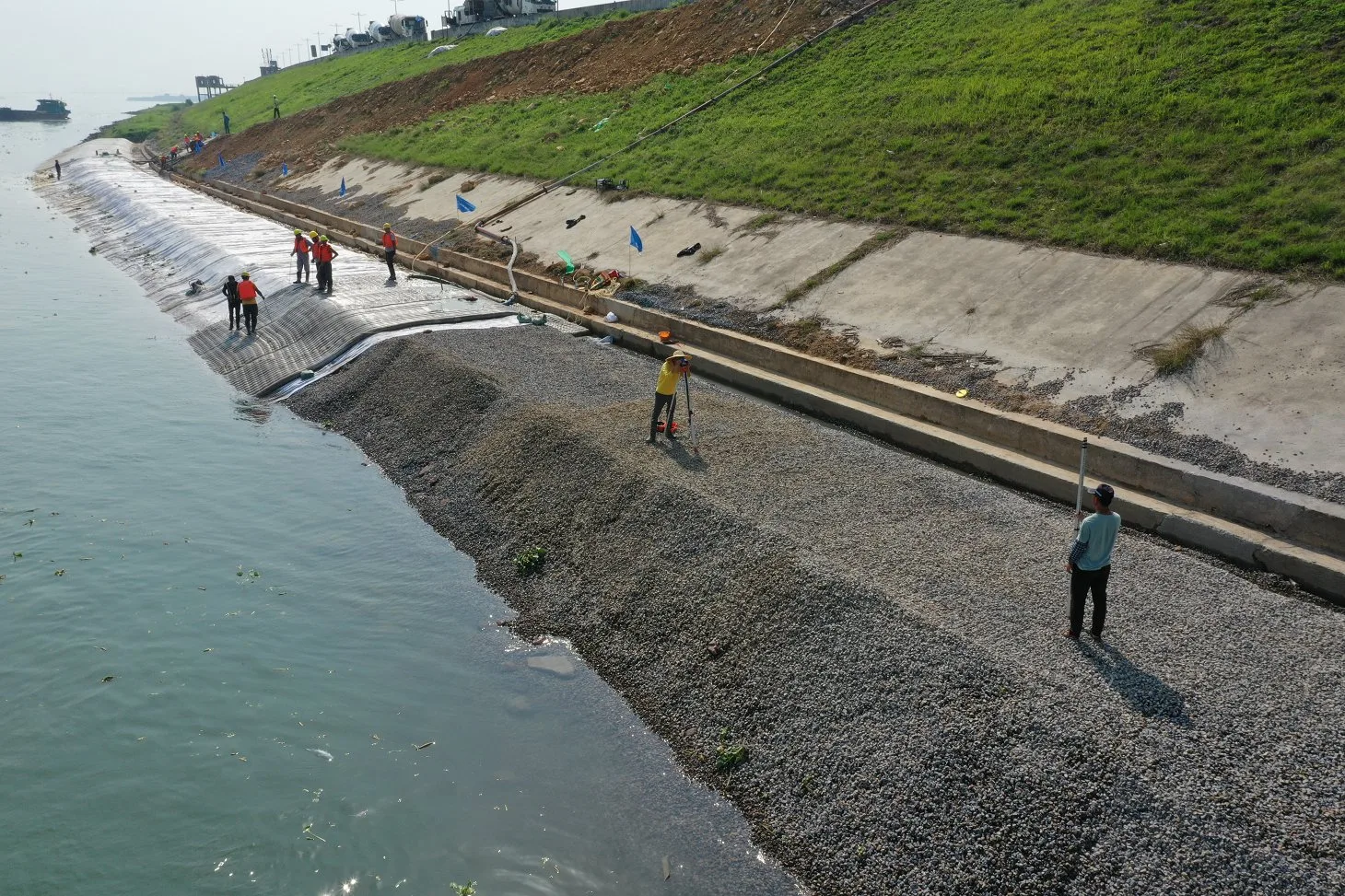
Filter Point
Drainage relief holes prevent artesian uplift in tidal and submerged applications.
Technical Specifications
Full product datasheets, GRI GT16 test reports, and BOQ templates.