
What Is a Grouted Mattress? Technical Guide
Quick Summary
A grouted mattress (GGFM) is a flexible concrete erosion protection system. Covers fabric types, grout mix design, thickness selection, and GRI GT16 compliance.
Quick Answer: A grouted mattress is a flexible erosion protection system made from two layers of woven geotextile stitched into a grid, then filled with cement grout on-site. It conforms to any surface, installs without dewatering, and delivers a 50+ year design life fully compliant with GRI GT16.
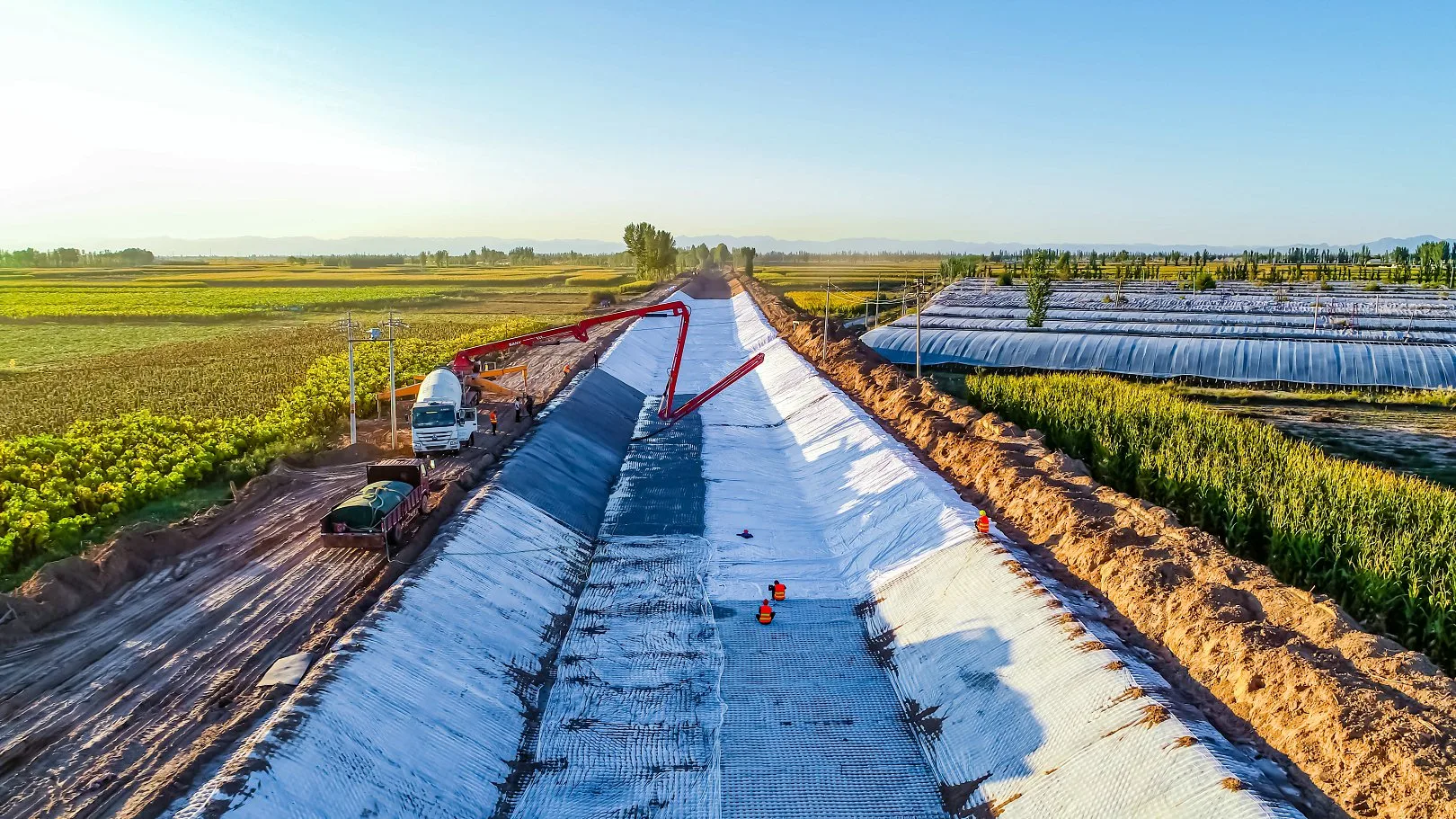
When hydraulic engineers need to protect a canal, riverbank, reservoir slope, or bridge pier, one system consistently outperforms loose rock and precast panels on cost, speed, and long-term performance: the grouted mattress — also called a Geotextile Grout-Filled Mattress (GGFM). It has become the default specification for large-scale hydraulic works across China, the Middle East, and Southeast Asia.
This guide explains exactly how the system works, what the different fabric variants offer, how to select the right thickness, and why GRI GT16 compliance is non-negotiable when evaluating a supplier. For a direct cost comparison with the most common alternative, see Grouted Mattress vs Rip-Rap.
What Is a Grouted Mattress?
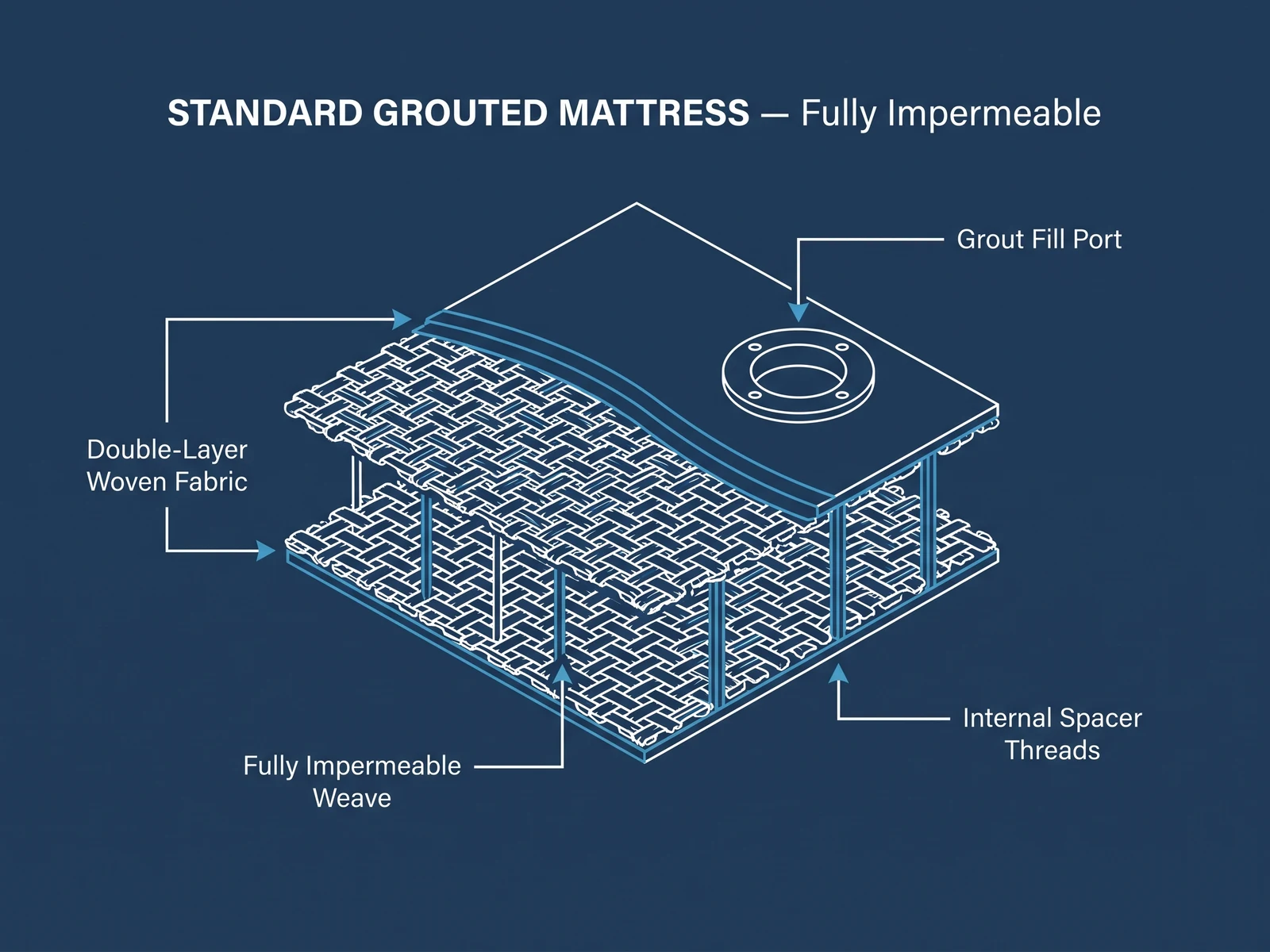
A grouted mattress consists of two layers of woven polypropylene geotextile stitched together at regular intervals to create a grid of internal cells. The mattress is manufactured flat, rolled into manageable units, and transported to site. Once positioned on the slope or canal bed, a concrete pump truck injects fine-aggregate cement grout through fill nozzles, expanding the fabric to its design thickness and forming a rigid, articulated concrete armour.
Unlike conventional concrete slabs, the mattress remains flexible at panel joints — it conforms to the subgrade profile as the grout fills each cell, and continues to tolerate minor settlement after curing without cracking.
- Installed without dewatering — even in actively flowing water up to 0.5 m/s
- Conforms to irregular subgrade profiles during and after installation
- Articulated at panel joints, tolerating post-construction settlement
- Transported as compact flat rolls — no crane-lifted precast panels
- 800–1,200 m² installed per pump unit per 8-hour shift
How Does a Grouted Mattress Work?
The Geosynthetic Research Institute defines the GGFM system across four distinct installation stages — all of which use standard contractor plant with no specialist grouting equipment.
- Fabric placement — The rolled mattress is unrolled down the prepared slope and secured at the top edge with steel stakes at 2 m centres. Adjacent panels overlap by 300 mm minimum.
- Injection port connection — The pump hose connects to the fill nozzle at the panel base. A standard 42–47 m boom pump is sufficient.
- Grout pumping — Fine-aggregate cement grout is pumped at 15–25 m³/hour, the installer walking the injection point along the panel at 1 m intervals as each cell expands.
- Curing — Water misting begins within 30 minutes of pumping and continues for 7 days minimum. The mattress reaches ≥17 MPa compressive strength at 28 days.
For the complete step-by-step site guide see our Canal Lining Installation Guide.
What Are the Three Types of Grouted Mattress Fabric?
HydroBase manufactures three fabric variants. Selecting the correct one is as important as selecting the right thickness — using an impermeable mattress in tidal conditions, for example, can lead to uplift failure.
| Variant | Fabric Face | Best For | Key Benefit |
|---|---|---|---|
| Standard | Fully impermeable woven face | Canal lining, slope protection, river training | Maximum flow resistance; seepage prevention |
| Filter Point | Openings at cell intersections allow drainage | Tidal zones, artesian conditions, coastal revetments | Prevents uplift failure under hydrostatic pressure reversal |
| Vegetated | Large open cells allow plant establishment | Ecological slopes, amenity riverbanks, highway embankments | Vegetation roots reinforce the structure |
What Is GRI GT16 and Why Does It Matter?
The industry specification for grouted mattresses worldwide is GRI GT16, published by the Geosynthetic Research Institute. It specifies minimum acceptance values for both the unfilled fabric and the completed filled system:
- Grab tensile strength (ASTM D4632) — minimum 1,200 N (both directions)
- CBR puncture resistance (ASTM D6241) — minimum 4,500 N
- UV degradation resistance (ASTM D4355) — minimum 70% tensile strength retained after 500 hours
- Compressive strength of filled mattress — minimum 17 MPa at 28 days
- Seam strength — peel ≥500 N/m, shear ≥1,500 N/m at panel joints
For a full breakdown including how to use GRI GT16 as a procurement tool, read GRI GT16 Explained: The Grouted Mattress Quality Standard.
How Do You Choose the Right Thickness?
| Thickness | Typical Application | Design Velocity | Weight (kg/m²) |
|---|---|---|---|
| 75 mm | Low-flow irrigation canals, minor drainage channels | Up to 2.5 m/s | ~115 |
| 100 mm | Standard canal lining, slope protection, river training | Up to 3.5 m/s | ~155 |
| 150 mm | High-velocity channels, tidal revetments, large reservoirs | Up to 4.5 m/s | ~230 |
| 200 mm | Bridge pier scour collars, exposed coastal structures | Up to 6.0 m/s | ~310 |
What Is Grouted Mattress Used For?
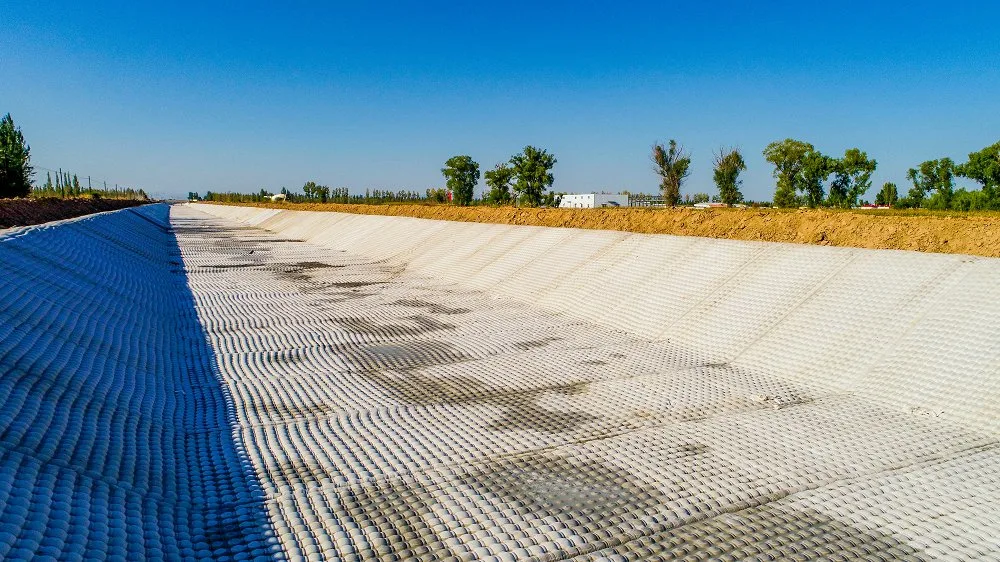
- Canal lining — irrigation, drainage, and water conveyance channels; prevents seepage losses and scour at design velocities
- River bank and bed protection — training works, flood embankments, and navigation channel stabilisation
- Bridge pier scour protection — articulated mattress collars installed underwater around existing piers
- Coastal revetments — wave and tidal erosion protection on seawalls and beach embankments
- Highway embankments — slope protection and drainage channel lining on infrastructure projects
- Reservoir and dam facing — upstream face armour resisting wave action and drawdown seepage
Frequently Asked Questions
Can grouted mattress be installed underwater?
Yes. The geotextile can be positioned and pumped in water up to 10 m deep using a guide frame lowered from a pontoon. Divers connect the grout injection hose; pumping is controlled from the surface. This is the standard method for bridge pier scour protection and submerged channel repair.
Does grouted mattress need a geotextile separator layer beneath it?
On competent subgrades (CBR ≥3%), no separator is required — the mattress fabric itself acts as a filter. On soft or silty subgrades below CBR 3%, a non-woven geotextile separator (150–200 g/m², minimum 4,500 N CBR puncture resistance) should be placed first to prevent differential settlement and piping at the subgrade–mattress interface.
Can grouted mattress be cut or shaped to fit around obstacles?
Yes. Panels can be pre-cut at the factory to fit around bridge piers, culvert outlets, headwalls, and irregular plan shapes. On-site trimming with a utility knife is also possible before pumping, as the unfilled fabric cuts cleanly. Post-curing trimming is impractical — confirm final geometry before ordering.
All HydroBase grouted mattress products are manufactured and tested to GRI GT16. Third-party test certificates are included with every shipment. Contact our engineering team for a product recommendation and indicative pricing within 48 hours.
HydroBase Technical Team
HydroBase manufactures grouted mattresses (GRI GT16 compliant) in China and delivers to 30+ countries. Our engineering team provides specification support, grout mix design, and installation guidance.
About HydroBaseMore Articles
View all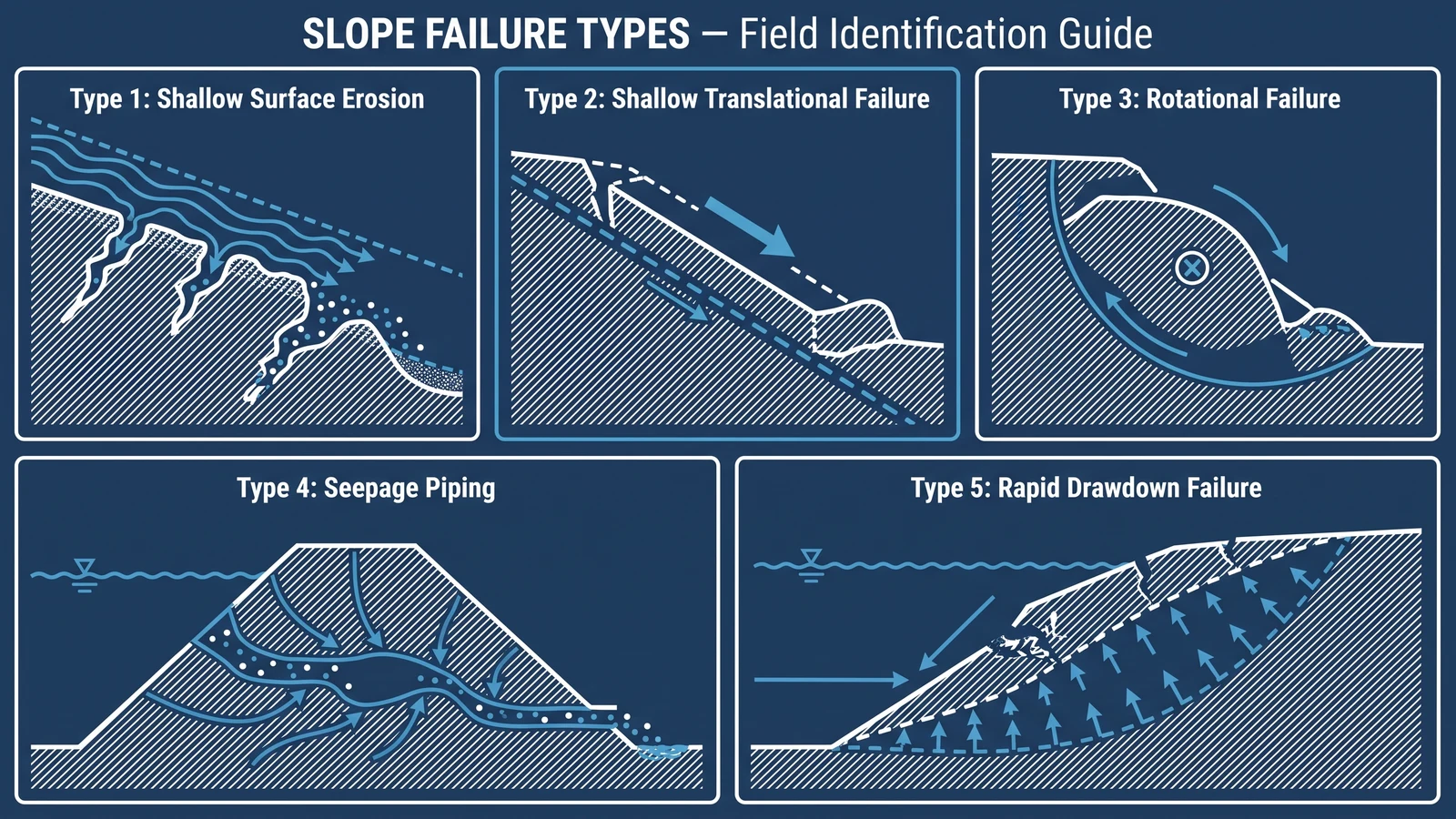
Slope Failure Causes and Prevention: Field Guide
Slope failures on canal embankments, reservoir faces, and road cuttings follow recognisable patterns. This field guide covers the five main slope failure types — shallow surface erosion, shallow translational, rotational, piping, and rapid drawdown — with prevention measures for each.
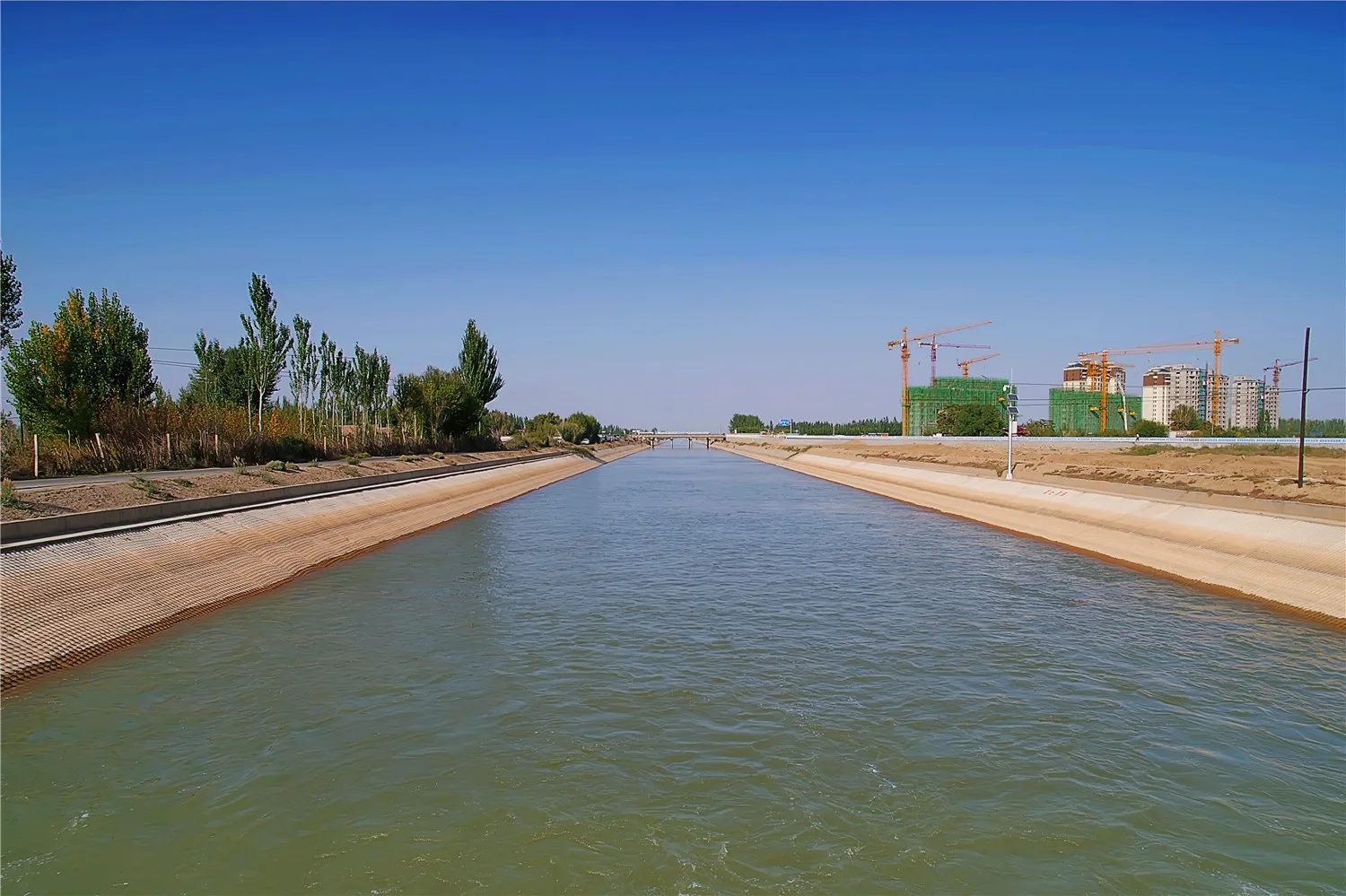
Grouted Mattress Case Studies: 5 Projects, Real Data
Five real grouted mattress installations across canal lining, river bank protection, coastal revetment, reservoir lining, and bridge pier scour — with actual project areas, design parameters, installation programmes, and post-installation performance data.
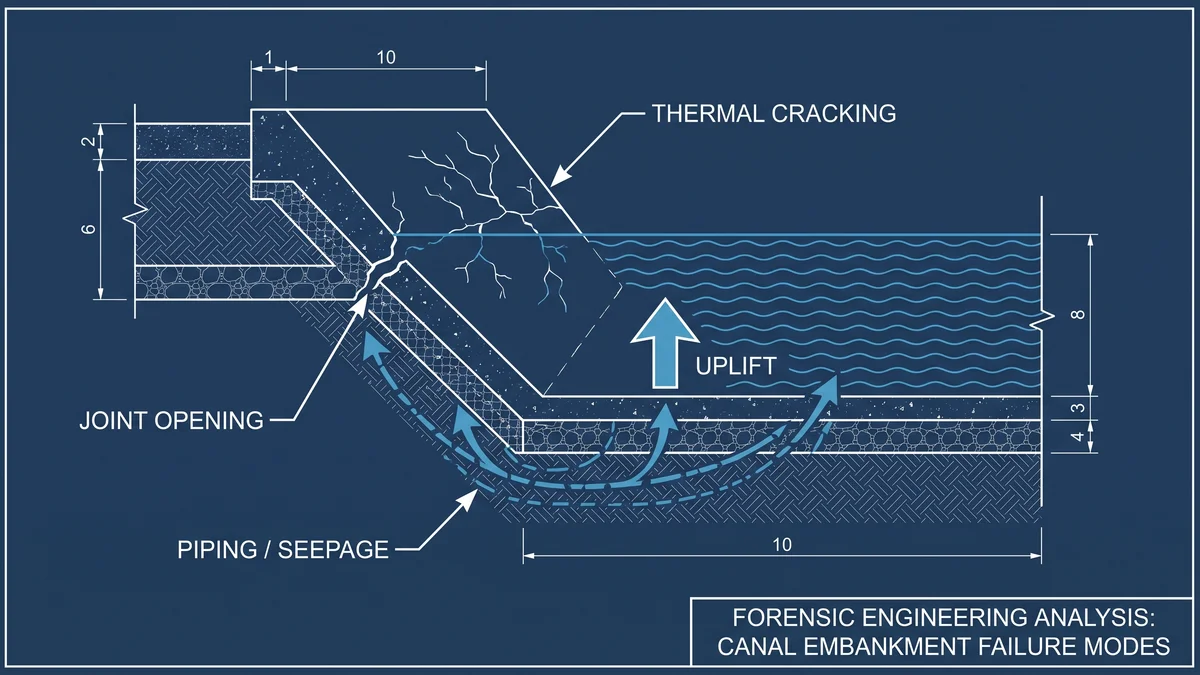
Canal Lining Failure: 7 Causes and How to Prevent Them
Canal lining failures cost irrigation authorities billions annually in emergency repairs and lost water. This forensic guide identifies the 7 most common failure causes — from joint failure to uplift — and explains how to prevent each through better specification and installation.
HydroBase - China Manufacturer
Ready to Specify Grouted Mattress?
GRI GT16 compliant products, factory test reports included. Engineering support at no cost. 48-hour response.