
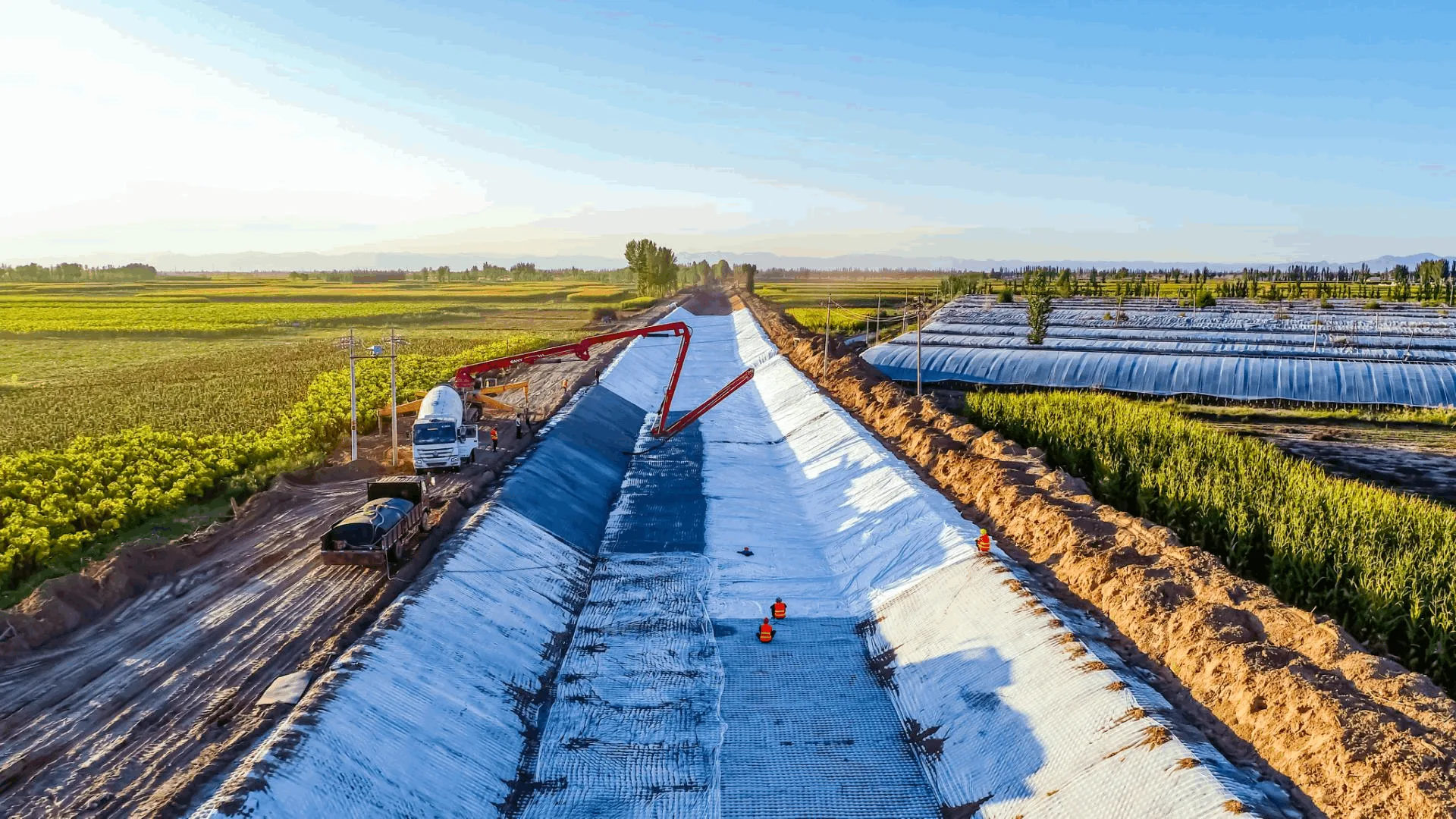
Canal Seepage Control: Methods, Costs, and ROI
Quick Summary
Irrigation canals can lose 30–50% of water to seepage. This guide compares every seepage control method — compacted clay, concrete, geomembrane, and grouted mattress — with ROI calculations showing payback periods from water savings.
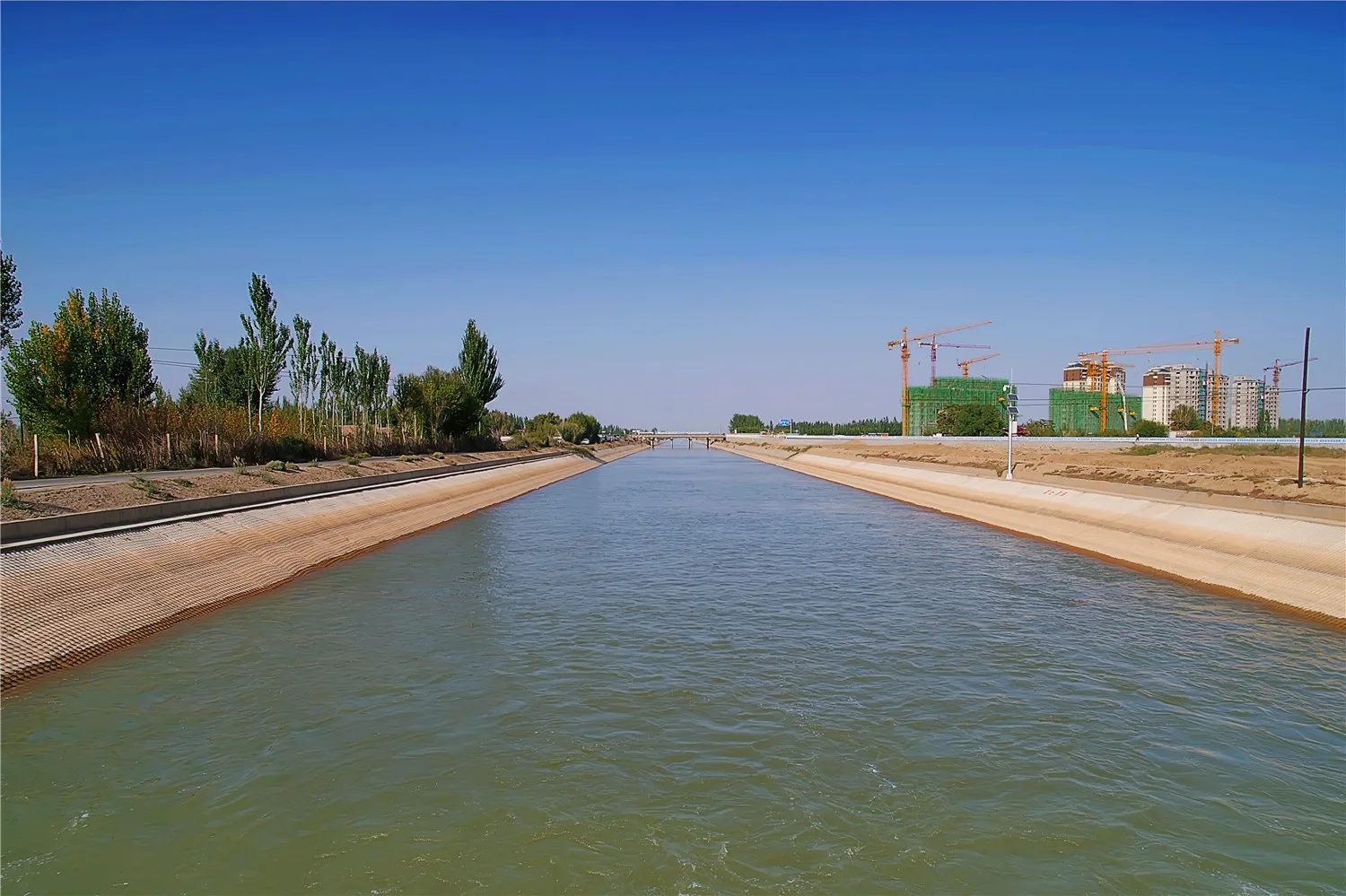
Quick Answer: Unlined irrigation canals typically lose 30–50% of diverted water to seepage. Lining reduces this to 5–10%, generating water savings that pay back the lining cost within 5–15 years depending on water value and canal size. Grouted mattress delivers the best combination of seepage control, durability, and installation speed for most irrigation main canals. Concrete lining is competitive where aggregate is locally available; compacted clay is the lowest-cost option where suitable clay is on-site. This guide provides the numbers to make the business case for lining investment.
Water is the most valuable resource in agriculture, and seepage from unlined canals is the largest single loss in most irrigation systems. The Food and Agriculture Organization of the United Nations (FAO) estimates that irrigation efficiency in developing countries averages 38% — meaning 62 litres in every 100 diverted from the source never reaches the crop. Canal seepage accounts for 30–50% of total system losses in most surface irrigation networks.
This guide provides the technical and financial framework for evaluating canal seepage control investment — which lining method, what it costs, and how quickly the water savings pay it back. For the technical comparison of lining materials, see Canal Lining Methods: Complete Comparison. For canal slope protection specifically, see Slope Protection for Canals and Reservoirs.
How Much Water Does a Canal Lose to Seepage?
Seepage loss depends on three factors: canal wetted perimeter, soil permeability, and the hydraulic head driving seepage. The Moritz formula — the most widely used empirical seepage estimation method detailed in FAO's irrigation and drainage lining guidance — expresses seepage loss as:
Q_seepage = C × P × L
Where Q_seepage is daily seepage loss (m³/day), C is the seepage coefficient (m³/m²/day, depending on soil type), P is the wetted perimeter (m), and L is the canal length (m). Typical seepage coefficients by soil type:
| Soil Type | Seepage Coefficient C (m³/m²/day) | Typical Daily Loss (per km, 5 m wide canal) |
|---|---|---|
| Gravel / sandy gravel | 0.25–0.50 | 1,500–3,000 m³/day/km |
| Sandy loam | 0.10–0.20 | 600–1,200 m³/day/km |
| Loam | 0.05–0.10 | 300–600 m³/day/km |
| Clay loam | 0.02–0.05 | 120–300 m³/day/km |
| Heavy clay | 0.005–0.02 | 30–120 m³/day/km |
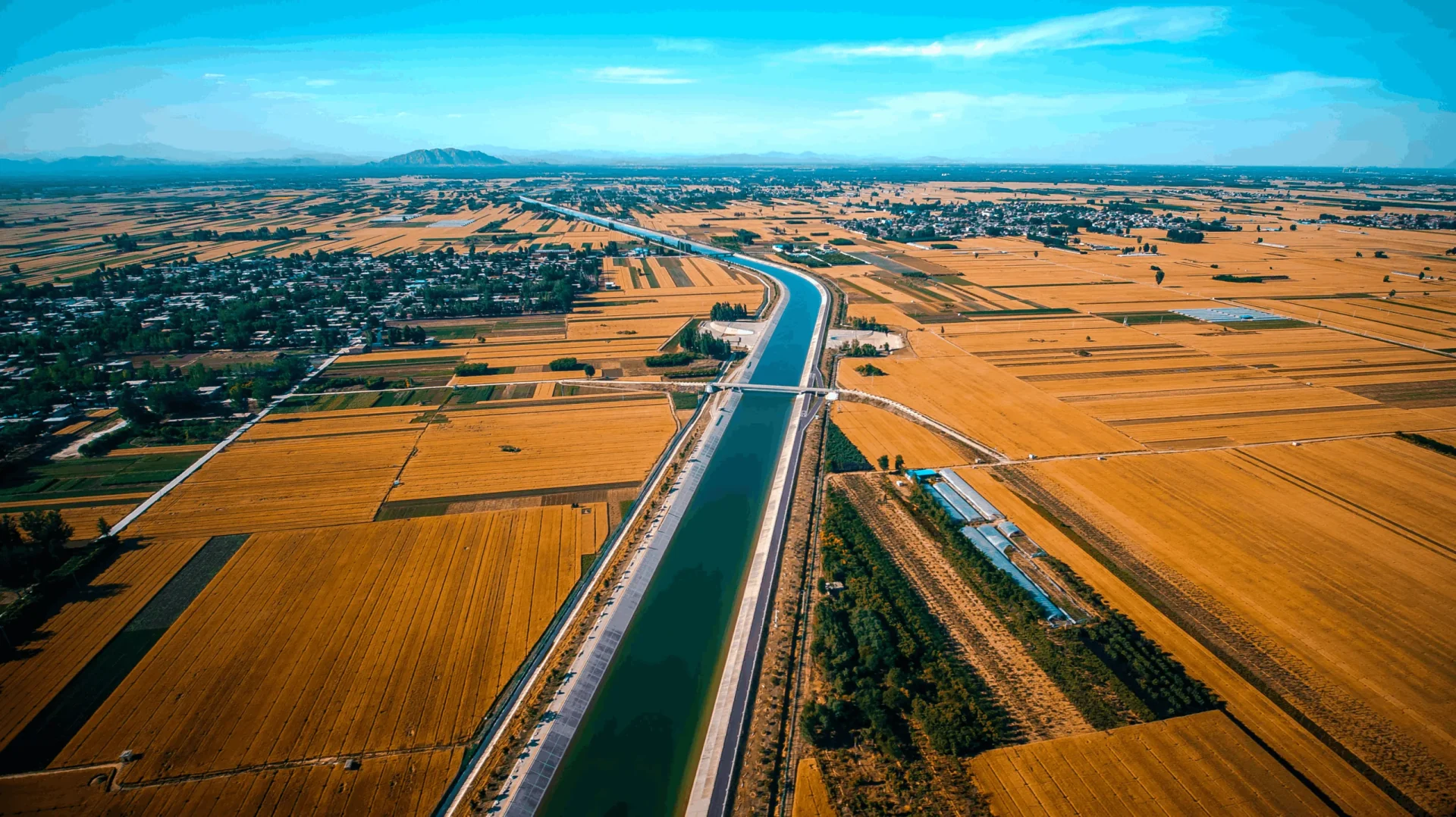
Seepage Reduction by Lining Type
| Lining Type | Seepage Reduction | Residual Loss (% of unlined) | Notes |
|---|---|---|---|
| Compacted Clay (PI ≥ 20) | 60–75% | 25–40% | Effective only where high-PI clay available |
| Concrete (100 mm, good joints) | 85–95% | 5–15% | Joint maintenance critical; joints open over time |
| Geomembrane (HDPE 1.5 mm) | 95–99% | 1–5% | Best seepage control; requires protective cover on slope |
| Grouted Mattress (100 mm) | 85–95% | 5–15% | No joint maintenance; 50+ year design life |
ROI Calculation: Is Canal Lining Worth It?
The financial case for canal lining depends on the value of the water saved. In water-scarce regions, this value can be very high — water that stops seeping into the ground and reaches the field instead generates direct crop revenue. The calculation:
Annual water savings (m³) × Water value (USD/m³) = Annual revenue from lining
Example: A 10 km secondary canal, sandy loam subgrade, 4 m wetted perimeter, operating 150 days/year:
| Parameter | Unlined | Grouted Mattress (100 mm) |
|---|---|---|
| Daily seepage loss | 0.15 m³/m²/day × 4 m × 10,000 m = 6,000 m³/day | ~600 m³/day (90% reduction) |
| Annual seepage loss | 900,000 m³/year | 90,000 m³/year |
| Annual water saved | — | 810,000 m³/year |
| Value at USD 0.05/m³ | — | $40,500/year |
| Lining cost (40,000 m² × $35/m²) | — | $1,400,000 |
| Simple payback period | — | ~34 years |
At USD 0.05/m³ (typical for a government-subsidised irrigation scheme), the payback period is long. But in water-scarce markets where farmers pay $0.15–$0.30/m³ for irrigation water, the same project pays back in 8–12 years — a strong investment case. The payback also improves significantly when the analysis includes avoided cost of pumping (less water pumped to compensate for seepage losses) and avoided salinity (seepage return flows cause waterlogging and soil salinity).
Payback Period Reference Table
Indicative simple payback periods for grouted mattress lining (installed cost USD $32–$40/m²). Sandy loam subgrade; 150 operating days/year; 90% seepage reduction assumed. Gravel subgrade roughly halves payback periods; heavy clay subgrade roughly doubles them. Use the Moritz formula above for site-specific calculation — these figures are indicative only and vary significantly with local installation costs and actual operating schedules. The International Commission on Irrigation and Drainage (ICID) publishes broader benchmarking data on irrigation efficiency across member countries for scheme-level comparisons.
| Canal Size (wetted perimeter × length) | Water value $0.05/m³ | Water value $0.10/m³ | Water value $0.20/m³ | Water value $0.30/m³ |
|---|---|---|---|---|
| Small: 4 m × 5 km | 30–40 yrs | 15–20 yrs | 8–10 yrs | 5–7 yrs |
| Medium: 6 m × 10 km | 25–35 yrs | 12–17 yrs | 6–9 yrs | 4–6 yrs |
| Large main canal: 10 m × 20 km | 18–25 yrs | 9–13 yrs | 5–7 yrs | 3–5 yrs |
| Regional main canal: 15 m × 50 km | 12–18 yrs | 6–9 yrs | 3–5 yrs | 2–3 yrs |
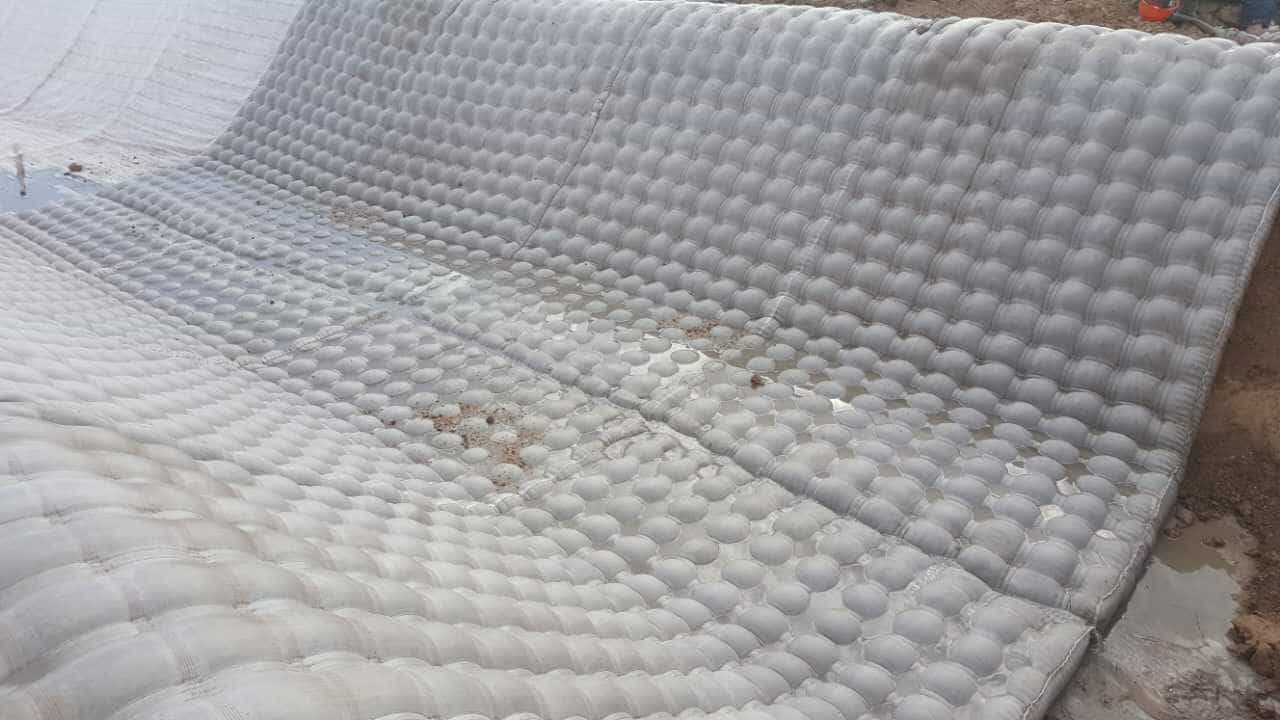
Which Lining Is Right for Your Canal?
| Canal Type | Recommended Lining | Reason |
|---|---|---|
| Large main canal (> 10 m³/s, V > 2.0 m/s) | Grouted mattress 100–150 mm | High velocity exceeds concrete joint durability; no dewatering needed for long canals |
| Medium canal (2–10 m³/s, V = 1.0–2.0 m/s) | Grouted mattress 100 mm or concrete 100 mm | Both suitable; concrete competitive if aggregate available locally |
| Small secondary canal (< 2 m³/s, V < 1.0 m/s) | Concrete 75 mm or compacted clay (if local) | Low velocity — concrete joints acceptable; clay lowest cost if on-site |
| Canal in expansive clay subgrade | Geomembrane + grouted mattress cover | Clay heave damages rigid lining; flexible system needed |
| Canal crossing saline groundwater zone | Geomembrane underliner + grouted mattress | Saline seepage contaminates root zone; belt-and-braces seepage control needed |
Frequently Asked Questions
How do I measure seepage losses in my existing canal?
The ponding test is the simplest field measurement: isolate a 200–500 m reach with temporary stop boards, fill it to design water level, and measure the rate of drop over 24–48 hours. This gives a direct seepage coefficient for your specific soil conditions — more reliable than table estimates. For large canal systems, continuous flow measurement at the head and tail of canal reaches gives an operational seepage loss estimate.
Does canal lining require the canal to be dewatered?
Grouted mattress does not require full dewatering — installation can proceed with the canal at low flow (up to 0.3–0.5 m/s). Concrete lining requires full dewatering for the full length of the pour. For large canals where full dewatering means stopping irrigation to the entire service area, grouted mattress is the only practical option during the irrigation season — the canal can remain operational in one half-width while the other half is lined.
Can seepage control lining also provide slope protection?
Yes — and this is one of the strongest arguments for grouted mattress over geomembrane. Grouted mattress provides both seepage control and scour/slope protection in a single product. Geomembrane provides superior seepage control but no scour resistance — it must be covered with rock, concrete, or other protective layer that adds significant cost. Grouted mattress eliminates this second layer for most irrigation canal applications. See Canal Lining Methods Comparison for full details.
HydroBase has lined over 500 km of irrigation canals in 30+ countries. Our engineering team can calculate seepage reduction and payback period for your project. Send us your canal dimensions and local water tariff — we will provide a free ROI analysis within 48 hours.
HydroBase Technical Team
HydroBase manufactures grouted mattresses (GRI GT16 compliant) in China and delivers to 30+ countries. Our engineering team provides specification support, grout mix design, and installation guidance.
About HydroBaseMore Articles
View all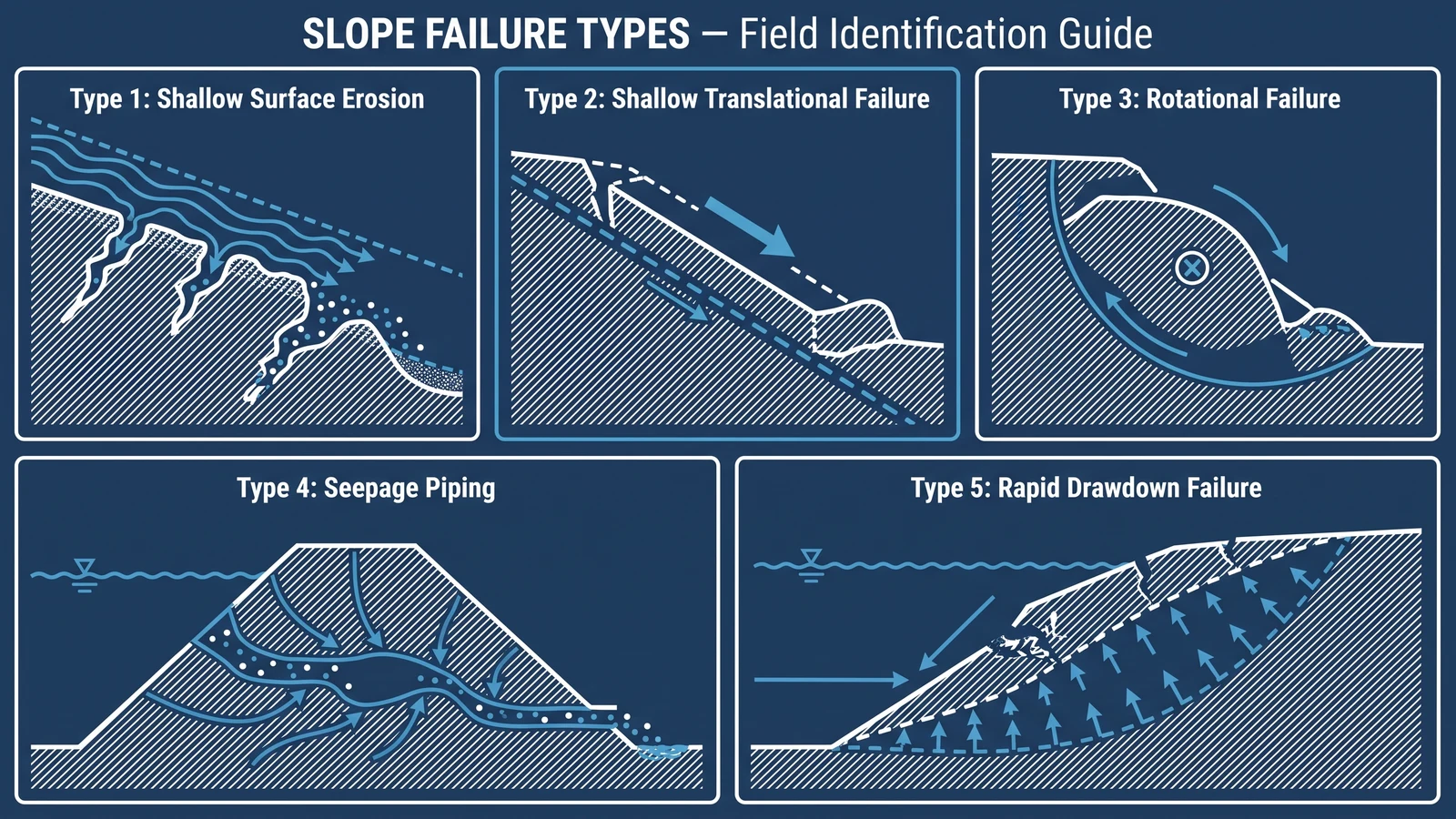
Slope Failure Causes and Prevention: Field Guide
Slope failures on canal embankments, reservoir faces, and road cuttings follow recognisable patterns. This field guide covers the five main slope failure types — shallow surface erosion, shallow translational, rotational, piping, and rapid drawdown — with prevention measures for each.
Grouted Mattress Case Studies: 5 Projects, Real Data
Five real grouted mattress installations across canal lining, river bank protection, coastal revetment, reservoir lining, and bridge pier scour — with actual project areas, design parameters, installation programmes, and post-installation performance data.
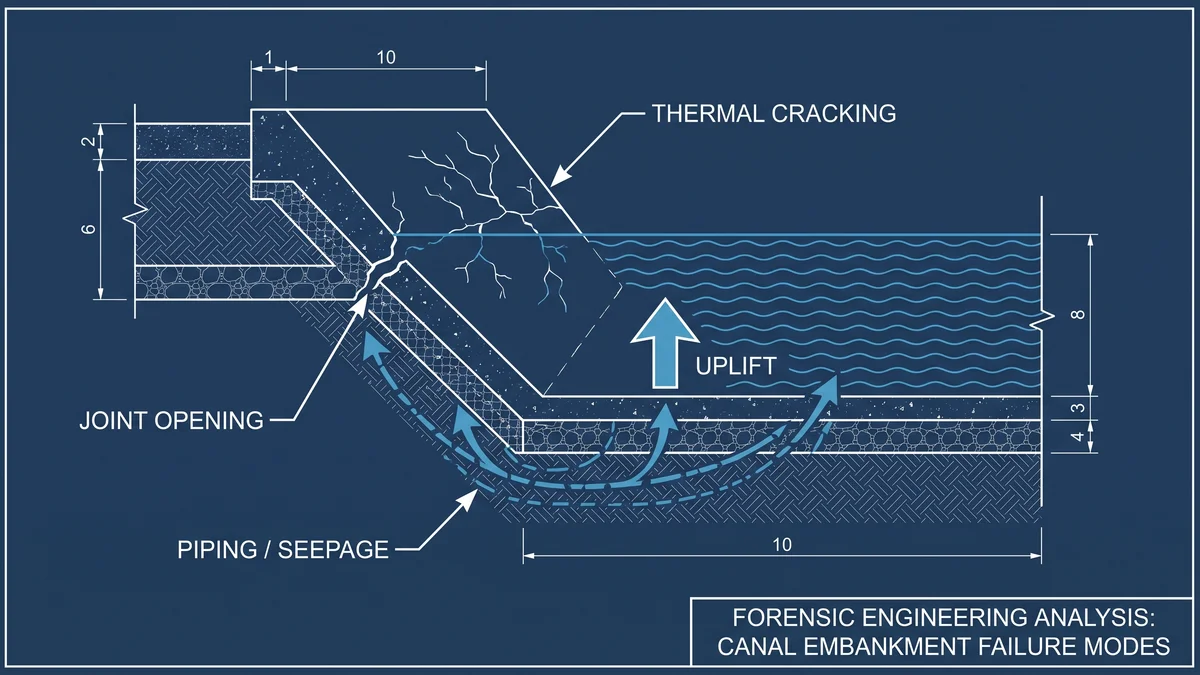
Canal Lining Failure: 7 Causes and How to Prevent Them
Canal lining failures cost irrigation authorities billions annually in emergency repairs and lost water. This forensic guide identifies the 7 most common failure causes — from joint failure to uplift — and explains how to prevent each through better specification and installation.
HydroBase - China Manufacturer
Ready to Specify Grouted Mattress?
GRI GT16 compliant products, factory test reports included. Engineering support at no cost. 48-hour response.