
GRI GT16: Grouted Mattress Buyer's Compliance Guide
Quick Summary
GRI GT16 is the international quality standard for grout-filled geotextile mattresses. This guide explains what it tests, the minimum acceptance values, how to verify compliance, and what to ask suppliers.
Quick Answer: GRI GT16 (Geosynthetic Research Institute GT16) is the internationally recognised acceptance standard for grout-filled geotextile mattresses (GGFM). It specifies minimum values for fabric tensile strength, puncture resistance, UV resistance, seam strength, and grout compressive strength. Any grouted mattress specified for a hydraulic engineering project should require GRI GT16 compliance with third-party test certificates. This guide explains each test requirement and how to verify them before purchasing.
When you specify grouted mattress on a project, you are trusting that the product will perform as designed for 50+ years under continuous hydraulic loading. The difference between a GRI GT16-compliant product and a non-compliant one may not be visible — until the first major flood. This guide is for engineers and procurement teams who want to understand what GRI GT16 actually requires, and how to use it as an effective quality gate in procurement.
What Is GRI GT16?
GRI GT16 is a standard published by the Geosynthetic Research Institute (GRI), a non-profit research organisation based in Folsom, Pennsylvania, USA. GRI standards are widely referenced in geosynthetics specifications globally, particularly in North America, the Middle East, Southeast Asia, and Africa.
GT16 specifically covers "Test Methods, Required Properties and Testing Frequencies for Grout-Filled Mattresses" — it defines not just what properties to test, but the minimum values each property must meet, and how frequently testing must be performed on production lots.
GRI GT16 is not an ISO or ASTM standard — it is a GRI proprietary standard. However, the test methods it references (ASTM D4632, ASTM D6241, ASTM D4355, ASTM C39) are all internationally recognised ASTM standards, making the results verifiable by any accredited materials testing laboratory.
The Seven Key GRI GT16 Requirements
| Property | Test Method | GRI GT16 Minimum | Why It Matters |
|---|---|---|---|
| Grab Tensile Strength (MD) | ASTM D4632 | 1,200 N | Fabric must withstand installation tension and hydraulic drag |
| Grab Tensile Strength (XD) | ASTM D4632 | 1,200 N | Must be met in both directions — not just machine direction |
| CBR Puncture Resistance | ASTM D6241 | 4,500 N | Fabric must resist puncture from subgrade stone and debris during placement |
| UV Degradation (500 hrs) | ASTM D4355 | ≥70% tensile retained | Fabric exposed before grouting must not degrade below functional threshold |
| Seam Peel Strength | GRI GT16 §4.3 | 500 N/m | Seams between internal cell rows must hold under grout injection pressure |
| Seam Shear Strength | GRI GT16 §4.3 | 1,500 N/m | Seams must resist shear force from differential settlement and hydraulic load |
| Grout Compressive Strength | ASTM C39 | 17 MPa at 28 days | Filled mattress must achieve structural concrete strength |
Testing Frequency Requirements
GRI GT16 specifies not just minimum values, but the frequency at which testing must be performed on production lots. Buyers should request a testing schedule that matches these frequencies:
| Test | Required Frequency | Sample Size |
|---|---|---|
| Grab Tensile (MD + XD) | Every 10,000 m² of fabric produced | 5 specimens per direction |
| CBR Puncture | Every 10,000 m² | 3 specimens |
| UV Degradation | Once per product type per order | Per ASTM D4355 |
| Seam Peel + Shear | Once per seam type per order | 3 specimens per seam type |
| Grout Compressive Strength | Every 500 m³ of grout placed | 3 cubes per batch |
How to Verify GRI GT16 Compliance
Claiming GRI GT16 compliance is not the same as demonstrating it. Any manufacturer can print "GRI GT16" on a data sheet — the question is whether they can back it up with third-party test evidence. Here is a four-step verification process for procurement teams:
- Request third-party test certificates — not manufacturer self-test reports. Tests must be performed by an independent accredited laboratory. Look for an ISO 17025 accreditation number on the test certificate header.
- Check test date currency — GRI GT16 requires ongoing production testing. Certificates older than 12 months may not reflect current production quality. Request certificates dated within the last 6 months, or request that testing be performed on the specific production lot for your order.
- Verify all seven properties — some suppliers provide tensile and puncture certificates but not seam strength or UV certificates. A partial certificate is not GRI GT16 compliance. All seven properties must be tested and documented.
- Check grout mix design — the manufacturer should be able to provide the grout mix design (cement:sand ratio, w/c ratio) and confirm it achieves ≥17 MPa at 28 days via their standard mix. Request trial mix cube results if this has not been recently tested at your project location.

GRI GT16 vs Other Geosynthetic Standards
| Standard | Organisation | Scope | Relation to GRI GT16 |
|---|---|---|---|
| GRI GT16 | GRI (USA) | GGFM acceptance standard | Primary standard for grouted mattress |
| ASTM D4632 | ASTM International | Grab tensile test method | Referenced test method within GT16 |
| ISO 10319 | ISO | Wide-width tensile test (geosynthetics) | Alternative tensile test — not directly referenced in GT16 but used in some markets |
| GB 50290 | China MWR | Technical standard for geosynthetics in water conservancy | Chinese national standard — compatible requirements; both may be specified on Chinese projects |
See also: GRI GT16 standard explained and our grouted mattress specification guide.
Red Flags: Suspicious GRI GT16 Claims
Most non-compliance is not intentional fraud — it is suppliers who claim GRI GT16 without having tested to the full standard. These are the patterns to watch for in procurement:
- Single-direction tensile only. The standard requires MD and XD (both directions). A certificate showing only one direction is incomplete.
- No seam test data. Seam peel and shear certificates are frequently omitted. Without them, there is no assurance that internal cell seams will hold during grout injection at elevated pressure.
- UV certificate older than 2 years. UV resistance is a material property, not a production-lot property — but if the product formulation has changed, an old certificate may not reflect current material. Request a certificate within 2 years for new product types.
- "Equivalent to GRI GT16" wording. This means the product has not been tested to GRI GT16. Equivalent claims are not acceptable on World Bank, ADB, or AfDB funded projects. Require actual test reports.
- Self-test reports without ISO 17025 accreditation number. Any manufacturer can operate an in-house lab. An ISO 17025 accreditation number on the test certificate header is the minimum evidence of independent testing.
- Grout cube results not provided. Grout compressive strength must be tested at the project site. Require the contractor to confirm the grout mix design and submit cube results from the first day of production.
Frequently Asked Questions
Is GRI GT16 a legal requirement?
GRI GT16 is not a statutory requirement in any jurisdiction — it is a voluntary consensus standard. However, many national and international project specifications require compliance as a contractual condition. World Bank, ADB, and AfDB funded projects routinely specify GRI GT16 for grouted mattress procurement. Projects in the United States, Middle East, and Southeast Asia most commonly reference it. For Chinese domestic projects, GB 50290 is the equivalent national standard.
What happens if a grouted mattress fails to meet GRI GT16?
If a delivered product fails GRI GT16 acceptance testing, the procurement contract typically requires the supplier to replace the non-compliant material at their cost. For this reason, buyers should specify GRI GT16 compliance with third-party testing as a contractual obligation, not just a technical requirement, and retain the right to reject and claim replacement costs for non-compliant material. HydroBase provides third-party certificates with every order and accepts replacement obligations for any lot that fails on retesting.
Are GRI GT16 test certificates provided with every order?
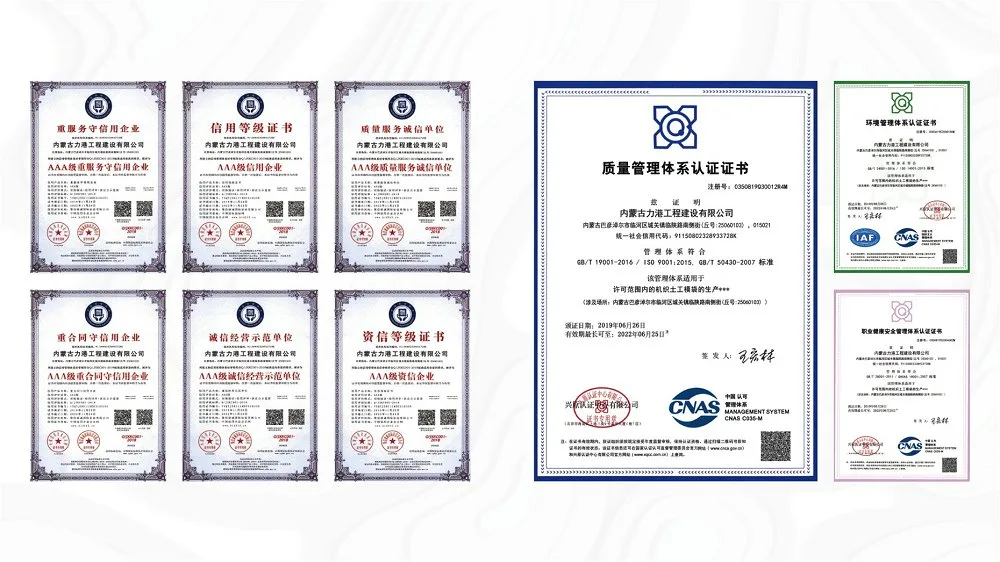
Yes — HydroBase provides third-party GRI GT16 test certificates from accredited laboratories with every production order. Certificates covering all seven properties are included in the shipment documentation package. Pre-order certificates from recent production runs are available on request. Contact our technical team to request a sample certificate package.
All HydroBase grouted mattress products are manufactured to GRI GT16. Third-party certificates from accredited laboratories are included with every order. Request a sample certificate package or download our full technical specification sheet.
HydroBase Technical Team
HydroBase manufactures grouted mattresses (GRI GT16 compliant) in China and delivers to 30+ countries. Our engineering team provides specification support, grout mix design, and installation guidance.
About HydroBaseMore Articles
View all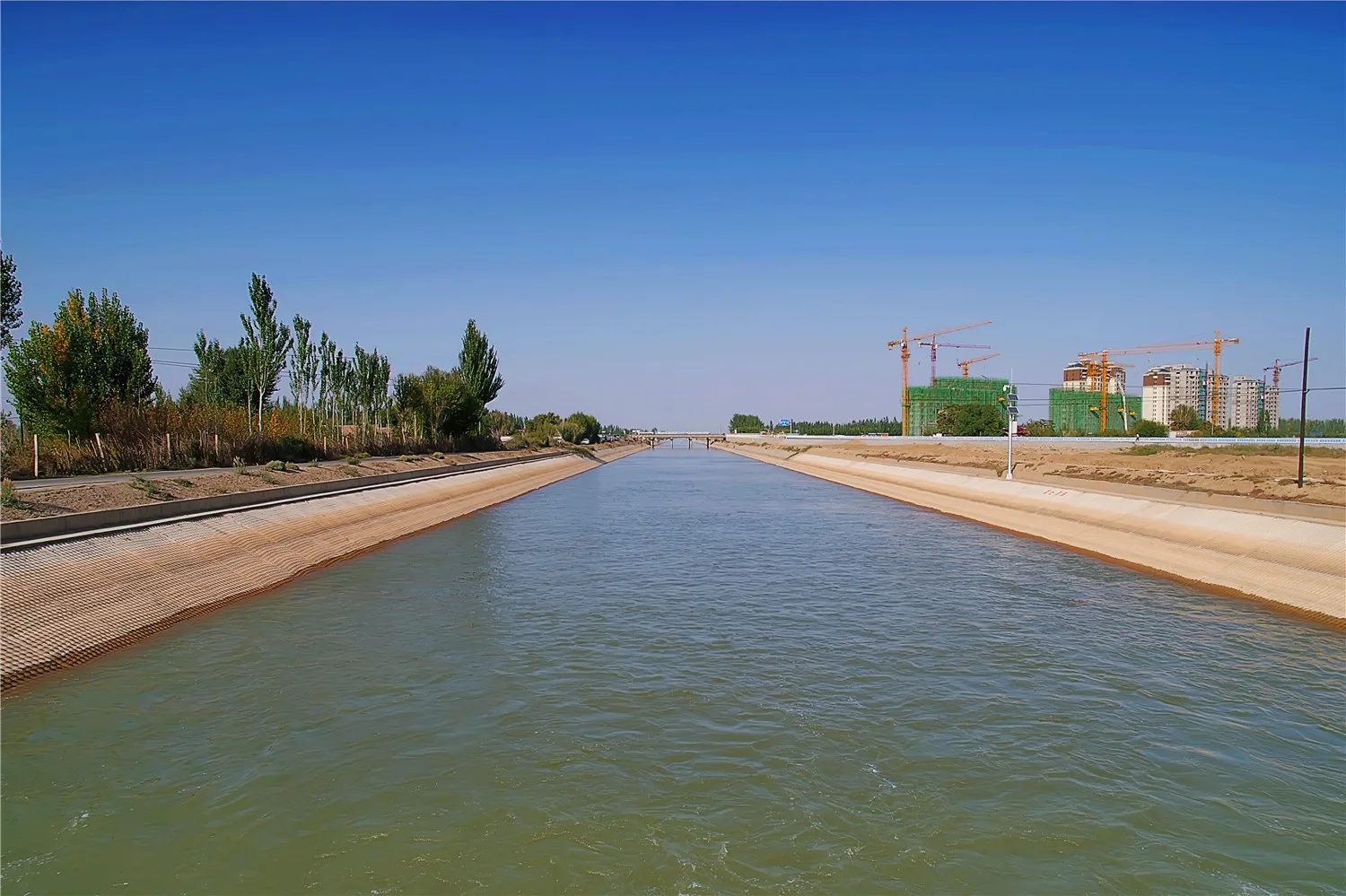
Grouted Mattress Case Studies: 5 Projects, Real Data
Five real grouted mattress installations across canal lining, river bank protection, coastal revetment, reservoir lining, and bridge pier scour — with actual project areas, design parameters, installation programmes, and post-installation performance data.
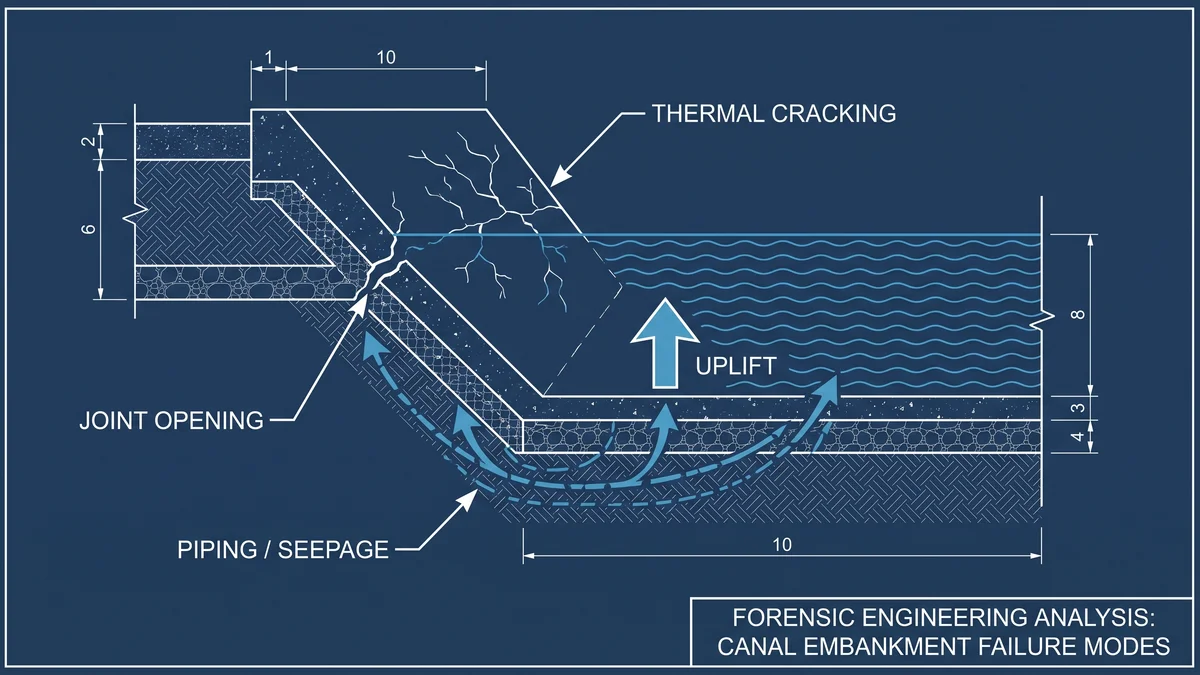
Canal Lining Failure: 7 Causes and How to Prevent Them
Canal lining failures cost irrigation authorities billions annually in emergency repairs and lost water. This forensic guide identifies the 7 most common failure causes — from joint failure to uplift — and explains how to prevent each through better specification and installation.
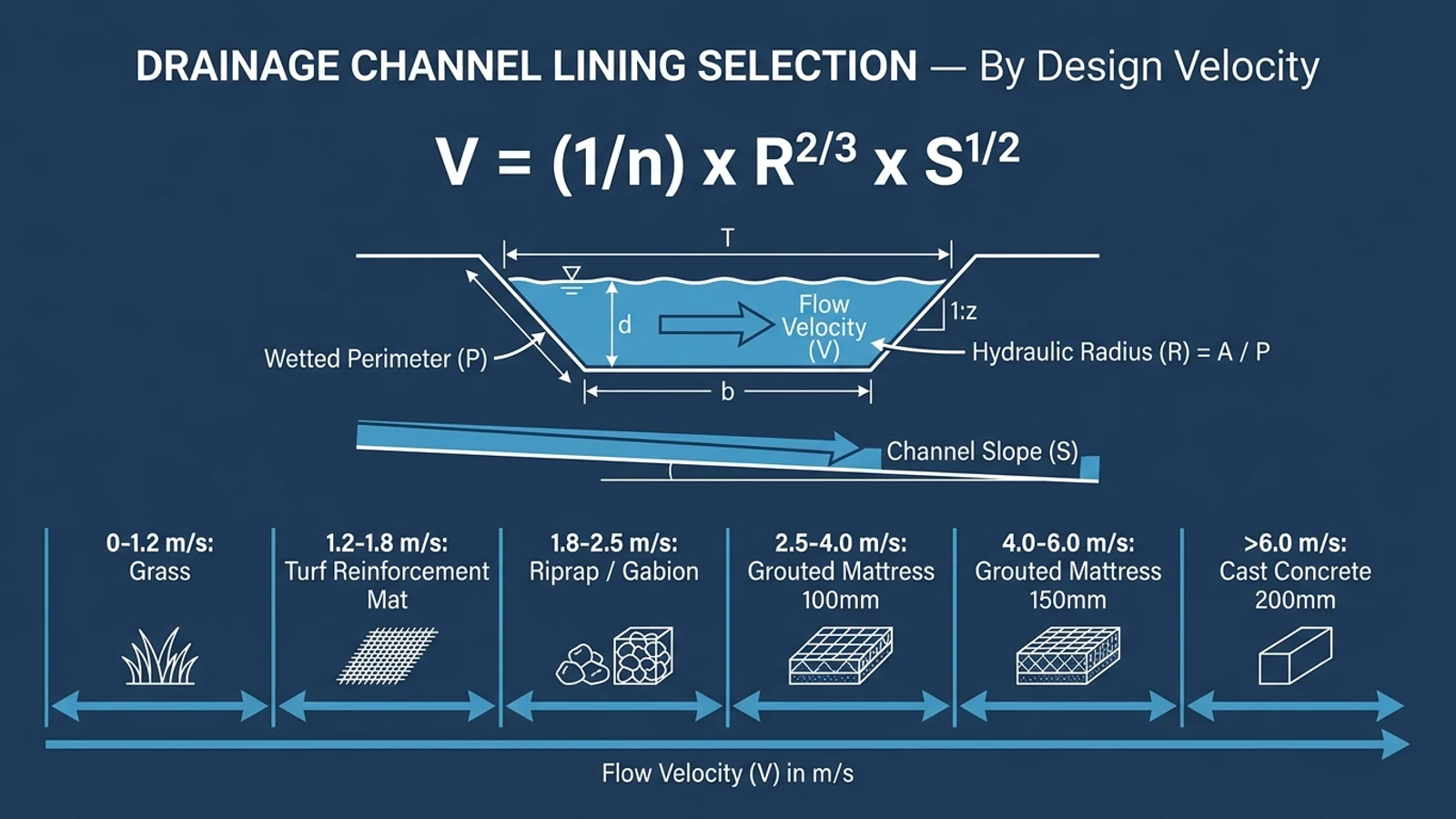
Drainage Channel Lining: Road and Infrastructure Guide
Drainage channels alongside roads, railways, and industrial sites carry high-velocity storm runoff that erodes unlined channels within seasons. This guide covers lining selection, hydraulic design, and installation for roadside drainage channels.
HydroBase - China Manufacturer
Ready to Specify Grouted Mattress?
GRI GT16 compliant products, factory test reports included. Engineering support at no cost. 48-hour response.