
Canal Lining Methods Compared (2026)
Quick Summary
Concrete, HDPE, compacted clay, riprap, or grouted mattress? This engineer's guide compares every canal lining method on cost per m², hydraulic performance, installation speed, and 25-year lifecycle — with real project data.
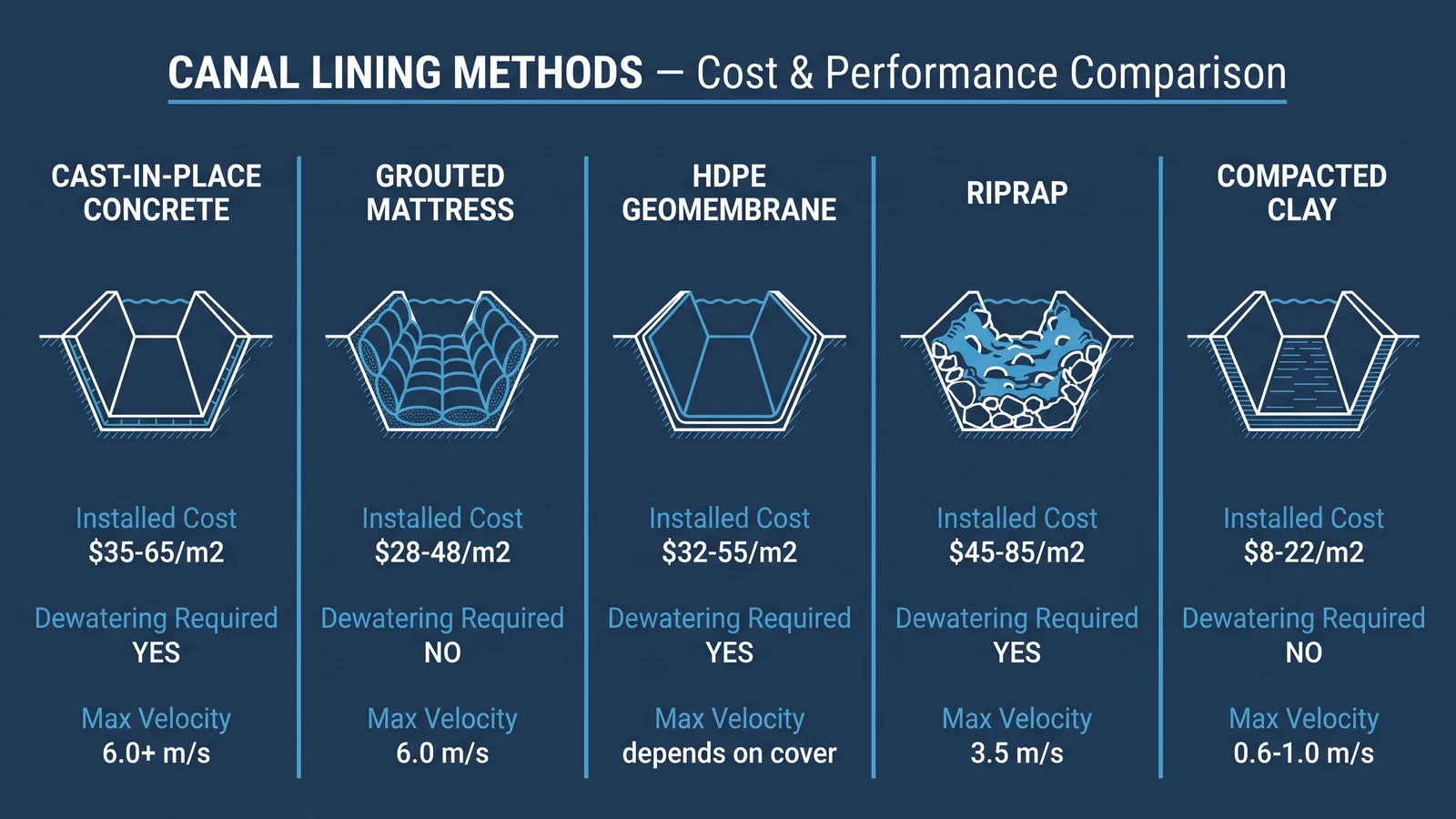
Quick Answer: There is no single "best" canal lining — it depends on flow velocity, soil conditions, seepage requirements, local labour costs, and whether the channel can be dewatered. Cast-in-place concrete is the lowest first cost in labour-cheap markets. Grouted mattress (GGFM, $28–$48/m² installed) is preferred where dewatering is impractical, settlement risk is high, or installation speed matters. HDPE geomembrane costs less than both but provides zero scour resistance — only suitable for low-velocity flat-bed applications. This guide compares all five methods honestly across the criteria that determine field performance.
Canal lining decisions are made once and lived with for decades. Choose the wrong system — or specify the right system but at the wrong thickness — and you face seepage losses, scour failure, or costly rehabilitation within five to ten years. Choose well, and the lining runs maintenance-free for the design life of the scheme.
This comparison draws on hydraulic design standards from the FAO Irrigation and Drainage Paper series, the US Bureau of Reclamation Canal Design Manual, and project cost data from Southeast Asia, the Middle East, and China (2022–2025). For a deeper look at the grouted mattress option, see our complete guide: What Is a Grouted Mattress?
The Five Main Canal Lining Methods
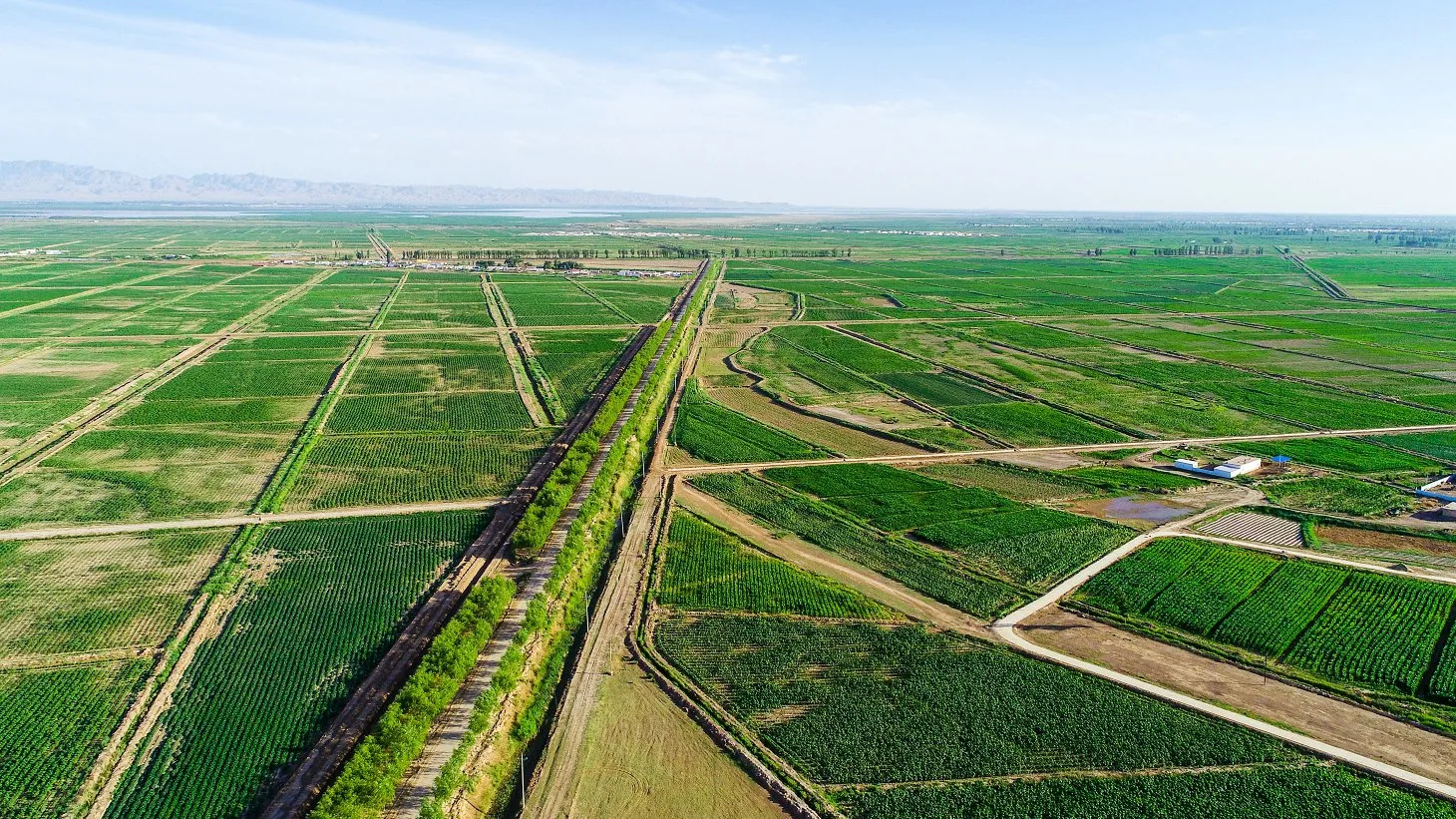
Before comparing costs and performance, it helps to understand exactly what each system is doing and how it fails. Canal lining must perform two jobs simultaneously: prevent seepage (water lost through the channel bed and sides) and resist scour (erosion of the subgrade under hydraulic shear stress). Most failures occur because a system designed for one job is deployed in conditions that demand both.
1. Cast-in-Place Concrete
A 75–150 mm concrete slab poured over a prepared, dewatered channel. The most widely specified lining method worldwide — and for good reason. Where labour is cheap, rock aggregate is locally available, and the channel can be dewatered, cast-in-place concrete is hard to beat on first cost. It is also the system that local contractors know best in most markets, which reduces execution risk. The limitations are well-documented: concrete requires a dewatered channel, is sensitive to differential settlement (panels crack and lose seepage control at construction joints), and is expensive to repair in remote locations. Construction joints at 3–5 m centres are the primary failure point in practice.
2. Grouted Mattress (GGFM)
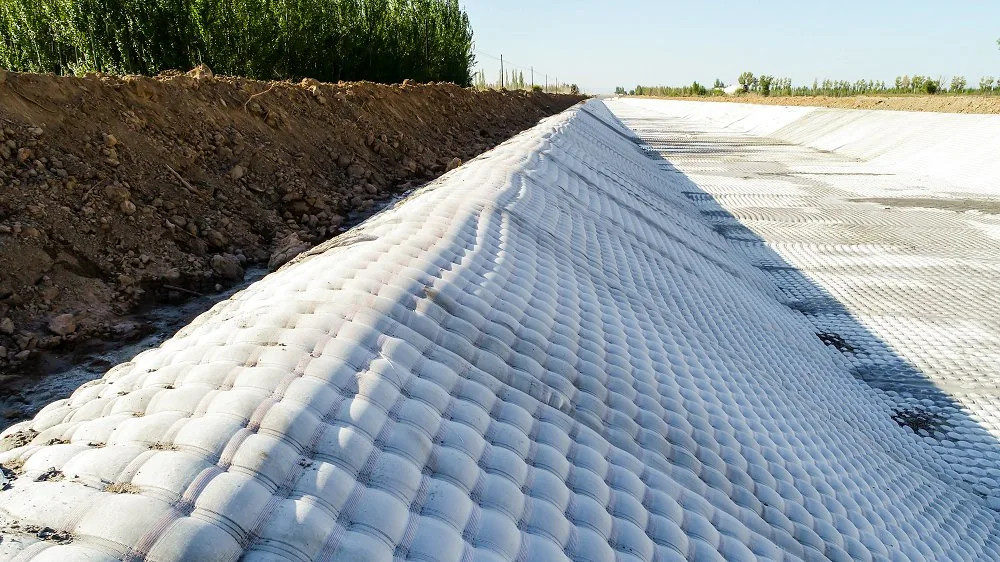
A geotextile grout-filled mattress — two layers of woven polypropylene fabric pumped full of cement grout in place. Unlike a concrete slab, the mattress is articulated at panel joints, tolerating post-construction settlement without cracking. It can be installed in flowing water without dewatering. Complies with GRI GT16. The system of choice for high-volume, large-area canal lining where programme constraints or active irrigation supply make dewatering impractical.
3. HDPE Geomembrane
A 0.5–2.0 mm high-density polyethylene sheet welded into a continuous liner on the prepared channel surface. Delivers excellent seepage control (effective permeability <10⁻¹² m/s) at low material cost. Has zero scour resistance — it must be covered by concrete or rock armour in any channel with design velocity above 0.3 m/s. Unprotected geomembrane in a flowing canal will fail within weeks from UV degradation and flotation under seepage pressure reversal.
4. Riprap (Loose Rock Armour)
Graded rock placed over a geotextile filter layer. Effective scour resistance when correctly sized; zero seepage control (a separate geomembrane is needed for seepage-critical applications). Requires dewatering and locally available quarried rock. In regions without accessible rock sources, haulage costs make riprap uncompetitive. Performance degrades gradually as smaller particles migrate through voids — regular inspection and stone replacement are needed after major flood events.
5. Compacted Clay / Bentonite Blanket
Regraded and compacted natural clay subgrade, or a factory-manufactured geosynthetic clay liner (GCL), used where native soils have suitable plasticity. Lowest material cost of any option; entirely unsuitable for channels with flow velocities above 0.6 m/s or any channel subject to desiccation (clay shrinks and cracks when the canal is dried down). Widely used for low-gradient, low-velocity feeder channels in flat agricultural plains.
Cost Comparison: What Does Canal Lining Actually Cost?
Installed cost varies substantially by region, project scale, and site access. The figures below are based on contractor quotations and project actuals from Southeast Asia, the Middle East, and Central Asia (2022–2025), and assume projects of 50,000 m² or larger — smaller projects typically carry a 15–25% premium.
| Lining Method | Material Cost (USD/m²) | Installed Cost (USD/m²) | Dewatering Required? | Repair Cost (USD/m²) |
|---|---|---|---|---|
| Cast-in-Place Concrete (100 mm) | $8–$14 | $35–$65 | Yes | $40–$80 |
| Grouted Mattress (100 mm) | $12–$18 | $28–$48 | No | $15–$30 |
| HDPE Geomembrane (1.0 mm) + Concrete Cover | $6–$10 | $32–$55 | Yes | $25–$50 |
| Riprap (D50 = 250 mm) | $18–$35 | $45–$85 | Yes | $20–$40 |
| Compacted Clay / GCL | $2–$6 | $8–$22 | No | $10–$25 |
Note: Dewatering costs are excluded from the above — where required, dewatering typically adds $4–$12/m² to the installed cost of concrete and riprap on active irrigation schemes, and can extend the construction programme by 4–8 weeks per section.
Hydraulic Performance: Manning's n and Design Velocity
The roughness of the lining surface determines the design flow velocity for a given channel cross-section and slope. A smoother surface (lower Manning's n) allows a smaller channel cross-section to carry the same flow — reducing excavation volume and cost. A rougher surface requires a larger channel or accepts lower velocity.
| Lining Method | Manning's n | Max Design Velocity (m/s) | Seepage Rate (m/day) |
|---|---|---|---|
| Cast-in-Place Concrete | 0.012–0.014 | 6.0+ | <0.001 |
| Grouted Mattress (Standard) | 0.016–0.020 | Up to 6.0 (200 mm) | <0.001 |
| HDPE Geomembrane + Cover | 0.012–0.016 | Depends on cover type | <0.0001 |
| Riprap (D50 = 250 mm) | 0.030–0.040 | 3.5 (D50 = 250 mm) | High (permeable) |
| Compacted Clay | 0.020–0.030 | 0.6–1.0 | 0.01–0.10 |
Manning's n values from USBR Design of Small Canal Structures and USACE HEC-RAS Reference Manual.
Installation Speed: Project Programme Comparison
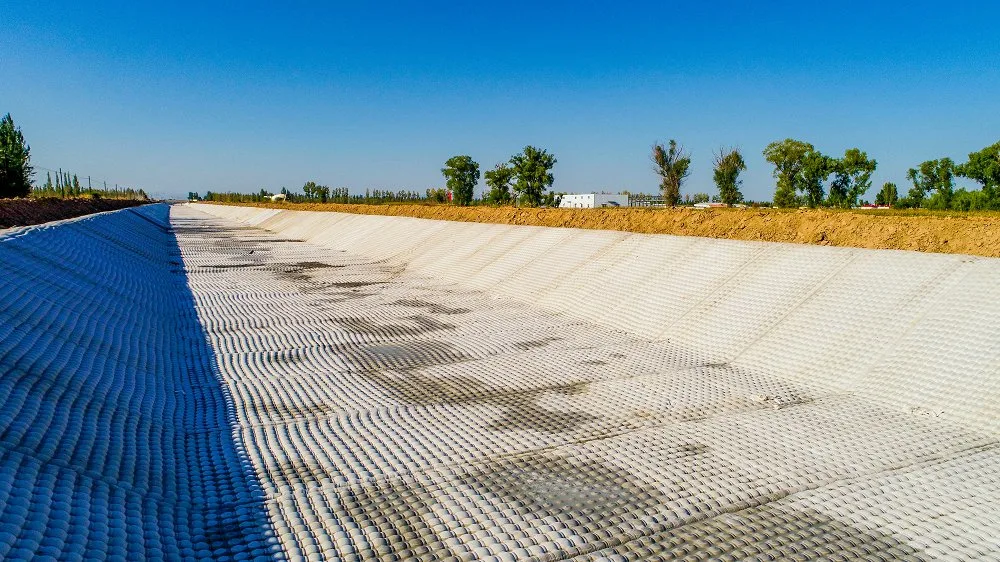
Programme speed is often the deciding factor on active irrigation schemes, where the window for lining work is limited to the dry season or a scheduled maintenance shutdown. The table below compares typical installation rates for a 500,000 m² canal lining project (a large but not unusual scale for a national irrigation scheme).
| Lining Method | Daily Output (m²/crew) | Crews for 500,000 m² | Programme (months) | Dewatering Shutdown |
|---|---|---|---|---|
| Cast-in-Place Concrete | 300–500 | 6–8 | 8–14 | 4–8 weeks/section |
| Grouted Mattress | 800–1,200 | 4–6 | 4–7 | None |
| HDPE + Concrete Cover | 400–600 | 6–8 | 7–12 | 4–8 weeks/section |
| Riprap | 200–400 | 8–12 | 12–20 | 4–6 weeks/section |
| Compacted Clay | 600–1,000 | 4–6 | 4–7 | None |
25-Year Lifecycle Cost Analysis
First cost is only part of the story. Canal linings require periodic maintenance inspection, and some require significant rehabilitation after flood events or after the design seepage performance degrades. The lifecycle figures below assume a 500,000 m² scheme in a semi-arid region with one major flood event per decade.
| Lining Method | Year 0 Installed Cost | Year 10 Maintenance | Year 25 Cumulative Cost | Expected Life |
|---|---|---|---|---|
| Cast-in-Place Concrete | $35–$65/m² | Joint resealing $3–$6/m² | $50–$90/m² | 25–35 years |
| Grouted Mattress | $28–$48/m² | Minimal (<$1/m²) | $32–$55/m² | 50+ years |
| HDPE + Concrete Cover | $32–$55/m² | Membrane inspection $2–$4/m² | $42–$70/m² | 30–40 years |
| Riprap | $45–$85/m² | Stone replenishment $5–$15/m² | $60–$120/m² | 20–30 years |
| Compacted Clay | $8–$22/m² | Re-grading $4–$8/m² | $25–$55/m² | 10–20 years |
Which Canal Lining Method Should You Choose?
The right answer depends on three site-specific variables: design velocity, whether dewatering is feasible, and the primary performance requirement (seepage control vs scour resistance). Use this decision tree:
- Design velocity > 3.5 m/s: Grouted mattress (150–200 mm) or cast-in-place concrete. Riprap and clay are excluded at these velocities.
- Active irrigation supply — cannot dewater: Grouted mattress only. All other hard lining options require a dry channel.
- Seepage control is the primary objective, velocity < 1.5 m/s: HDPE geomembrane with concrete topping offers lowest lifecycle cost.
- Rock locally available, velocity 2.0–3.5 m/s, seepage acceptable: Riprap may be cost-competitive — evaluate local quarry prices against grouted mattress landed cost.
- Low-gradient feeder channel, velocity < 0.6 m/s, good native clay: Compacted clay is lowest cost. Add GCL if improved seepage control is needed.
- Large-scale, remote location, tight programme: Grouted mattress — factory dispatch in 48 hours, no specialist plant, no dewatering.
Grouted Mattress Specifications for Canal Lining
If grouted mattress is the preferred option, thickness selection follows the hydraulic design velocity and the relevant national or international standard. HydroBase supplies four standard thicknesses, all manufactured to GRI GT16:
| Thickness | Design Velocity | Typical Canal Application | Weight (kg/m²) |
|---|---|---|---|
| 75 mm | Up to 2.5 m/s | Small irrigation laterals, minor drainage channels | ~115 |
| 100 mm | Up to 3.5 m/s | Standard irrigation mains, water diversion canals | ~155 |
| 150 mm | Up to 4.5 m/s | High-velocity conveyance canals, reservoir outlet channels | ~230 |
| 200 mm | Up to 6.0 m/s | Spillway channels, high-head diversion works | ~310 |
For a complete specification sheet including fabric tensile strength, CBR puncture resistance, and seam peel/shear values, download the HydroBase Technical Specification Sheet.
Frequently Asked Questions
What is the cheapest canal lining method?
Compacted clay is the lowest first cost at $8–$22/m² installed, but only suits low-velocity channels (<0.6 m/s) on schemes where native soil plasticity is adequate. For channels requiring both seepage control and scour resistance, grouted mattress typically offers the lowest 25-year lifecycle cost at $32–$55/m² cumulative — lower than concrete at $50–$90/m² and riprap at $60–$120/m² when maintenance is included.
Can canal lining be installed without dewatering the channel?
Yes — grouted mattress is the only hard lining system that can be installed in actively flowing water (up to 0.5 m/s without underwater installation procedures, up to 1.5 m/s with guide frames). Concrete, HDPE, and riprap all require a dewatered, dry channel surface. For active irrigation schemes where shutting down supply is not feasible, grouted mattress is effectively the only viable hard lining option.
How long does canal lining last?
Grouted mattress has a design life of 50+ years based on the long-term durability of cement grout and the UV-stabilised polypropylene fabric. Cast-in-place concrete lasts 25–35 years before joint sealing failure leads to significant seepage at construction joints. HDPE geomembrane has a 30–40 year membrane life; riprap degrades progressively and typically requires major rehabilitation after 20–30 years in flood-prone channels.
What is the best canal lining for an irrigation scheme in a hot, arid climate?
Grouted mattress or concrete — both cope well with thermal cycling and UV exposure. Compacted clay and HDPE geomembrane without hard cover are vulnerable in arid climates: clay desiccates and cracks when the canal is dried down; unprotected HDPE degrades rapidly under direct solar radiation. Seepage loss is also highest in arid regions — a fully impermeable lining (concrete or standard grouted mattress) is strongly preferred over riprap for water conservation.
Is grouted mattress suitable for concrete canal lining repair?
Yes — one of the most cost-effective applications is overlaying a deteriorated concrete-lined canal with grouted mattress. The fabric conforms to the irregular cracked slab surface, the grout fills voids, and the result is a new seepage-resistant armour at typically 40–60% of the cost of full slab removal and replacement. Contact our engineering team for an assessment of your rehabilitation project.
HydroBase manufactures GRI GT16-compliant grouted mattress at our 150,000 m² factory in Inner Mongolia. We supply canal lining projects across 30+ countries with 48-hour dispatch and full third-party test documentation. Request a quote with your project area and design velocity — we respond within 48 hours with a product recommendation and indicative price.
HydroBase Technical Team
HydroBase manufactures grouted mattresses (GRI GT16 compliant) in China and delivers to 30+ countries. Our engineering team provides specification support, grout mix design, and installation guidance.
About HydroBaseMore Articles
View all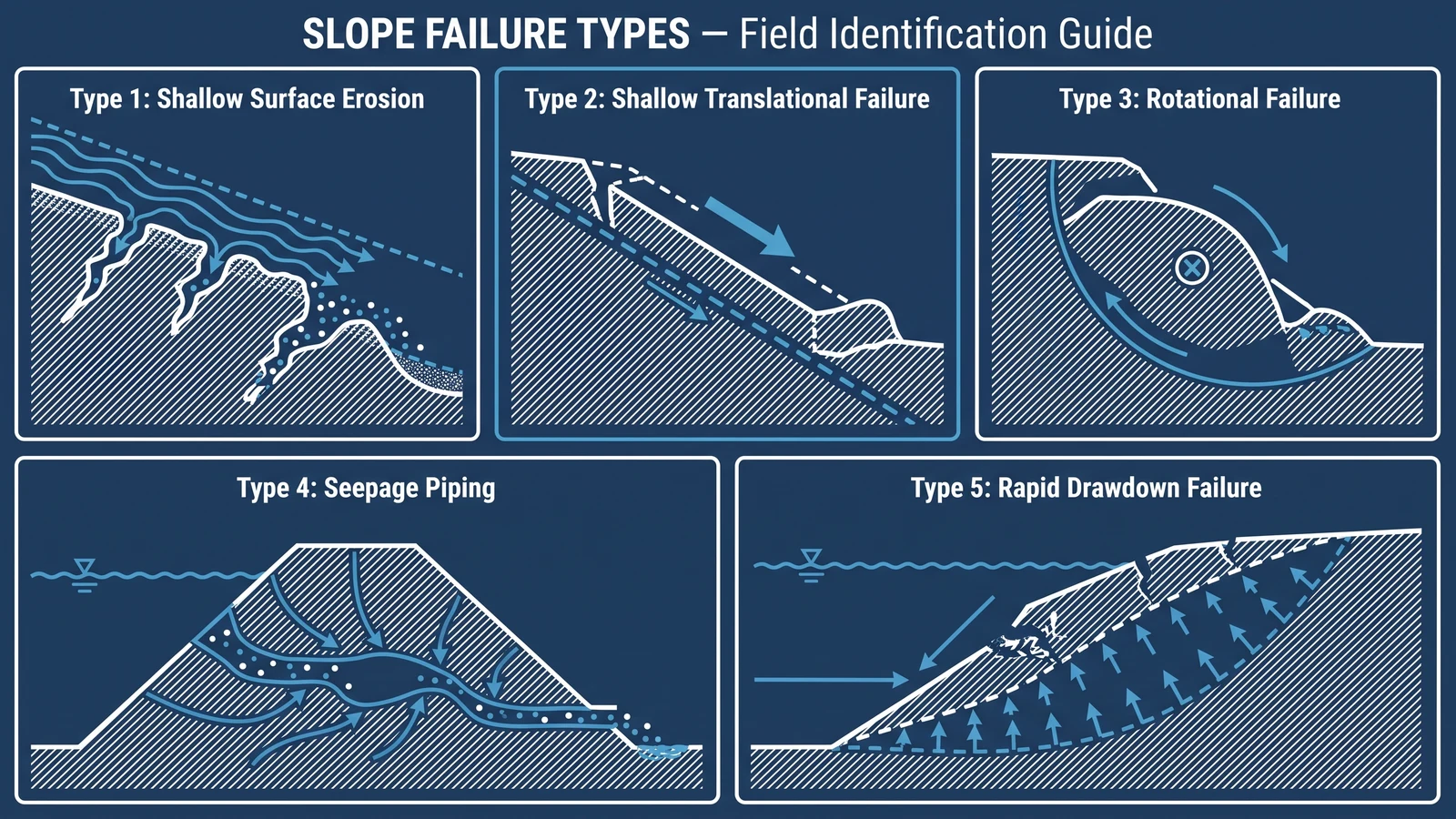
Slope Failure Causes and Prevention: Field Guide
Slope failures on canal embankments, reservoir faces, and road cuttings follow recognisable patterns. This field guide covers the five main slope failure types — shallow surface erosion, shallow translational, rotational, piping, and rapid drawdown — with prevention measures for each.
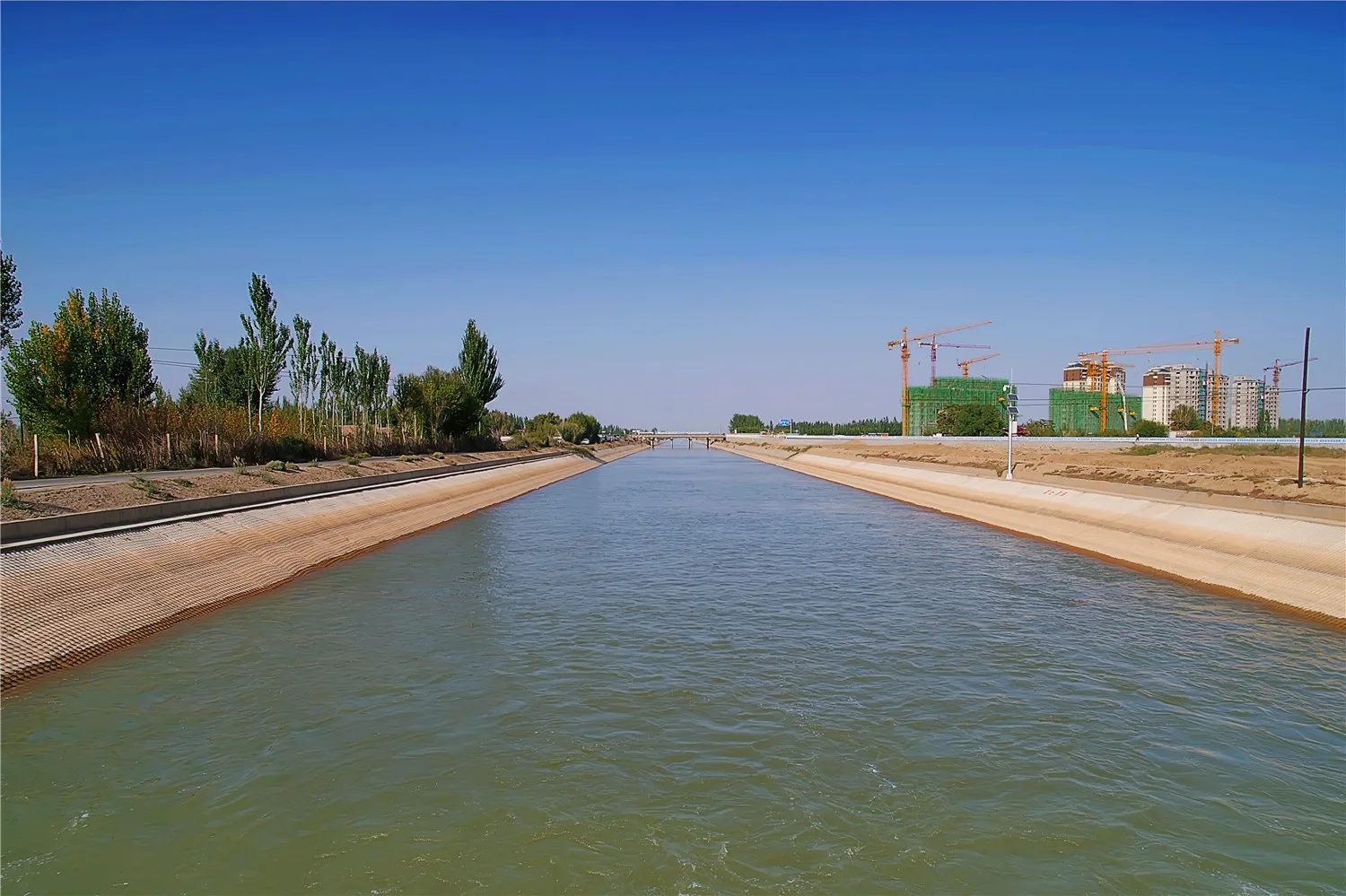
Grouted Mattress Case Studies: 5 Projects, Real Data
Five real grouted mattress installations across canal lining, river bank protection, coastal revetment, reservoir lining, and bridge pier scour — with actual project areas, design parameters, installation programmes, and post-installation performance data.
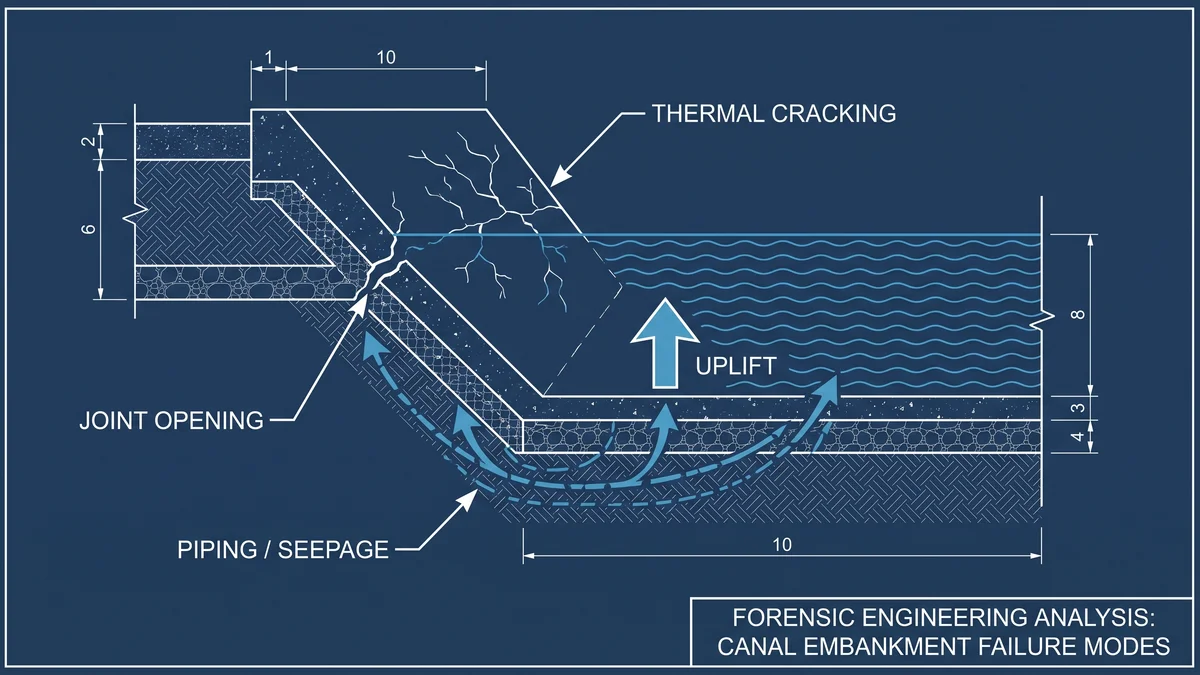
Canal Lining Failure: 7 Causes and How to Prevent Them
Canal lining failures cost irrigation authorities billions annually in emergency repairs and lost water. This forensic guide identifies the 7 most common failure causes — from joint failure to uplift — and explains how to prevent each through better specification and installation.
HydroBase - China Manufacturer
Ready to Specify Grouted Mattress?
GRI GT16 compliant products, factory test reports included. Engineering support at no cost. 48-hour response.