
Grouted Mattress Specification: Tender Document Guide
Quick Summary
A practical guide for engineers writing specifications and tender documents for grouted mattress (GGFM) procurement. Covers GRI GT16 clauses, thickness selection, test certificate requirements, and common specification errors.
Quick Answer: A compliant grouted mattress specification must include: product type (standard/filter point/vegetated), thickness, GRI GT16 compliance with third-party test certificate requirements, grout compressive strength minimum (≥17 MPa at 28 days), installation method statement requirement, and post-installation testing schedule. Missing any of these allows suppliers to deliver substandard product without contractual recourse. This guide provides a model specification framework and flags the most common errors in grouted mattress tender documents.
A well-written specification is the contract engineer's primary quality control tool — it defines exactly what the supplier must deliver and gives the client the contractual basis to reject non-compliant material. A poorly written specification allows substitution of inferior products, incomplete test programmes, and incorrect installation — all without breach of contract, because the contract did not clearly require better.
Grouted mattress specifications in many markets are deficient in consistent ways: they specify the product by trade name only (no performance criteria), omit third-party test certificate requirements (allowing self-certification), and fail to specify the grout mix design or compressive strength requirement. This guide provides a model framework that closes all of these gaps. For background on GRI GT16 requirements, see GRI GT16 Explained.
The Five Essential Specification Clauses
Clause 1: Product Definition and Type
Specify the exact product variant required. The three main types have different performance characteristics and are not interchangeable:
- Standard (impermeable) grouted mattress: fully impermeable woven face. Specify for canal lining, river bank protection, and slope protection where seepage control is required and rapid drawdown uplift is not a design scenario.
- Filter point grouted mattress: drainage openings at cell intersections. Specify for reservoir upstream faces, tidal zones, coastal revetments, and any application where hydrostatic pressure reversal is a design scenario.
- Vegetated grouted mattress: large open cells for plant establishment. Specify for ecological slopes and amenity waterways where vegetation integration is required.
Clause 2: Thickness and Hydraulic Design Basis
Specify the design thickness with reference to the hydraulic design velocity and the applicable standard:
"The grout-filled mattress shall be [75/100/150/200] mm nominal thickness as selected by the designer based on the design flow velocity of [X] m/s at the protected surface in accordance with [GRI GT16 / USACE EM 1110-2-1601 / CIRIA C742]. The minimum filled thickness at any point shall not be less than [design thickness − 10] mm."
Clause 3: GRI GT16 Compliance — The Core Quality Clause
This is the most important clause — it sets the material acceptance threshold and requires independent verification:
"The geotextile fabric and completed grout-filled mattress shall comply with the requirements of GRI GT16 (Geosynthetic Research Institute Standard Test Methods, Required Properties and Testing Frequencies for Grout-Filled Mattresses). All tests shall be performed by an independent accredited laboratory holding ISO 17025 accreditation for the relevant test methods. Manufacturer self-test results will not be accepted. Test certificates shall be provided to the Engineer not less than 14 days before scheduled delivery of the first production lot."
Clause 4: Grout Mix Design and Compressive Strength
Specify the grout mix parameters and the acceptance criterion:
"The grout shall be a fine-aggregate cement grout comprising Portland cement (CEM I or CEM II, complying with [EN 197 / ASTM C150]) and clean fine aggregate passing 5 mm sieve, in a ratio not less than 1:2 (cement:aggregate) by weight. The water/cement ratio shall not exceed 0.50. The 28-day cube compressive strength of the grout (tested to ASTM C39) shall be not less than 17 MPa. Not less than 3 cube specimens shall be taken for each 500 m³ of grout placed, cured alongside the work, and tested at 28 days."
Clause 5: Installation Requirements and Method Statement
Require the contractor to submit an installation method statement before commencing:
"Not less than 14 days before commencing installation, the Contractor shall submit an installation method statement for Engineer approval covering: (a) subgrade preparation and compaction programme; (b) panel layout and overlap plan; (c) grout mix design and batching method; (d) injection sequence and pump specification; (e) curing procedure and duration. Installation shall comply with the approved method statement and the manufacturer's installation guide. Any deviation requires Engineer's written approval."
Model Specification: Test Certificate Schedule
| Property | Standard | Minimum Value | Test Certificate Required |
|---|---|---|---|
| Grab Tensile Strength (MD + XD) | ASTM D4632 | ≥ 1,200 N | Per 10,000 m² of fabric |
| CBR Puncture Resistance | ASTM D6241 | ≥ 4,500 N | Per 10,000 m² of fabric |
| UV Degradation (500 hr) | ASTM D4355 | ≥ 70% tensile retained | Once per product type per order |
| Seam Peel Strength | GRI GT16 §4.3 | ≥ 500 N/m | Once per seam type per order |
| Seam Shear Strength | GRI GT16 §4.3 | ≥ 1,500 N/m | Once per seam type per order |
| Grout Compressive Strength | ASTM C39 | ≥ 17 MPa at 28 days | 3 cubes per 500 m³ grout placed |
Common Specification Errors and How to Fix Them
| Error | Consequence | Fix |
|---|---|---|
| Specify by trade name only ("as manufactured by X") | Locks to one supplier; no performance standard for alternatives | Specify GRI GT16 + thickness + type; allow "or equivalent meeting this specification" |
| No third-party test certificate requirement | Supplier self-certifies — no independent verification | Require ISO 17025 accredited lab certificates; self-test reports explicitly excluded |
| No grout compressive strength clause | Contractor may use weak, watery grout — product feels right but fails at 28 days | Include ≥17 MPa at 28 days with cube testing schedule |
| Standard mattress specified for reservoir face | Uplift failure during rapid drawdown — should be filter point | Check drawdown design scenario; specify filter point where drawdown >0.5 m/day |
| Thickness specified without velocity basis | Contractor substitutes thinner product — passes visual inspection but undersized | Include design velocity and the standard used to select thickness in the spec |
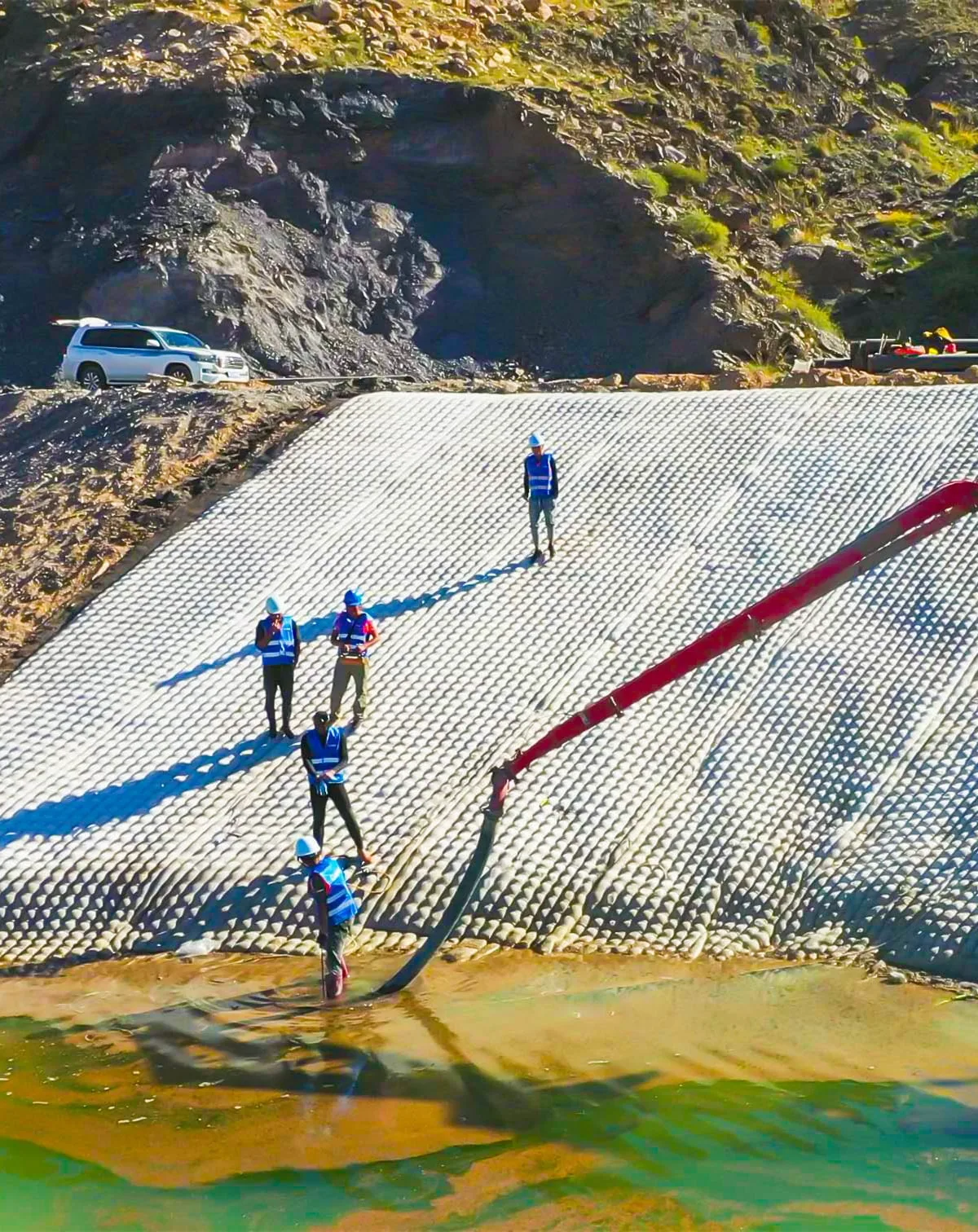
Specification references: The GRI GT16 test standard (Geosynthetic Research Institute) defines the acceptance criteria your specification should reference. ASTM D4439 provides standardised geosynthetic terminology for use in tender documents.
For installation context, read our grouted mattress installation guide and our articulated concrete mattress technical guide before drafting your specification.
Frequently Asked Questions
Can I specify grouted mattress without a brand name?
Yes — and this is best practice for competitive tendering. Specify the product by performance requirements (GRI GT16, thickness, type, compressive strength) rather than by brand. This opens competition to multiple qualified suppliers and avoids single-source procurement risk. Include the clause "or equivalent product meeting the specification requirements, as demonstrated by third-party test certificates submitted not less than 21 days before the tender deadline." Evaluate equivalence submissions against the specification clauses, not just price.
What should I do if the delivered product fails testing?
If third-party test results come back below GRI GT16 minimums: (1) immediately notify the contractor in writing that the lot is non-compliant; (2) quarantine the delivered material — do not allow installation to proceed; (3) request the contractor to replace with compliant material at no additional cost; (4) if the contractor disputes the results, specify retesting by a second accredited laboratory with split samples from the same lot. If retesting confirms non-compliance, reject the lot. Your specification should include a liquidated damages clause for delays caused by material rejection to protect the programme.
Should I specify grouted mattress with a geotextile filter beneath it?
In most cases, the mattress fabric itself serves as the filter layer — this is one of GRI GT16's design bases. A separate geotextile filter beneath the mattress is required only where the subgrade is gap-graded or prone to piping, specifically where the subgrade D15 ÷ mattress fabric AOS ratio exceeds the filter design criterion (per USACE EM 1110-2-1901). In practice, confirm the filter criterion is met by the mattress fabric alone using the project geotechnical test data, and include the separate filter layer only if the calculation requires it.
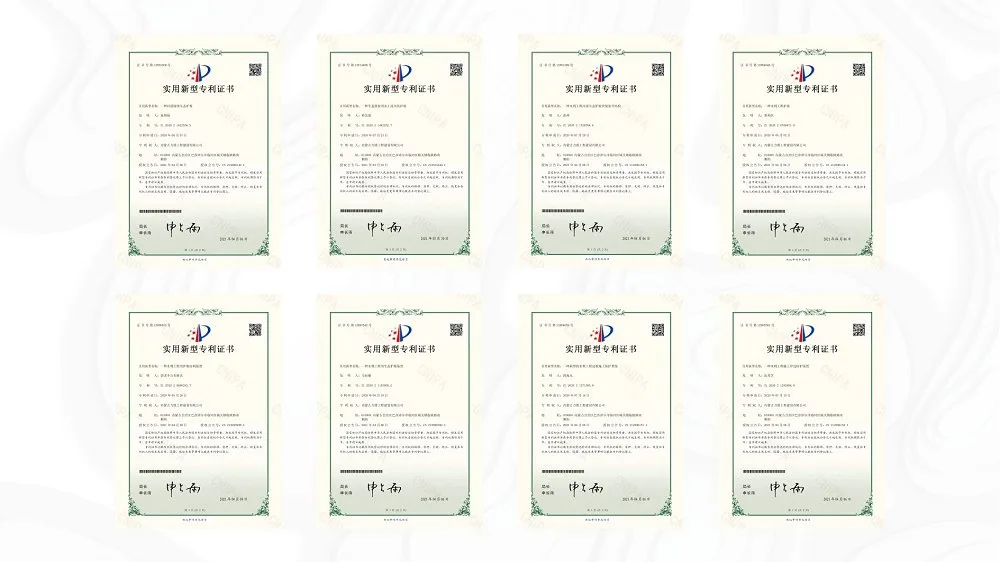
HydroBase provides a model specification document and GRI GT16 test certificate package for use in tender documents — at no cost to project engineers. Request the specification package and we will send you a complete Word-format specification with all five clauses, the test certificate schedule, and our most recent third-party lab certificates.
HydroBase Technical Team
HydroBase manufactures grouted mattresses (GRI GT16 compliant) in China and delivers to 30+ countries. Our engineering team provides specification support, grout mix design, and installation guidance.
About HydroBaseMore Articles
View all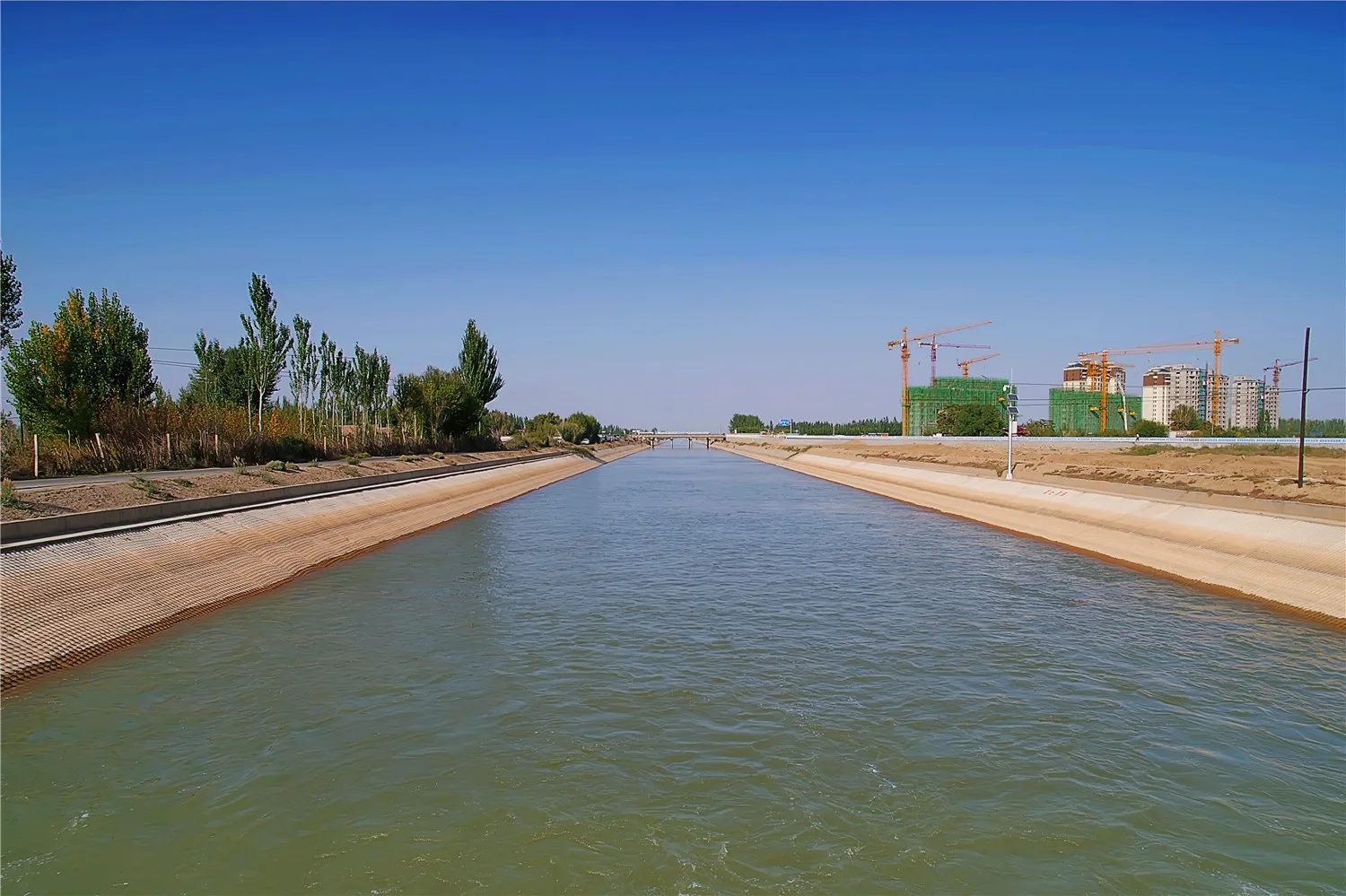
Grouted Mattress Case Studies: 5 Projects, Real Data
Five real grouted mattress installations across canal lining, river bank protection, coastal revetment, reservoir lining, and bridge pier scour — with actual project areas, design parameters, installation programmes, and post-installation performance data.
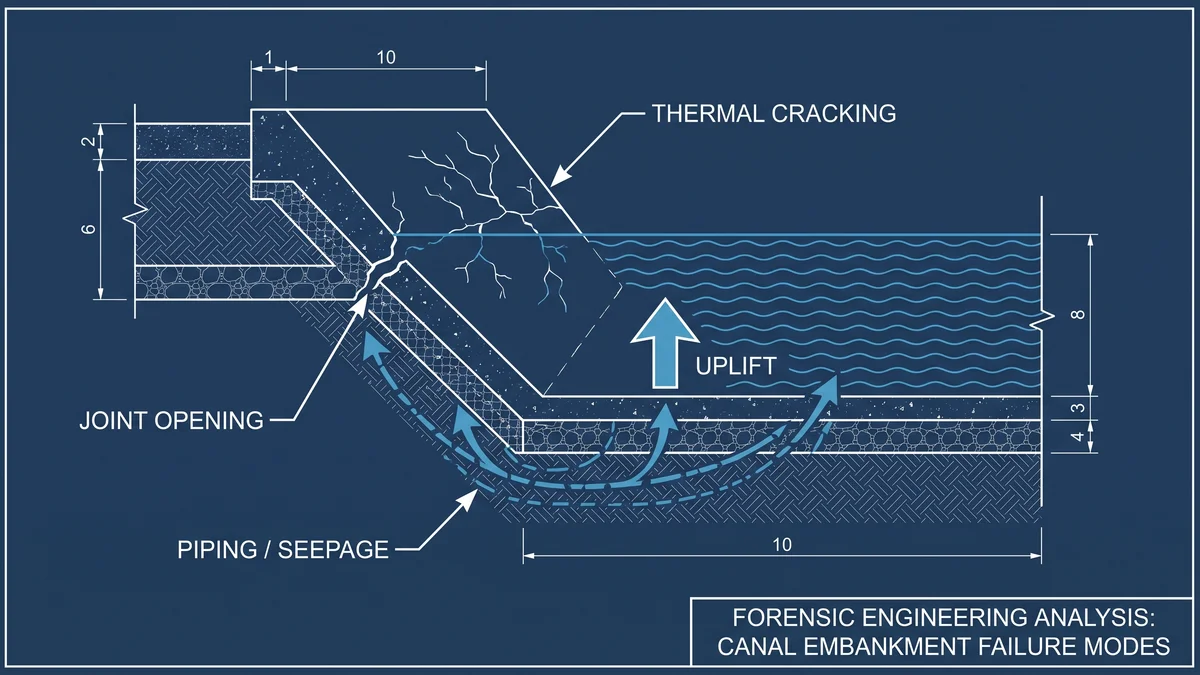
Canal Lining Failure: 7 Causes and How to Prevent Them
Canal lining failures cost irrigation authorities billions annually in emergency repairs and lost water. This forensic guide identifies the 7 most common failure causes — from joint failure to uplift — and explains how to prevent each through better specification and installation.
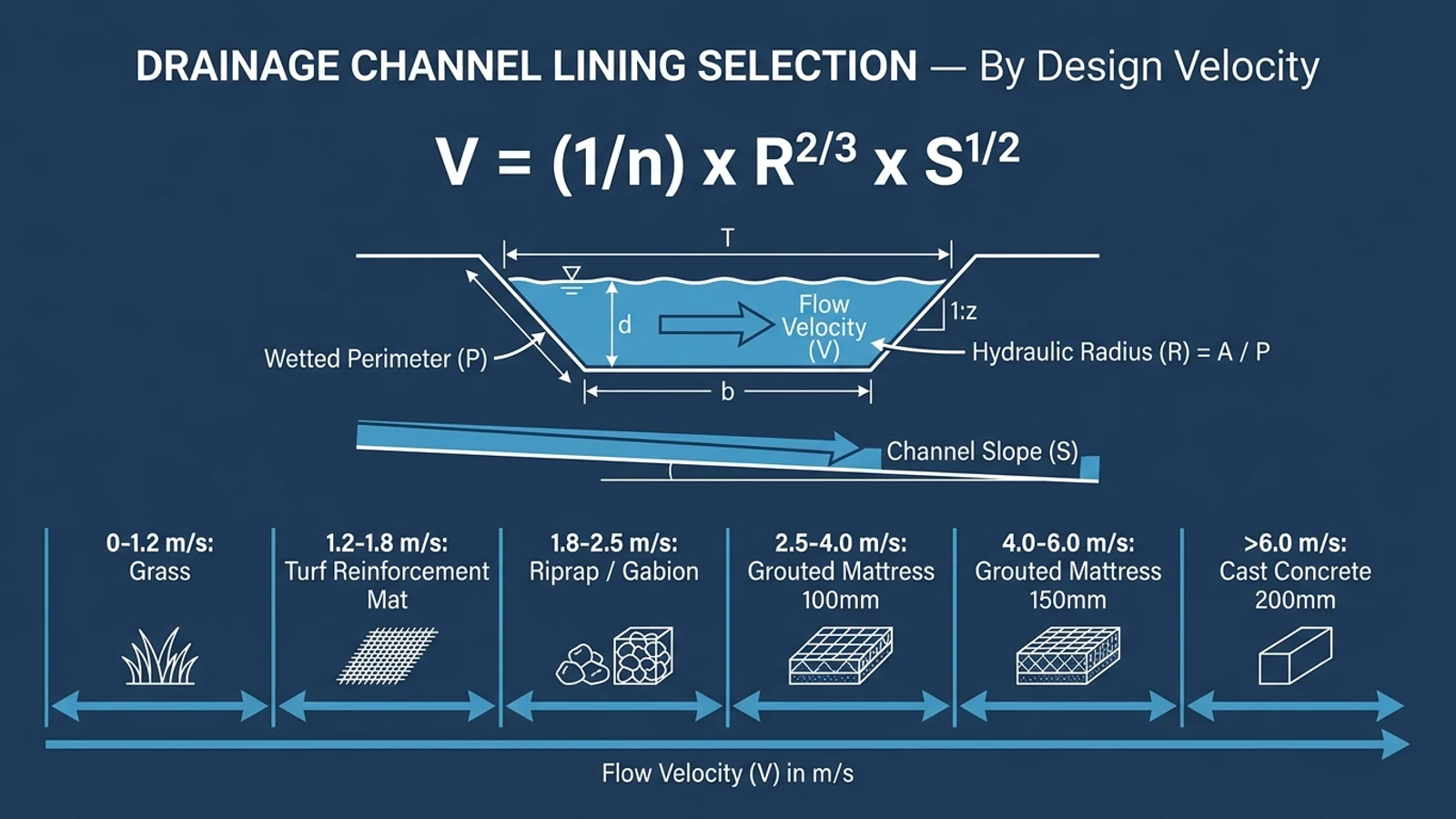
Drainage Channel Lining: Road and Infrastructure Guide
Drainage channels alongside roads, railways, and industrial sites carry high-velocity storm runoff that erodes unlined channels within seasons. This guide covers lining selection, hydraulic design, and installation for roadside drainage channels.
HydroBase - China Manufacturer
Ready to Specify Grouted Mattress?
GRI GT16 compliant products, factory test reports included. Engineering support at no cost. 48-hour response.