
Articulated Concrete Mattress: Technical Guide 2026
Quick Summary
Everything engineers need to know about articulated concrete mattress (ACM) — fabric types, thickness selection, GRI GT16 compliance, installation, and cost. The definitive reference for specifiers and contractors.
Quick Answer: Articulated concrete mattress (ACM) — also called grouted mattress or GGFM (Geotextile Grout-Filled Mattress) — is a flexible erosion protection system made from two layers of woven geotextile fabric stitched into a grid and filled with cement grout on-site. It provides concrete-hard scour resistance at velocities up to 6.0 m/s, installs without dewatering, and complies with GRI GT16. This guide covers everything from material standards to installation procedures and lifecycle costs.
Articulated concrete mattress is one of the most versatile and widely deployed erosion protection systems in hydraulic engineering today. Across China's national water diversion canals, the Middle East's irrigation infrastructure, Southeast Asia's riverbank stabilisation programmes, and Africa's reservoir construction projects, ACM has become the preferred specification for projects combining high-velocity hydraulic loads with programme or access constraints that make conventional concrete impractical.
This guide covers the complete technical picture — from the material science of the geotextile fabric to the hydraulic design methodology and installation requirements. For specific application guides, see: Canal Lining, Slope Protection, Bridge Pier Scour, and Coastal Revetment.
What Is Articulated Concrete Mattress?
The term "articulated concrete mattress" describes any continuous erosion protection system where discrete concrete elements are connected in a way that allows relative movement between adjacent elements — the "articulation" that gives the system its ability to conform to irregular surfaces and tolerate post-construction settlement without cracking.
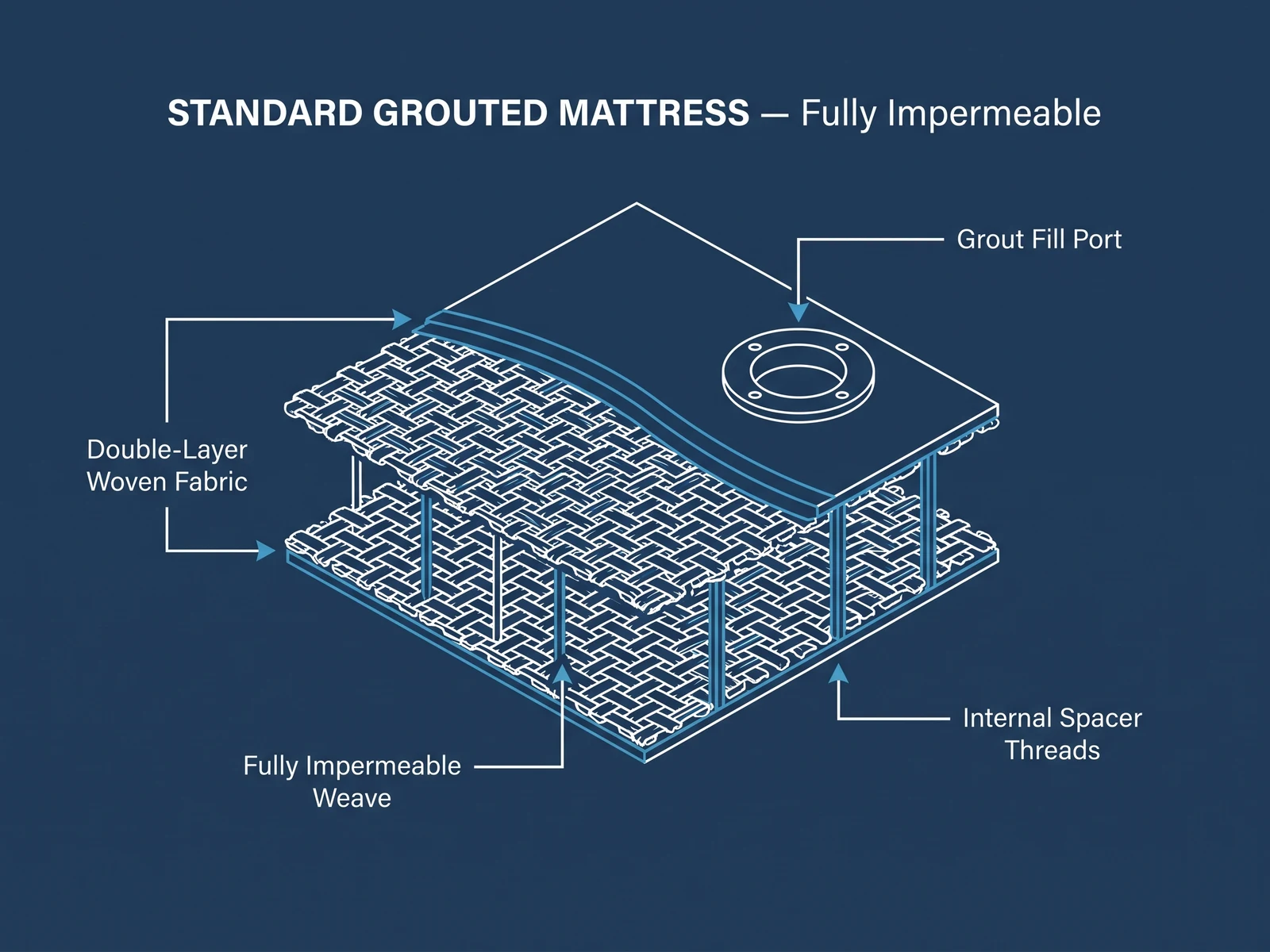
The grout-filled (GGFM) type — the most widely used form — consists of:
- Outer woven fabric: Two layers of high-tenacity polypropylene woven geotextile, UV-stabilised, with minimum grab tensile strength of 1,200 N per GRI GT16, tested to ASTM D4632
- Internal cell structure: The two fabric layers are stitched together at regular intervals (typically 200–300 mm centres) creating a grid of internal chambers
- Cement grout fill: Fine-aggregate cement grout (typically 1:2 cement:sand ratio, w/c = 0.45–0.50) is pumped into the cells on-site, expanding the mattress to its design thickness
- Panel joints: Adjacent panels are connected by overlapping fabric flaps with hook-and-loop or mechanical fasteners, maintaining continuity across panel joints while allowing angular movement
GRI GT16: The Quality Standard for Articulated Concrete Mattress
The Geosynthetic Research Institute's GRI GT16 is the internationally recognised acceptance standard for grout-filled mattresses. Specifiers should require GRI GT16 compliance — and third-party test certification — as a minimum procurement requirement. Key acceptance values:
| Property | Test Method | Minimum Value (GRI GT16) |
|---|---|---|
| Grab Tensile Strength | ASTM D4632 | 1,200 N (both directions) |
| CBR Puncture Resistance | ASTM D6241 | 4,500 N |
| UV Degradation Resistance | ASTM D4355 | ≥70% tensile strength retained (500 hrs) |
| Seam Peel Strength | GRI GT16 §4.3 | ≥500 N/m |
| Seam Shear Strength | GRI GT16 §4.3 | ≥1,500 N/m |
| Compressive Strength (filled) | ASTM C39 | ≥17 MPa at 28 days |
The Three Product Variants
HydroBase manufactures three variants of articulated concrete mattress, each optimised for different hydraulic and environmental conditions:
| Variant | Fabric Face | Best Application | Key Feature |
|---|---|---|---|
| Standard (Impermeable) | Fully impermeable woven face | Canal lining, river bank, slope protection | Full seepage control; maximum flow resistance |
| Filter Point | Drainage openings at cell intersections | Reservoirs, tidal zones, coastal revetments | Prevents hydrostatic uplift during rapid drawdown |
| Vegetated | Large open cells for plant establishment | Ecological slopes, amenity waterways | Combines structural protection with vegetation |
Thickness Selection: Design Velocity Method
Articulated concrete mattress thickness is selected based on the design flow velocity at the protected surface. The relationship between velocity and required thickness is derived from stability analysis of the grout-filled mattress unit weight resisting the hydrodynamic drag and lift forces generated by the design flow.
| Thickness | Design Velocity (m/s) | Unit Weight (kg/m²) | Roll Size (typical) | Installed Cost Guide (USD/m²) |
|---|---|---|---|---|
| 75 mm | Up to 2.5 | ~115 | 2.0 m × 50 m | $22–$35 |
| 100 mm | Up to 3.5 | ~155 | 2.0 m × 40 m | $28–$45 |
| 150 mm | Up to 4.5 | ~230 | 2.0 m × 25 m | $38–$60 |
| 200 mm | Up to 6.0 | ~310 | 2.0 m × 20 m | $48–$75 |
Installation: Step-by-Step
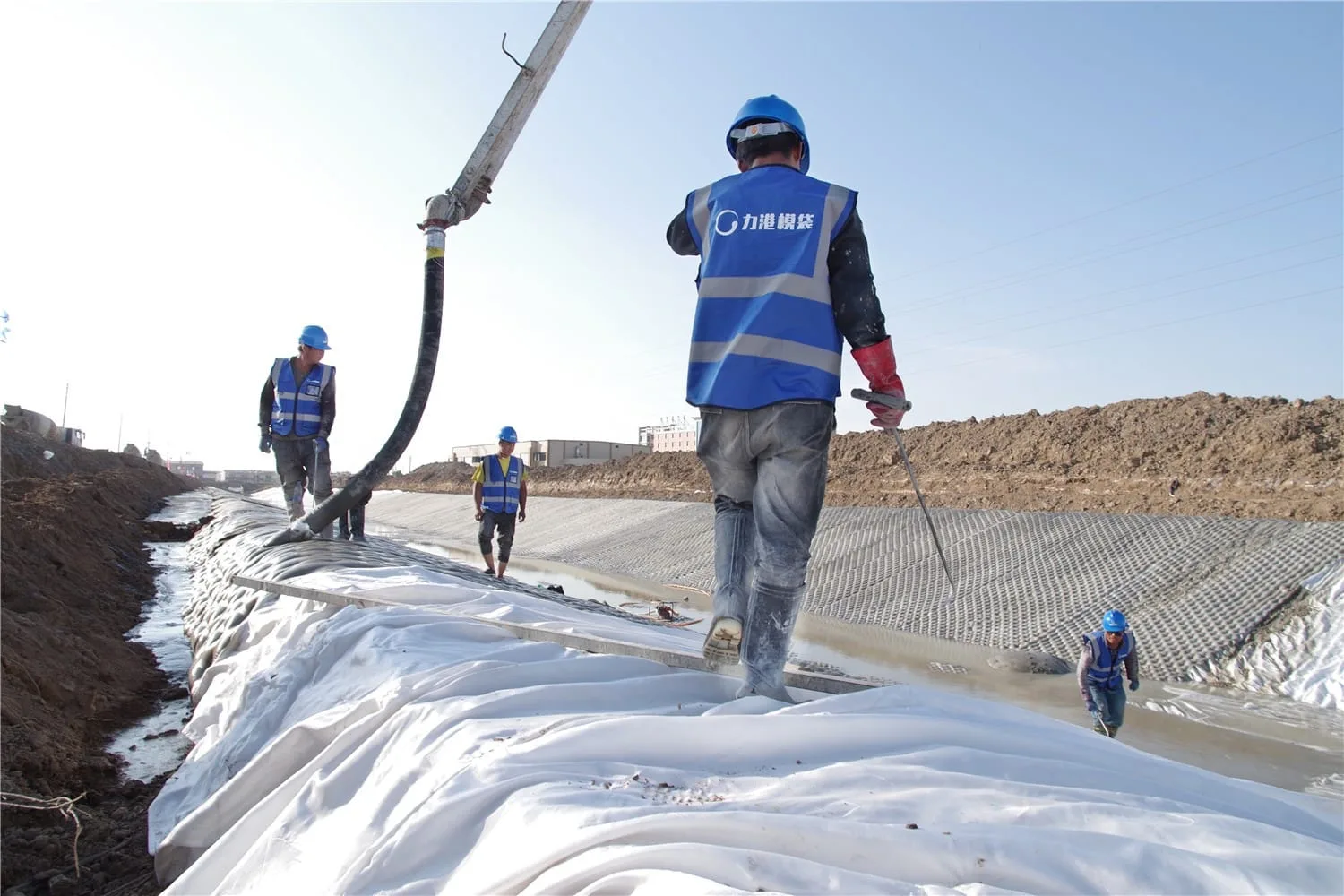
Articulated concrete mattress installation requires no specialist plant beyond a standard concrete pump truck — the most common piece of plant on any construction site. A typical installation sequence for a canal slope:
- Subgrade preparation — trim slope to design profile ±50 mm; remove vegetation and loose material; compact to minimum 95% Standard Proctor density
- Geotextile filter (where required) — lay non-woven filter geotextile (150–200 g/m²) if subgrade CBR <3%
- Panel placement — unroll mattress from crest downward; secure upper edge with steel anchor stakes at 2 m centres; overlap adjacent panels minimum 300 mm (upslope panel on top)
- Pump connection — connect 42–47 m boom pump hose to injection nozzle at panel base
- Grout mixing and injection — mix fine-aggregate grout (1:2 cement:sand, w/c = 0.45–0.50); pump at 15–25 m³/hour; move injection point along panel as cells fill
- Curing — apply hessian covers or curing compound immediately; mist with water for minimum 7 days; reach ≥17 MPa at 28 days
Production rates: 800–1,200 m²/pump unit/8-hour shift on flat or gently sloping surfaces; 500–800 m²/shift on steep slopes (1:1.5 and steeper).
Articulated Concrete Mattress vs Precast Concrete Mattress
A common point of confusion in tender documents: "articulated concrete mattress" can refer to either a grout-filled flexible mattress (GGFM) or a traditional precast concrete block mattress — a system using individual cast concrete blocks linked by steel cables or polypropylene rope. The two systems differ significantly in installation requirements and performance characteristics.
| Feature | Grout-Filled (GGFM) | Precast Block |
|---|---|---|
| Installation plant | Concrete pump truck | Crane + spreader beam |
| Panel weight (unfilled/installed) | 2–5 kg/m² / 155–310 kg/m² | 250–450 kg/m² (delivered) |
| Underwater installation | Yes (to 10+ m) | Limited (crane placement only) |
| Subgrade conformance | Excellent (fabric drapes) | Good (hinged between blocks) |
| Seepage control | Excellent (impermeable fabric) | None (open joints) |
| Installed cost guide | $28–$75/m² | $55–$120/m² |
Quality Assurance and Testing
For GRI GT16 compliance, the following tests should be specified at tendering stage and confirmed with third-party certificates at delivery:
- Fabric grab tensile strength (ASTM D4632) — minimum 5 specimens per 10,000 m²
- CBR puncture resistance (ASTM D6241) — minimum 3 specimens per 10,000 m²
- UV resistance (ASTM D4355) — one test per product type per order
- Seam peel and shear strength (GRI GT16 §4.3) — minimum 3 specimens per seam type per order
- Grout compressive strength (ASTM C39) — minimum 3 cubes per 500 m³ of grout placed
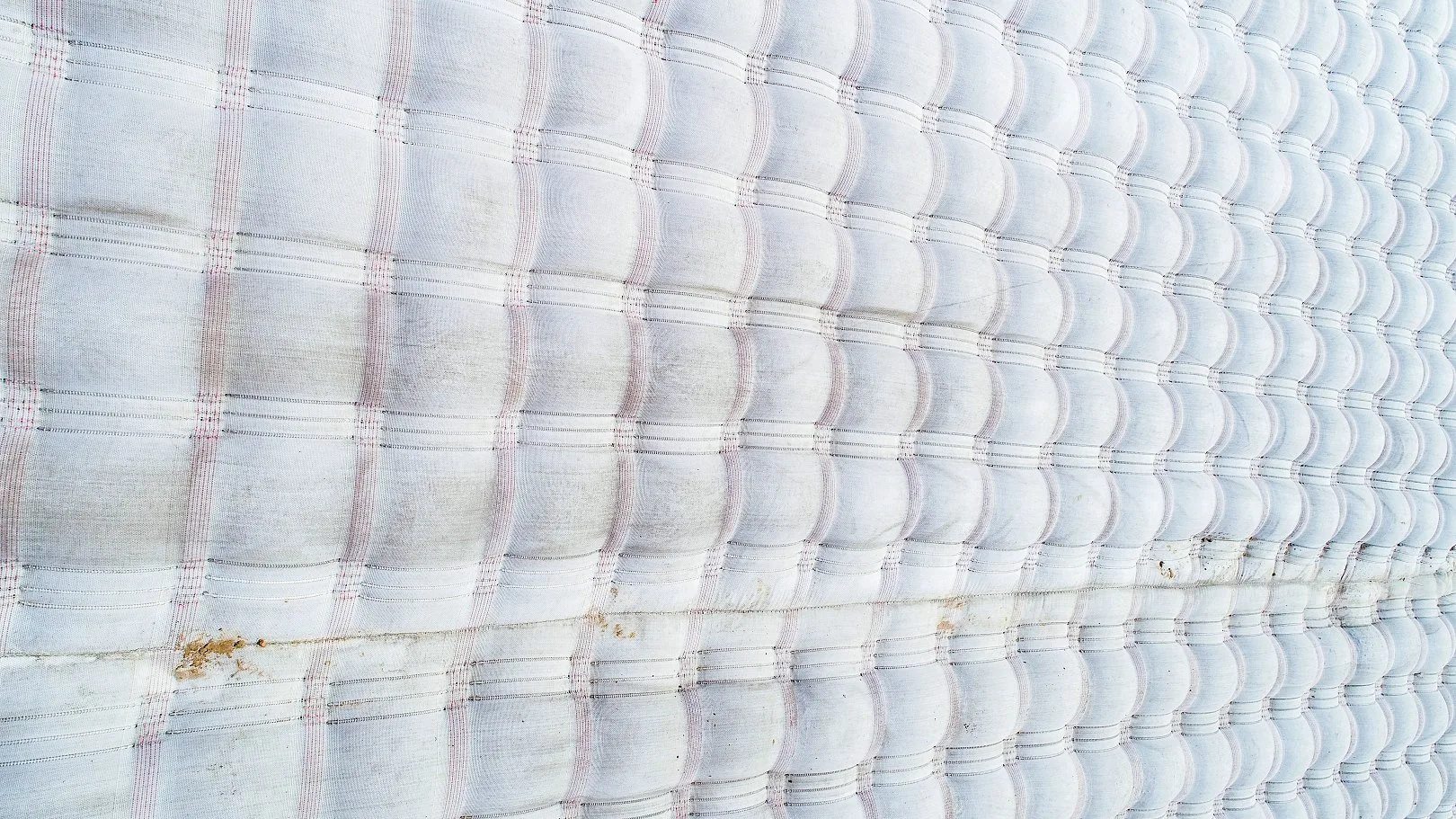
For system comparison, read revetment mattress vs riprap and our slope protection design guide.
Frequently Asked Questions
What is the difference between grouted mattress and articulated concrete mattress?
The terms are used interchangeably in most markets. "Articulated concrete mattress" (ACM) is the broader category — it includes both grout-filled fabric mattresses (GGFM) and precast concrete block mattresses. In practice, when engineers specify "ACM" without further qualification, they almost always mean the grout-filled type. HydroBase manufactures the grout-filled (GGFM) type exclusively.
How long does articulated concrete mattress last?
The grout core has an indefinite service life — cement concrete does not degrade in a submerged or buried environment. The polypropylene fabric is UV-stabilised and has a certified post-UV tensile strength retention of ≥70% after 500 hours (ASTM D4355). In practice, the mattress fabric is protected from UV by the grout fill immediately after installation, meaning the UV exposure period is limited to the handling and placement phase. Design life is typically quoted at 50+ years, based on equivalent installations dating to the 1980s still in service.
Can articulated concrete mattress be repaired if damaged?
Yes. Localised damage — typically caused by impact from waterborne debris or vandalism of the unfilled fabric before grout injection — can be repaired by cutting out the damaged area and stitching in a patch panel, then pumping the patch with grout. For damage to the cured mattress (impact cracking), grout injection through a drilled port can fill internal voids. Full panel replacement is rarely required — the articulated structure means that even significant local damage does not propagate to adjacent panels.
What grout mix is used in articulated concrete mattress?
The standard mix is a fine-aggregate cement grout: Portland cement : fine sand at 1:2 by weight, with water-cement ratio of 0.45–0.50. No coarse aggregate — the maximum aggregate size must pass through the injection nozzle (typically 5 mm). Admixtures (plasticisers, accelerators) may be used to adjust workability or early strength development in cold-weather installations. The target 28-day compressive strength is minimum 17 MPa per GRI GT16.
HydroBase manufactures GRI GT16-compliant articulated concrete mattress (grouted mattress / GGFM) at our 150,000 m² production facility in Inner Mongolia. Third-party test certificates with every order. 48-hour dispatch. Request a technical package and quote or download our full specification sheet.
HydroBase Technical Team
HydroBase manufactures grouted mattresses (GRI GT16 compliant) in China and delivers to 30+ countries. Our engineering team provides specification support, grout mix design, and installation guidance.
About HydroBaseMore Articles
View all
Grouted Mattress Case Studies: 5 Projects, Real Data
Five real grouted mattress installations across canal lining, river bank protection, coastal revetment, reservoir lining, and bridge pier scour — with actual project areas, design parameters, installation programmes, and post-installation performance data.
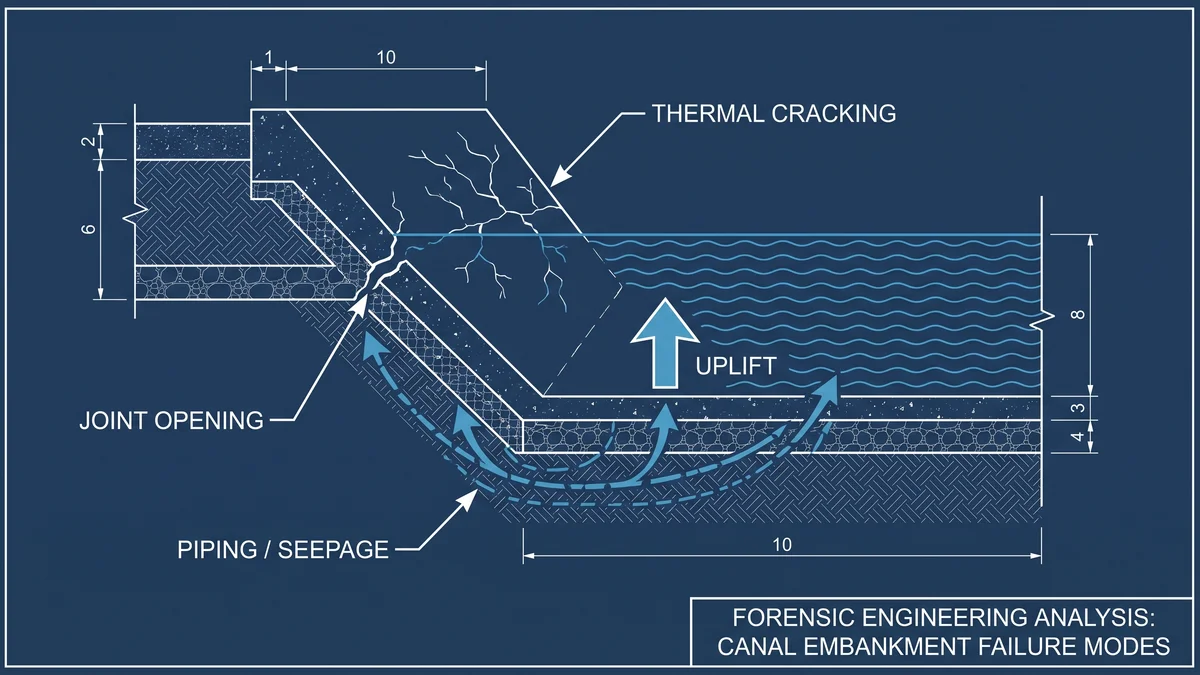
Canal Lining Failure: 7 Causes and How to Prevent Them
Canal lining failures cost irrigation authorities billions annually in emergency repairs and lost water. This forensic guide identifies the 7 most common failure causes — from joint failure to uplift — and explains how to prevent each through better specification and installation.
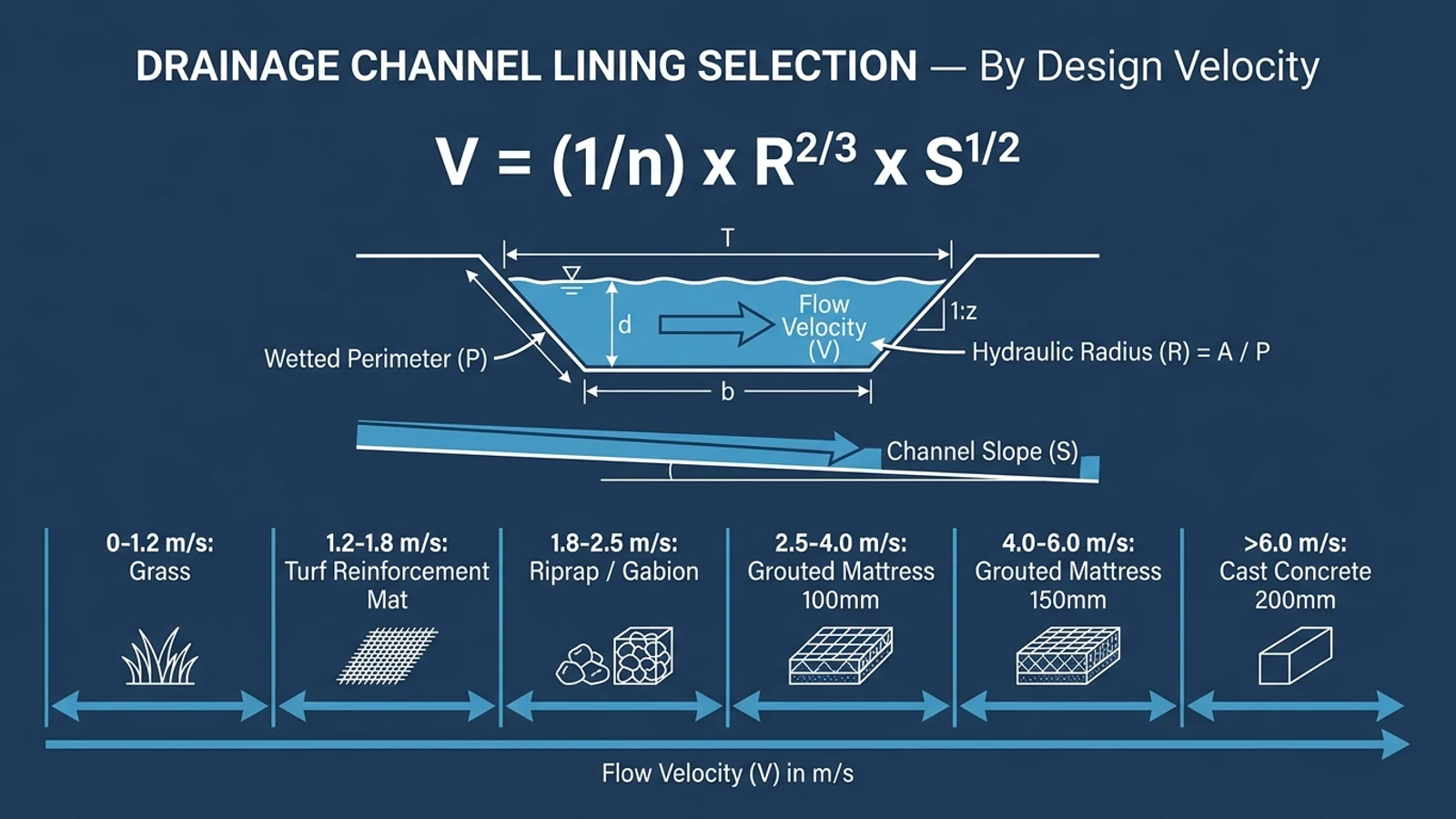
Drainage Channel Lining: Road and Infrastructure Guide
Drainage channels alongside roads, railways, and industrial sites carry high-velocity storm runoff that erodes unlined channels within seasons. This guide covers lining selection, hydraulic design, and installation for roadside drainage channels.
HydroBase - China Manufacturer
Ready to Specify Grouted Mattress?
GRI GT16 compliant products, factory test reports included. Engineering support at no cost. 48-hour response.