
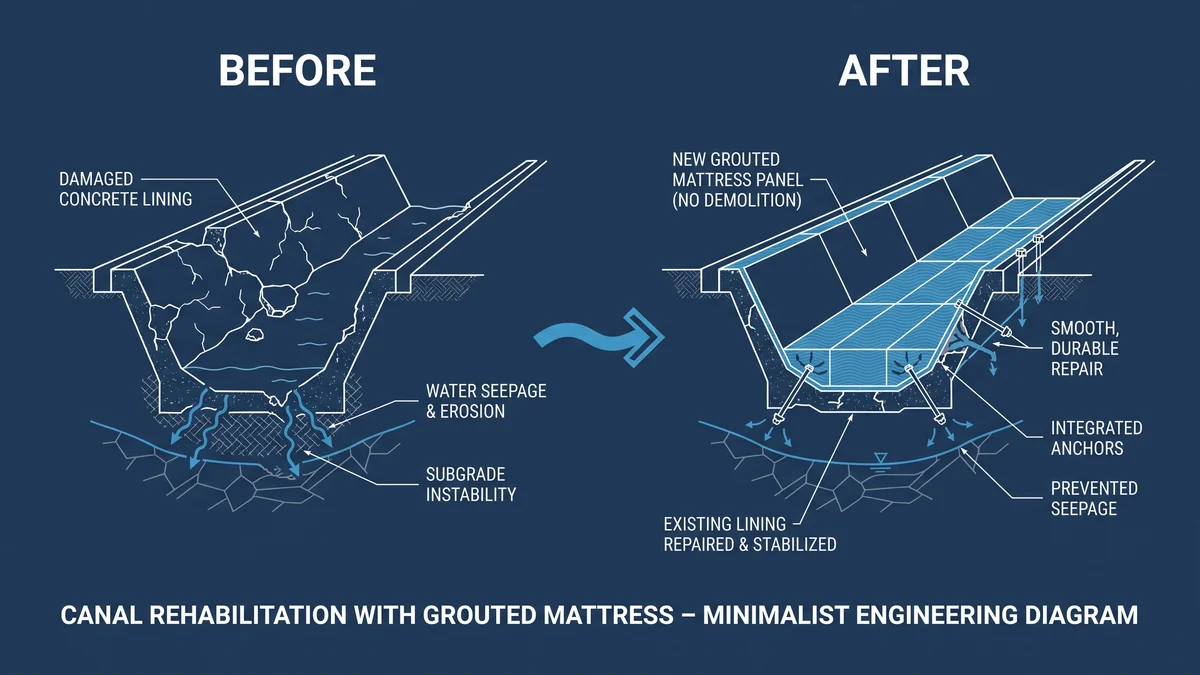
Canal Rehabilitation: How to Reline a Damaged Canal
Quick Summary
Old canals lose water through cracked concrete, failed joints, and eroded sections. This guide covers the full canal rehabilitation process — condition assessment, rehabilitation method selection, installation, and cost comparison for re-lining over existing linings.
Quick Answer: Most canal rehabilitation projects can reline directly over the existing damaged lining without demolition — saving 30–50% of the cost compared to full removal and replacement. Grouted mattress is particularly well-suited for rehabilitation because it conforms to the irregular profile of an existing cracked or settled lining, fills surface voids as it inflates, and does not require the perfectly flat subgrade that new concrete requires. This guide covers the assessment and relining process step by step.
Irrigation infrastructure built in the 1960s–1990s is now at or past its design life across much of the developing world. Concrete canal linings crack at construction joints after 15–25 years; clay blankets consolidate and develop preferential seepage paths; old riprap lining displaces after major floods leaving exposed banks. The cost of full demolition and replacement of failed canal linings is prohibitive — rehabilitation by overlining is the standard approach for the majority of cases.
This guide walks through the three phases of a canal rehabilitation project: condition assessment, method selection, and installation. For the hydraulic design of a new lining, see Canal Lining Methods: Complete Comparison. For seepage loss calculation and ROI, see Canal Seepage Control: Methods, Costs, and ROI.
Phase 1: Condition Assessment
A systematic condition assessment drives rehabilitation method selection. The assessment should document:
- Seepage loss measurement: ponding test on isolated reaches (see Seepage Control Guide) to quantify current losses and prioritise the worst-performing reaches for rehabilitation
- Lining inventory: existing lining type (concrete, clay, riprap, compacted earth), thickness, and age from as-built drawings or core samples
- Defect mapping: systematic visual inspection recording crack locations, joint failures, erosion holes, slope subsidence, and vegetation intrusion. Grade each defect: minor (surface crack only), moderate (full-depth crack, joint open), severe (panel displacement, erosion hole >100 mm deep)
- Subgrade condition: is the existing lining structurally stable or has it moved? If the lining has settled into voids beneath it, overlining without void filling will result in the new lining bridging the same voids
- Hydraulic survey: confirm the existing canal cross-section still matches the design — siltation, erosion, and settlement can alter the hydraulic profile over time
Phase 2: Rehabilitation Method Selection
| Existing Condition | Recommended Rehabilitation Method | Notes |
|---|---|---|
| Cracked concrete — surface cracks only, panels stable | Overline with grouted mattress 100 mm | Mattress fills and bridges cracks; no demolition needed |
| Cracked concrete — joints open, panels displaced <50 mm | Grout-fill joint voids, then overline with GGFM 100 mm | Void fill prevents bridging; displacement within GGFM tolerance |
| Concrete — panels displaced >50 mm or tipped | Remove displaced panels; regrade; overline with GGFM | Partial demolition only — remove displaced sections only |
| Failed clay blanket — erosion holes and loss of profile | Regrade clay; compact; overline with GGFM 100 mm | Clay provides subgrade; GGFM provides permanent armour |
| Displaced riprap — stone gaps, filter exposed | Overline directly with GGFM 100–150 mm | GGFM fabric drapes over stone surface; grout fills voids |
| Full-section failure — slope collapse or piping | Geotechnical investigation → full reconstruction section | Overlining not appropriate where subgrade has failed structurally |
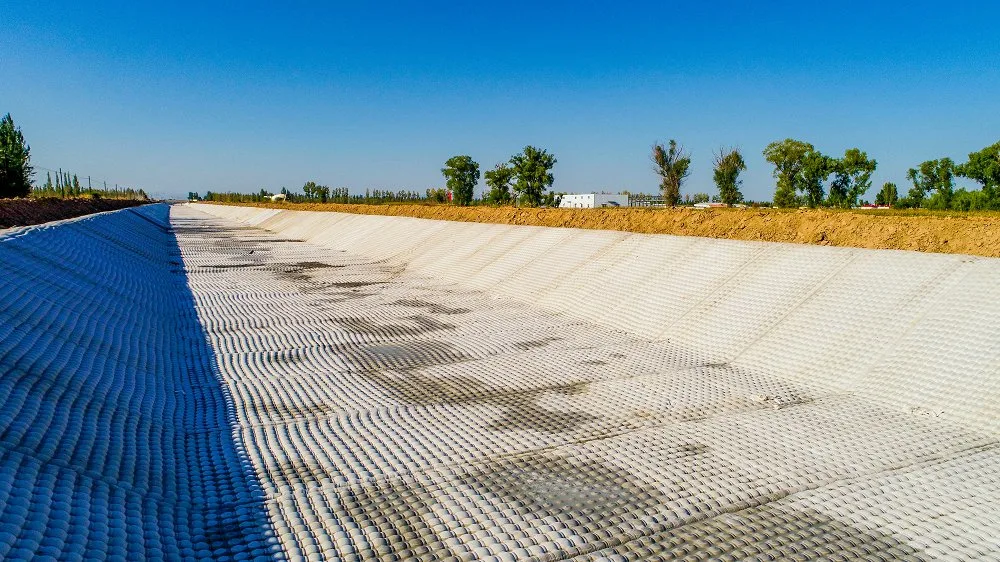
Phase 3: Grouted Mattress Rehabilitation Installation
Installing grouted mattress over an existing canal lining differs from new-construction installation in three important ways:
Difference 1: Subgrade Tolerances Are More Relaxed
The design tolerance for GGFM installation over an existing lining is ±75 mm profile deviation (vs ±50 mm on new subgrade). The fabric's flexibility allows it to drape over moderate surface irregularity. However, depressions deeper than 75 mm should be filled with grout or compacted fill before overlining — the GGFM will bridge the depression, leaving an unsupported span that can crack under load.
Difference 2: Void Filling Before Overlining
Where the existing concrete panels have settled into sub-panel voids — detectable by the hollow sound when tapped — these voids must be pressure-grouted through drilled holes before the GGFM is placed. Unfilled voids beneath the GGFM create the same bridging problem as surface depressions. A simple 50 mm diameter hole pattern at 1.5 m centres, pressure-grouted with a 1:2 cement:sand grout, fills most sub-panel voids effectively.
Difference 3: Thickness Upgrade Opportunity
Canal rehabilitation is the opportunity to upgrade the lining to the current design velocity requirement — which may be higher than the original design if canal capacity has been increased. Specify the GGFM thickness for the current design velocity rather than the original design velocity. Adding 50 mm of GGFM over a failed 100 mm concrete lining gives an equivalent thickness of 150 mm (100 mm concrete + 100 mm GGFM provides more than 150 mm equivalent protection due to the composite action).
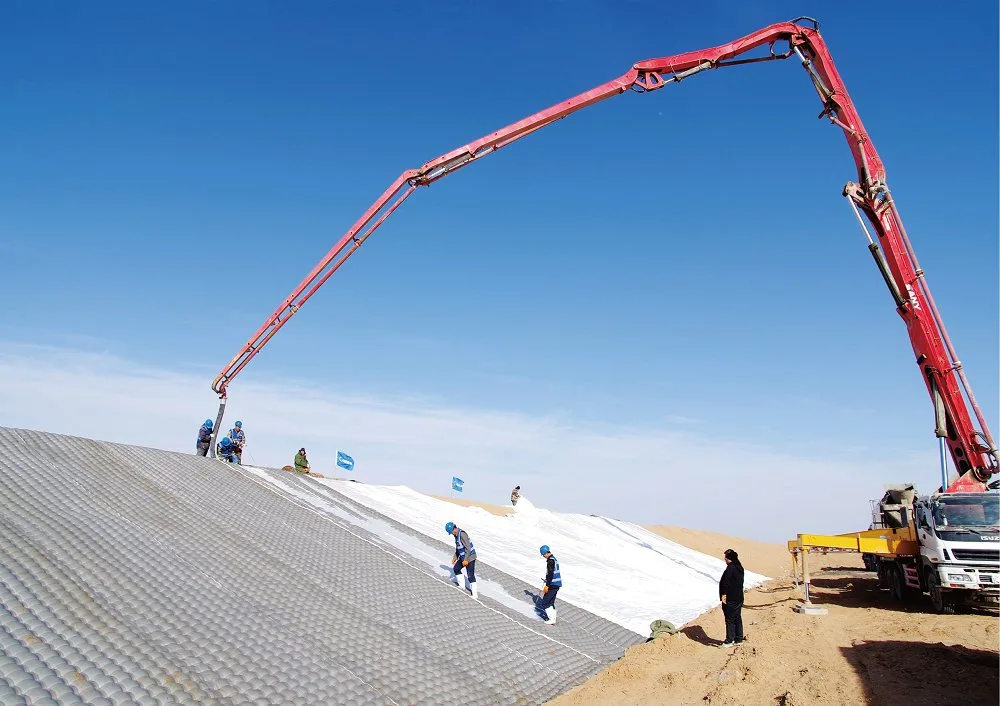
Cost Comparison: Rehabilitation vs Full Replacement
| Approach | Typical Cost (USD/m²) | Programme (per km) | Canal Closure Duration |
|---|---|---|---|
| Full demolition + new concrete | $80–$140 | 8–14 weeks | Full season closure likely |
| Full demolition + new GGFM | $60–$100 | 6–10 weeks | 4–8 weeks |
| Overline existing with GGFM (no demolition) | $35–$60 | 3–5 weeks | 2–3 weeks |
| Partial repair (patch only) | $20–$45 (patched area only) | 1–2 weeks/km | 1–2 weeks |
Technical references: USBR Engineering Monograph No. 39 covers canal lining performance and rehabilitation. The FAO Land and Water Division provides cost-benefit frameworks for irrigation canal rehabilitation programmes.
Frequently Asked Questions
Can grouted mattress be installed over existing concrete without dewatering?
Yes — this is one of the key rehabilitation advantages. The canal can remain at low flow (up to 0.4 m/s) during installation of the upper slope sections. The invert and lower slope require dewatering or temporary diversion but can typically be completed in short dry windows without full-season closure. For canals supplying active irrigation schemes, a reach-by-reach programme allows rehabilitation to proceed without interrupting supply to the entire scheme.
How thick should the overline be on an existing concrete lining?
The minimum thickness for overlining existing concrete is 100 mm — sufficient to bridge surface cracks and provide the seepage control and scour resistance of the new lining. If the design velocity has increased since the original construction, or if the existing lining was underdesigned, specify the thickness for the current design velocity regardless of the existing lining condition. The composite thickness (old lining + new GGFM) provides additional structural reserve.
How long does canal rehabilitation with grouted mattress take?
For a 10 km secondary canal with overlining (no demolition): approximately 4–6 weeks for a crew of 8 with one pump truck. This assumes the canal can be taken out of service for the rehabilitation period. If the canal must remain partially operational, extend the programme by 30–50% to allow the reach-by-reach approach. Planning the rehabilitation during the dry season or low-demand period minimises operational impact.
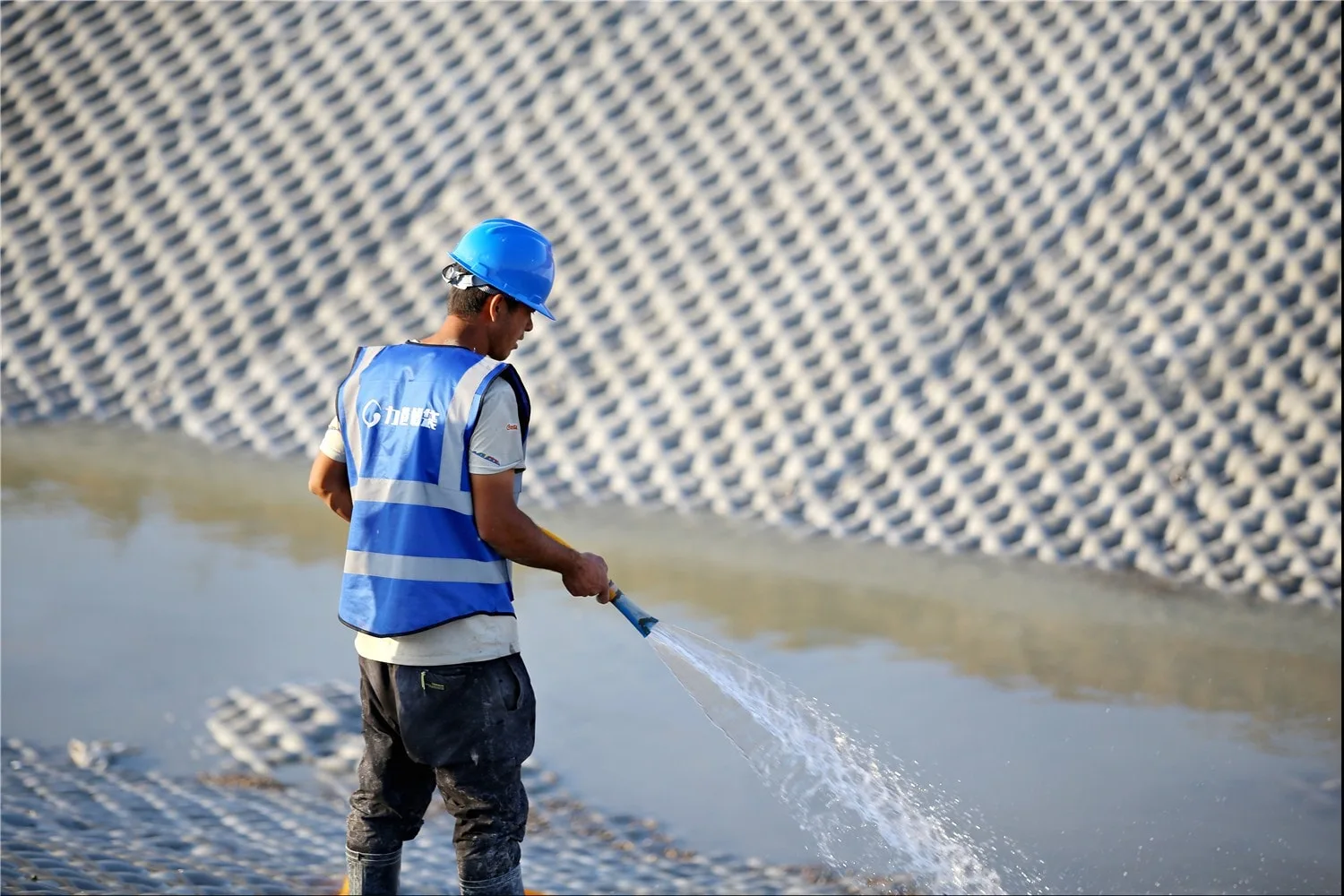
HydroBase has supplied grouted mattress for canal rehabilitation projects across China, Pakistan, Egypt, and Southeast Asia. Our engineering team can review your condition assessment data and recommend the most cost-effective rehabilitation approach. Request a free rehabilitation assessment with your canal condition survey data.
HydroBase Technical Team
HydroBase manufactures grouted mattresses (GRI GT16 compliant) in China and delivers to 30+ countries. Our engineering team provides specification support, grout mix design, and installation guidance.
About HydroBaseMore Articles
View all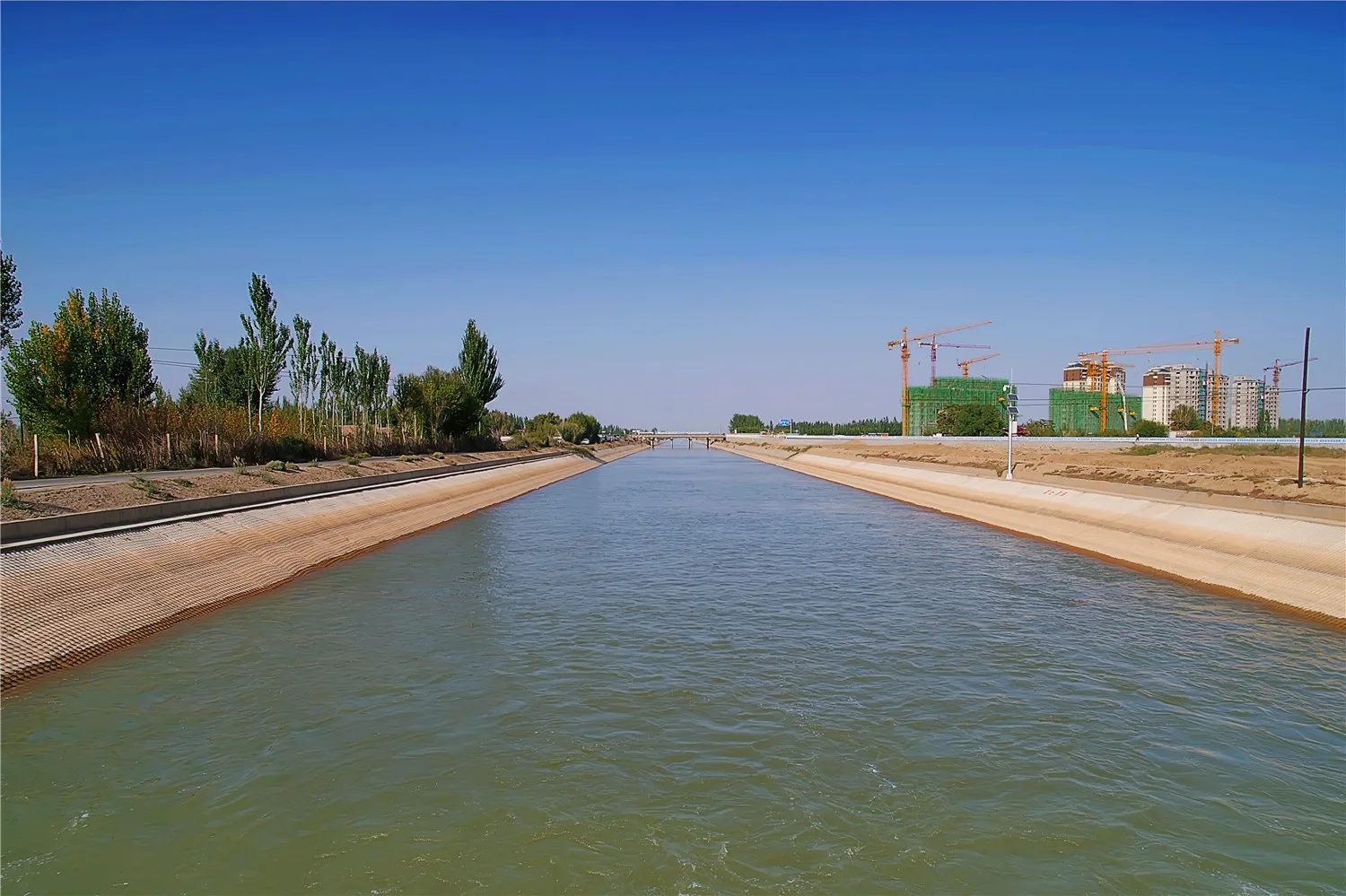
Grouted Mattress Case Studies: 5 Projects, Real Data
Five real grouted mattress installations across canal lining, river bank protection, coastal revetment, reservoir lining, and bridge pier scour — with actual project areas, design parameters, installation programmes, and post-installation performance data.
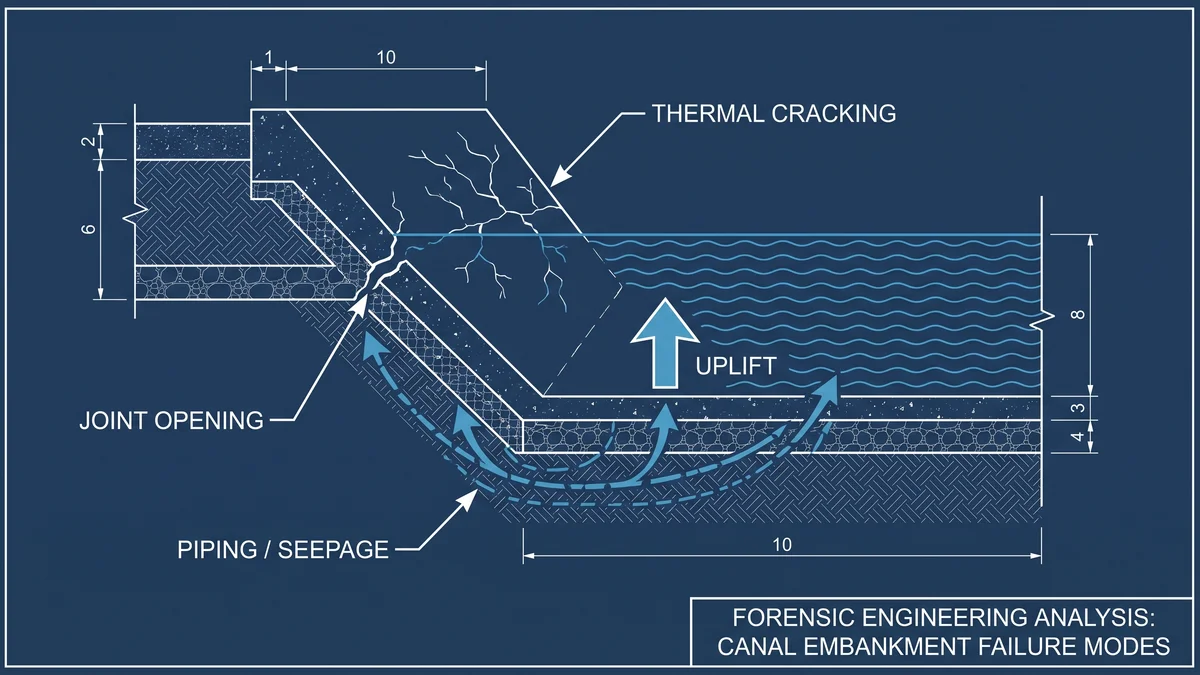
Canal Lining Failure: 7 Causes and How to Prevent Them
Canal lining failures cost irrigation authorities billions annually in emergency repairs and lost water. This forensic guide identifies the 7 most common failure causes — from joint failure to uplift — and explains how to prevent each through better specification and installation.
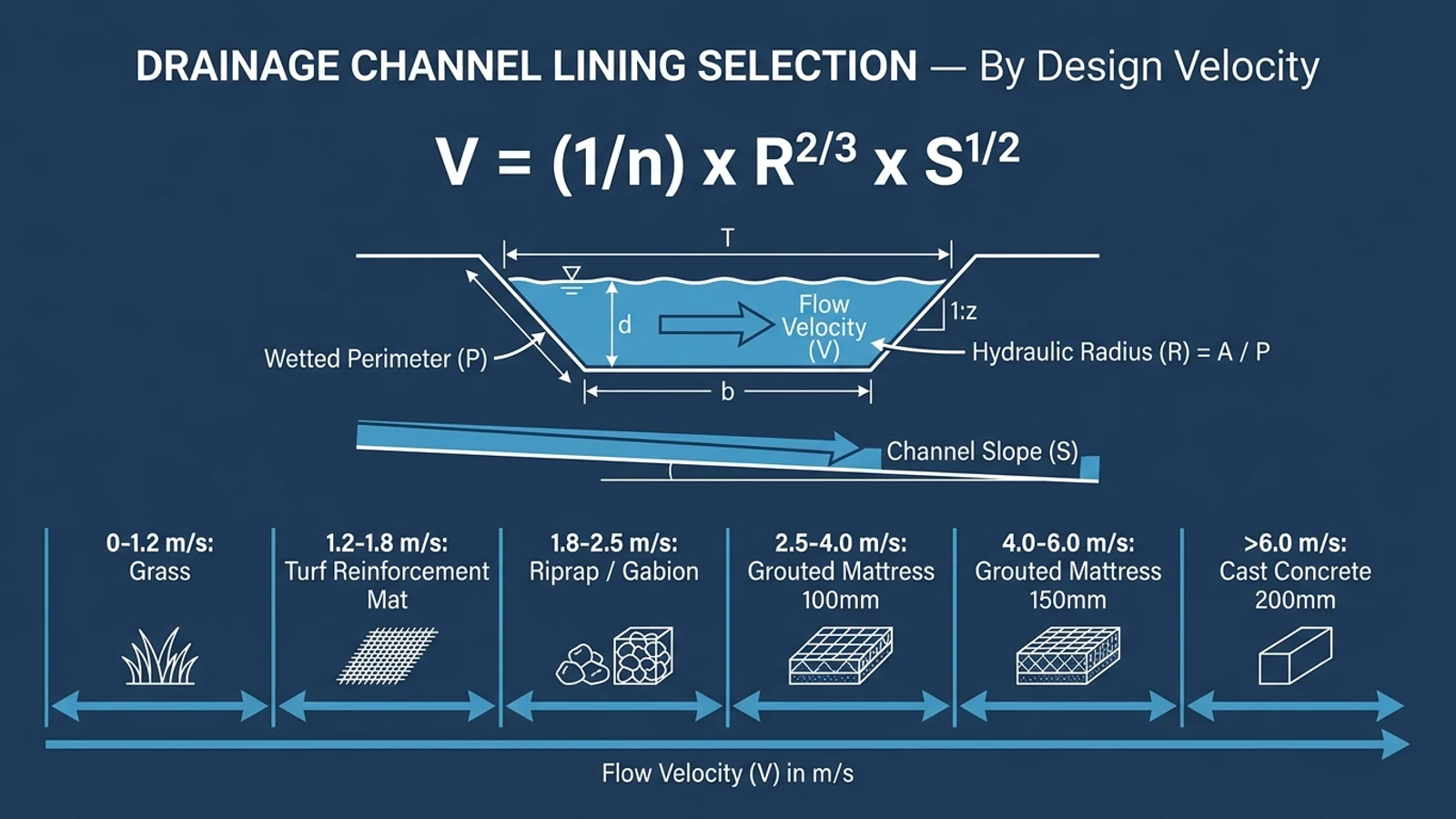
Drainage Channel Lining: Road and Infrastructure Guide
Drainage channels alongside roads, railways, and industrial sites carry high-velocity storm runoff that erodes unlined channels within seasons. This guide covers lining selection, hydraulic design, and installation for roadside drainage channels.
HydroBase - China Manufacturer
Ready to Specify Grouted Mattress?
GRI GT16 compliant products, factory test reports included. Engineering support at no cost. 48-hour response.