
Revetment Mattress vs Riprap: Cost and Performance Data
Quick Summary
A straight comparison of revetment mattress (grouted mattress) and riprap for slope and bank protection. Real cost data, installation speed, hydraulic performance, and maintenance requirements — without the marketing spin.
Quick Answer: Revetment mattress (grouted mattress) costs $28–$55/m² installed — typically 20–40% less than riprap when local rock is not available, and installs around twice as fast (roughly 600 vs 250–300 m²/day) without dewatering. Riprap is cost-competitive where quarried rock is available within 20 km — in those conditions, it is genuinely hard to beat on first cost. Grouted mattress outperforms riprap on seepage control and programme speed in almost all conditions, and on 25-year lifecycle cost where rock haulage exceeds 20 km. Neither system wins on every criterion on every project.
Revetment mattress and riprap are the two most commonly specified hard erosion protection systems in hydraulic engineering — and the choice between them comes up on almost every irrigation, river training, and coastal revetment project. This comparison uses real cost data and hydraulic performance figures. Full disclosure: HydroBase manufactures grouted mattress, not riprap. We have tried to present the riprap cost and performance data fairly — if you find an error or a scenario we have not covered, contact us and we will update the comparison.
For a broader multi-system comparison, see Canal Lining Methods: Complete Comparison and River Bank Erosion Protection: 6 Methods Compared.
What Are We Comparing?
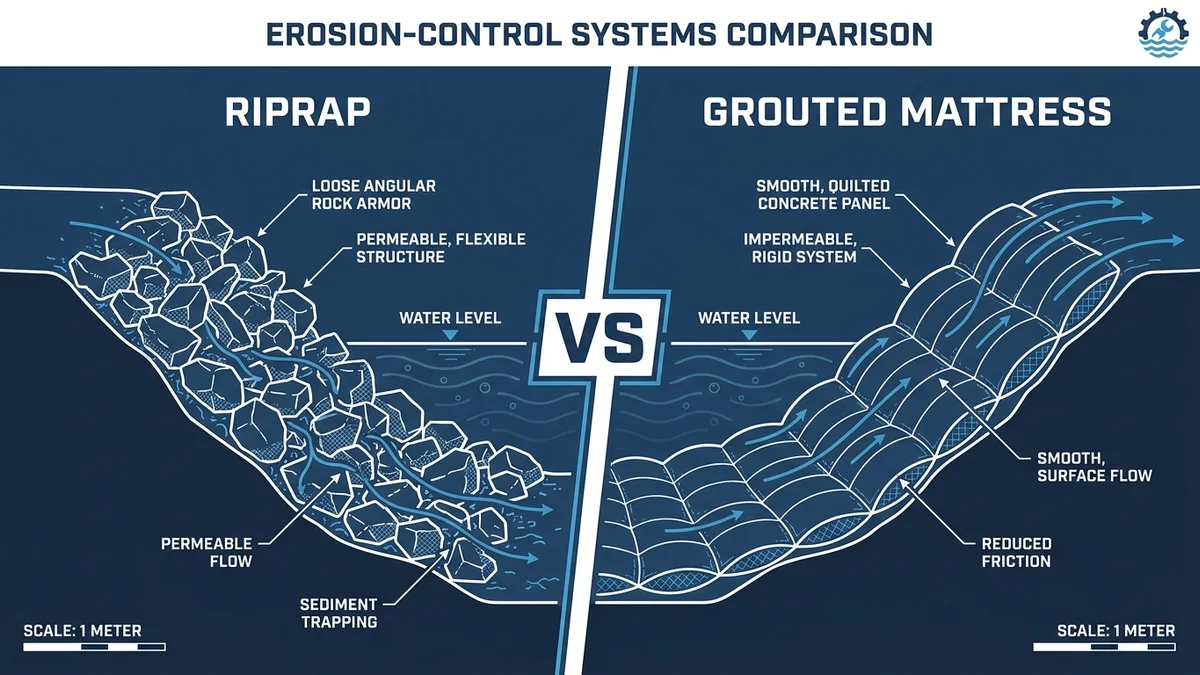
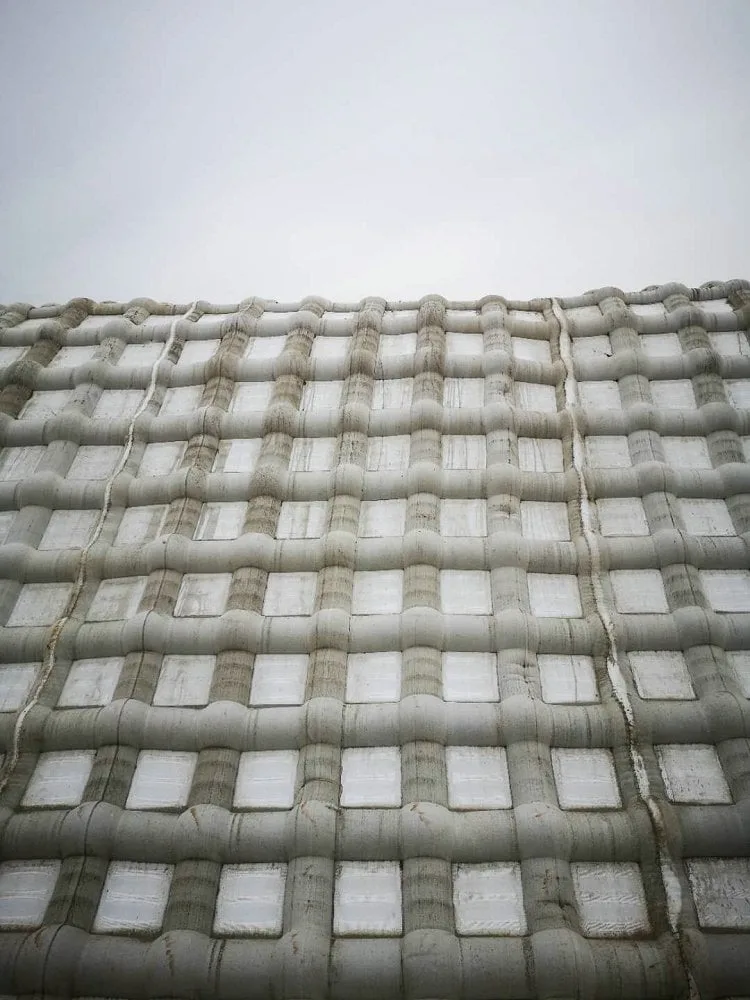
Revetment mattress in this context means grouted mattress (GGFM) — a geotextile grout-filled mattress installed as a continuous, articulated concrete armour on the slope or bank face. It is sometimes called articulated concrete mattress (ACM) or fabric formed concrete. Available in 75–200 mm thickness, it provides both scour resistance and seepage control.
Riprap means randomly placed graded rock over a geotextile filter blanket. The rock size (D50) is selected by hydraulic design — typically using the Isbash equation, USACE EM 1110-2-1601, or CIRIA C683 (The Rock Manual) equations, alongside river-mechanics guidance such as FHWA HEC-20. Riprap is permeable — it provides scour resistance only, with no seepage control unless a separate geomembrane is used. The filter geotextile beneath it is governed by the same IGS testing framework as GGFM fabric.
Direct Cost Comparison
| Cost Component | Revetment Mattress (100 mm) | Riprap (D50 = 200 mm) |
|---|---|---|
| Material (USD/m²) | $12–$18 (fabric + grout) | $18–$35 (rock, incl. haulage) |
| Filter layer (USD/m²) | $0 (mattress fabric = filter) | $3–$6 (non-woven geotextile) |
| Labour + plant (USD/m²) | $10–$20 | $12–$25 |
| Dewatering (USD/m²) | $0 (not required) | $4–$12 |
| Total installed (USD/m²) | $28–$48 | $40–$78 |
Note: Riprap costs assume rock is available within 50 km. Where rock must be hauled >100 km, add $8–$20/m². Where rock is quarried on-site, deduct $8–$15/m².
Performance Comparison
| Performance Factor | Revetment Mattress | Riprap | Winner |
|---|---|---|---|
| Max design velocity | Up to 6.0 m/s (200 mm) | Up to 4.0 m/s (D50 = 300 mm) | Mattress |
| Seepage control | Excellent (impermeable) | None (permeable) | Mattress |
| Settlement tolerance | Excellent (articulated) | Good (regrade stone) | Draw |
| Manning's n (hydraulic roughness) | 0.016–0.020 | 0.030–0.040 | Mattress |
| Installation without dewatering | Yes | Partial (no dewater for rock; dewater for filter) | Mattress |
| Material availability | Factory produced; shipped globally | Requires local quarry | Mattress (remote sites) |
| Post-flood repair | Minor (grout injection) | Moderate (stone replenishment) | Mattress |
| Design life | 50+ years | 20–30 years | Mattress |
Installation Speed Comparison
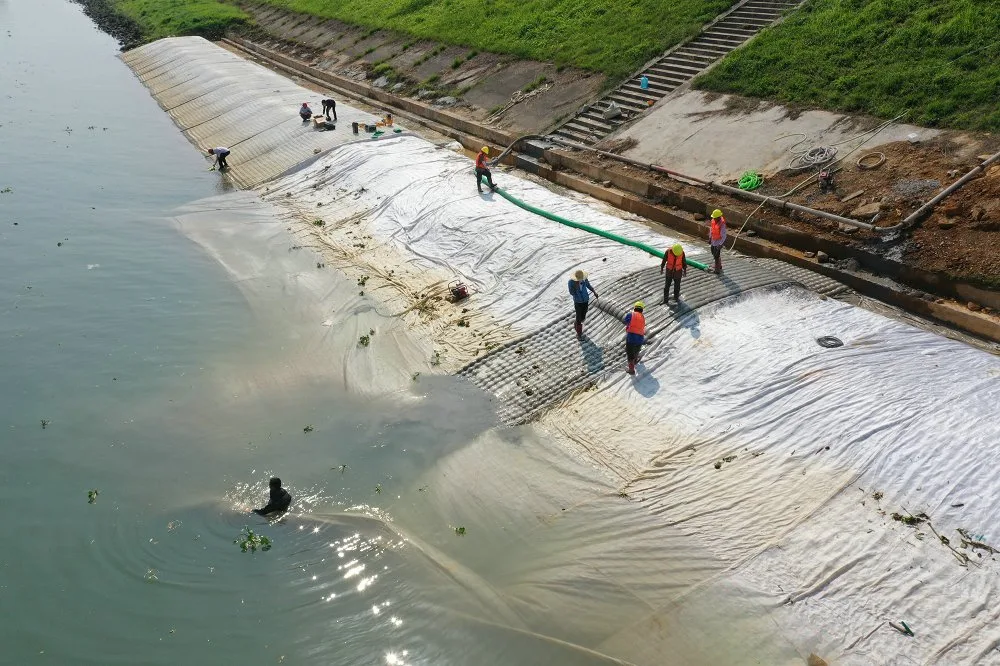
For a 50,000 m² canal lining project with a 6-week programme window:
| Activity | Revetment Mattress | Riprap |
|---|---|---|
| Dewatering / preparation | 0 days | 7–14 days |
| Filter layer | 0 days (fabric = filter) | 5–8 days |
| Lining installation | 42 days (2 pumps × 600 m²/day) | 50–62 days (2 crews × 250–300 m²/day) |
| Curing / reinstatement | 7 days | 2 days |
| Total programme | 49 days | 64–86 days |
When Riprap Wins
Riprap is the right choice in a limited but important set of conditions:
- Hard rock is available from an on-site or nearby (<15 km) quarry at low cost
- The channel can be dewatered with minimal programme impact
- Seepage control is not required (rock is permitted to be permeable)
- Design velocity is below 3.5 m/s — within the cost-effective riprap range
- The project is in a region where skilled grouted mattress contractors are unavailable
25-Year Lifecycle Cost
Cost basis: Southeast Asian installation market, 2024. Rock haulage assumed at 40 km. Grouted mattress material shipped FOB China, installation by local contractor. Adjust for your market — rock-abundant regions with local quarries will show a smaller GGFM cost advantage at Year 0.
| Cost (USD/m²) | Revetment Mattress | Riprap |
|---|---|---|
| Year 0 (installed) | $38 | $55 |
| Year 5 (inspection) | $0.5 | $2 |
| Year 10 (maintenance) | $1 | $8 |
| Year 15 (post-flood repair) | $2 | $12 |
| Year 25 (major maintenance) | $2 | $15 |
| 25-year total | $43.5 | $92 |
Underwater and Below-Waterline Installation
One performance difference that cost tables cannot capture is the ability to install below the waterline — relevant on river bank revetments, bridge piers, and tidal zones where dewatering is impractical or impossible.
Grouted mattress: Fabric panels can be placed by diver or guide frame to depth, then grouted. The grout mix (w/c = 0.45–0.50) is dense enough to displace water within the mattress cells without significant washout. This is established practice in river training and coastal revetment to depths of 5–8 m. The mattress conforms to the underwater surface; no dewatering of the installation zone is required.
Riprap: Rock placement below the waterline is straightforward — dump from barge or excavator bucket. The filter geotextile beneath the rock must be placed by divers first, which is the limiting factor. In currents above 0.8 m/s, filter placement by diver is difficult and the filter may shift before rock arrives. Grouted mattress eliminates the separate underwater filter placement step.
| Factor | Grouted Mattress | Riprap |
|---|---|---|
| Placement without dewatering | Yes — fabric placed by diver or guide frame | Partial — rock yes, geotextile filter difficult |
| Maximum installation depth | 5–8 m (diver-assisted grouting) | Unlimited for rock; 3–5 m practical for filter |
| Current sensitivity during installation | Low — fabric held by grout weight once filled | Moderate — filter displacement above 0.8 m/s |
| Post-flood underwater repair | Targeted grout injection at scour point | Stone replenishment — difficult to achieve target D50 |
Frequently Asked Questions
Is riprap cheaper than grouted mattress?
Only when rock is locally available. Where rock must be hauled more than 50 km, grouted mattress is typically 15–30% cheaper on a first-cost basis. On a 25-year lifecycle basis, grouted mattress is almost always cheaper due to its lower maintenance requirements and longer design life — the numbers above show a 25-year total cost of $43.5/m² versus $92/m² for riprap.
Can grouted mattress replace existing riprap?
Yes — grouted mattress can be installed directly over existing failed or deteriorated riprap. The fabric drapes over the irregular stone surface and the grout fills voids between stones, creating a continuous concrete armour. This is often more cost-effective than removing the old riprap and starting fresh. Contact us to discuss rehabilitation of an existing riprap revetment.
Which is better for a remote project site?
Grouted mattress — shipped as lightweight fabric rolls (2–5 kg/m² before grouting), requiring only cement, sand, and water on-site. Remote sites with difficult access for rock haulage make riprap extremely expensive; grouted mattress fabric can be airfreighted if road access is very restricted. The pump truck used for grout injection is standard construction plant available in virtually every country.
HydroBase supplies GRI GT16 grouted mattress revetment to projects across 30+ countries. Factory-direct with 48-hour dispatch. Request a quote with your project area, slope dimensions, and design velocity.
HydroBase Technical Team
HydroBase manufactures grouted mattresses (GRI GT16 compliant) in China and delivers to 30+ countries. Our engineering team provides specification support, grout mix design, and installation guidance.
About HydroBaseMore Articles
View all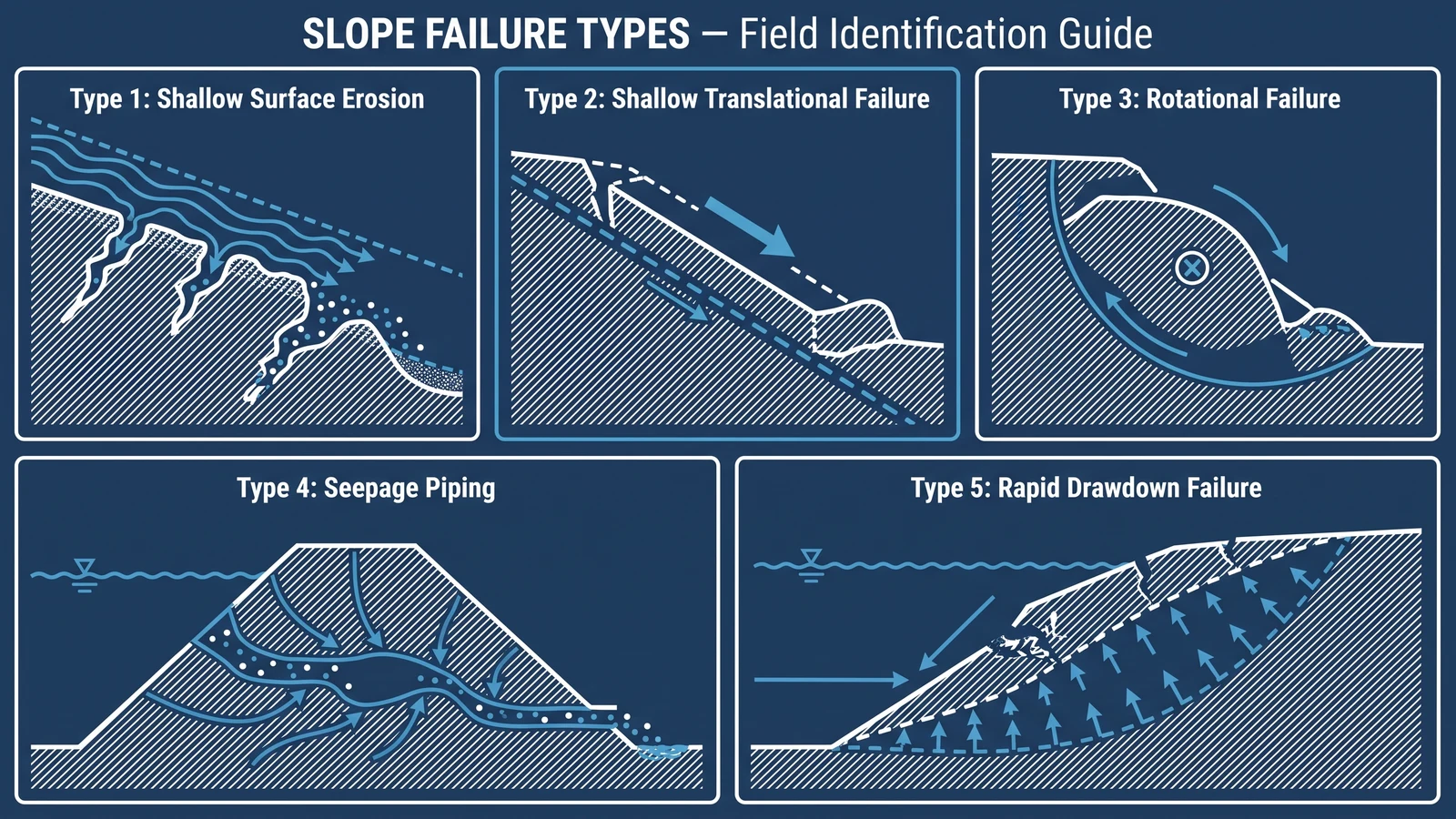
Slope Failure Causes and Prevention: Field Guide
Slope failures on canal embankments, reservoir faces, and road cuttings follow recognisable patterns. This field guide covers the five main slope failure types — shallow surface erosion, shallow translational, rotational, piping, and rapid drawdown — with prevention measures for each.
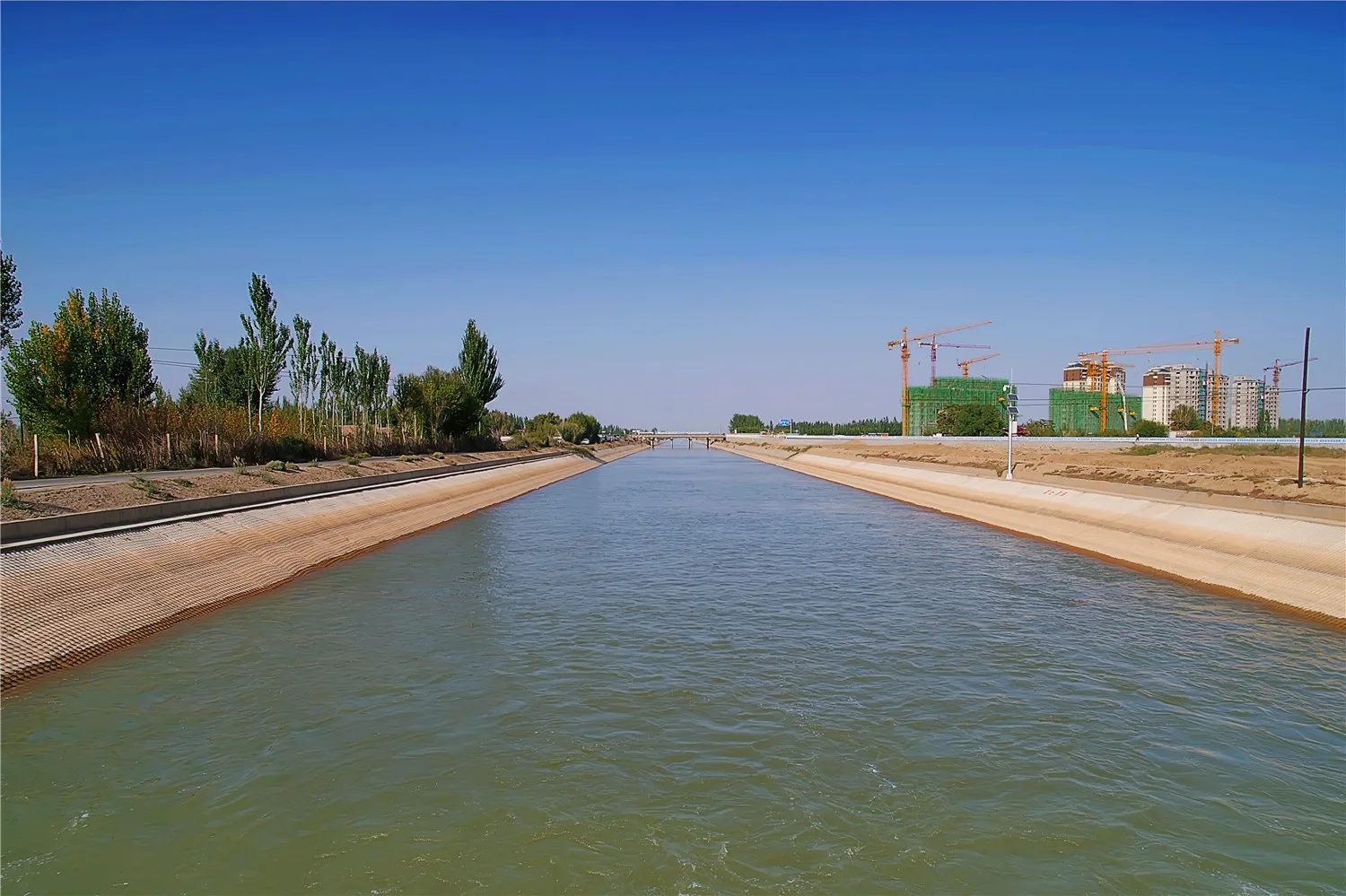
Grouted Mattress Case Studies: 5 Projects, Real Data
Five real grouted mattress installations across canal lining, river bank protection, coastal revetment, reservoir lining, and bridge pier scour — with actual project areas, design parameters, installation programmes, and post-installation performance data.
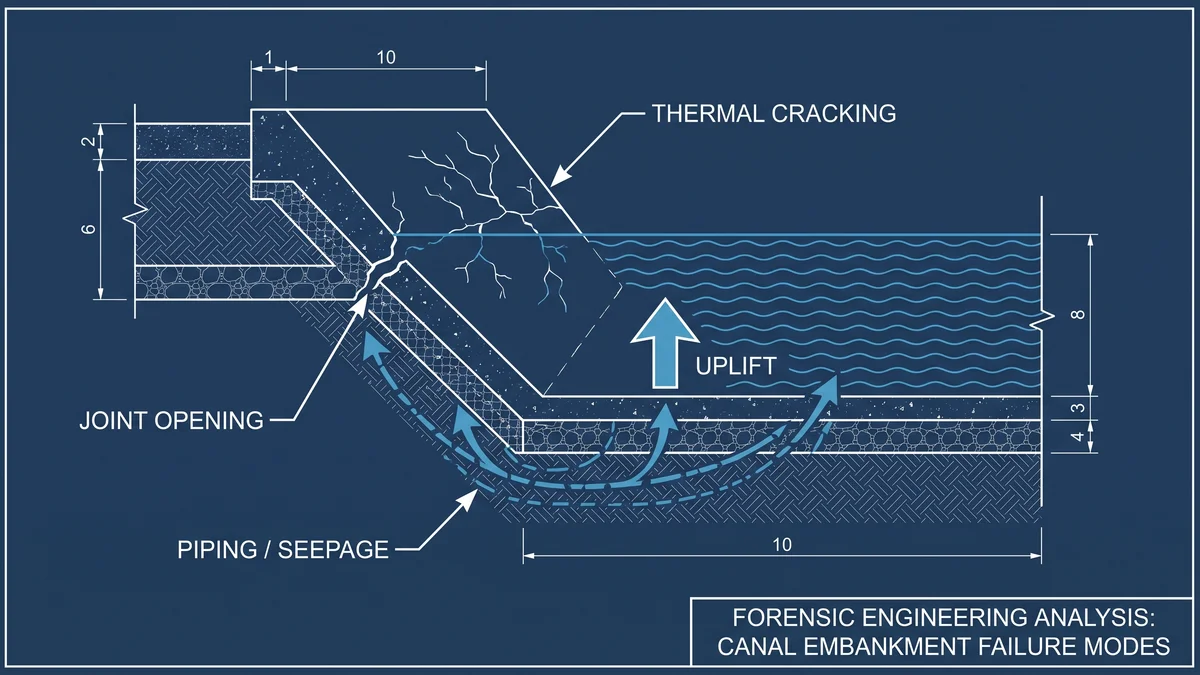
Canal Lining Failure: 7 Causes and How to Prevent Them
Canal lining failures cost irrigation authorities billions annually in emergency repairs and lost water. This forensic guide identifies the 7 most common failure causes — from joint failure to uplift — and explains how to prevent each through better specification and installation.
HydroBase - China Manufacturer
Ready to Specify Grouted Mattress?
GRI GT16 compliant products, factory test reports included. Engineering support at no cost. 48-hour response.