
Fabric Formed Concrete: How It Works and Applications
Quick Summary
Fabric formed concrete uses a flexible geotextile mould filled with cement grout to create durable, contoured concrete structures. Guide covers formwork types, grouted mattress systems, and project applications.
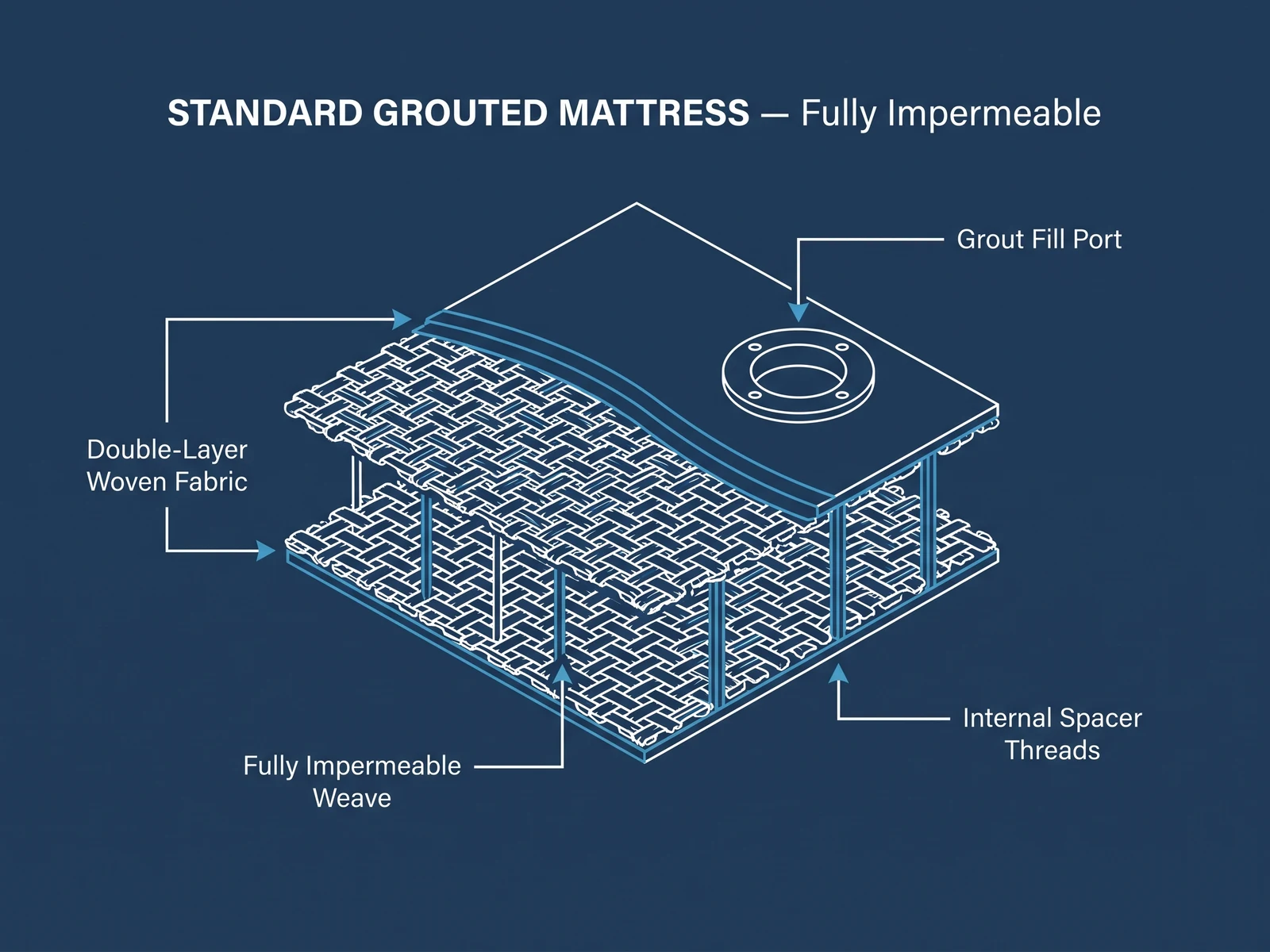
Quick Answer: Fabric formed concrete (FFC) is concrete cast inside a flexible geotextile mould rather than rigid timber or steel formwork. The fabric shapes the concrete to a precise profile, is left in place as permanent reinforcement, and requires no stripping. In hydraulic engineering, the dominant application is the grouted mattress — a double-layer woven geotextile filled with fine-aggregate concrete to create a continuous, articulated erosion armour.
Conventional concrete formwork is rigid, temporary, and expensive to fabricate and strip. Fabric formed concrete replaces the rigid mould with a flexible geotextile fabric that stays in place permanently after casting. The result is concrete with a smoother surface finish, a closer fit to complex geometries, and better long-term performance on slopes, channels, and underwater structures — without the cost of removing formwork.
This guide covers the principles behind fabric formed concrete, the main system types used in civil engineering, and practical guidance on when grouted mattress (the most widely used FFC system) is the right specification for your project.
What Is Fabric Formed Concrete?
Fabric formed concrete works on a straightforward principle: instead of building a rigid mould and filling it with concrete, you position a pre-sewn geotextile fabric against the surface to be protected, then inject cement grout under pressure until the fabric reaches its design thickness. The woven fabric is permeable enough to allow bleed water to escape (giving a denser, stronger surface), but the weave aperture is small enough to retain the cement particles.
The fabric remains bonded to the cured concrete and continues to perform structural functions — it adds tensile reinforcement, prevents the concrete from cracking under differential settlement, and provides a UV-stable outer surface. This is why fabric formed concrete structures outlast poured concrete alternatives in exposed hydraulic environments.
- No formwork to fabricate, position, or strip
- Fabric conforms to any substrate geometry — curved, irregular, or sloped
- Bleed water escapes through the fabric, producing denser surface concrete
- Fabric acts as permanent tensile reinforcement after curing
- Installs above and below water without dewatering
What Types of Fabric Formwork Systems Are Available?
The term "fabric formed concrete" covers several distinct systems used in civil and hydraulic engineering. Understanding the difference is important when selecting a specification.
| System | Also Called | Primary Application | Thickness Range |
|---|---|---|---|
| Grouted Geotextile Mattress | GGFM, ACM, grouted mattress | Erosion protection — channels, banks, coastal revetment | 50–200 mm |
| Geosynthetic Cementitious Composite Mat | GCCM, concrete canvas | Channel lining, slope facing, ditch lining | 5–13 mm |
| Fabric Slip Form | Fabric formwork, soft formwork | Columns, piles, underwater structural repairs | Variable |
| Scour Mattress (unreinforced) | Grout bag mattress | Temporary scour protection, pipeline stabilisation | 100–300 mm |
Why Is Grouted Mattress the Most Widely Used Fabric Formed Concrete System?
In hydraulic and coastal engineering, the articulated concrete mattress (also called grouted mattress or GGFM — Geotextile Grout-Filled Mattress) is the most widely specified fabric formed concrete system. It is governed by GRI GT16, the international quality standard for GGFM, and has been installed on over 230 major infrastructure projects across 30+ countries.
The system consists of two layers of woven polypropylene geotextile stitched together at regular intervals to form a grid of cells. The mattress is manufactured flat at the factory, rolled for transport, and unrolled on the slope or channel bed on site. A standard concrete pump truck injects fine-aggregate cement grout through fill nozzles until each cell expands to the design thickness.
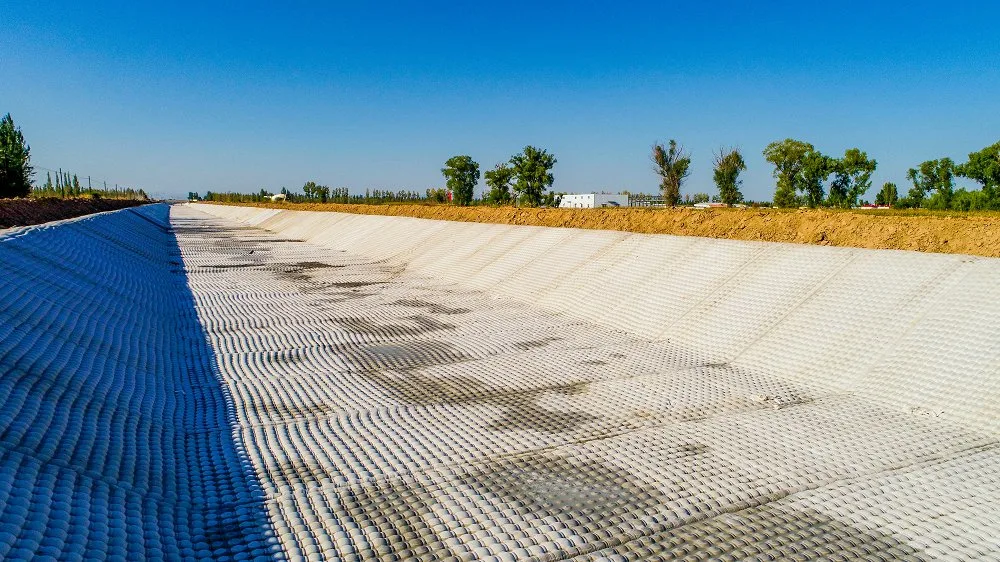
The articulated nature of the cured system — individual cells that flex relative to each other — makes grouted mattress more suitable than poured concrete slabs for most hydraulic applications. It tolerates post-construction settlement, conforms to scour voids, and does not crack under differential movement.
How Does Fabric Formed Concrete Compare to GCCM?
Engineers sometimes confuse the grouted mattress (GGFM) with the geosynthetic cementitious composite mat (GCCM) — a thinner system where dry cement is pre-impregnated into the fabric at the factory and activated by water on site. The two systems serve different purposes:
| Property | Grouted Mattress (GGFM) | GCCM (e.g. Concrete Canvas) |
|---|---|---|
| Thickness | 50–200 mm | 5–13 mm |
| Flow resistance | Up to 6.0 m/s | Up to ~2.0 m/s |
| Installation | Pump truck on site | Water activation (hose or rain) |
| Standard | GRI GT16 | Various proprietary specs |
| Best for | Canals, rivers, coastal works, scour | Small drainage channels, temporary works |
| Underwater install | Yes — up to 10 m depth | Limited |
For large-scale hydraulic protection — canal lining, river bank revetment, coastal defence, or bridge pier scour collars — the grouted mattress is the correct system. GCCM is better suited to small drainage channels, emergency repairs, and temporary protection where thin profiles and rapid installation are priorities.
Where Is Fabric Formed Concrete Used in Civil Engineering?
- Canal lining — prevents seepage loss and scour in irrigation and drainage canals; most common application globally
- River bank protection — bank stabilisation on live rivers without dewatering or coffer dams
- Coastal revetment — wave and tidal erosion protection using the filter point variant
- Bridge pier scour collars — underwater installation around existing piers without traffic disruption
- Slope protection — highway embankments, reservoir upstream face, spoil heaps
- Pipeline stabilisation — weighted concrete mattress (unreinforced variant) for negative buoyancy on submarine pipelines
Why Does Fabric Formwork Produce Stronger Concrete?
This is one of the least understood advantages of fabric formed concrete. A conventional rigid mould seals bleed water inside the mix, producing a wetter, more porous surface layer that is weaker and more susceptible to freeze-thaw attack and chemical erosion. A permeable fabric mould allows bleed water to escape through the weave, drawing excess water out of the surface layer and producing a denser, lower water-cement ratio outer skin.
Research on fabric formed concrete has demonstrated that the surface layer can be 15–20% stronger than conventional poured concrete at the same water-cement ratio, because the permeable fabric allows bleed water to escape during casting — reducing the effective w/c at the surface and producing a denser outer skin. This effect is documented in studies by GRI and referenced in FHWA guidance on geosynthetic applications. For structures in aggressive hydraulic environments — tidal zones, freeze-thaw exposed slopes, chloride-bearing water — this surface quality advantage is significant. The International Geosynthetics Society (IGS) maintains the broader research base behind fabric-formed and geosynthetic construction methods for engineers who want to go deeper.
For product specifications, read our articulated concrete mattress technical guide and our GGFM types and design overview.
Frequently Asked Questions
Is fabric formed concrete the same as a grouted mattress?
Fabric formed concrete (FFC) is the generic term for any concrete cast in a geotextile mould. A grouted mattress (GGFM or ACM) is the most widely used FFC system in hydraulic engineering — a double-layer woven geotextile filled with fine-aggregate cement grout on site. So all grouted mattresses are fabric formed concrete, but not all fabric formed concrete is a grouted mattress.
What is the difference between fabric formwork and traditional formwork?
Traditional formwork uses rigid panels (timber, steel, or aluminium) to shape concrete. Fabric formwork uses a flexible geotextile that conforms to the substrate geometry, remains in place permanently, and produces a denser surface concrete as bleed water escapes through the permeable fabric. Fabric formwork eliminates stripping time and cost, and is the only practical option for slope, underwater, and complex-geometry applications.
What grout mix is used in fabric formed concrete mattresses?
Fine-aggregate cement grout — typically OPC cement (350–450 kg/m³), clean fine sand (maximum 4 mm aggregate), and water at w/c 0.40–0.50. Admixtures (plasticisers, retarders) are used in hot climates or where pump distances exceed 100 m. The grout must achieve minimum 17 MPa at 28 days per GRI GT16. HydroBase provides the mix design and pump specification as part of the document package, and test batches are verified against relevant ASTM geotechnical test methods by a GAI-LAP accredited laboratory.
Can fabric formed concrete be used underwater?
Yes — this is one of its key advantages over conventional concrete. The grouted mattress variant is routinely installed in water up to 10 m deep for bridge pier scour protection and channel repair. The fabric is positioned using a guide frame from a pontoon and grouted from the surface through a hose. No dewatering, cofferdam, or diver-operated pump equipment is needed.
HydroBase manufactures grouted mattress (GGFM/ACM) to GRI GT16 at our 150,000 m² factory in Inner Mongolia, China. Third-party test reports ship with every order. Contact our engineering team for a product recommendation and project-specific datasheet within 48 hours.
HydroBase Technical Team
HydroBase manufactures grouted mattresses (GRI GT16 compliant) in China and delivers to 30+ countries. Our engineering team provides specification support, grout mix design, and installation guidance.
About HydroBaseMore Articles
View all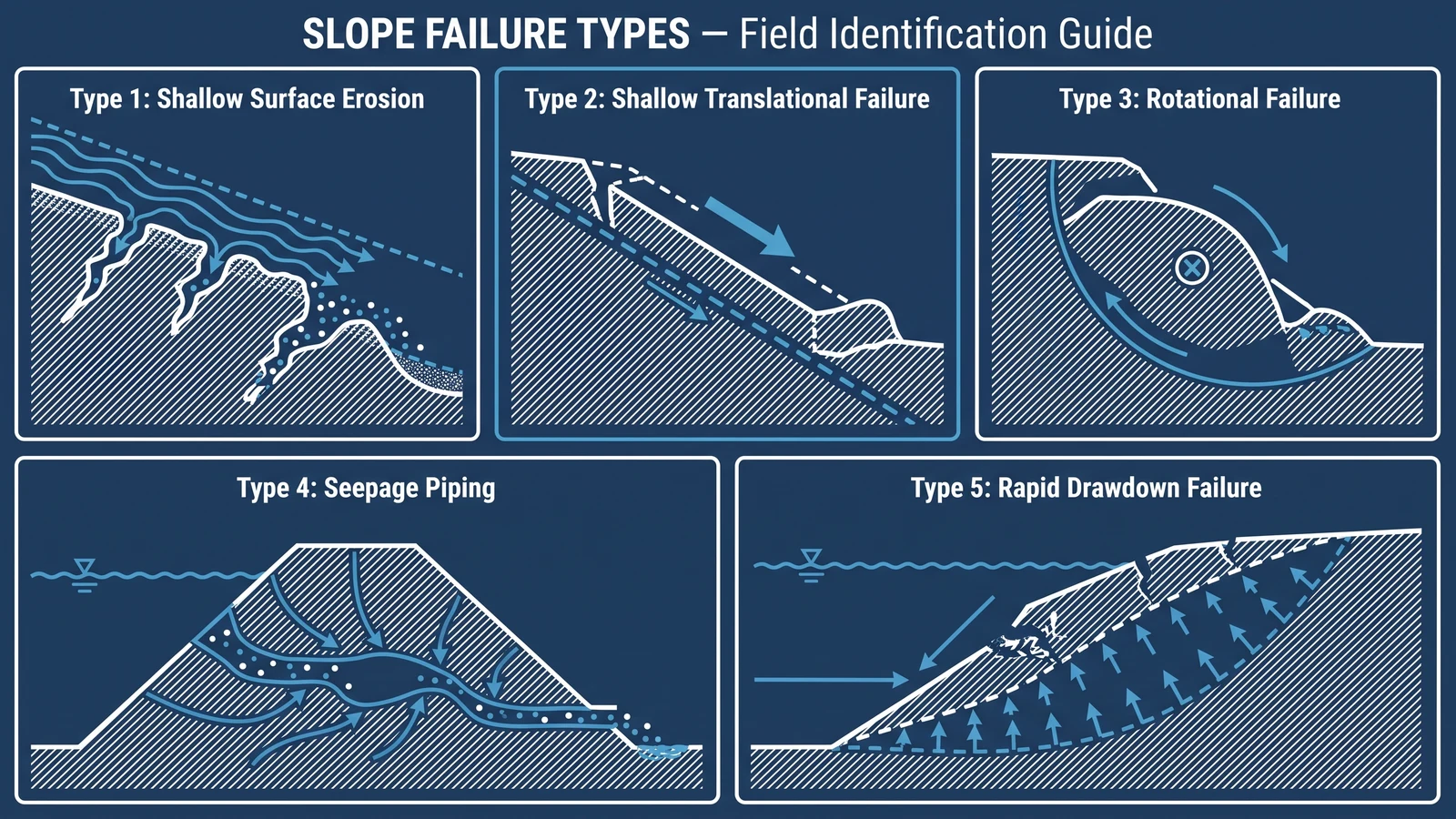
Slope Failure Causes and Prevention: Field Guide
Slope failures on canal embankments, reservoir faces, and road cuttings follow recognisable patterns. This field guide covers the five main slope failure types — shallow surface erosion, shallow translational, rotational, piping, and rapid drawdown — with prevention measures for each.
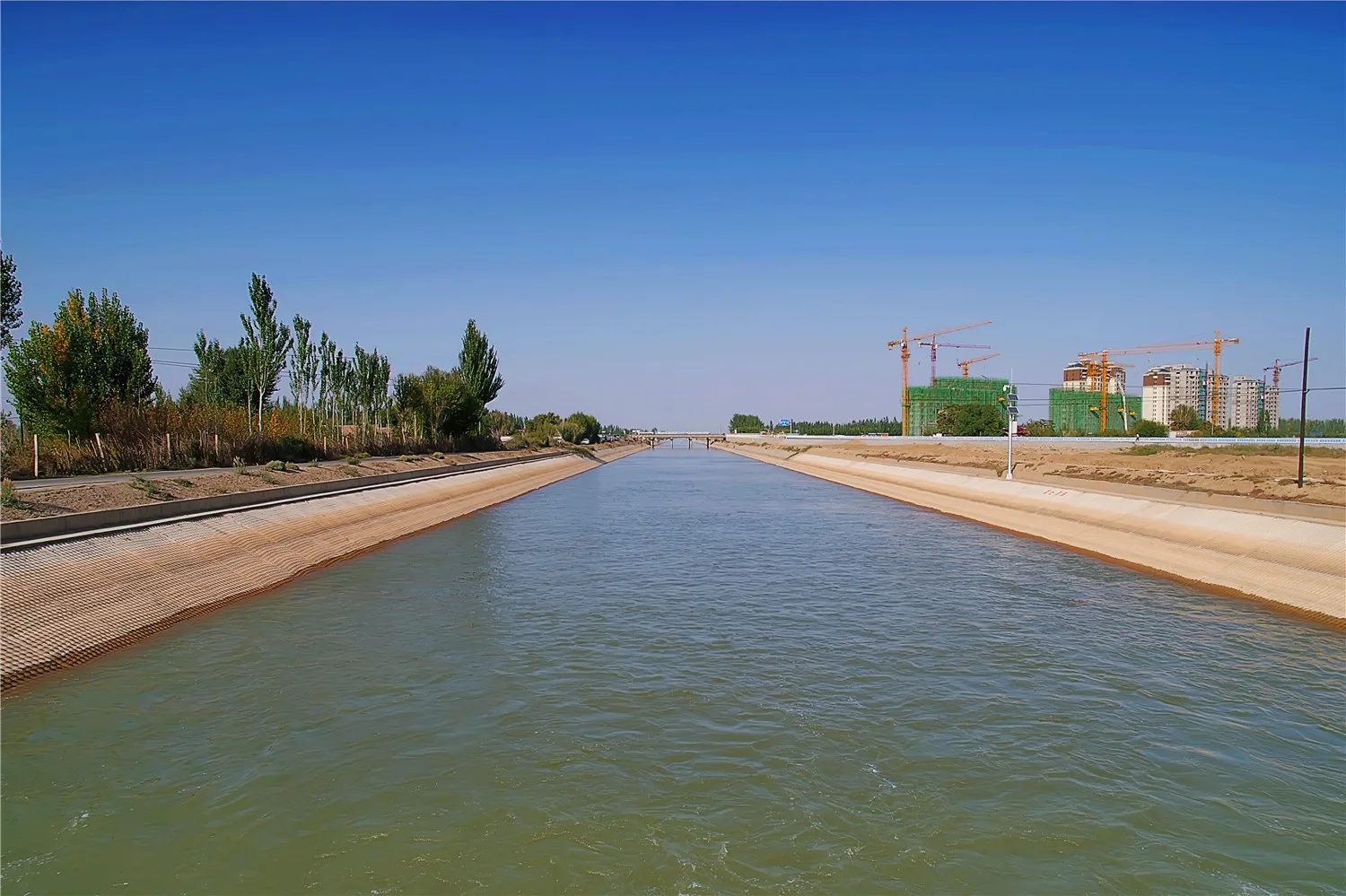
Grouted Mattress Case Studies: 5 Projects, Real Data
Five real grouted mattress installations across canal lining, river bank protection, coastal revetment, reservoir lining, and bridge pier scour — with actual project areas, design parameters, installation programmes, and post-installation performance data.
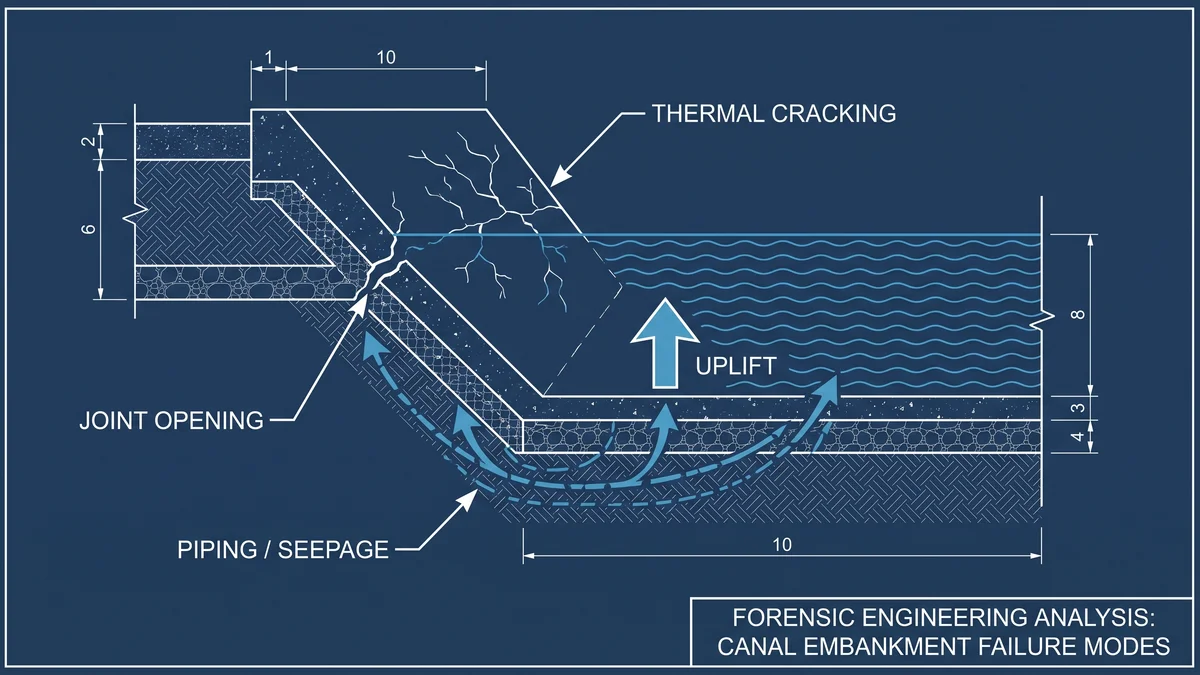
Canal Lining Failure: 7 Causes and How to Prevent Them
Canal lining failures cost irrigation authorities billions annually in emergency repairs and lost water. This forensic guide identifies the 7 most common failure causes — from joint failure to uplift — and explains how to prevent each through better specification and installation.
HydroBase - China Manufacturer
Ready to Specify Grouted Mattress?
GRI GT16 compliant products, factory test reports included. Engineering support at no cost. 48-hour response.