
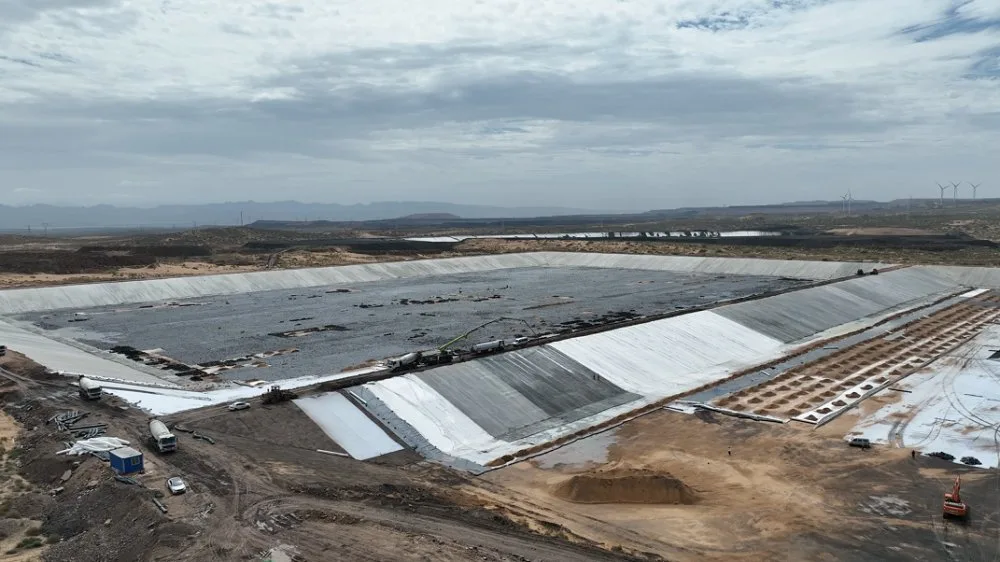
Aquaculture Pond Lining: Safety and Cost Compared
Quick Summary
Unlined aquaculture ponds lose 20–40% of water to seepage and suffer high turbidity from bank erosion. This guide compares geomembrane, concrete, and grouted mattress lining for fish ponds and shrimp farms — covering water quality, cost, and fish safety.
Quick Answer: For commercial fish farms and shrimp ponds, HDPE geomembrane (0.5–1.0 mm) on the pond base is the standard lining for maximum seepage control and easy cleaning. Grouted mattress is the preferred system for pond embankment slopes — it resists wave erosion from feeding activity and water exchange without requiring a concrete cover, and its surface chemistry is fish-safe (cured concrete at neutral pH). Combining geomembrane base + grouted mattress slopes gives the best of both systems. This guide explains the tradeoffs.
Aquaculture is one of the fastest-growing food production sectors globally — FAO projects that aquaculture will supply more than 60% of fish for human consumption by 2030. The WorldFish Center estimates that pond aquaculture accounts for approximately 70% of global freshwater aquaculture production, making pond lining design one of the highest-impact decisions in aquaculture farm development. Pond lining quality directly affects farm productivity: seepage loss reduces water depth and concentrates waste products; turbidity from eroding embankment slopes stresses fish and inhibits feeding; and poor containment of pond chemicals contaminates adjacent groundwater and causes regulatory problems.
This guide covers pond lining selection for commercial aquaculture — fish ponds (tilapia, catfish, carp) and shrimp ponds (whiteleg shrimp, black tiger shrimp). The lining requirements differ between these applications in important ways.
What Aquaculture Ponds Need from a Lining
A pond lining for aquaculture must satisfy five requirements simultaneously — which is why no single material is perfect for every application:
- Seepage control — minimise water loss; maintain stable water depth and dissolved oxygen concentration
- Fish/shrimp safety — lining materials must not leach toxins or alter water chemistry to levels harmful to stock
- Turbidity control — bank and bed erosion from wave action and current releases suspended solids that reduce feeding efficiency and cause gill damage
- Cleanability — ponds are periodically drained and mechanically or chemically cleaned to remove biofilm, sludge, and disease vectors. The lining must tolerate the cleaning process
- Longevity — the lining must maintain performance for 10–20+ years with minimum maintenance in a biologically active aquatic environment
Lining Options: Technical Comparison
| System | Seepage Control | Fish Safety | Wave Erosion Resistance | Installed Cost (USD/m²) |
|---|---|---|---|---|
| HDPE Geomembrane (0.5–1.0 mm) | Excellent (95–99%) | Good (inert when cured) | None (needs ballast or cover) | $4–$12 (base only) |
| Concrete (100 mm) | Very good (85–95%) | Good (neutral pH when cured) | Excellent | $40–$70 |
| Grouted Mattress 100 mm | Very good (85–95%) | Excellent (neutral pH, no plasticiser) | Excellent (up to 3.5 m/s) | $28–$48 |
| Compacted Clay | Moderate (60–75%) | Excellent (natural material) | Poor (erodes at >0.5 m/s) | $5–$15 (if local) |
| Bentonite blanket (GCL) | Good (80–90%) | Good | Poor (needs ballast) | $12–$25 |
The Recommended System: Geomembrane Base + Grouted Mattress Slopes
For commercial shrimp and intensive fish ponds, the industry best practice is a two-component system:
- Pond base (flat bottom): HDPE geomembrane 0.5–1.0 mm, ballasted by the water column. Provides near-zero seepage; smooth surface is easy to clean with a pump-out and brush. The water column weight (typically 1.0–1.5 m depth in shrimp ponds) holds the membrane flat without mechanical fixings. Easy to replace after 10–15 years if the membrane ages.
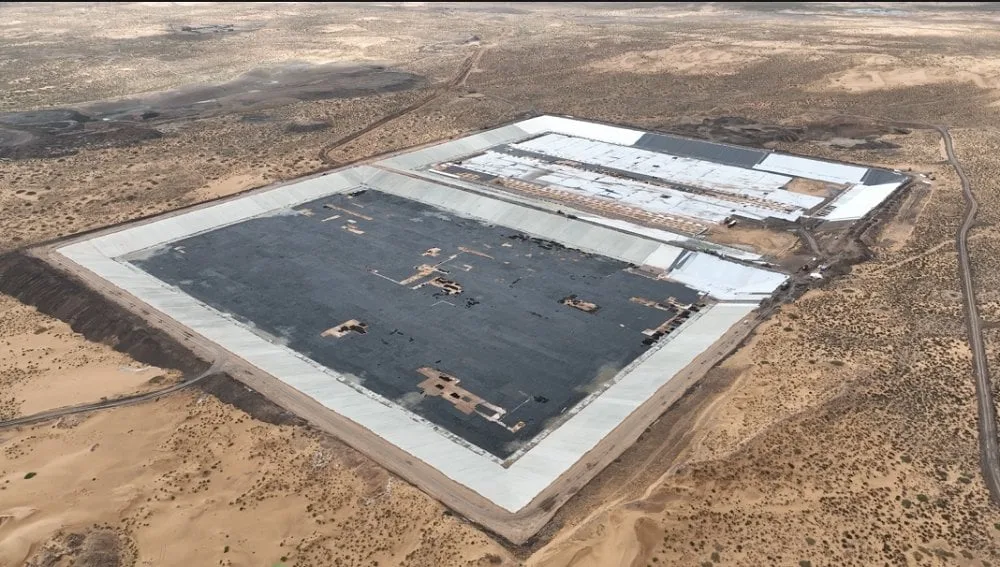
- Pond embankment slopes: Grouted mattress 100 mm. Wave action from aerators and feeding activity erodes unprotected embankment slopes, generating turbidity. Grouted mattress eliminates slope erosion, maintains stable water quality, and provides a firm surface for net attachment. The lining extends from the top of the embankment to the junction with the pond base, with a 300–500 mm overlap onto the flat membrane.
This combination costs $30–$55/m² of pond wetted surface — significantly less than all-concrete construction ($45–$70/m²) and significantly more durable than geomembrane-only construction (which requires the membrane to cover the slopes, where UV exposure and physical damage from maintenance accelerate degradation).
Fish Safety: Is Grouted Mattress Safe for Aquaculture?
Cured concrete is chemically inert in contact with freshwater and seawater at neutral to slightly alkaline pH. The cement hydration products — calcium silicate hydrate, calcium hydroxide — are stable and do not leach toxins at concentrations harmful to fish or shrimp at the standard stocking densities used in commercial aquaculture.
There is one important caution: fresh concrete (uncured or insufficiently cured) is strongly alkaline (pH 12–13) and toxic to fish. The curing period (minimum 7 days water misting per GRI GT16 requirements) is critical — do not stock the pond until the mattress has completed full curing and the pond has been filled, allowed to stand for 48–72 hours, and the water pH confirmed at or below 8.5.
For saltwater (marine shrimp) applications, the grout mix should specify sulfate-resistant cement (CEM III / GGBS type) to ensure long-term durability in the saline environment.
Pond Type Selection Guide
| Pond Type | Base Lining | Slope Lining | Special Requirement |
|---|---|---|---|
| Intensive shrimp (whiteleg, < 1.5 m depth) | HDPE geomembrane 0.5–0.75 mm | Grouted mattress 75–100 mm | Smooth base for daily biomass estimation; slope protection against aerator wave wash |
| Semi-intensive fish (tilapia, catfish) | Compacted clay (if local) or HDPE 0.5 mm | Grouted mattress 75–100 mm | Grouted mattress slopes control turbidity from feeding activity |
| Marine shrimp / saltwater species | HDPE geomembrane 0.75 mm | Grouted mattress 100 mm (sulfate-resistant cement) | Specify CEM III / GGBS cement for grout; HDPE preferred over LLDPE in saline conditions |
| Recirculating aquaculture system (RAS) pond | HDPE geomembrane 1.0 mm | Grouted mattress 100 mm | Maximum seepage control; slopes subject to high current from recirculation pumps |
| Grow-out / extensive culture (> 2 m depth) | Compacted clay blanket or bare earth (if low permeability) | Grouted mattress 75 mm or none | Lower stocking density tolerates more seepage; cost minimisation priority |
For lining material comparison, see grouted mattress vs geomembrane and our overview of reservoir lining systems which covers similar containment requirements.
Frequently Asked Questions
Can grouted mattress be installed in an existing pond without draining it?
The pond must be drained to install grouted mattress on the embankment slopes — the fabric panels cannot be positioned accurately underwater without diver assistance, and standard pump installation does not work submerged. Draining is typically scheduled during the winter or dry-season fallowing period. For new pond construction, the mattress is installed during the construction phase before the pond is filled.
Does grouted mattress affect water temperature in aquaculture ponds?
The thermal mass of the concrete mattress (155–310 kg/m²) is similar to a conventional concrete embankment lining. In shallow ponds (<1.5 m depth), the heat exchange between the embankment lining and the water can be significant — dark-coloured embankments absorb solar heat and warm the pond in daylight. Grouted mattress has a light grey concrete surface that reflects more solar radiation than dark soils. In practice, the temperature effect of the lining material is secondary to water depth, aeration rate, and ambient air temperature in determining pond temperature.
How long does grouted mattress last in a shrimp pond environment?
Design life is 50+ years in a freshwater or seawater aquaculture environment, provided sulfate-resistant cement is used in marine applications. The polypropylene fabric is fully resistant to the biological fouling (algae, biofilm) that colonises the surface — fouling has no structural effect. The concrete surface can be power-washed during pond cleaning without damage. HydroBase is aware of shrimp farm installations in Southeast Asia that have performed without maintenance for 15+ years.
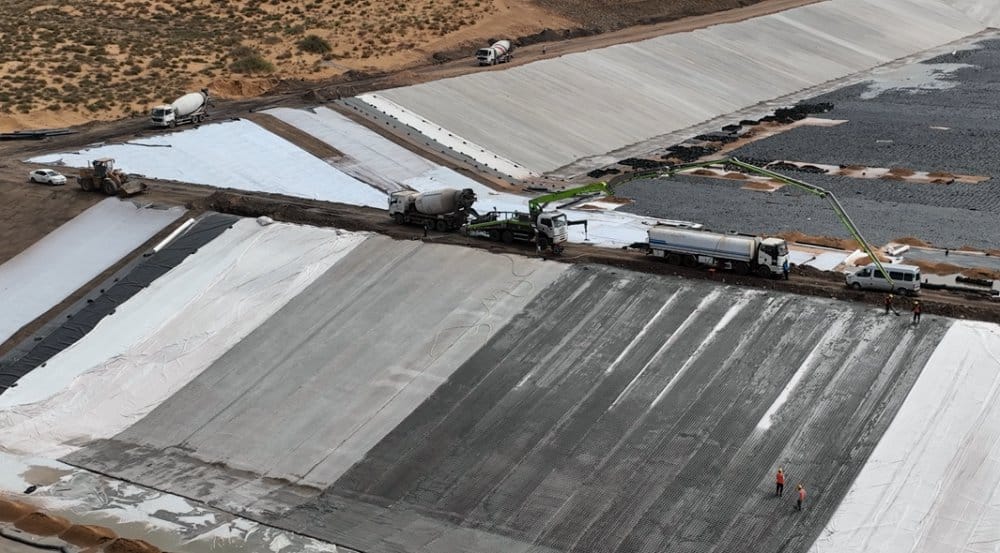
HydroBase supplies grouted mattress for aquaculture pond lining in freshwater and marine shrimp farm applications. Sulfate-resistant cement specification available for marine environments. Request a pond lining assessment with your pond dimensions and water salinity data.
HydroBase Technical Team
HydroBase manufactures grouted mattresses (GRI GT16 compliant) in China and delivers to 30+ countries. Our engineering team provides specification support, grout mix design, and installation guidance.
About HydroBaseMore Articles
View all
Grouted Mattress Case Studies: 5 Projects, Real Data
Five real grouted mattress installations across canal lining, river bank protection, coastal revetment, reservoir lining, and bridge pier scour — with actual project areas, design parameters, installation programmes, and post-installation performance data.
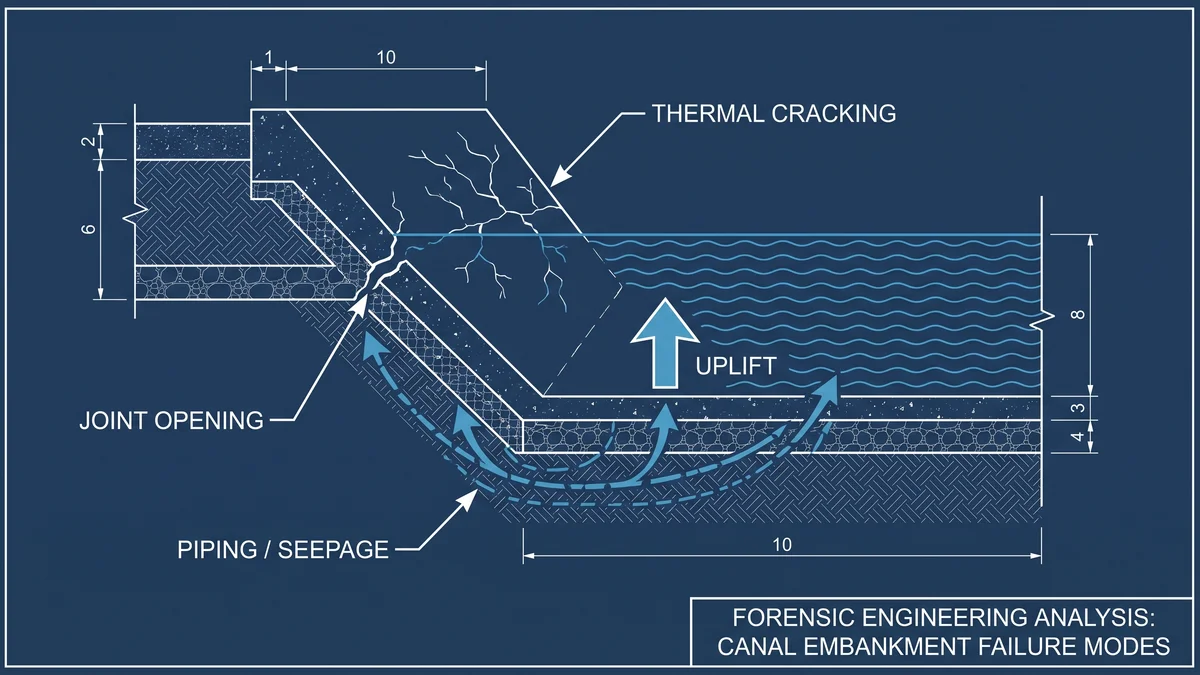
Canal Lining Failure: 7 Causes and How to Prevent Them
Canal lining failures cost irrigation authorities billions annually in emergency repairs and lost water. This forensic guide identifies the 7 most common failure causes — from joint failure to uplift — and explains how to prevent each through better specification and installation.
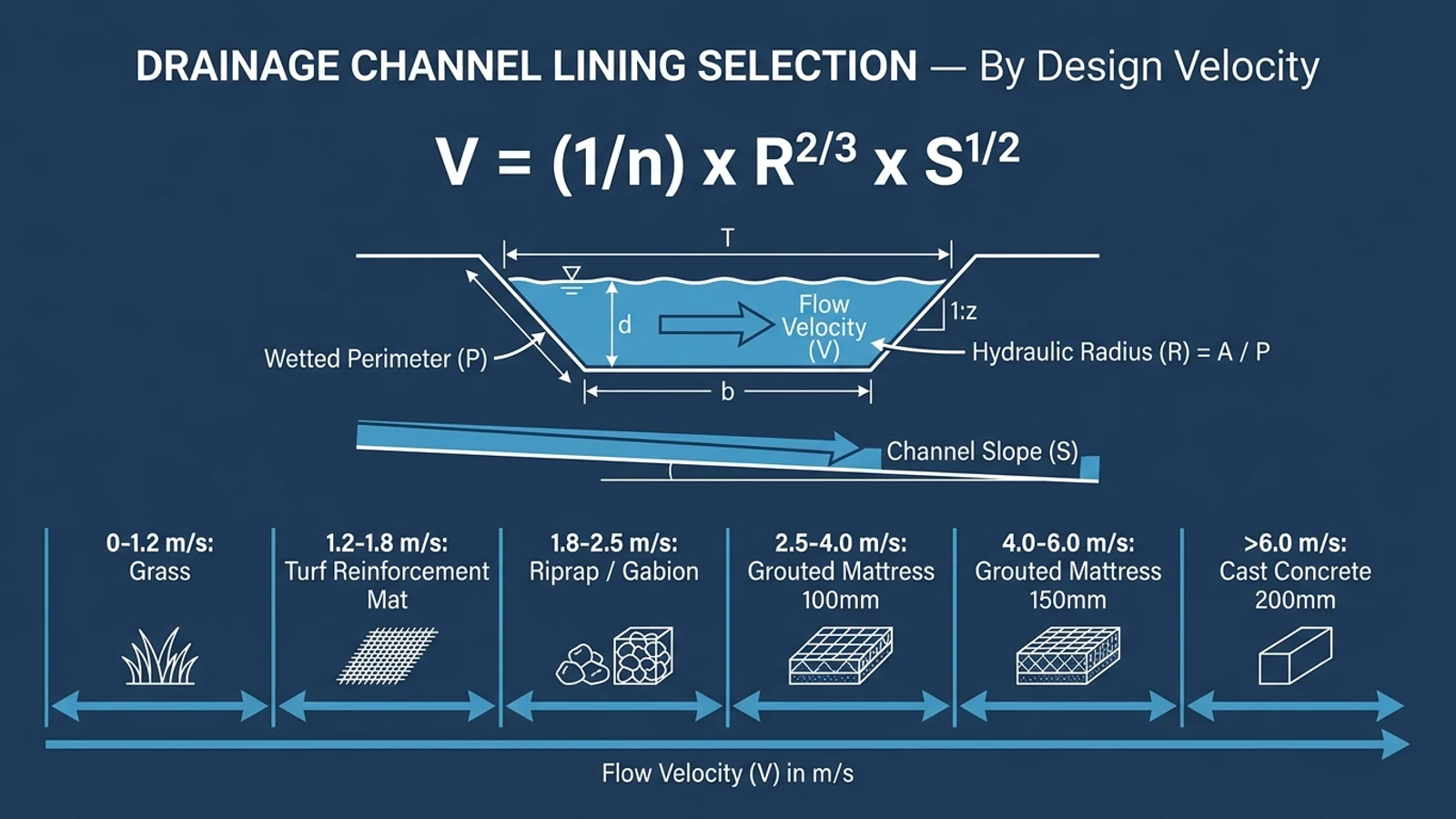
Drainage Channel Lining: Road and Infrastructure Guide
Drainage channels alongside roads, railways, and industrial sites carry high-velocity storm runoff that erodes unlined channels within seasons. This guide covers lining selection, hydraulic design, and installation for roadside drainage channels.
HydroBase - China Manufacturer
Ready to Specify Grouted Mattress?
GRI GT16 compliant products, factory test reports included. Engineering support at no cost. 48-hour response.