
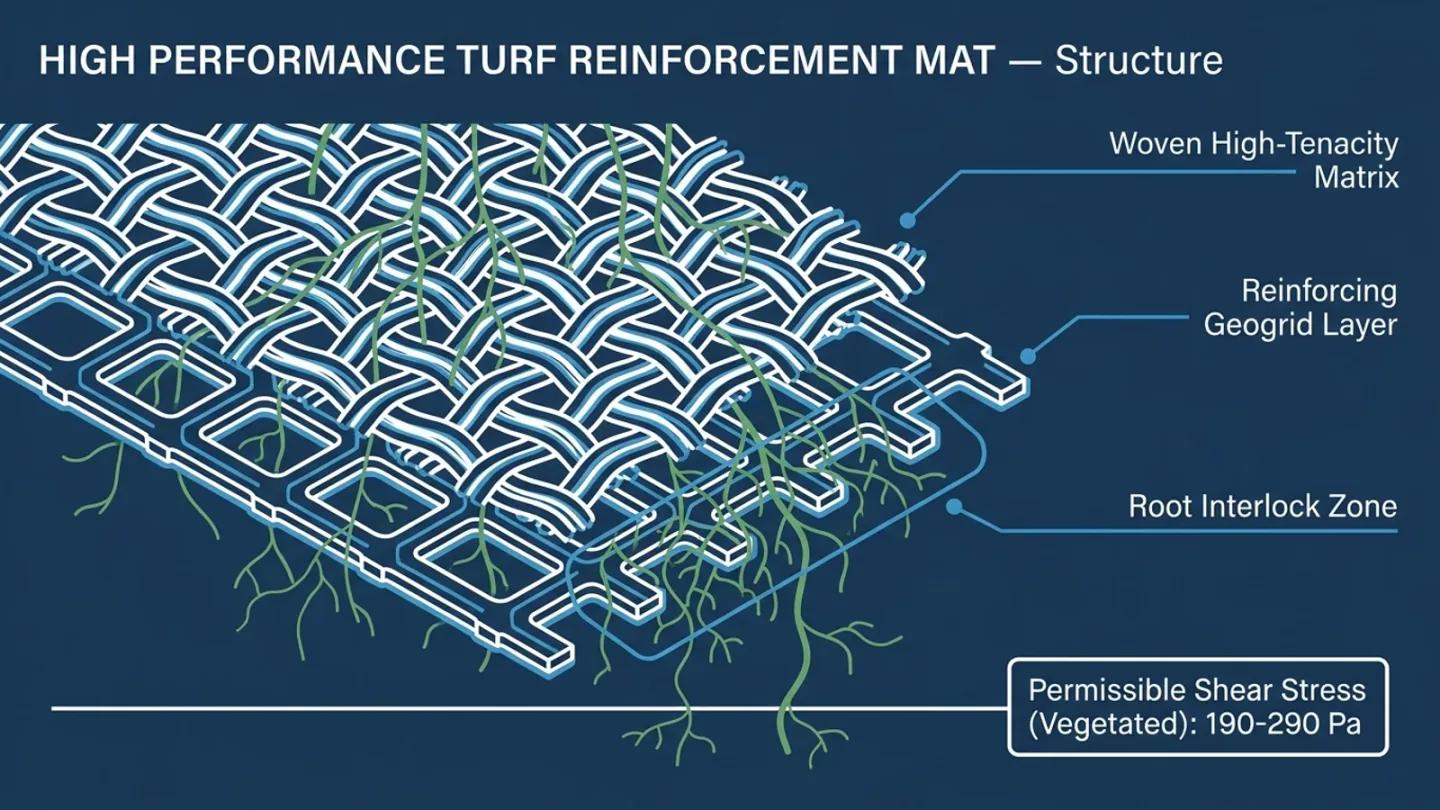
High Performance Turf Reinforcement Mat (HPTRM): Design and Specification Guide
Quick Summary
High performance turf reinforcement mat extends vegetated erosion control into higher-velocity channels than standard TRM can handle. This guide covers the shear stress design method, matrix types, and specification requirements.
Quick Answer: High performance turf reinforcement mat (HPTRM) is a heavier-duty class of TRM, typically incorporating a high-tensile geogrid or woven polypropylene matrix, rated for permissible shear stress up to approximately 190–290 Pa once vegetated (compared to roughly 95–145 Pa for standard TRM). It is specified using the permissible shear stress method set out in FHWA HEC-15, comparing the channel's computed shear stress against the product's tested permissible value at the relevant vegetation condition. Above HPTRM's rated shear stress — or wherever structural protection cannot wait for vegetation — grouted mattress is required instead.
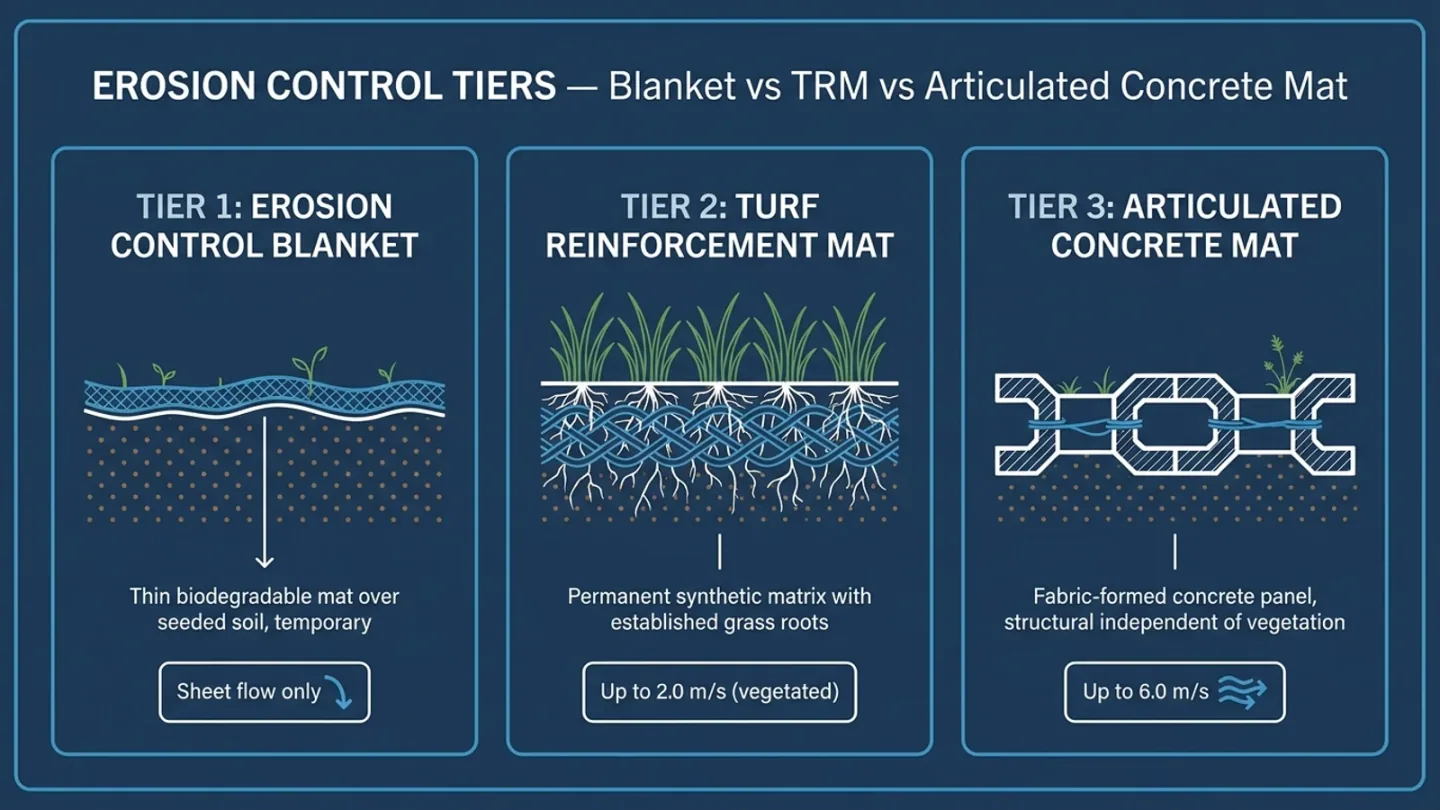
HPTRM sits at the upper end of the vegetated erosion control category, used on channels and slopes where standard TRM is undersized but full structural armour is not yet warranted. Specifying it correctly requires working through the shear stress design method rather than relying on a single velocity number, since permissible shear stress varies with soil type, slope, and vegetation condition.
The FHWA HEC-15 Design Method
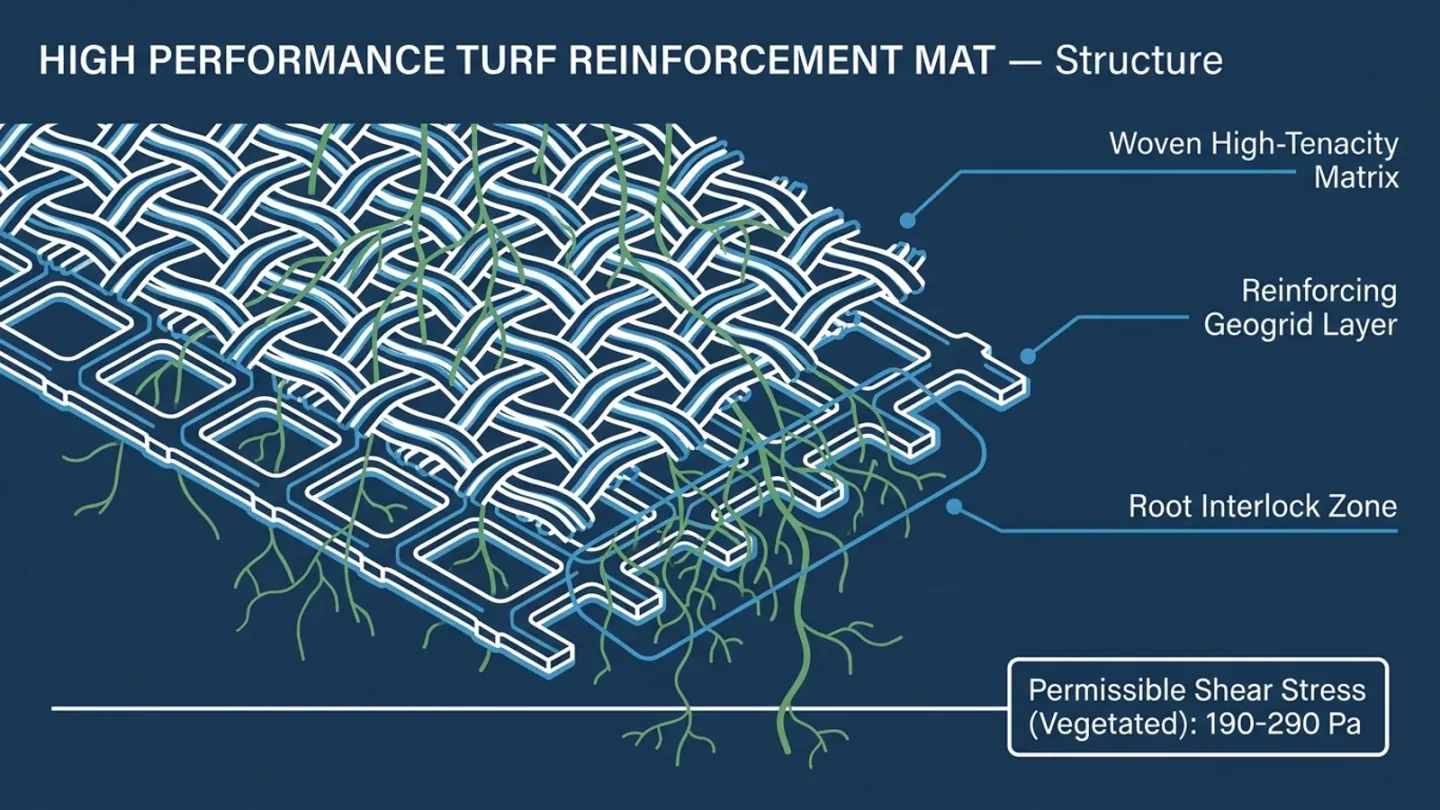
FHWA Hydraulic Engineering Circular 15 (Design of Roadside Channels with Flexible Linings) sets out the standard method for lining selection: compute the channel's design shear stress (τd = γ·d·S, where γ is unit weight of water, d is flow depth, and S is channel slope), then select a lining whose permissible shear stress (τp) exceeds τd at both the vegetated and unvegetated (establishment period) condition.
This is a more rigorous method than a single velocity threshold, because two channels with identical peak velocity but different depth and slope combinations can have very different shear stress on the channel lining — a shallow, steep channel imposes higher shear stress than a deep, flat one at the same velocity.
HPTRM Matrix Types
| Matrix Type | Construction | Typical Permissible Shear (Vegetated) |
|---|---|---|
| Woven monofilament HPTRM | High-tenacity polypropylene woven matrix | 190–240 Pa |
| Geogrid-reinforced HPTRM | Woven matrix bonded to a high-tensile geogrid layer | 240–290 Pa |
| Standard TRM (for comparison) | Lighter woven or extruded matrix | 95–145 Pa |
The unvegetated (installation period) permissible shear stress is typically 25–40% of the vegetated value across all TRM and HPTRM classes — this is the figure that governs performance during the weeks before vegetation establishes, and it is the value most often overlooked in specifications that only quote the long-term vegetated rating.
Specification Clause
A robust HPTRM specification names the shear stress design method explicitly rather than a velocity figure alone:
"The turf reinforcement mat shall achieve a permissible shear stress, tested per ASTM D6460, exceeding the design shear stress computed per FHWA HEC-15 for both unvegetated and fully vegetated conditions. Independent test data from a GAI-LAP accredited laboratory shall be submitted confirming permissible shear stress at both conditions for the specific product proposed."
When HPTRM Is Not Enough
Where computed design shear stress exceeds even geogrid-reinforced HPTRM's permissible value — typically above roughly 290 Pa, corresponding to design velocities above approximately 2.0 m/s in most channel geometries — or where the site cannot tolerate an establishment-period vulnerability window at all (dam spillways, flood control channels with no acceptable failure margin), vegetated grouted mattress becomes the appropriate specification. See TRM vs Vegetated Grouted Mattress for the full comparison.
Frequently Asked Questions
How long does HPTRM take to reach its vegetated shear stress rating?
Typically one full growing season (3–6 months depending on climate and grass species) for initial root development, and up to two seasons for full rated performance in cooler climates or on nutrient-poor subgrade — consistent with establishment timelines in Colorado State Extension's erosion control reference. This establishment window should be checked against the site's flood season timing before finalising the specification.
Is HPTRM suitable for channels with intermittent high-velocity flow, such as flash-flood-prone arid drainage?
Only if the establishment period can be scheduled outside the flood-risk season, since HPTRM's unvegetated shear resistance is well below its vegetated rating. In arid regions with unpredictable flash flooding and no reliable dry season for establishment, structural systems such as grouted mattress are generally the safer specification despite the higher cost.
Can HPTRM be used together with check dams or grade control structures?
Yes — HPTRM is frequently specified on the channel reaches between grade control structures, where the structures themselves manage the steepest shear stress concentrations and the HPTRM handles the more moderate shear stress along the general channel length.
Send the HydroBase engineering team your channel geometry and hydraulic design data and we will confirm whether HPTRM or vegetated grouted mattress meets your shear stress requirement.
HydroBase Technical Team
HydroBase manufactures grouted mattresses (GRI GT16 compliant) in China and delivers to 30+ countries. Our engineering team provides specification support, grout mix design, and installation guidance.
About HydroBaseMore Articles
View all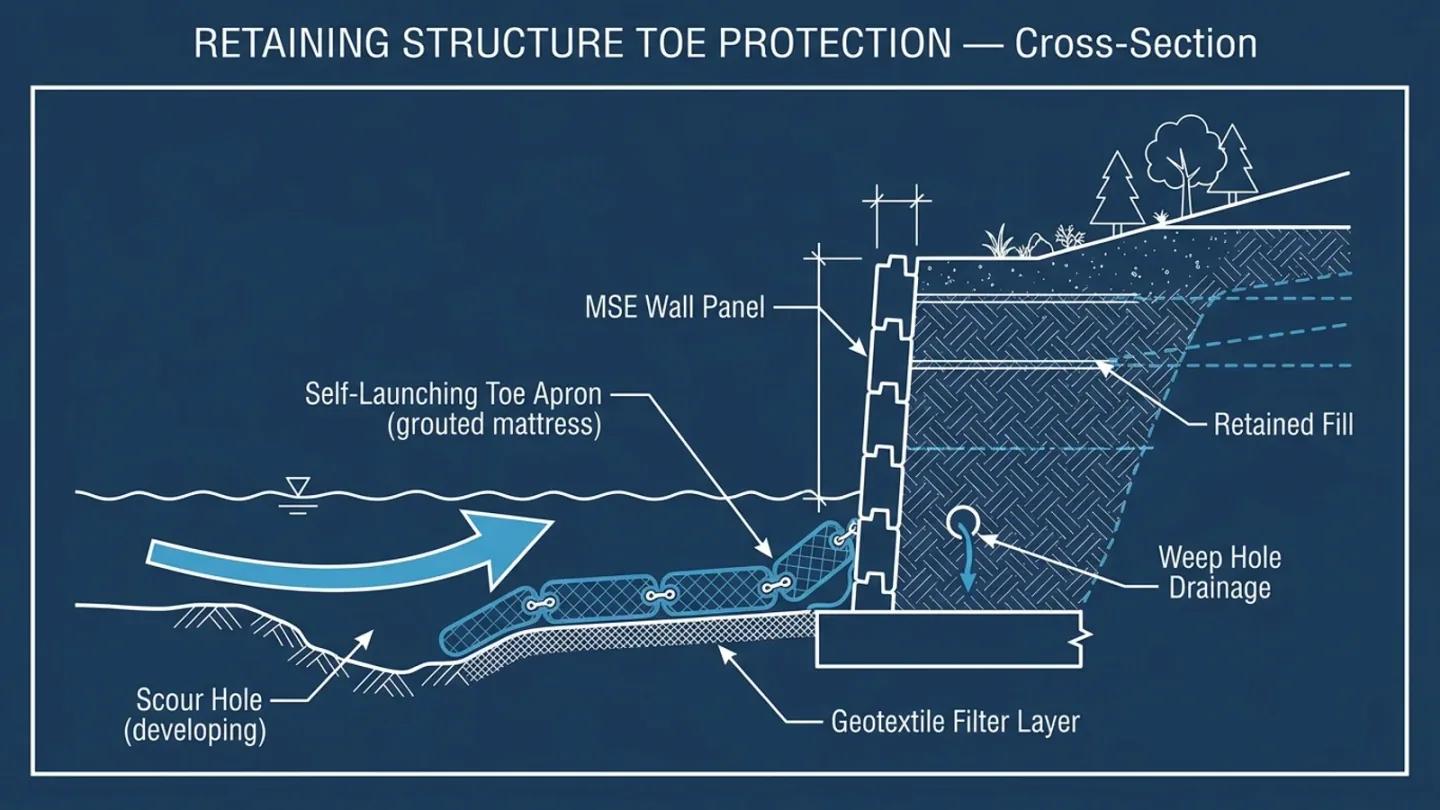
Erosion Control for Engineered Retaining Structures: MSE Walls, Canal Retaining, and Dam Toe Protection
Retaining structures fail more often from toe erosion and drainage problems than from the wall itself. This guide covers erosion control design at MSE walls, canal retaining structures, and dam toes.
Articulating Concrete Block (ACB): Types, Cost, Specifications, and When to Choose It Over Grouted Mattress
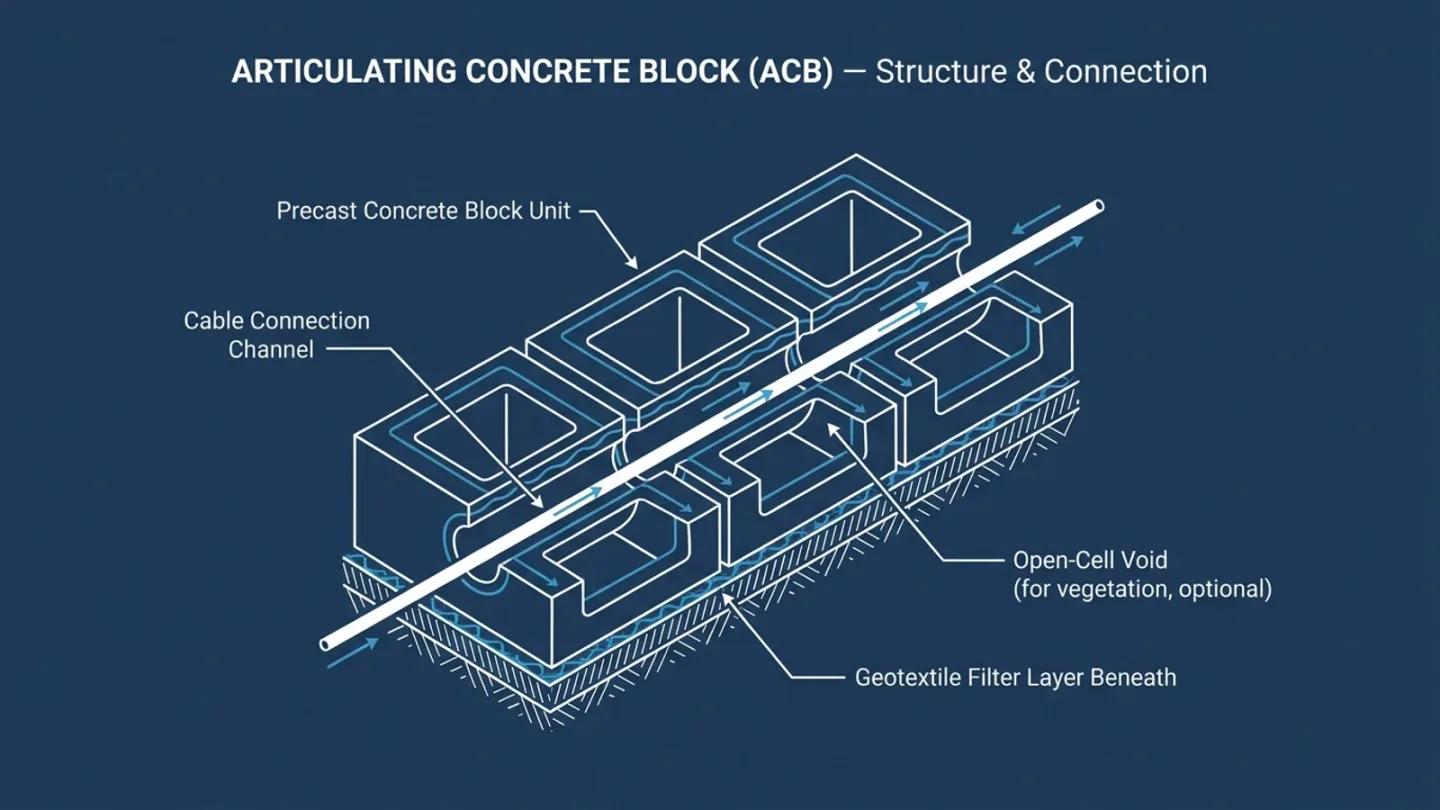
Articulating concrete block (ACB) is a precast alternative to grouted mattress, connected by cables or geotextile through cast openings. This guide covers block types, costs, specification, and when each system is the better fit.
Geosynthetic Cementitious Composite Mat (GCCM): Complete Guide
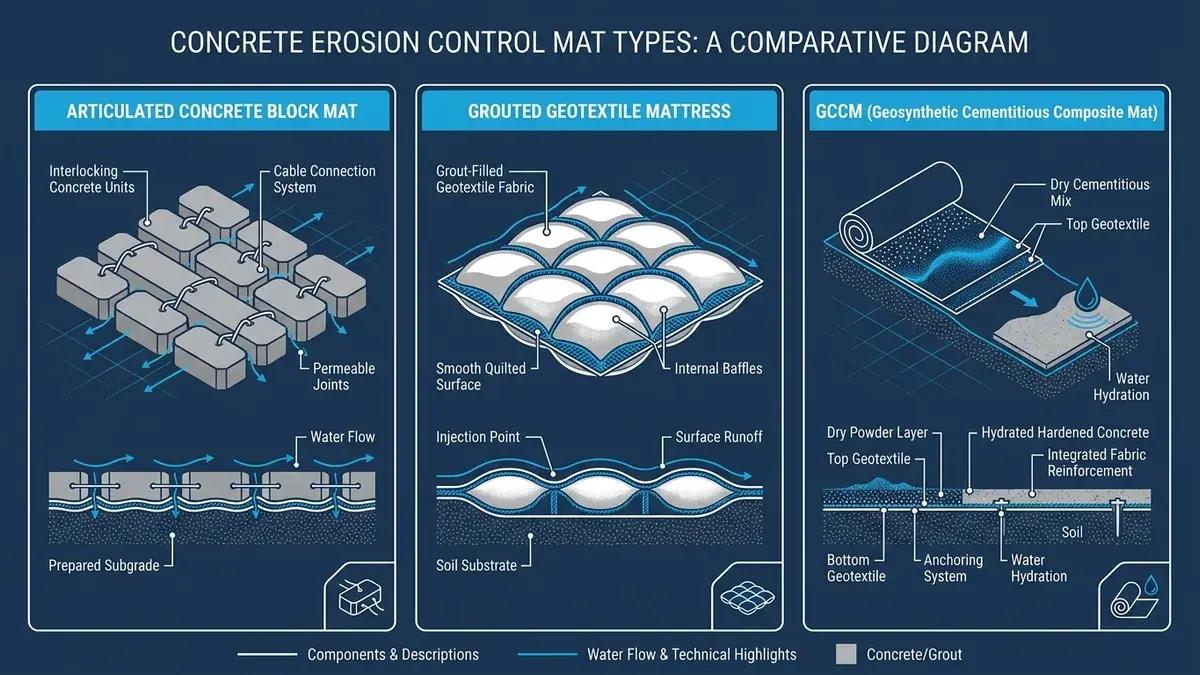
Geosynthetic cementitious composite mat (GCCM) is a roll-out concrete fabric that cures on contact with water. This guide explains how it works, what it's suited for, and where it stops being the right choice.
HydroBase - China Manufacturer
Ready to Specify Grouted Mattress?
GRI GT16 compliant products, factory test reports included. Engineering support at no cost. 48-hour response.