
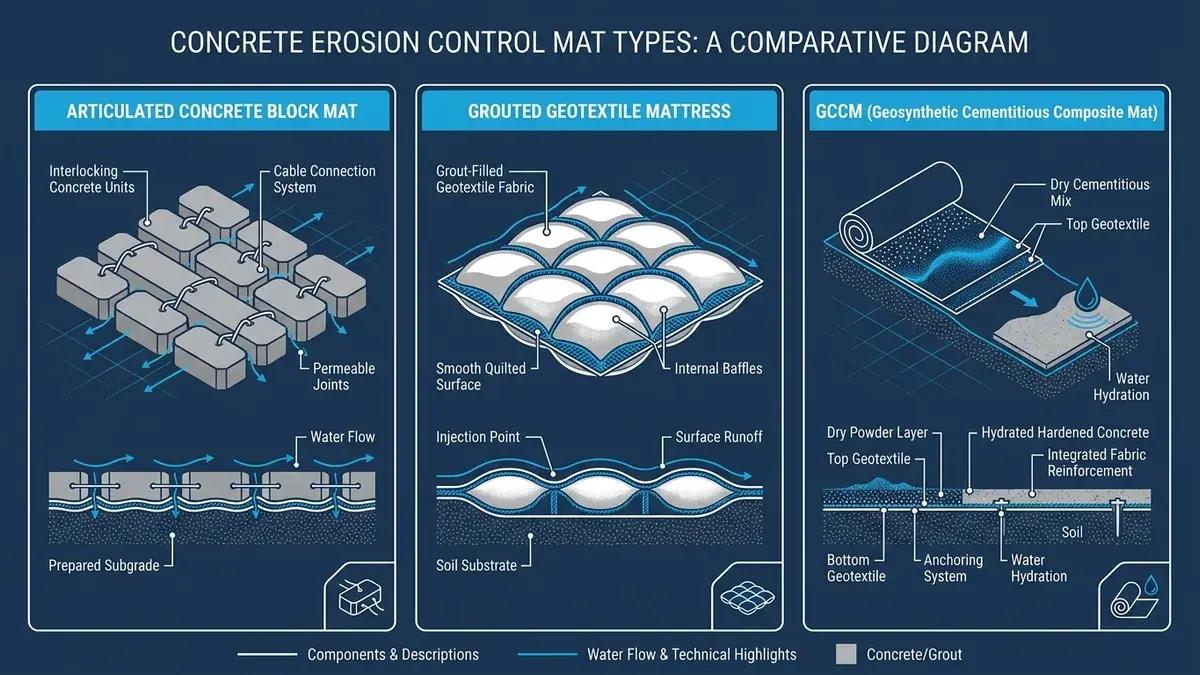
Geosynthetic Cementitious Composite Mat (GCCM): Complete Guide
Quick Summary
Geosynthetic cementitious composite mat (GCCM) is a roll-out concrete fabric that cures on contact with water. This guide explains how it works, what it's suited for, and where it stops being the right choice.
Quick Answer: GCCM (geosynthetic cementitious composite mat) is a factory-manufactured, roll-out fabric with a dry cement blend bonded between geotextile layers. It is unrolled dry, then hydrated in place — by rainfall, hose, or submersion — and cures into a thin (5–15 mm), flexible concrete layer. It is fast to install and effective for low-to-moderate velocity erosion protection and containment lining, but its thin section gives it far lower design velocity and impact resistance than a grout-filled mattress. GCCM and GGFM solve overlapping but distinct problems and are frequently specified on the same project for different zones.
GCCM is one of the more recent additions to the erosion-control and containment toolkit, and it is often confused with grouted mattress (GGFM) because both cure into a concrete-faced flexible layer. The manufacturing process, thickness, and performance envelope are quite different, and mixing them up in a specification leads either to an over-thick, over-priced GCCM callout or an undersized GGFM substitution.
How GCCM Is Made and Installed
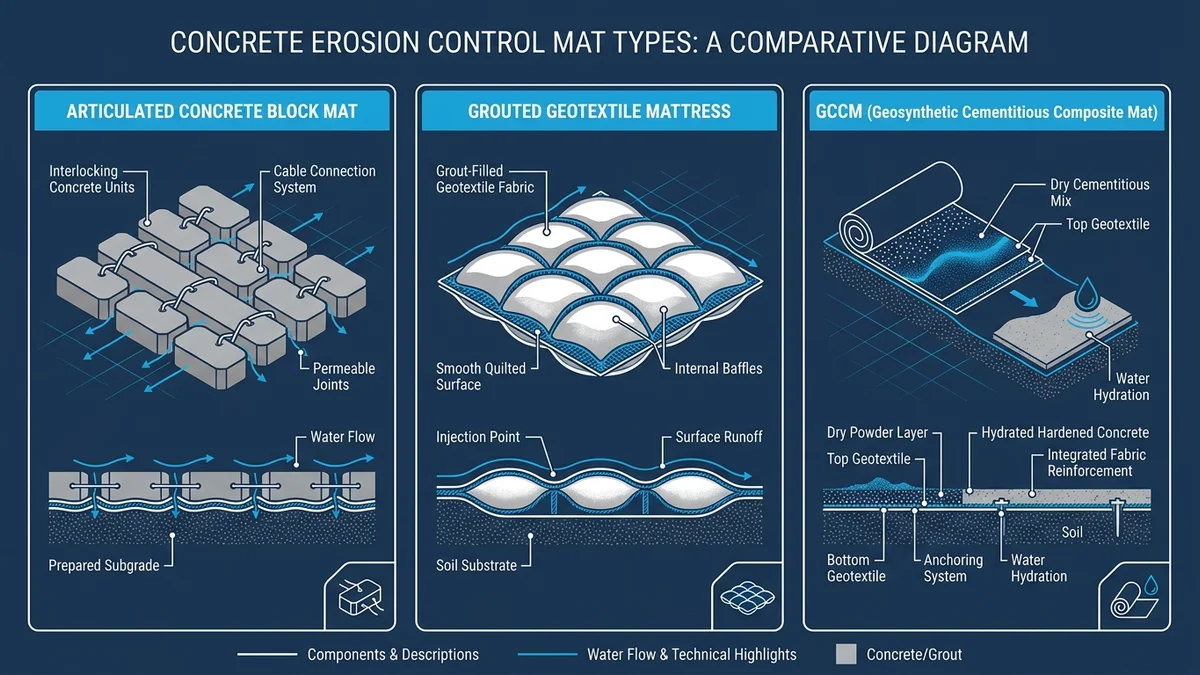
A GCCM panel consists of a dry, powdered cement-based mix encapsulated between two layers of geotextile fabric, factory-bonded and typically supplied in rolls. Unlike GGFM, no on-site grout mixing or pumping is required — the panel is unrolled directly onto the prepared surface, mechanically fixed or weighted in place, and then hydrated. Hydration can be by natural rainfall, water truck spray, or full submersion, depending on the product and application. Once hydrated, the cement layer cures over 24–48 hours into a thin, flexible concrete slab bonded to the geotextile facing — the cement chemistry itself follows the same OPC hydration principles documented by the Portland Cement Association.
Because there is no on-site batching, pumping, or curing supervision comparable to grout injection, GCCM installation crews can cover large areas quickly with a smaller plant footprint — no pump truck, no grout batching plant, no injection ports to manage.
Typical GCCM Specifications
| Property | Typical Range |
|---|---|
| Cured thickness | 5–15 mm |
| Compressive strength (cured) | 20–40 MPa |
| Roll weight (dry) | 15–25 kg/m² |
| Design velocity (erosion applications) | Up to approximately 6–8 m/s for short-duration flow, thin sections |
| Hydration time to full cure | 24–48 hours |
The high design-velocity figure for GCCM in erosion applications is somewhat misleading in isolation — it is achieved on a very thin section with minimal mass, which makes it excellent at resisting sheet-flow erosion but far more vulnerable than GGFM to point loading, impact from debris, and puncture. The comparison that matters for most projects is not peak velocity in isolation but combined hydraulic and mechanical loading — see Fabric Formed Concrete: How It Works and Applications for the broader system family both GCCM and GGFM belong to.
GCCM vs Grouted Mattress: Where Each Wins
| Factor | GCCM | Grouted Mattress (GGFM) |
|---|---|---|
| Section thickness | 5–15 mm | 75–200 mm |
| Installation plant required | None beyond hydration source | Concrete pump truck, grout batching |
| Installation speed | Fastest — roll and hydrate | Fast, but requires pump mobilisation |
| Impact / puncture resistance | Low — thin section | High — full-depth grout core |
| Suited to underwater / flowing water installation | Limited — hydration control is harder in flowing water | Yes, up to 0.5 m/s during pumping |
| Best-fit applications | Pond and canal lining, containment berms, slope capping, temporary/rapid works | Canal lining, slope protection, bridge pier scour, coastal revetment, reservoir faces |
| Typical installed cost | $15–$28/m² | $28–$48/m² (100 mm) |
GCCM's real strength is projects where speed and minimal plant mobilisation matter more than maximum structural robustness — containment pond lining, secondary containment berms around tank farms, canal capping on smaller schemes, and slope erosion control on sites where mobilising a pump truck is impractical. Where the site sees sustained high-velocity flow, debris impact, underwater installation, or any scour risk at a structure (bridge pier, culvert outlet), the thicker grout-filled section of GGFM is the appropriate specification.
Frequently Asked Questions
Can GCCM be installed underwater?
Some GCCM products are designed for submerged hydration and can be installed underwater, but hydration uniformity is harder to control than in a dry, rainfall, or spray-hydrated application, and most manufacturers recommend against installation in actively flowing water. Grouted mattress, which is pumped with the fabric already in place, handles flowing-water installation more reliably.
Is GCCM reinforced, or is it plain cement?
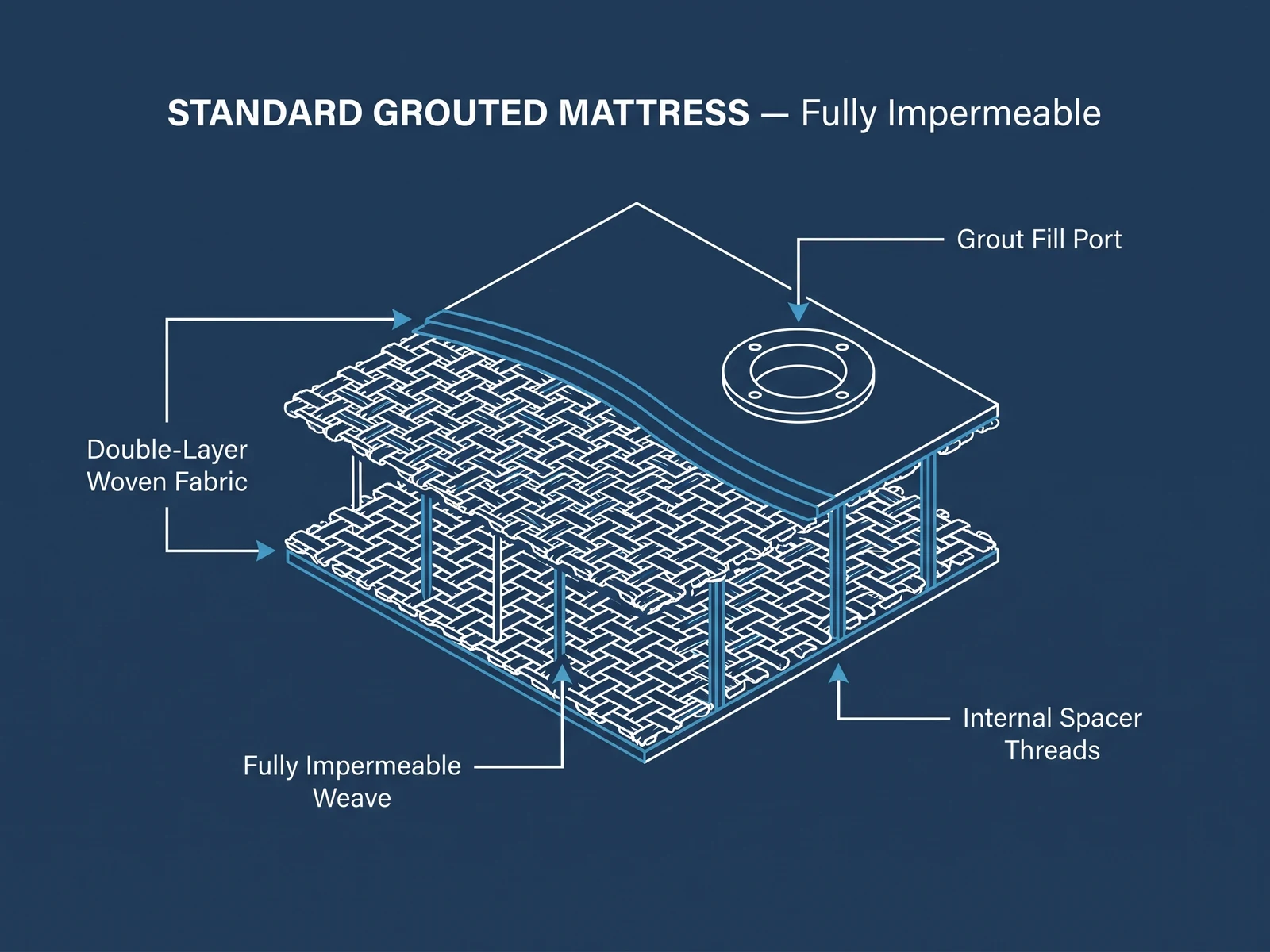
The geotextile facings on both sides provide some tensile reinforcement and contain the cement matrix, but GCCM does not have the internal restraint-thread structure that a grouted mattress has. This is part of why GCCM sections stay thin — there is no internal spacer system holding two fabric layers apart to create a thick, three-dimensional grout core.
Does GCCM require the same third-party testing as GRI GT16 for GGFM?
GCCM is covered by a separate set of test methods (typically referencing ASTM standards for compressive strength, flexibility, and abrasion resistance specific to cementitious composite mats) rather than GRI GT16, which was written specifically for grout-filled mattress systems. When specifying GCCM, request the manufacturer's specific test standard reference rather than assuming GT16 applies.
Not sure whether your project needs GCCM, standard grouted mattress, or a combination of both by zone? Send us your site conditions and hydraulic requirements — our engineering team will recommend the appropriate system within 48 hours.
HydroBase Technical Team
HydroBase manufactures grouted mattresses (GRI GT16 compliant) in China and delivers to 30+ countries. Our engineering team provides specification support, grout mix design, and installation guidance.
About HydroBaseMore Articles
View all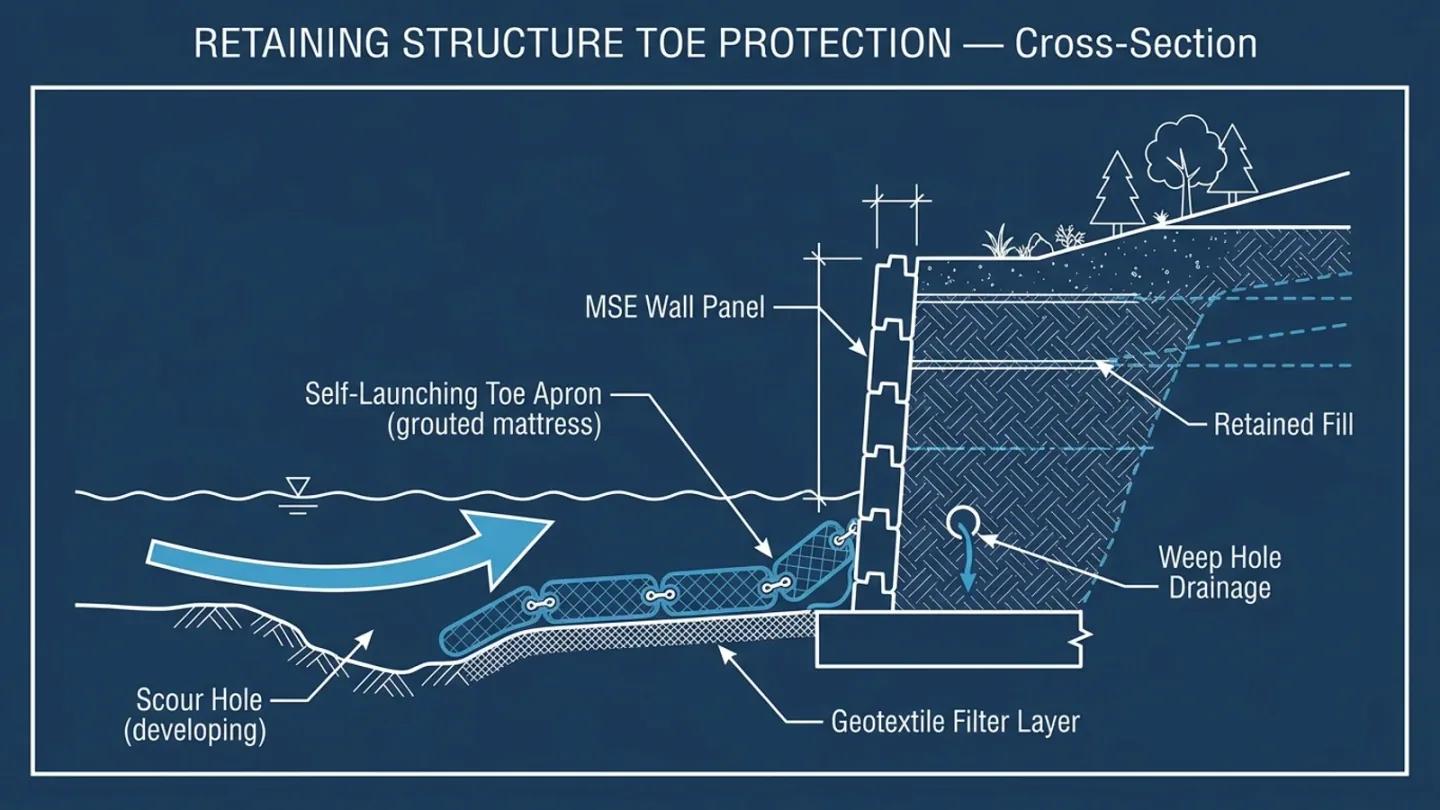
Erosion Control for Engineered Retaining Structures: MSE Walls, Canal Retaining, and Dam Toe Protection
Retaining structures fail more often from toe erosion and drainage problems than from the wall itself. This guide covers erosion control design at MSE walls, canal retaining structures, and dam toes.
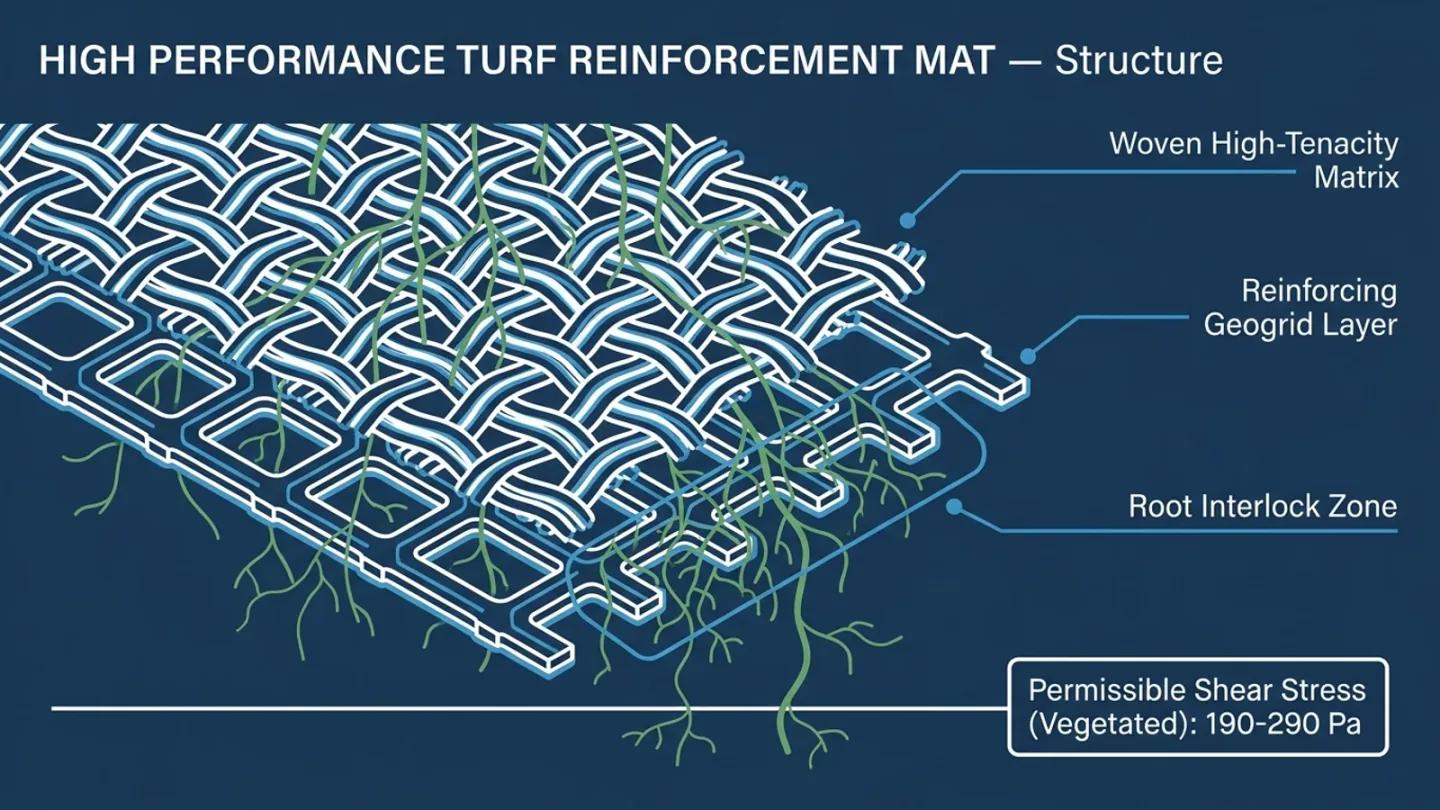
High Performance Turf Reinforcement Mat (HPTRM): Design and Specification Guide
High performance turf reinforcement mat extends vegetated erosion control into higher-velocity channels than standard TRM can handle. This guide covers the shear stress design method, matrix types, and specification requirements.
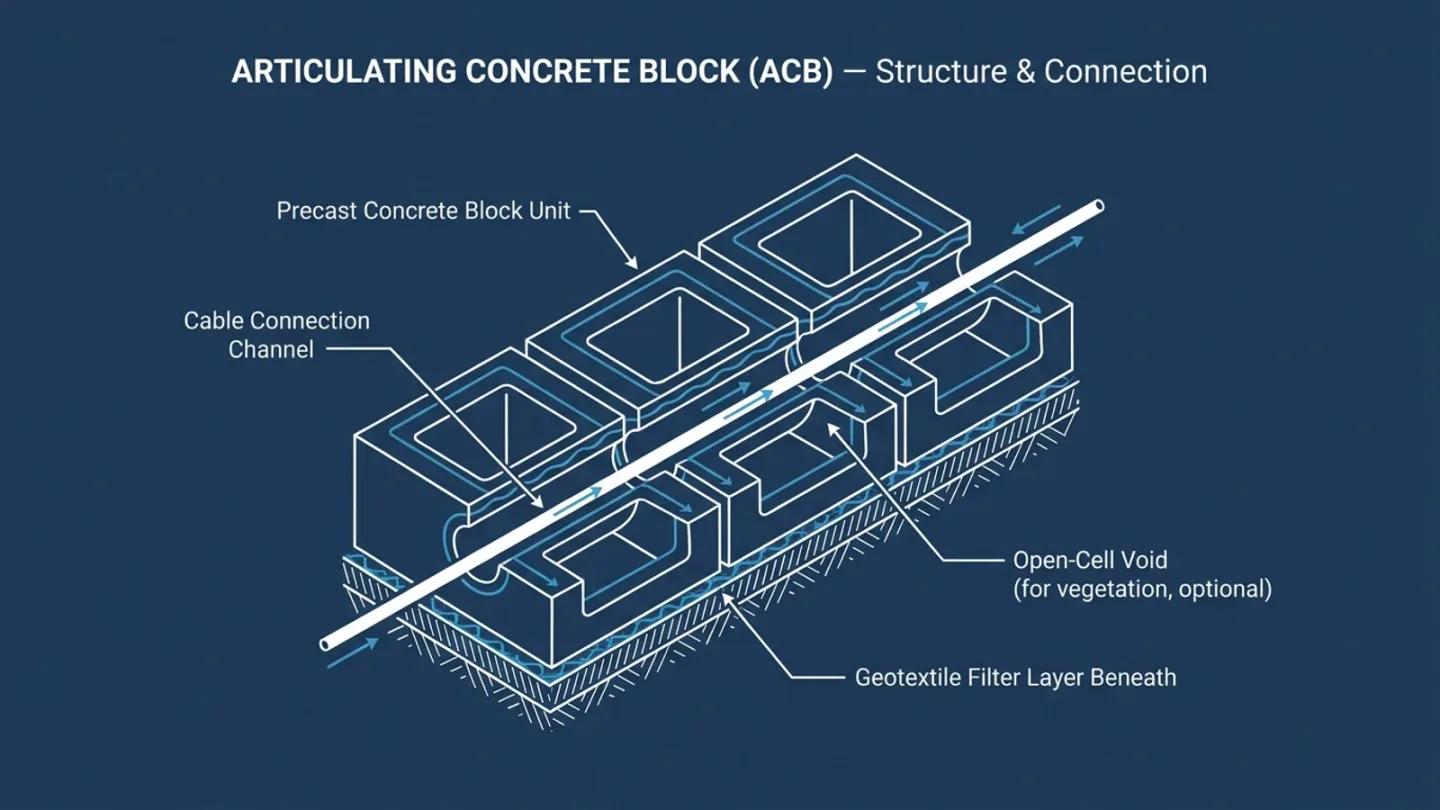
Articulating Concrete Block (ACB): Types, Cost, Specifications, and When to Choose It Over Grouted Mattress
Articulating concrete block (ACB) is a precast alternative to grouted mattress, connected by cables or geotextile through cast openings. This guide covers block types, costs, specification, and when each system is the better fit.
HydroBase - China Manufacturer
Ready to Specify Grouted Mattress?
GRI GT16 compliant products, factory test reports included. Engineering support at no cost. 48-hour response.